 Skip to content
Building a family through adoption is a journey of love, commitment, and navigating a clear legal path. The Texas adoption rules, found in the Texas Family Code, aren't there to be confusing; they provide a structured process to make sure every adoption is handled with care, always putting the child's best interests first. Think of this guide as your roadmap, created with empathy and clarity to walk you through the process, from your very first thought about adoption to the joyful day you finalize your family.
Your Texas Adoption Journey Starts Here
Deciding to adopt can feel like a mix of incredible excitement and being completely overwhelmed. You have so much love to give, but the legal steps can seem like a mountain to climb. At The Law Office of Bryan Fagan, PLLC, we believe that understanding the journey is the very first step toward a confident and successful adoption.
We often compare the process to building a new home for a child—a project that needs purpose, care, and a solid plan.
First, you lay a strong foundation. This means meeting the state's eligibility requirements, which are in place to confirm you're ready to provide a safe and stable home. Then, you create a detailed blueprint through the home study, which helps social workers really understand your family and find the right match. Finally, you carefully build the legal framework that makes it all official, leading to a joyful finalization day in court.
The Three Phases of Your Adoption
To make the Texas adoption rules easier to understand, we can break down the major milestones into three clear phases. Each phase has its own goal and set of tasks, moving you one step closer to building your family.
-
Foundation (Eligibility and Preparation): This is all about making sure you meet the state's criteria to adopt. It involves background checks, a look at your finances, and gathering personal documents. Think of it as checking the ground to make sure it's solid before you start building.
-
Blueprint (The Home Study and Matching): Here, you'll work closely with an agency to create a detailed portrait of your family life. The home study isn't a test; it's an in-depth, collaborative process that lets professionals get to know you, your home, and your parenting style. This is what helps them match you with a child.
-
Build (Legal and Finalization): This is the final construction phase. It involves the legal termination of the birth parents' rights, a post-placement supervision period where the child lives with you, and the final court hearing where a judge signs the decree that legally, officially makes you a family.
This simple visual breaks down the journey into these three core stages, showing the path from getting ready to the final legal creation of your family.
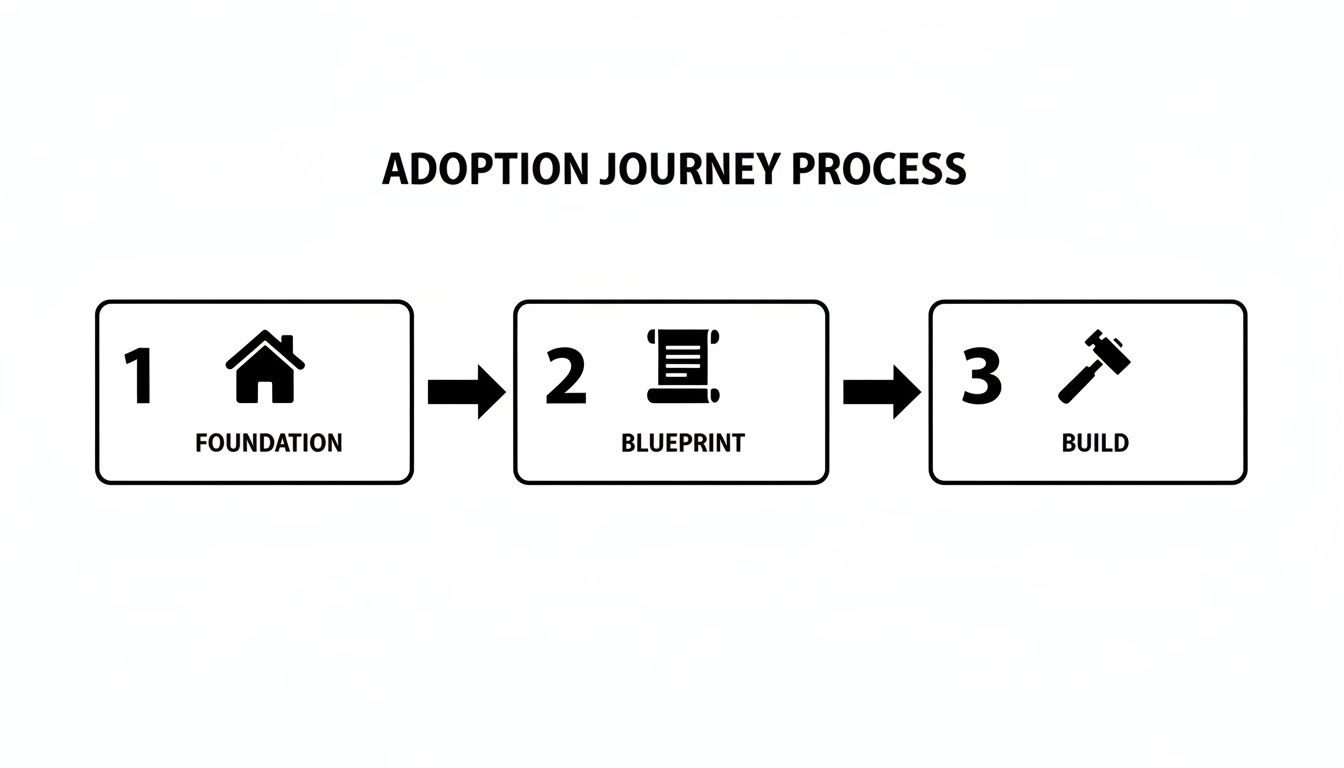
To help you visualize this path from start to finish, here is a quick overview of the major milestones you will encounter.
Key Stages of the Texas Adoption Process at a Glance
| Adoption Stage | Primary Goal | Typical Activities Involved |
|---|---|---|
| Foundation | Establish eligibility and prepare for the journey. | Attending info sessions, financial assessments, background checks, gathering documents. |
| Blueprint | Create a family profile and find a suitable match. | Completing the home study, interviews with social workers, creating a parent profile. |
| Build | Legally complete the adoption and form a new family. | Filing court petitions, terminating parental rights, post-placement visits, finalization hearing. |
Seeing the process laid out this way helps turn a complex legal journey into a series of manageable, meaningful steps toward your goal.
In this guide, we'll walk you through each stage, replacing legal jargon with simple, empowering explanations. Our goal is to give you the clarity and reassurance you need to move forward with confidence. If you're ready to take the first step or just have questions about your unique situation, our team is here to help. You can schedule a free, no-obligation consultation with our compassionate adoption attorneys today.
Meeting the Foundational Requirements to Adopt
Before you get to the heart of the adoption journey—connecting with a child—every hopeful parent has to start with the basics. Texas lays out a set of foundational requirements, not to create barriers, but to act as thoughtful safeguards. They exist for one reason: to make sure every child lands in a safe, stable, and nurturing home, which is always in the best interest of the child.
Think of it like checking the foundation of a house before you move in. This first step ensures the ground is solid enough to build your family’s future on.

The Texas Family Code (specifically Chapter 162) spells out the core criteria for anyone looking to adopt. While that sounds formal, the ideas behind the rules are simple, focusing on readiness and responsibility. The state’s number one priority is finding adults who can provide for a child's physical, emotional, and financial well-being.
Who Is Eligible to Adopt in Texas?
One of the best things about Texas adoption law is how inclusive it is. The focus is squarely on a person's ability to be a good parent, not their marital status, background, or who they love. The state welcomes a huge variety of families, which beautifully mirrors the diverse group of kids waiting for a permanent home.
Here are the key things the state looks for:
- A Mature Adult: You must be a credible and mature adult ready for the challenges and joys of parenting.
- Financial Stability: This isn't about being rich. It simply means you can show you have the financial footing to provide for a child without putting your household in a tough spot.
- Relationship Status: You can be single, married, divorced, or widowed. A loving home is a loving home, period.
- A Completed Home Study: Every potential adoptive family must go through and pass a home study, which we'll break down in the next section.
It’s important to know that Texas fully supports adoption by all qualified people, including members of the LGBTQ+ community. The guiding principle is always the "best interest of the child," and a stable, loving home is what truly matters.
"At its heart, the law is looking for one thing: a person who can offer a child a life of stability, support, and unconditional love. The rules are simply the framework to help identify those individuals."
The Crucial Role of Background Checks
One of the most critical safeguards in the entire Texas adoption process is the mandatory background check. This isn't meant to feel invasive or judgmental. It's a non-negotiable step to protect the well-being of vulnerable children.
Every adult (14 years or older) living in the prospective home must undergo a thorough background check. This isn't just a quick search; it's a deep dive that includes:
- A check of Texas Department of Public Safety (DPS) records.
- A national FBI criminal history check using your fingerprints.
- A review of child abuse and neglect registries in Texas and any other state the adult has ever lived in.
Having a criminal record doesn't automatically shut the door on your adoption dreams. The court and agencies will consider the nature of the offense, how long ago it happened, and what you’ve done to turn things around since. The ultimate goal is simple: ensure no child is placed in a home where their safety could ever be in question.
To become licensed foster or adoptive parents, you must be at least 21 years of age, be financially stable, and show responsible character. The process kicks off with an application where you'll share details about yourself and your lifestyle. You’ll also need to provide references from relatives and non-relatives who can speak to your fitness as a parent and show proof of marriage and/or divorce if that applies to you. You can discover more about these initial requirements on bobleonard.com.
Navigating the Home Study with Confidence
Let’s be honest, the term “home study” sounds intimidating. For many hopeful parents, it conjures up images of a white-glove inspection where your life is put under a microscope. We want you to throw that idea out the window.
The home study isn't a pass-or-fail test. Think of it as a collaborative process—a partnership between you and a social worker designed to prepare you for a successful adoption. Its entire purpose is to ensure the best interests of a child are always the top priority, and that starts with getting to know the wonderful home you’re ready to provide.

We like to tell our clients to think of it as creating a detailed family blueprint. Just like a builder needs architectural plans, an adoption agency needs to understand your family’s unique strengths, lifestyle, and values. This is how they find a child whose personality and needs are a perfect match for the environment you’ve built. For example, a quiet, structured family might be a wonderful fit for a child who needs a calm and predictable environment, while an active, bustling household could be the perfect place for a child with tons of energy.
This process is a fundamental piece of the Texas adoption rules. Once you understand its true purpose, you can turn any anxiety you might have into confident preparation.
The Core Components of the Texas Home Study
A licensed social worker or agency professional will guide you through several key steps. Each one is a piece of the puzzle that, when assembled, creates a full picture of your readiness to parent. The process almost always involves a few interviews, a home visit, and gathering some important paperwork.
Here’s a breakdown of what the home study will cover:
- Personal and Family History: You’ll talk about your childhood, your relationship with your own parents, and the values that shape your family. This isn’t about judging your past; it’s about understanding the experiences that made you who you are today.
- Relationship and Parenting Styles: If you're adopting with a partner, the social worker will want to see the strength of your relationship. You'll also explore your views on things like discipline, communication, and your overall parenting philosophy.
- Your Home and Community: This is the part people worry about, but it's really just a safety check to make sure your home is a secure place for a child. They'll also ask about your neighborhood, local schools, and the support system of friends and family you have in place.
- Motivation to Adopt: This is where you get to share your story. Why do you want to adopt? What are your hopes and dreams for your family? This conversation is genuine and heartfelt.
Gathering Your Documentation
A good chunk of the home study involves paperwork. Trust us, getting organized ahead of time will make this stage feel so much smoother. The goal here is simply to verify the stability and readiness you've talked about in your interviews. You can learn more about the nitty-gritty in our detailed guide explaining what a home study for adoption is.
You will typically be asked to provide the following:
- Financial Statements: This includes things like pay stubs, tax returns, and bank statements to show you're financially stable.
- Medical Records: A simple letter from your doctor confirming you're physically and mentally healthy enough to parent a child is standard procedure.
- Personal References: You’ll need a few letters of reference from friends, family, or colleagues who can speak to your character.
- Important Documents: This means gathering your birth certificates, marriage license, and any divorce decrees if applicable.
The home study is fundamentally an educational journey. It not only assesses your readiness but also equips you with the knowledge and resources you'll need to welcome a child into your home successfully.
Why This Process Matters So Much
Every single question asked and every document requested serves one vital purpose: protecting the child's well-being. By getting a clear picture of your family dynamic, the agency can make a thoughtful, informed match. Their goal isn't just to place a child in a house, but to place them in a home where they will truly thrive.
The home study provides the critical insights needed for these successful placements. It's the heart of the adoption process, ensuring every child’s journey ends where it should: in a safe, permanent, and loving home.
Understanding Termination of Parental Rights
Before an adoption can move forward and give a child the legal permanence they deserve, a critical and sensitive legal step has to happen first. It’s called the Termination of Parental Rights, or TPR. This is the formal, court-ordered process that permanently ends the legal relationship between a child and their biological parents.
This might sound like a heavy topic, and it is, but its purpose is rooted in love and protection. The whole point of a TPR is to clear the path for a new, legally secure parent-child relationship to form through adoption. It’s all about ensuring the child can grow up with the stability and security they need. The Texas adoption rules handle this with great care, fully recognizing the emotional weight this carries for everyone involved.
Two Paths to the Same Goal: Permanence
In Texas, parental rights can be terminated in one of two ways. While the outcome is the same—making a child legally available for adoption—the circumstances that lead to it are worlds apart.
- Voluntary Relinquishment: This is when a birth parent makes the courageous and loving choice to place their child for adoption. It’s an act of consent, where they willingly decide to end their parental rights. Imagine a young mother who knows she can't provide the life she dreams of for her baby. Her decision to sign the papers is a profound act of love for her child's future.
- Involuntary Termination: This path is taken by a court when a child's safety and well-being have been put at risk. It’s not a choice the parent makes, but a decision made by a judge to protect the child from harm.
Understanding this distinction is absolutely crucial, as each path involves a very different legal and emotional journey.
Voluntary Relinquishment: A Loving Choice
When a birth parent decides that adoption is the best plan for their child, they must sign a legal document called an Affidavit of Relinquishment of Parental Rights. Texas law puts a critical safeguard on this process to protect the birth mother from feeling pressured or rushed into a decision.
A birth mother cannot sign this irrevocable document until at least 48 hours after the child's birth. This waiting period ensures she has time to recover physically and emotionally and can make this life-altering decision with a clear mind.
Once signed, this affidavit is legally binding and, in most cases, cannot be reversed. This finality provides reassurance to adoptive parents and, more importantly, creates immediate stability for the child. It is a profound act of love, made with the child’s future at its heart.
Involuntary Termination: A Protective Measure
In heartbreaking situations where a child's environment is unsafe due to abuse, neglect, abandonment, or other serious concerns, the state has to step in. This is what often happens in cases involving Child Protective Services (CPS). Here, the court's primary duty is to protect the child, period.
A judge may order the involuntary termination of parental rights if there is clear and convincing evidence that it is in the child's best interest. This isn’t a decision made lightly; it’s a high legal standard, and the court looks at many factors, such as:
- Endangering the child's physical or emotional well-being.
- Failing to support the child.
- Abandoning the child.
- Engaging in criminal conduct that puts the child at risk.
This is a solemn court proceeding, designed not to punish the parents, but to provide a path to a safe and permanent home for the child. For families considering adopting from foster care, understanding this process is a key part of the journey. To explore this topic in greater depth, you can learn more by reading about terminating parental rights in Texas in our detailed guide.
Finalizing Your Adoption in Court
You’ve made it. After months (or maybe years) of paperwork, interviews, and waiting, you’re finally at the finish line. This is the moment when all that hope and hard work pays off, and your family officially, legally becomes whole. The final steps are guided by Texas adoption rules, but they’re less about bureaucracy and more about ensuring a smooth, supportive transition for you and your child.
Before you head to the courthouse, there’s a crucial adjustment period known as post-placement supervision. This happens after a child is placed in your home but before the judge makes it official.
Think of these visits not as inspections, but as supportive check-ins. Over a few months, a social worker from your adoption agency will stop by to see how everyone is settling in. Their goal is to offer resources, answer your questions, and just make sure the new family dynamic is gelling.
The Post-Placement Supervision Period
These visits are required by Texas law, but they serve a wonderful purpose: confirming that the placement is thriving and truly in the child's best interest. The social worker will observe you interacting with your child, chat about how you're navigating new challenges, and document all the positive bonding that’s happening.
This documentation becomes a series of positive reports for the court. Essentially, these reports are the final piece of evidence a judge needs to see that you've created the loving, stable home you promised in your home study.
Understanding Adoption Timelines
One of the first questions every hopeful parent asks is, "How long is this going to take?" And the honest answer is: it varies. A lot. While the final legal steps are fairly quick, the journey to get there is unique for every family.
For a domestic infant adoption in Texas, the average wait time can fall anywhere between 12 to 24 months. Some families get matched much faster, while others wait longer. The timeline often depends on factors like your flexibility on a child's age, gender, or background. You can discover more insights about Texas adoption wait times on angeladoptioninc.com.
The key is to trust the process and stay patient. Every family’s path is different, and finding the right match for you is worth every second of the wait. The final hearing is the beautiful culmination of that entire journey.
Your Day in Court: The Finalization Hearing
This isn't your typical day in court. The finalization hearing is a celebration. It’s often a joyful, relaxed event where families bring grandparents, friends, and even balloons or a new teddy bear for the child. It feels more like a family ceremony officiated by a judge than a stuffy legal proceeding.
Here’s a quick rundown of what to expect:
- Reviewing the Paperwork: Your attorney will present the final adoption petition and all the supporting documents, like your approved home study and the glowing post-placement reports.
- A Few Simple Questions: The judge will likely ask you to confirm, under oath, that you want to adopt the child and promise to provide a permanent, loving home. It’s a formality, but a powerful one.
- Signing the Decree: This is the big moment. The judge will sign the final decree of adoption. With the stroke of a pen, your child legally becomes a member of your family, with all the rights that come with it—including a new birth certificate with your names on it.
For most families, this is the day they’ve dreamed about—their official "Adoption Day." It’s a time to celebrate the love and perseverance that brought you all together, transforming a hopeful journey into a beautiful, legally-bound reality.
Exploring Different Paths to Adoption in Texas
Every family’s journey to adoption looks a little different, and that's okay. The Texas adoption rules are built to flex, accommodating the unique ways families come together. Whether you're making it official with a stepchild or formally welcoming a grandchild into your home, there’s a legal path designed for your situation. Knowing your options is the first step to confidently building your family.
While each type of adoption has its own set of rules, they all share one powerful goal: creating a stable, loving, and permanent home for a child. Let's break down the most common paths so you can find the one that fits your story.
Stepparent and Kinship Adoptions
When a family is already connected by marriage or blood, the adoption process is usually more straightforward. These adoptions, known as stepparent and kinship (or relative) adoptions, recognize the bonds that already exist and often streamline some of the typical requirements.
- Stepparent Adoptions: This is a beautiful way for a stepparent to make their bond with a stepchild legally permanent. The main focus here is getting consent from the other biological parent or, if that’s not possible, legally terminating their parental rights.
- Kinship Adoptions: When grandparents, aunts, uncles, or other relatives step up to adopt a child in their family, the law acknowledges the trust that's already there. A home study is still part of the process, but it's typically a modified version focused on making sure the home continues to be a safe place for the child.
These adoptions do more than just update legal documents; they provide children with an incredible sense of security and belonging.
Adopting from Foster Care (CPS)
Taking the path of adopting a child from the Texas foster care system, which is managed by Child Protective Services (CPS), is a special kind of journey. Many of these children have been through tough times and need a home that offers patience, understanding, and healing.
Often, this starts with becoming a licensed foster parent. This "foster-to-adopt" route allows a child to live with you and begin to form attachments while the legal work of terminating birth parent rights is still in motion. It gives the child much-needed stability and gives you time to build a strong bond before the adoption is finalized. The state offers a lot of support, including specialized training and often financial help, for families who open their homes and hearts to these incredible kids.
Adopting from foster care is more than just a legal process; it is an act of healing that provides a child with the promise of a permanent, loving family and a bright future.
Inclusive Paths for All Families
Texas law is crystal clear on one thing: what truly matters is your ability to provide a safe, nurturing home for a child. This means the door to adoption is open to all qualified adults, no matter their marital status or sexual orientation. Single people and LGBTQ+ couples have the same rights and are held to the same high standards as any other adoptive parent.
The law also makes room for adult adoption. This is a powerful way for one adult to legally adopt another, often to formalize a lifelong parent-child relationship that was never legally recognized. It’s a way to secure inheritance rights and, more importantly, to legally cement a cherished family bond. Each of these different types of adoption provides a unique way to build or legally solidify your family.
If you’re trying to figure out which path is the right one for you, we’re here to offer clear, compassionate advice. Schedule a free consultation with our team, and let’s talk about your family’s future.
Your Top Questions About Texas Adoption, Answered
Let’s be honest, the adoption journey is filled with big questions. It’s completely normal to feel a mix of excitement and uncertainty. To help clear things up, we’ve put together some straight-to-the-point answers for the most common concerns we hear from families just like yours.
How Much Does It Really Cost to Adopt in Texas?
This is usually the first question on everyone's mind, and the answer really depends on the path you take. There’s a huge difference between private and state adoptions.
- Private Infant Adoptions: These typically run anywhere from $30,000 to over $60,000. That figure covers a lot—from legal and agency fees to the birth mother’s medical care and living support.
- Foster Care (CPS) Adoptions: This is a fantastic, low-cost option. In many cases, it’s virtually free because the state offers financial help to cover the costs and provide ongoing support for the child.
Can a Birth Parent Change Their Mind After Placing a Child for Adoption?
Texas law is very clear on this to protect everyone involved, especially the child. A birth mother cannot legally sign away her parental rights until at least 48 hours after giving birth. This gives her a crucial window to make her decision without pressure.
Once she signs that official affidavit, her decision is considered permanent and legally binding. It can only be challenged in very rare situations, like proven fraud or coercion, which provides the stability every child deserves.
Do I Absolutely Need an Attorney for a Texas Adoption?
Yes, you do. And frankly, you’ll be glad you have one. Texas law requires an experienced adoption attorney to handle the entire legal process. They’re responsible for all the court filings, representing you in front of the judge at the final hearing, and making sure the termination of the biological parents' rights is done correctly and ethically.
Think of your attorney as your guide and protector—they ensure the adoption is secure and legally sound, protecting you, the birth parents, and most importantly, your future child.
Building your family is one of the most incredible things you’ll ever do, and you shouldn’t have to navigate it alone. If you’re ready to take the next step toward building your family or just have more questions, the compassionate team at The Law Office of Bryan Fagan, PLLC is here to offer the expert legal guidance you deserve. Let us empower you to move forward with confidence. Schedule a free, no-obligation consultation today and let's talk about your future.

