 Skip to content
If you’re wondering, ‘what is a home study for adoption?’, let's clear up one common misconception right away. It's not a white-glove inspection designed to catch you out. Think of it more as a supportive partnership—a collaborative process where a licensed professional gets to know you, your home, and your hopes for growing your family with empathy and clarity.
The goal is simple: to make sure a child will be welcomed into a safe, stable, and loving home. This is a foundational step in Texas adoption, always focused on the best interests of the child.
The Heart of the Adoption Home Study
Welcome to one of the most meaningful steps on your adoption journey. That phrase, "home study," can sound intimidating, we know. But its real purpose is rooted in compassion and is focused entirely on what's best for the child. It’s less about having a perfect house and much more about having a prepared heart and a safe home.
This foundational step, outlined in the Texas Family Code, is about setting your family up for success and making sure you’re truly ready for the joys and challenges of parenthood. The Law Office of Bryan Fagan, PLLC has helped countless Texas families navigate this path, turning anxiety into understanding. We see it as the first chapter in your family’s beautiful story.
A home study is a comprehensive evaluation required for nearly every adoption. It assesses a family's readiness to provide a safe, loving environment for a child. Conducted by a licensed social worker or agency, it involves in-home visits, interviews, and background checks to ensure you're prepared for the journey ahead.
What Is the Purpose of a Home Study?
The home study isn't just an evaluation; it's a multi-faceted process designed to educate, assess, and prepare. It serves three primary goals, all centered on creating a successful and lasting placement for a child.
Here’s a quick breakdown of what the home study aims to achieve:
| Objective | What It Means for Your Family |
|---|---|
| Education | You'll receive valuable information about the emotional and practical sides of adoption, helping you anticipate the journey ahead. |
| Evaluation | A social worker partners with you to look at your home environment, stability, and parenting philosophies to confirm your readiness. |
| Preparation | By discussing topics like your family background, support system, and discipline, the process helps you thoughtfully get ready for your child’s arrival. |
Each part of the home study is designed to build a strong foundation for your growing family, ensuring everyone is supported long before placement day arrives. For example, if you are pursuing an international adoption, understanding the need for the translation of adoption documents is a crucial detail. A compassionate legal guide can help you anticipate and manage these details without the stress.
Navigating the Home Study Process Step by Step
Let’s pull back the curtain on the home study journey, breaking it down into clear, manageable steps so you know exactly what to expect. This isn’t a test with pass-fail grades; it's a series of conversations and milestones designed to get your family ready. Our goal is to empower you to move through each stage feeling prepared and positive.
The home study has evolved into a standardized safeguard, a cornerstone of modern adoption that leads to permanent, loving homes for countless children. It's a crucial tool for approving families for all kinds of adoption paths, from domestic to international.
Getting Started: The Paperwork Phase
The journey begins with gathering essential documents. It might feel like a mountain of paperwork at first, but collecting these items upfront makes the rest of the process run much more smoothly. Think of it as laying a strong foundation for your adoption file.
You'll typically be asked to provide copies of:
- Personal Identification: Things like birth certificates, your marriage license, and driver's licenses.
- Financial Records: Recent pay stubs, tax returns, and bank statements to show you're financially stable.
- Medical Reports: A letter from your doctor confirming you're physically and mentally healthy enough to parent.
- Personal References: Letters from friends, colleagues, or community members who can speak to your character and readiness to become a parent.
This isn't about judging you; it's about painting a full, honest picture of your life and stability. It's a key requirement under Texas law to ensure a child's well-being.
Background Checks and Interviews
Once your paperwork is in, the next phase kicks off with background checks and interviews. In Texas, this means state and federal criminal background checks for every adult in the home, plus a check of the child abuse and neglect registry. It’s vital to be upfront about anything in your past—a minor issue from years ago doesn't automatically close the door.
The interviews are really the heart of the home study. Your social worker will want to chat with you both as a couple and individually.
These conversations are a chance for the social worker to get to know you on a personal level—your motivations for adopting, your parenting philosophies, your support system, and how you handle stress. This is your opportunity to let your personality and love for your future child shine through.
These aren't interrogations but collaborative talks. They help your social worker see your unique strengths and prepare you for the adventure ahead. For a deeper look into what these conversations cover, explore our guide on the top components of a Texas adoption home study.
This diagram illustrates the general flow of the home study, from preparation to final approval.
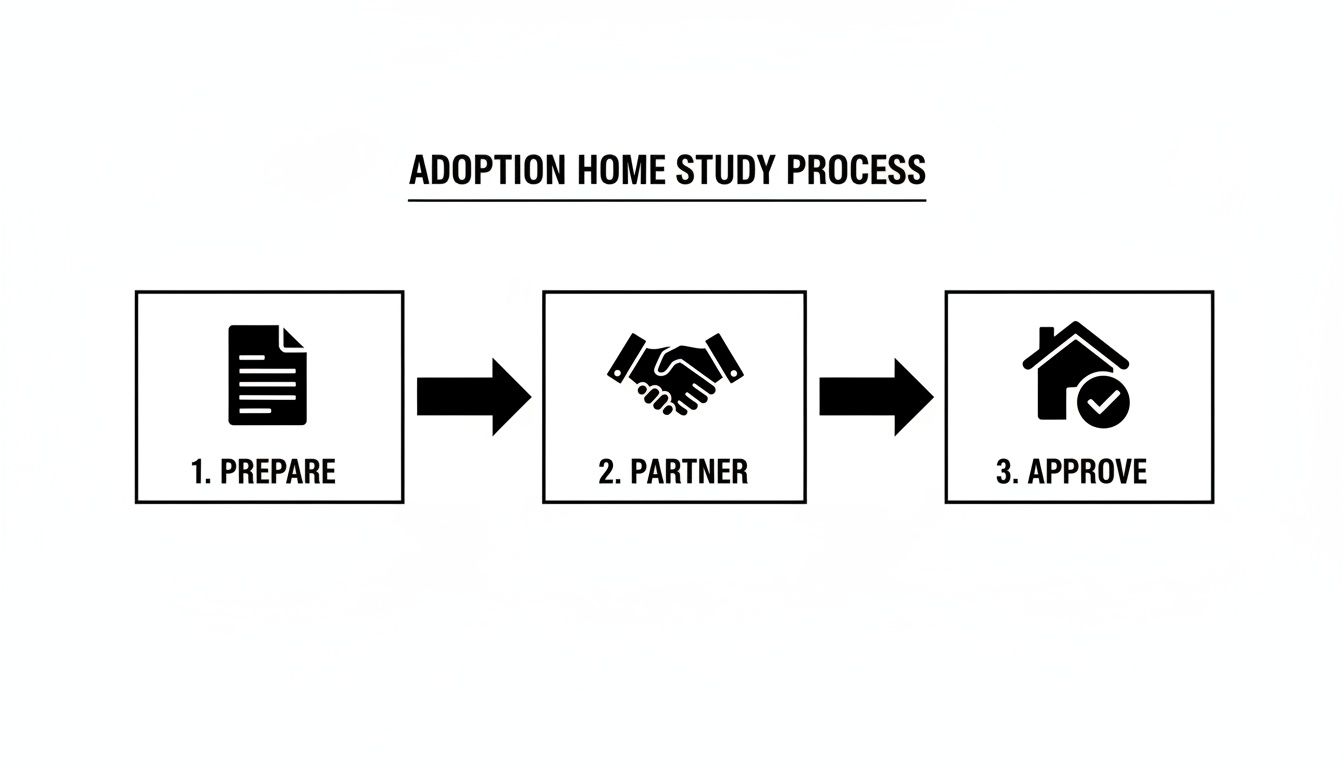
As you can see, the process is designed to be a partnership, moving logically from documentation and interviews toward the home visit and final approval.
The Home Visit and Final Report
The home visit is the part that tends to make families the most nervous, but there's truly no need to stress. The social worker isn’t coming with a white glove to check for dust. They are simply looking for a safe, clean, and welcoming environment for a child.
They’ll check for basic safety measures like working smoke detectors, ensuring hazardous materials are stored securely, and general childproofing. It’s also another chance to talk in a more relaxed setting, allowing the social worker to see your family dynamic in your own space.
After the interviews and home visit are done, the social worker will compile everything into a detailed final report. This document summarizes their findings and includes a recommendation on your family's readiness to adopt. Once you're approved, this report is your ticket to being matched with a child, bringing you one giant step closer to building your family.
How Texas Home Studies Vary by Adoption Type
In Texas, the adoption home study isn't a one-size-fits-all checklist. It’s thoughtfully adapted to fit the unique circumstances of your family and the specific type of adoption you're pursuing. Knowing these differences ahead of time can make the whole journey feel less intimidating and more supportive of your family’s story.
The core purpose never changes—it's always about ensuring a child’s safety and well-being. What does shift is the focus and intensity of the evaluation, depending on your relationship with the child and the adoption path you've chosen. Let's break down how the requirements change for different kinds of adoptions here in Texas.

Stepparent and Kinship Adoptions
When you’re adopting a stepchild or a relative—like a grandchild, niece, or nephew—the home study process is often much more streamlined. The Texas Family Code (Chapter 162) recognizes that these existing family bonds matter a great deal.
- Stepparent Adoptions: In these situations, a full, formal home study is sometimes waived by the court. The focus isn't so much on evaluating a brand-new home environment, but more on the stepparent's relationship with the child, their commitment to parenting, and how the adoption truly serves the child's best interests.
- Kinship Adoptions: For adoptions by relatives, the social worker starts from a place of acknowledging the pre-existing relationship. The evaluation still ensures the home is safe, but it also heavily weighs the emotional connection and stability that the family already provides.
The law prioritizes keeping families together whenever possible. In kinship and stepparent adoptions, the home study respects and builds upon the love and history you already share with the child, making it a more affirming experience.
Private Infant vs. Foster Care (CPS) Adoptions
The home study process looks quite different when you compare a private domestic adoption with adopting a child from the Texas foster care system, also known as Child Protective Services (CPS).
For a private infant adoption, the home study is a deep dive into your family's background, stability, and readiness to parent a newborn from day one. It thoroughly covers your motivations, finances, health, and home safety to prepare for a healthy placement from birth.
Adopting from foster care (CPS), on the other hand, involves a more specialized process. Because children in the foster system have often experienced trauma, neglect, or abuse, the home study has additional requirements. Hopeful parents must complete specialized training, like Trauma-Informed Care, to make sure they're equipped to meet the unique emotional and behavioral needs of the child. The focus is squarely on creating a therapeutic and healing home environment.
International Adoptions
Pursuing an international adoption adds another layer of complexity to the home study. Your home study has to meet not only Texas state laws but also the strict requirements of U.S. Citizenship and Immigration Services (USCIS) and the specific country you're adopting from.
This means your home study will likely be more detailed and may require extra documentation or interviews. The social worker has to ensure your family is ready for the unique cultural, emotional, and social adjustments that come with an international placement. It’s a rigorous process, but it’s designed to protect children and ensure families are fully prepared for this beautiful, complex journey.
No matter which path you choose, the purpose of "what is a home study for adoption" is always the same: to build a bridge between a loving family and a child who needs one. Each variation in the process is just a thoughtful adjustment made to best serve the child and honor the unique way your family is coming together.
Your Practical Home Study Preparation Checklist
Feeling prepared can turn what feels like a stressful test into a moment of confident connection. Think of this checklist as your roadmap to organizing your home, your paperwork, and most importantly, your heart for the home study visit.
Let’s be clear: this isn’t about being perfect. It’s about being thoughtful, ready, and able to show you can provide a stable, loving home for a child. This is your chance to proactively tackle the process, reduce anxiety, and take a huge step toward building your family.
Gathering Your Important Paperwork
Getting your documents in order early is one of the smartest things you can do for a smooth, timely process. This paperwork is the foundation of your adoption story, proving you're ready for this journey. While the exact list might shift a bit, you can start gathering these items right now:
- Personal Identification: Pull together copies of birth certificates, your marriage license, any past divorce decrees, and current driver's licenses for every adult in the house.
- Financial Stability: This isn't about being rich; it's about showing responsibility. Collect recent pay stubs, your last few years of tax returns, and bank statements to show you can manage your finances to support a child.
- Health Statements: Make an appointment with your doctor to get a letter confirming you're in good physical and mental shape for the demands of parenting.
- Reference Letters: Think about the people who know you best—friends, colleagues, or neighbors. Ask them to write letters that speak to your character, your stability, and your genuine readiness to be a parent.
For a deeper dive, our firm has put together a complete guide to the essential required documents for a Texas adoption home study that you can use as your detailed roadmap.
Preparing Your Home Environment
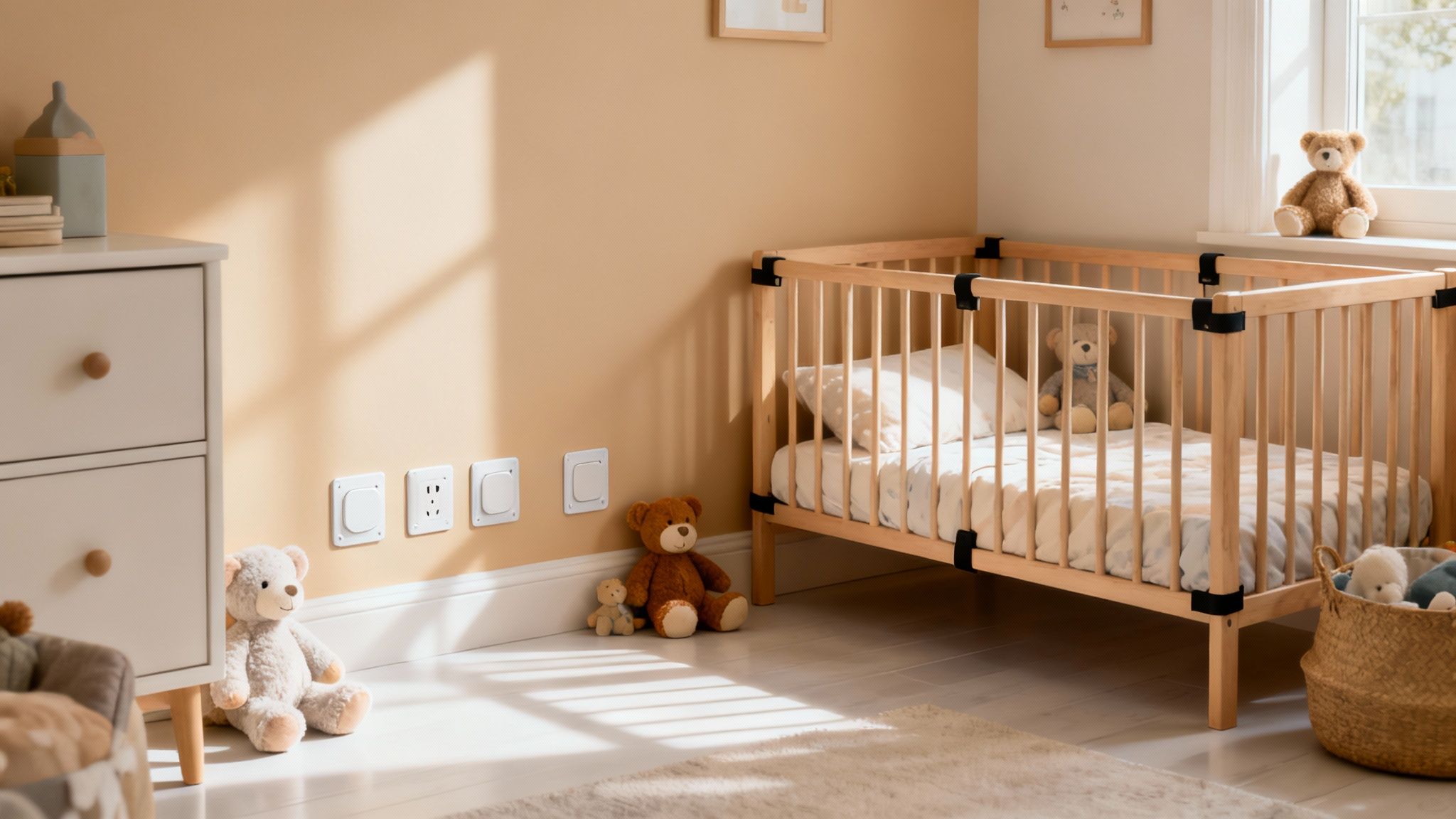
Let’s bust a myth: your home does not need to look like it belongs on a magazine cover. It just needs to be a safe, welcoming space for a child. Your social worker is looking for a home that’s clean, safe, and filled with warmth—not a perfect one.
The home visit is less about inspection and more about connection. Your social worker wants to envision a child thriving in your space and to get a feel for your daily life. They are on your team, looking for reasons to say "yes."
Focus your energy on these key areas:
- Safety First: Check that your smoke and carbon monoxide detectors are working. If you own firearms, make sure they are secured in a locked safe with ammunition stored separately. Put cleaning supplies and medications well out of a child's reach.
- Basic Comfort: The social worker will want to see that a child will have their own space, even if it’s a shared room to start. The home should be in good repair with working utilities and be generally tidy.
- Outdoor Safety: If you have a pool, double-check that it’s fenced according to Texas state law. Take a walk through your yard and clear out any potential hazards.
Emotional and Relational Preparation
This is, without a doubt, the most important part of your prep work. The home study is just as much about your mindset and your relationships as it is about your physical space. It's your opportunity to show you've really thought through the realities of adoption.
Take some time to talk through these topics with your partner or your closest support system:
- Parenting Philosophies: How do you feel about discipline? What about education and family values? Get on the same page about how you’ll work together as a parenting team.
- Honoring Their Story: How are you going to talk about adoption with your child? Discuss how you'll honor their birth family and their unique history as a cherished part of who they are.
- Support System: Who is your village? Identify the friends and family you can call on for emotional support or a helping hand after the child is placed with you.
Being able to talk about these things clearly shows a depth of preparedness that goes far beyond a clean house. It proves you’re ready not just to provide a home, but to build a family rooted in love, respect, and deep understanding.
To help you get organized, we've created a simple checklist that breaks down these preparation steps into manageable tasks. Use this as your guide to stay on track and feel confident as you move forward.
Home Study Preparation Checklist
| Preparation Area | Key Tasks | Pro Tip from Our Attorneys |
|---|---|---|
| Document Gathering | Collect IDs, financial records, health statements, and reference letters. Store them in a dedicated folder or digital drive. | Start this first! Some documents, like birth certificates or letters from doctors, can take weeks to get. Don't wait until the last minute. |
| Home Safety | Test smoke/CO detectors, lock up firearms/meds/chemicals, ensure pool safety, and clear yard hazards. | Walk through your home from the perspective of a curious toddler. What can they reach? What could be a danger? This simple shift in perspective is incredibly helpful. |
| Home Comfort | Deep clean the main living areas, declutter, ensure the child's room is ready (even if basic), and check that all utilities work properly. | You don't need a perfectly decorated nursery. A safe crib, a place for clothes, and a clean, welcoming space are what truly matter. |
| Emotional Prep | Discuss parenting styles, how you'll talk about adoption, and identify your support network. Practice articulating your thoughts. | The social worker wants to see a united front. Have these conversations with your partner beforehand so your answers are thoughtful and aligned. |
| Interview Prep | Review your application and be ready to talk openly about your life, your motivations for adopting, and how you'll handle challenges. | Be authentic. They aren't looking for perfect answers, but for honest, self-aware people who are ready to be parents. Your real story is your greatest strength. |
Remember, this checklist isn't about passing a test—it's about thoughtfully preparing for one of the most important chapters of your life. Each step you take brings you closer to welcoming a child into your family.
Understanding the Costs and Timeline in Texas
Let’s get right to it. Two of the biggest questions on every hopeful parent's mind are: "How much is this going to cost?" and "How long will this take?" Planning for a Texas home study means understanding the investment of not just money, but your time and emotional energy. These are real concerns, and our goal is to give you the clarity you need to move forward with confidence.
The process is designed to be thorough for one simple reason: to make sure every child is placed in a safe, loving, and well-prepared home. Think of it as an investment in your family's future.
Breaking Down the Financial Investment
The cost of a home study in Texas typically falls somewhere between $1,500 to over $4,000. That’s a pretty wide range, and the final price tag really depends on a few key factors.
- Type of Adoption: A home study for a private infant adoption often has a different cost structure than one for a foster care (CPS) adoption, which can sometimes be free or state-funded.
- Agency or Provider: Every licensed professional or agency sets their own fees. These usually cover things like application fees, processing background checks, and the social worker's time for interviews and writing the final report.
- Location: Believe it or not, costs can sometimes shift a bit depending on where you live in Texas.
Our best advice? Always ask for a detailed fee schedule from any provider you're considering. This helps you see exactly what’s included and makes sure there are no surprises down the road.
Mapping Out the Home Study Timeline
Patience is a virtue in any adoption journey, and the home study is no exception. In Texas, you can generally expect the home study process to take between 90 and 120 days from start to finish. This timeframe gives everyone enough breathing room for all the essential steps, from gathering your documents to getting the final report written and approved.
Remember, this timeline isn't just a passive waiting period. It's an active phase of preparation. The more organized and responsive you are with paperwork and appointments, the smoother and more efficiently the whole process can move along.
Several things can affect how long it takes:
- Your Pace: How quickly you can gather and turn in your paperwork plays a huge role.
- Scheduling: Finding times for interviews and home visits that work for both you and your social worker is a key piece of the puzzle.
- Third-Party Processing: Sometimes, the biggest delays come from waiting on background check results from state and federal agencies.
Knowing these timelines helps you set realistic expectations and plan your life accordingly. For a deeper dive into what can impact the schedule, you can learn more about how long a home study can take in our dedicated article. An experienced adoption attorney can also be a huge asset here, helping you navigate the process efficiently and keep you on track toward building your family.
Guiding Your Family Through the Home Study Process
Building a family is a journey, and you should never feel like you're walking it alone. At The Law Office of Bryan Fagan, PLLC, we’re here to partner with you, offering compassionate legal guidance every step of the way.
We’ve seen it time and again: when you're well-prepared and supported, the home study becomes a positive, manageable step. It’s your chance to thoughtfully plan for your child's arrival and show just how ready you are to provide a loving, stable home. Your dream of growing your family is worth every effort, and having the right people in your corner makes all the difference.
Your Advocate and Partner
An experienced adoption attorney is more than just a legal advisor; they are an invaluable part of your team. We help Texas families navigate this crucial phase with the confidence and clarity they deserve.
Our role is to support you by:
- Helping you find and select a trusted, licensed home study provider.
- Reviewing the final home study report to make sure it's accurate, fair, and positively reflects your family.
- Confidently addressing any questions or unexpected issues that might pop up during the process.
The home study is more than just a requirement; it's the official start of your adoption story. Our goal is to ensure it's a chapter filled with hope and excitement, not stress and uncertainty. We handle the legal complexities so you can focus on what truly matters—preparing your heart and home.
You are not just another case file to us. You are a family in the making. Our deep experience in Texas family law means we understand the nuances of the system, from the first piece of paperwork to the final court hearing. We're here to answer your questions, ease your worries, and celebrate with you at every milestone.
Take the Next Step with Confidence
Your dream of bringing a child into your life deserves dedicated, caring legal guidance. When you're ready to take the next step or simply want to talk through your adoption options, we invite you to schedule a free, no-obligation consultation with us.
Let’s build your family, together.
Your Top Questions About the Adoption Home Study
It’s completely normal to feel a mix of excitement and anxiety heading into the home study. This journey is full of unknowns, and a few clear, honest answers can make all the difference in helping you move forward with confidence. Let's tackle some of the most common worries we hear from hopeful parents right here in Texas.
Our goal is to pull back the curtain on this process and show you it’s meant to be supportive, not scary. At the end of the day, honesty, safety, and a whole lot of love are what truly matter.
What if I Have a Mistake in My Past?
This is, without a doubt, one of the biggest fears we see. Whether it’s a minor legal issue from college or a financial stumble years ago, a past mistake does not automatically disqualify you from adopting in Texas. The absolute most important thing is complete honesty right from the start.
When the background checks begin, you must disclose everything. Trying to hide something is far more damaging than the issue itself. Social workers and judges understand that people aren't perfect; they learn and grow. They’ll look at what the offense was, when it happened, and what you’ve done since then to build a stable, responsible life. A single mistake does not define your ability to be a loving parent.
Do I Need a Perfect House?
Let’s clear this up right now: absolutely not. You do not need a huge, professionally decorated home to pass a home study. Your social worker isn’t coming over to judge your interior design skills; they are there to see a safe, stable, and nurturing environment.
The focus is on love and readiness, not square footage or Pinterest-worthy decor. A home filled with warmth and care is what a child needs. Your space just has to be clean, in decent repair, and free of any obvious safety hazards.
How Long Is a Home Study Good for in Texas?
In Texas, an approved home study is generally valid for one year from the date it's officially completed. If a year goes by and you haven't been matched with a child yet, you'll need to get a home study update.
The good news is an update is way simpler than the original process. It’s mostly about verifying that your key information—like your address, job, and who lives in the home—is still the same and running new background checks.
Can Single Parents or LGBTQ+ Couples Adopt in Texas?
Yes. A thousand times, yes. Texas law is focused on what’s best for the child, and that means placing them in a loving, stable home, regardless of what that family looks like. Your ability to provide that home is what matters—not your marital status or sexual orientation.
- Single parents are not only welcome but are often incredibly successful adoptive parents. The home study will simply focus on your individual strengths, the support system you have in place, and your readiness to take on parenting solo.
- LGBTQ+ individuals and couples have every right to adopt in Texas. You will be evaluated with the same care, respect, and standards as any other hopeful parent.
The Texas Family Code cares about one thing above all else: finding the best possible home for a child. We are proud to help all kinds of families grow through adoption.
Your dream of building a family is worth fighting for, and you shouldn’t have to figure it all out on your own. At The Law Office of Bryan Fagan, PLLC, our team is ready to answer your questions with both legal clarity and genuine compassion. When you're ready to take that next step, schedule a free, no-obligation consultation with us.

