
Thinking about welcoming a newborn into your home is one of life’s most powerful dreams. For many hopeful parents in Texas, this dream leads them to consider adopting a newborn from foster care—a path filled with incredible love but also some very real legal hurdles. It's a journey that truly requires a blend of unwavering hope and clear-eyed realism, and our goal is to help you navigate it with empathy and clarity.
The Hope and Reality of Adopting a Newborn from Foster Care

When you picture adopting from the state, you might imagine bringing an infant straight home from the hospital, ready to start your life together. While that beautiful moment is the ultimate goal, it's so important to first understand how the Texas foster care system, managed by the Department of Family and Protective Services (DFPS), works.
The primary, legally-mandated goal of foster care is reunification. This means the state’s first priority, as outlined in the Texas Family Code, is to safely return a child to their biological parents or relatives whenever possible. This principle is the foundation of every single Child Protective Services (CPS) case, especially those involving newborns, and it shapes the entire journey for hopeful adoptive parents.
Understanding Legal-Risk Placements
When a newborn first enters foster care, their case is just beginning. The biological parents' legal rights have not been terminated yet. Because of this, any family that welcomes this infant into their home does so through what's called a "legal-risk" placement.
That term can sound a little scary, but it simply means you are fostering a child with the hope of eventually adopting them, all while the legal process to decide their permanent home is still ongoing. The "risk" is that the court may ultimately decide to reunify the child with their birth family. This uncertainty is, without a doubt, the most emotionally challenging part of trying to adopt an infant from foster care.
Acknowledging and preparing for this emotional risk is the very first step. It involves loving and caring for a child completely, while understanding that the future is not yet legally secured. Our role is to help you navigate this period with clarity and legal protection.
To help you get a clearer picture of where this path fits in, here's a quick comparison of the common routes for adopting an infant in Texas.
Pathways for Infant Adoption in Texas
| Adoption Pathway | Typical Availability of Newborns | Primary Goal | Legal Risk Level |
|---|---|---|---|
| Foster-to-Adopt | Rare | Reunification with birth family | High (initially) |
| Private Infant Adoption | More Common | Permanent placement with adoptive family | Low to Moderate |
| Kinship Adoption | Varies | Placement with a relative | Varies by case |
Understanding these differences helps set realistic expectations from the start. Each path has its own unique journey, timeline, and emotional landscape.
Why Newborns Are So Rare in Foster Care Adoption
Statistically speaking, adopting a newborn directly from the foster care system is not common. The numbers tell the story: infants under one year old represented just 2% of all foster care adoptions in a recent fiscal year. This highlights the fact that most children who become legally free for adoption are older; they've been in the system longer while the state pursued reunification efforts. For a deeper dive, you can discover more insights about these foster care adoption statistics to better understand the landscape.
This doesn't mean your dream is impossible. It just means the path requires patience, resilience, and a solid understanding of the legal journey ahead. At The Law Office of Bryan Fagan, PLLC, our purpose is to provide that understanding, guiding your family with compassion and expert legal counsel from the very first step.
Preparing Your Heart and Home for the Home Study
Let’s be honest: the Texas home study can feel like the most intimidating part of adopting from foster care. It's completely normal to worry about a stranger coming into your home to judge your life.
But here’s a perspective shift that helps many of our clients: think of it less as a pass-or-fail inspection and more as a conversation. It’s a chance to partner with a professional to make sure your home is a safe, stable, and loving place for a child. This process is required by the Texas Family Code (Chapter 162), which mandates a social study to protect the child's best interests. The caseworker isn't looking for a perfect house; they're looking for a prepared and loving family.
What Caseworkers Truly Look For
Your home study professional wants to get to know you—as a person and as a potential parent. They are there to help you succeed, not to catch you making a mistake. The process boils down to a few key areas.
- Background Checks: This is a non-negotiable step to ensure child safety. It includes criminal history and child abuse registry checks for every adult living in the home.
- Financial Review: You don’t need to be wealthy, but you do need to show you’re financially stable. The caseworker will review your income and expenses to confirm you can provide for a child's basic needs.
- Personal Interviews: This is really the heart of the home study. You’ll talk about your personal history, your relationship with your partner (if applicable), your parenting philosophies, and what led you to adoption. Honesty and openness are your greatest assets here.
The goal of the home study is not to find flaws. It is a partnership designed to prepare you for the realities of parenting a child from foster care and to verify that you can provide a nurturing environment.
A Real-World Scenario: Honesty Builds Trust
Let me tell you about a couple we worked with, Sarah and Tom. They were terrified about their home study. A few years back, a business they started had failed, leaving them with a mountain of credit card debt. They were convinced this would automatically disqualify them.
Instead of trying to hide it, they brought it up themselves during their interview. They walked the caseworker through what happened, the steps they took to climb out of debt, and how they manage their money now. They even brought their family budget to show their current financial stability.
The caseworker was genuinely impressed. She didn't see a financial failure; she saw a resilient couple who had weathered a storm together—a critical skill for any parent. Their honesty didn't just save their application; it strengthened it by building a foundation of trust. It’s a powerful lesson: your past doesn’t define your future as a parent, but how you’ve handled it says everything.
Practical Tips for a Smoother Process
A little preparation can go a long way in reducing the stress of the home study. Start by getting your documents in order.
- Organize Your Paperwork: Get a binder and fill it with copies of your essential documents: birth certificates, marriage license, financial statements like pay stubs and tax returns, and driver's licenses.
- Prep Your Home: This is about basic safety, not interior design. Make sure you have working smoke detectors, a fire extinguisher, and that any medications or hazardous materials are stored securely.
- Think Through the Tough Questions: Be ready to talk about personal topics like your childhood, any past trauma, and how you and your partner handle conflict. It’s a good idea to practice discussing these things together beforehand.
The home study is as much a journey of self-reflection as it is a formal assessment. It’s an opportunity to make sure you are emotionally and practically ready to welcome a child into your life. If you can embrace the process with an open heart, you’ll find it’s one of the most important steps toward building your family.
Navigating the CPS Legal Journey in Texas
Once a newborn is placed in your home, the legal part of your journey with Child Protective Services (CPS) really kicks into gear. This is where things can get complicated, and having an experienced guide is critical to protect both your heart and your family’s future. It can feel like a lot, but we're here to break it down in plain, simple English.
The whole process is guided by the Texas Family Code, specifically Chapters 162-166, which lay out the rules for adoption and child welfare. One of the first legal terms you’ll hear is conservatorship. At the beginning, CPS is usually named the "Temporary Managing Conservator." This gives them the legal power to make major decisions for the child, while you, as the foster parent, handle the day-to-day care.
The Path to Termination of Parental Rights (TPR)
The single biggest legal milestone in any foster care adoption is the Termination of Parental Rights, or TPR for short. Before any adoption can move forward, a judge must legally and permanently end the rights of the biological parents. This is a serious court process that can't be rushed—it's one of the most significant actions a court can take.
Courts handle TPR with incredible gravity, always focusing on the child’s need for a permanent, safe, and stable home. A judge will only terminate parental rights if they find it's in the child's best interest and there's clear evidence the parent committed an act listed in the Texas Family Code, like endangerment, neglect, or failing to complete court-ordered services.
This visual flow chart breaks down the home study, which is a foundational part of getting ready for this legal journey.
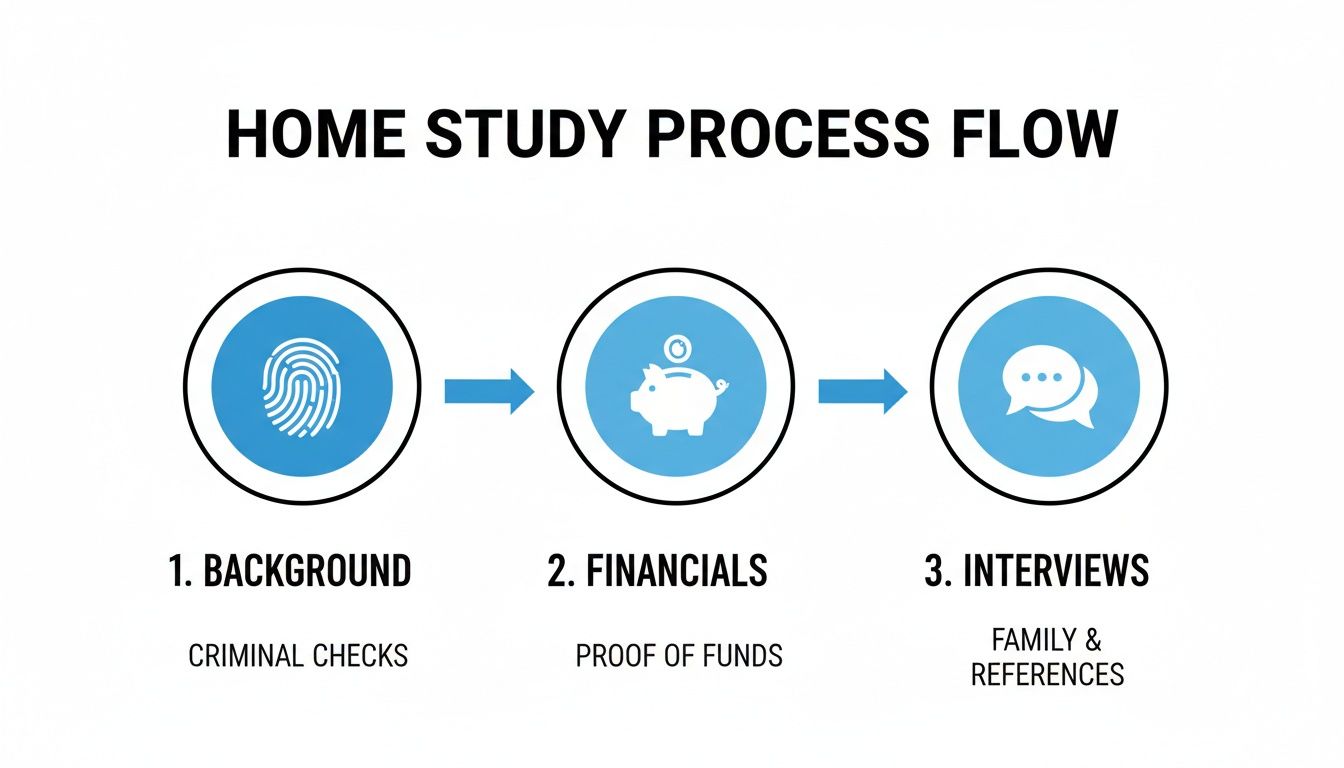
This graphic simplifies the process into three core parts—background checks, financial verification, and personal interviews—which all work together to build a complete picture for CPS.
The timeline for a TPR case can be unpredictable. While the state tries to find a permanent home for a child within 12 to 18 months of them entering care, things like legal challenges, appeals, or trouble locating a parent can cause major delays. It's during this waiting period that your emotional resilience will be tested the most.
A common myth is that if a parent misses a few visits, their rights are automatically terminated. The reality is that the legal standard is very high. The process is meticulous and requires skilled legal work to present a clear and convincing case to the judge.
The Role of the Ad Litem Attorney
In every single CPS case, the court appoints an ad litem attorney for the child. This lawyer has one job and one job only: to represent the child's best interests. They are literally the child’s voice in the courtroom.
The ad litem will visit the child in your home, talk to you, the caseworker, and the biological parents. After gathering all this information, they'll make recommendations to the judge about what they believe is best for the child. Building a positive, transparent relationship with the ad litem attorney is incredibly important.
Why You Need an Experienced Adoption Attorney
While CPS has its own lawyers and the child has an ad litem, neither of them represents you. Their legal duties are to the state and the child, respectively. Without your own attorney, your rights and interests as a prospective adoptive parent are left unprotected.
An experienced adoption attorney does several vital things for you:
- Monitors the Case: They keep a sharp eye on every deadline and hearing in the CPS case so nothing gets missed.
- Advocates for You: They make sure your voice is heard and that the court fully understands your commitment to the child.
- Intervenes if Necessary: If the case starts to head in a direction that isn't in the child’s best interest, your attorney can file a formal "intervention" to become a legal party to the lawsuit.
- Prepares for Finalization: As soon as TPR is granted, your attorney gets to work on all the paperwork and legal steps to finalize your adoption.
Understanding how an attorney nonprofit can offer support is valuable, but for your specific case, you need dedicated, personal representation focused solely on your family. To learn more, check out our guide on CPS adoption in Texas and the comprehensive representation we provide.
This whole journey is an emotional and legal marathon, not a sprint. Having The Law Office of Bryan Fagan, PLLC, by your side means you have a compassionate expert dedicated to one thing: helping you cross that finish line and legally become a forever family.
Key Legal Milestones in a Texas CPS Adoption
| Legal Stage | What It Means for You | Typical Timeframe | Your Role as a Prospective Parent |
|---|---|---|---|
| Initial Placement | The child is placed in your home under CPS's temporary conservatorship. | 0-2 months | Provide a safe, stable, and loving home. Document everything. |
| Permanency Hearings | Regular court reviews to check progress toward a permanent plan for the child (reunification or adoption). | Every 3-6 months | Attend hearings (if permitted), cooperate with the ad litem, and provide updates on the child's well-being. |
| Filing of TPR Petition | CPS attorneys formally ask the court to terminate the biological parents' rights. | 6-12 months into the case | Stay informed through your attorney and continue providing excellent care for the child. |
| TPR Trial | A court trial is held where evidence is presented to determine if parental rights should be terminated. | 12-18 months into the case | You may be asked to testify. Your attorney will prepare you and advocate for the child's best interest. |
| Post-TPR Waiting Period | A mandatory period after TPR is granted for any potential appeals from the biological parents. | 30-90+ days | This is a crucial waiting game. Maintain stability for the child and stay in close contact with your lawyer. |
| Adoption Finalization | Your attorney files the adoption petition, and a final hearing is held to legally make the child yours. | 1-3 months after appeal period | Celebrate! This is the court hearing where you officially become a forever family. |
This table provides a general overview, but remember that every case is unique. Having a dedicated legal team ensures you're prepared for each step and can navigate any unexpected turns with confidence.
From Placement to Permanency: Your Adoption Day

After the emotional rollercoaster of a legal-risk placement and the termination of parental rights (TPR) trial, you've finally reached the last, most hopeful chapter in your journey to adopting a newborn from foster care. The legal battles are behind you, and the path to making your family official is finally clear. This is the time when you transition from foster parent to forever parent, and it all leads up to a day you will never forget.
But before the big celebration, there's one more period of waiting. It's a crucial step, even if it feels like just another hurdle.
The Post-Placement Supervision Period
Once the court grants the TPR and all appeal periods have expired, your family enters a mandatory observation window. Under the Texas Family Code (Chapter 162), the child must live in your home for at least six months before an adoption can be finalized. During these months, your caseworker will make several post-placement visits.
Don't worry—these visits are very different from the intense home study process. They’re less about inspection and more about support. The caseworker’s real goal is to see how everyone is adjusting and to document that the placement is stable, positive, and in the baby’s best interest.
You can make these visits feel productive and positive:
- Be Open and Honest: Share everything—the joys and the challenges. Are you struggling with sleep schedules? Is the baby bonding well? This is your chance to ask for support and resources.
- Show, Don't Just Tell: Let the caseworker see you interacting naturally with the baby. There's no more powerful evidence of a successful placement than the loving bond they can witness firsthand.
- Ask Questions: Use this time to get answers. Ask about accessing community resources, understanding the adoption assistance you'll receive, or any other practical concerns you have about the future.
This period is really just about giving the state time to confirm what you already know in your heart—this child belongs with you.
The Celebration of Finalization Day
Your adoption finalization hearing is the beautiful, tear-jerking finale to your entire journey. Unlike the tense atmosphere of previous court dates, this day is a true celebration. It's often a joyous, relaxed event where families are encouraged to bring cameras, grandparents, and close friends to share the moment.
The hearing itself is usually quite brief. You, your attorney, and your child will stand before a judge who reviews the final paperwork, including the Final Decree of Adoption, which your attorney has meticulously prepared.
The judge might ask you a few simple questions, like confirming your desire to adopt and your commitment to providing a permanent, loving home. Then, with the strike of a gavel, they will declare the adoption legally complete. In that moment, your child is, forever and in the eyes of the law, yours.
What Happens After the Hearing
That Final Decree of Adoption is the most important document you'll receive. It's the court order that officially creates your legal parent-child relationship.
With this decree in hand, your attorney will help you with the next essential step: applying for a new birth certificate for your child. The Texas Bureau of Vital Statistics will issue an amended certificate that lists you as the child's parents, just as if they were born to you. This document legally seals your new family unit.
Imagine a couple, Maria and David, who fostered a baby girl named Lily for 18 long months. On their finalization day, the courtroom wasn't filled with anxiety, but with happy tears. The judge, smiling, handed Lily a small teddy bear after signing the decree. For Maria and David, it was the moment the constant "what if" finally disappeared, replaced by the profound, peaceful certainty of "forever."
It’s the finish line you have worked so hard to reach. It’s the official start of your new life as a forever family, built on resilience, hope, and unwavering love.
Understanding the Costs and Financial Aid for Foster Care Adoption

Let’s tackle one of the biggest myths right away: adoption has to be expensive. Many hopeful parents hear the word "adoption" and immediately see dollar signs. But one of the most incredible things about adopting a newborn from foster care is just how affordable it is.
In Texas, the state isn’t just a passive observer; it’s deeply invested in helping children find permanent, loving homes. That means the entire process is structured to be financially accessible for real families.
Unlike private adoptions that can run into the tens of thousands, adopting a child through CPS is often very low-cost or even free. In fact, the state frequently reimburses families for most—if not all—of the expenses involved. The goal is simple: your financial situation should never be a barrier to providing a stable home for a child who needs one.
How Texas Supports Adoptive Families Financially
The financial support available through the state is surprisingly robust. It’s designed to cover not just the initial adoption costs but also the long-term needs of raising a child. You aren’t expected to carry this financial weight on your own.
Here are the key ways Texas steps in to help:
- Reimbursement of Fees: The state offers reimbursement for what they call "nonrecurring adoption expenses." This covers things like your home study, court costs, and attorney fees, typically up to a set limit of around $1,200 per child.
- No Agency Fees: Because you’re working directly with a state agency (CPS), you get to skip the hefty placement and agency fees that are a major part of private adoptions.
This support system removes the biggest financial hurdles that can stop families from even starting the adoption journey, opening the door for so many loving parents.
The state's financial assistance isn't just a benefit—it's a statement. It affirms that the most important qualification for being a parent is your capacity to love and provide a stable home, not the size of your bank account.
Ongoing Support After Finalization
The help doesn’t stop the day you finalize the adoption. Texas understands that children who have been in the foster system, even as newborns, might have ongoing needs. To help families meet those needs, the state provides several crucial long-term benefits.
This continued support ensures you have the resources to give your child the best possible care as they grow. To get a complete breakdown of the financial side of things, check out our in-depth guide on the cost of adoption from foster care in Texas.
Types of Post-Adoption Assistance
After the adoption is complete, families who adopt eligible children from CPS can access three main forms of assistance:
- Monthly Adoption Assistance Subsidy: This is a monthly payment meant to help with your child's everyday living expenses. The exact amount is based on the child’s unique needs and is worked out through a negotiation process before the adoption is finalized.
- Medicaid Coverage: Children adopted from foster care are almost always eligible for Texas Medicaid until they turn 18. This is a huge relief for families, as it provides comprehensive health insurance that covers medical, dental, and vision care.
- Federal Adoption Tax Credit: Beyond state benefits, you can also claim the federal Adoption Tax Credit. It’s a significant non-refundable credit that can help you recover adoption-related expenses by lowering your federal income tax liability.
At The Law Office of Bryan Fagan, PLLC, our job goes beyond the legal paperwork. We're here to guide you through applying for and securing every single benefit your family is entitled to, making sure you start this new chapter on the strongest financial footing possible.
Answering Your Toughest Questions About Newborn Foster Care Adoption
The path to adopting a newborn from foster care is paved with love, hope, and a whole lot of questions. It's completely normal to feel a mix of excitement and worry as you think about this incredible journey. To give you some clarity and peace of mind, we've pulled together the questions we hear most often from families just like yours.
How Long Does It Really Take to Adopt a Newborn from Foster Care?
This is usually the first thing everyone wants to know, and the honest answer is: it’s unpredictable. Getting through the home study and becoming a licensed foster parent generally takes around four to six months, but that’s just the first step.
The real waiting game begins once a newborn is placed in your home. Because the Texas foster care system’s number one goal is always family reunification, the legal case involving the birth parents has to play out completely. The court must finalize the termination of parental rights (TPR) before any adoption can happen. This legal process typically takes at least 6 to 12 months but can easily stretch to 18 to 24 months, especially if there are appeals or other legal hurdles. It is an emotional test of patience and resilience.
What Is a Legal-Risk Placement and Why Is It Common for Newborns?
A "legal-risk" placement is the standard way to adopt an infant from foster care here in Texas. In simple terms, it means you are fostering a baby you hope with all your heart to adopt, but a judge has not yet terminated the biological parents' rights.
This is the most common route for newborns because their legal cases are just getting started when they enter the system. The "risk" is the very real possibility that the court could decide to send the child back to their birth parents or another relative. This is, without a doubt, the most emotionally taxing part of the process, but it's often the only pathway to adopting a newborn from foster care. An experienced attorney can help you understand the specific legal risks in your case so you can enter the journey with your eyes wide open.
Will We Have to Interact with the Birth Parents?
Yes, in almost every situation, you will have some contact with the birth parents. As part of the court's reunification plan, CPS will set up regular, supervised visits between the baby and their biological parents.
As the foster-to-adopt family, you're usually responsible for transporting the baby to and from these visits. This can be an incredibly delicate and emotionally charged situation. We can help you understand your legal duties while also helping you set healthy communication boundaries to protect your heart and the child's well-being.
What Happens If a Relative Comes Forward to Adopt?
The Texas Family Code is very clear: CPS must prioritize placing a child with a willing and suitable relative over a non-relative foster family. This is called a kinship placement, and it represents a major emotional risk in any legal-risk placement.
A relative can step forward at any point before parental rights are terminated. If that relative passes a home study and gets the court's approval, it's highly likely the child will be moved from your home to theirs. These situations are heartbreaking. That’s why having an experienced attorney in your corner is so critical—to make sure all legal procedures are followed and to advocate for the child’s need for stability.
"The most significant wound in my adoption story happened after reuniting with my birth mother. Despite my efforts to build a relationship, she refused to continue. The sting of that rejection was sharp. I had to grieve that loss."
This powerful quote from an adoptee named Sherrie is a raw reminder of the deep emotional currents that run through adoption. Her story really underscores how important it is for everyone in the adoption triad to have solid emotional preparation and support.
Once a baby is in your arms, the legal worries often take a backseat to the day-to-day realities of parenting. For a great resource on the fundamentals, from feeding to sleeping, check out this guide on how to care for a newborn baby. This journey requires navigating not just legal complexities, but the beautiful, messy, everyday work of raising a child.
Adopting a newborn from foster care is a path filled with unique challenges, but you don't have to walk it alone. Having a compassionate legal expert by your side can make all the difference. At The Law Office of Bryan Fagan, PLLC, we help Texas families navigate this journey with clarity and confidence. If you're ready to take the next step or just have more questions, we invite you to schedule a free consultation with our team. Let us help you build your forever family.
