
When you decide to adopt siblings, you're making a profound commitment to preserve one of the most fundamental human connections there is—the family bond. It’s a recognition that for children who have already faced so much uncertainty, their brothers and sisters are often the only source of stability and shared history they have left. Choosing to keep siblings together isn't just a logistical choice; it's a decision that honors their past while building a stronger foundation for their future. At The Law Office of Bryan Fagan, PLLC, we understand this journey is filled with both unique joys and challenges, and we're here to provide the compassionate legal guidance Texas families need.
The Heart of Sibling Adoption in Texas
Imagine two children, hand in hand, trying to navigate the complexities of the foster care system together. That powerful image gets to the very core of why Texas law and child welfare professionals so strongly advocate for adopting siblings as a group. Their bond is a lifeline, a constant in a world that has been filled with change and loss.
While any adoption builds a family, welcoming a sibling group is an act of preserving one that already exists. For children in foster care, this connection is often the longest-lasting relationship they've ever known. By choosing to adopt them together, you offer a unique sense of security and belonging as they find their place in your family.

Why Keeping Siblings Together Matters
The benefits of keeping brothers and sisters united ripple through every part of a child’s well-being. This isn't just a preference; it's a practice rooted in a deep understanding of what helps children heal and truly thrive. When siblings get to stay together, they often experience:
- Emotional Stability: They have a built-in support system to help them navigate the anxieties of joining a new home. Crucially, they aren't losing yet another family member in the process.
- Easier Transitions: The adjustment to a new family and environment is often much smoother because they have a familiar, trusted face right beside them. This can dramatically reduce feelings of isolation and fear.
- A Shared Identity: Siblings help each other remember their past and make sense of their shared history, which is absolutely vital for developing a healthy sense of self.
- Better Long-Term Outcomes: Research has shown that children placed with their siblings tend to have fewer behavioral issues and develop stronger social skills as they grow.
This approach is also incredibly beneficial for adoptive parents. You get a much more complete picture of your children's history and personalities right from the start. And while it certainly comes with its own unique challenges, it also brings immense joy as you watch them support and love one another, instantly filling your home with the dynamic energy of a family.
In many ways, this path shares the same goals as a kinship adoption, which you can learn more about in our guide, since both prioritize preserving existing, vital family bonds.
Key Benefits of Adopting a Sibling Group
| Benefit for Children | Benefit for Adoptive Parents |
|---|---|
| Reduced Trauma & Loss: Children don't have to grieve the loss of their siblings on top of everything else. | Instant Family Dynamic: The home is immediately filled with the unique energy and relationships of a family. |
| Built-In Support System: They help each other adapt, process emotions, and feel less alone. | Richer Understanding: Parents gain deeper insight into the children's backgrounds and personalities. |
| Preservation of Identity: Siblings act as a living link to their family history and culture. | Stronger Attachments: Watching siblings support each other can foster a powerful sense of family unity. |
| Improved Behavioral Outcomes: Studies link sibling placements to better social and emotional development. | Access to More Support: Agencies often provide additional resources and subsidies for sibling group adoptions. |
Welcoming a sibling group is a journey that creates a resilient, loving, and deeply connected family from day one.
"Keeping siblings together is more than just a logistical decision; it's a commitment to protecting a child's first and most enduring support system. It allows them to carry a piece of their history with them as they step into their future."
Navigating the Texas Sibling Adoption Process
The legal side of adoption can feel like a maze, but once you have a clear roadmap, it becomes a much more manageable part of your journey. In Texas, the law is built around one simple, powerful idea: to always act in the best interest of the child. When it comes to adopting siblings, this principle almost always means one thing—keeping them together.
The Texas Family Code, specifically Chapters 162 through 166, is the legal framework for building a family through adoption. These laws lay out everything from who can adopt to the specific steps you'll take in court. Understanding this framework is a core part of family law and is key to a smooth process.
The Legal Preference for Sibling Unity
Texas courts and Child Protective Services (CPS) don't just prefer to keep siblings together; they operate with a strong legal mandate to do so. This isn't just a suggestion—it's a firm policy backed by decades of child welfare research. The law recognizes that for children who have been through trauma and upheaval, the bond with their brother or sister is a huge source of stability and identity.
When a judge looks at a sibling adoption case, their starting point is that the children should stay together. They would need to find compelling reasons to separate them, not the other way around. This gives a real advantage to families wanting to adopt sibling groups, as agencies and courts are actively looking for homes just like yours.
Key Legal Milestones in a Sibling Adoption
While every family's story is different, the journey through the Texas court system generally follows a clear path with several major milestones.
- Termination of Parental Rights (TPR): Before any adoption can move forward, the birth parents' legal rights must be terminated by a court. For a sibling group, this is often handled in a single court proceeding that covers all the children at once. The court must find that termination is in each child's best interest.
- The Adoption Petition: After TPR is complete, your attorney will file a formal "Petition for Adoption." This is the legal document that officially kicks off the process of making the children a permanent part of your family, listing each sibling you plan to adopt.
- Post-Placement Supervision: Once the children are settled in your home, a required supervisory period begins. This usually lasts for at least six months. A social worker will visit to check in, see how everyone is adjusting, and prepare a report for the court confirming the placement is thriving.
- The Finalization Hearing: This is the big day—the moment you officially become a family in the eyes of the law. You, the children, and your attorney will go before a judge, who will review all the paperwork, confirm every legal box is checked, and sign the final Decree of Adoption for each child.
Many sibling adoptions start in the foster care system. If you're considering this path, you can explore our detailed guide on adopting from foster care in Texas to get a better feel for that specific process.
The legal process is more than just paperwork; it’s the series of steps that transforms your loving commitment into a legally recognized, permanent family. Each milestone brings you closer to the moment you can assure your children they are home for good.
At The Law Office of Bryan Fagan, PLLC, our job is to translate these legal steps into a clear, stress-free process for you. We navigate the complexities of the court system so you can focus on what really matters—welcoming your children home.
Your Step-by-Step Journey to Adopting Siblings
Deciding to adopt a sibling group is a beautiful, life-changing commitment. While every family's path is unique, understanding the practical steps can make the whole process feel less overwhelming and more like the exciting journey it is. Think of this as your roadmap, guiding you from the initial preparations all the way to that final, joyful day in court.
Preparing Your Home and Heart: The Home Study
The first major milestone is the adoption home study. It's easy to get nervous about this part, but try to think of it less as a pass-or-fail test and more as a collaborative effort to get you ready for this new chapter. A social worker will visit your home, not to judge your decorating skills, but to ensure it’s a safe, stable, and suitable environment for children.
When you're planning to adopt siblings, the home study has a few extra points of focus:
- Sufficient Space: The social worker will check the bedroom situation. While siblings of the same gender can often share a room, Texas has specific guidelines based on age, and the goal is to make sure everyone has adequate personal space.
- Capacity to Parent Multiple Children: This is about more than just physical room. The home study looks at your understanding of sibling dynamics, your plan for giving each child individual attention, and your financial stability to support a bigger family.
- Emotional Readiness: You'll have honest conversations about your reasons for adopting siblings and your strategies for helping them settle into your family while nurturing the powerful bond they share.
Ultimately, this process is about education and preparation. It's designed to make sure you have the resources and insight needed to welcome multiple children into your life with confidence.
The Matching and Placement Process
Once your home study is approved, the matching process begins. This is where an adoption agency or CPS gets to work, connecting you with a sibling group whose needs you are well-equipped to meet. You’ll review profiles of children who are waiting, and when a potential match comes up, you'll learn all about their history, personalities, and what makes them tick.
This is a profoundly important stage, built on careful, thoughtful consideration by caseworkers. The whole point is to create a "forever family" where both you and the children can truly thrive.
This infographic lays out the key legal phases that give structure to the Texas adoption process.
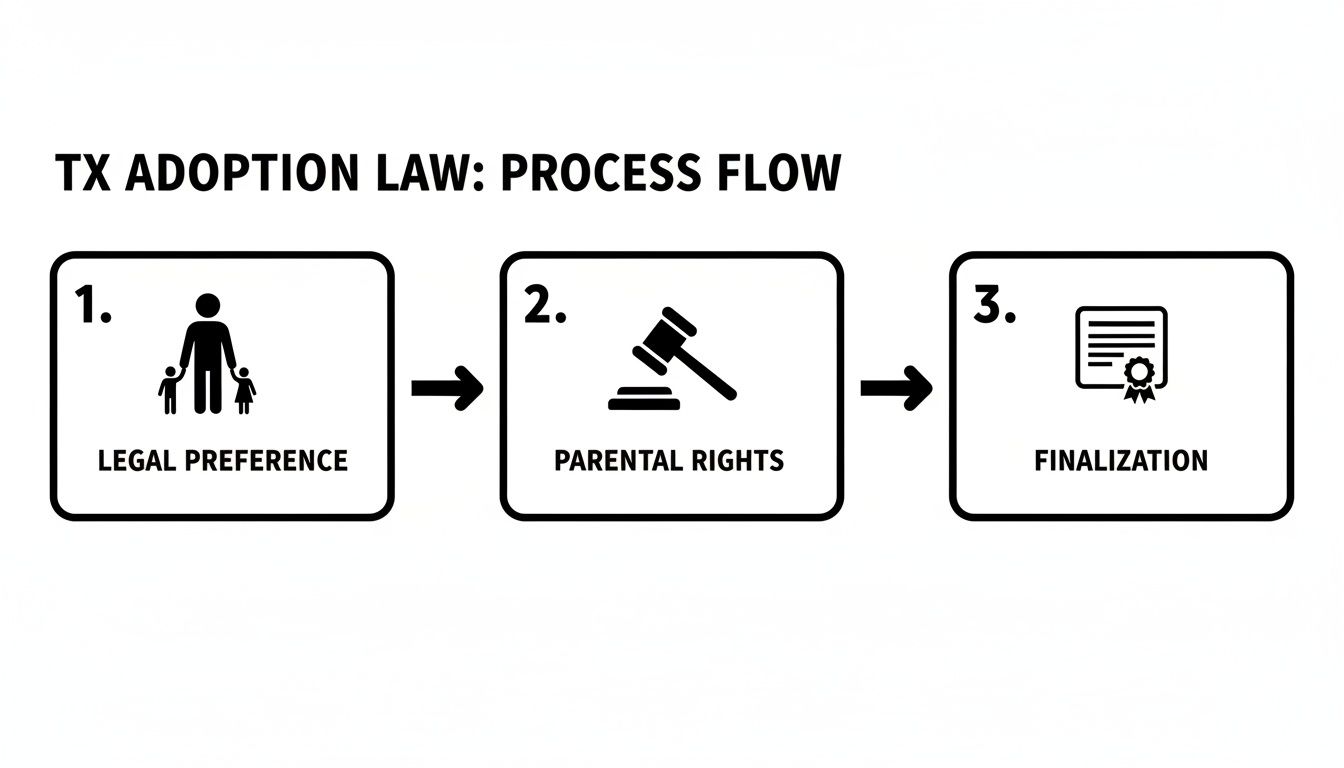
As you can see, the journey moves from establishing the legal preference for keeping families together, to the necessary step of terminating parental rights, and finally, to the celebration of finalization.
After a match is made, a transition plan is put into place. This isn't an overnight move. It might involve a series of visits, starting with short meetings in a neutral spot and slowly building up to overnight stays in your home before the children are officially placed with you. This gradual process helps ease the anxiety for everyone involved and builds trust from day one.
Each year, thousands of kids are adopted from foster care, but many more are left waiting, even when they are legally free for adoption. Sibling groups make up a disproportionate share of these waiting children, which is why families like yours are so urgently needed. You can discover more insights about these national adoption statistics and see the critical role you can play.
From Post-Placement to Finalization
After the siblings move into your home, you'll enter what's called a post-placement supervision period. This is required by the Texas Family Code and typically lasts for at least six months. During this time, your social worker will visit your home periodically to offer support, answer your questions, and see how everyone is adjusting to the new normal.
These visits are an incredible resource for your family. They’re your chance to talk through challenges, celebrate the little victories, and make sure you have access to any services you might need, like counseling or educational support. The reports from these visits become a key part of the legal file that goes to the court.
The finalization hearing is the culmination of your entire journey. It's the moment when a judge reviews your case, signs the final adoption decrees, and legally declares that you are a family forever.
This hearing is almost always a joyful, emotional celebration. Many families bring grandparents, aunts, uncles, and friends to witness the big moment. The judge might even invite the kids up to the bench, give them a small gift, and allow for pictures to capture it all. On this day, your commitment is officially recognized by the law, and your children finally gain the permanency and security they so deeply deserve.
Exploring Different Paths to Sibling Adoption
Every family’s story is different, and the path you take to build yours through adoption will be just as personal. In Texas, there are several distinct ways to adopt siblings, each designed for different situations but all leading to the same incredible destination: a permanent, loving home. Figuring out these options can help you see where your own journey might begin.
Most of the time, these paths involve children who are already a part of your life in some way or those waiting in the state’s care. No matter the route, the Texas Family Code guides every step, making sure the children's best interests always come first.
Adoptions by Relatives and Stepparents
Many sibling adoptions happen right inside existing family circles, making bonds that are already strong legally permanent. These are often the most straightforward adoptions because you’re not starting from scratch—a relationship with the children is already there.
- Kinship or Relative Adoptions: This happens when a relative—like a grandparent, aunt, uncle, or even an older sibling—steps in to adopt. Imagine grandparents who have been raising their three young grandchildren for over a year. A kinship adoption gives those kids the legal stability they need, ensuring they can stay together with family they already know and love.
- Stepparent Adoptions: This path lets a stepparent legally adopt their spouse's children, creating a single, legally unified family. For example, a woman marries a man with two kids from a previous marriage. By adopting them, she becomes their legal mother, giving them the security of having two legal parents at home.
These types of adoptions are all about family preservation, which is a huge priority in Texas family law.
Foster-to-Adopt: The Main Path for Sibling Groups
By far, the most common way hopeful parents adopt sibling groups is through the foster care system. It's a sad reality that while many siblings enter foster care together, they often get separated. Data from across the United States shows that sibling groups are among the toughest to place for adoption, which makes the foster care system the main battlefield for keeping these vital family bonds intact. You can read the full report on global adoption trends to get a better sense of why this is so important.
This process is usually called foster-to-adopt. It involves becoming a licensed foster parent with the clear intention of adopting children who become legally free for adoption. This is the primary way Child Protective Services (CPS) finds forever homes for waiting brothers and sisters.
Real-Life Scenario: A couple in Dallas gets licensed to foster and is soon asked to care for two sisters, ages four and six. For the next 18 months, they give them a safe, loving home while CPS works on a plan to hopefully reunite the girls with their birth parents. When that doesn't work out and the parents' rights are terminated, the foster parents are the first choice to adopt, making sure the girls stay together in the only stable home they’ve known.
This pathway is so critical because it provides kids with stability during a really uncertain time and often creates an incredibly strong, bonded family.
A Welcoming Path for All Loving Parents
It’s crucial to know that Texas law opens its arms to all qualified, loving adults who want to adopt. Your marital status or sexual orientation has absolutely no bearing on your ability to provide a wonderful home for a group of siblings.
Single parents and LGBTQ+ individuals and couples can and do successfully adopt sibling groups all across Texas. The home study process and all the legal requirements are exactly the same for everyone. The state is focused on one thing: your ability to provide a safe, stable, and nurturing environment. The top priority is finding the best possible family for kids who are waiting, and that means opening the door to everyone with a loving heart and a stable home.
Understanding Financial Support for Sibling Adoptions
One of the biggest concerns for families considering adopting siblings is the financial aspect. It’s completely natural to worry about the cost. Welcoming multiple children into your home is a huge commitment, but you don't have to carry the financial weight all on your own.
Texas has put solid support systems in place, especially for children adopted from the foster care system. These programs were created because the state understands just how important it is to keep brothers and sisters together. The goal is to remove financial barriers so that loving, stable families like yours can open their hearts without being overwhelmed by the cost. Knowing what's available can give you the peace of mind to move forward.
The Texas Adoption Assistance Program
If you're adopting from Child Protective Services (CPS) care, the Texas Adoption Assistance Program is going to be your most important resource. It’s designed to help you meet the specific needs of your children with real, ongoing support.
Here’s what the program generally includes:
- Monthly Financial Assistance: Often called an adoption subsidy, this is a monthly payment that helps cover the day-to-day costs of raising your children. The exact amount is tailored to the individual needs of each child in the sibling group.
- Medicaid Health Coverage: Eligible children receive a Texas Medicaid card, which provides excellent health insurance until they turn 18. This is a significant benefit, covering everything from doctor and dentist visits to prescriptions and therapy.
- Reimbursement of Nonrecurring Expenses: You can also get reimbursed for some of the one-time costs of the adoption itself. This includes court filing fees and legal expenses, up to a certain amount for each child.
This isn't just a temporary handout. It’s a long-term commitment from the state to make sure you have the resources your children need to truly flourish. It's an acknowledgment that children from foster care may have ongoing needs, and it provides a crucial safety net for your family.
Federal Adoption Tax Credit
On top of state-level help, the federal government offers a powerful financial incentive to make adoption more accessible. The Federal Adoption Tax Credit is a non-refundable credit that can significantly lower your federal income tax liability.
This credit is meant to help you recover some of the costs you put into the adoption process. For the 2024 tax year, the maximum credit is a substantial $16,810 per eligible child. So, if you adopt a sibling group of three, you could potentially claim a credit for each one. Even better, for a child considered to have special needs (a common classification for children adopted from foster care), you might be able to claim the full credit amount without having to document your exact expenses. You can find out how much the adoption subsidy is in Texas and how it coordinates with federal benefits to see how these programs work together.
Figuring out the financial side of adoption can feel like a puzzle, but these programs are designed to make the pieces fit. Here at The Law Office of Bryan Fagan, PLLC, we walk our clients through every part of the journey, including helping you understand and apply for the financial support your new family deserves.
Overcoming Common Challenges with Compassion
Bringing a sibling group into your home is an incredible, life-changing experience. But like any journey worth taking, it will have its challenges. It's helpful to view these moments not as roadblocks, but as opportunities for your new family to learn, adapt, and grow stronger together.
The key is to approach every moment with compassion, a great deal of patience, and the wisdom to ask for help. You’re not the first to walk this path, and support is available every step of the way.

Addressing Complex Sibling Dynamics
Children who’ve journeyed through the foster care system together often have incredibly complex relationships. One might have acted as a little parent, another the protector. They may have fought, but they also formed a fiercely loyal bond that can be tough for a new parent to join.
It's your job to respect their shared history while gently establishing your role as the parent. This isn't a race. It's a slow and steady process that involves:
- Observing and Listening: Before you try to change anything, just watch. Pay attention to how they interact. Learn their unspoken rules and loyalties first.
- Encouraging Individuality: Their bond is sacred, but they also need to be their own person. Help each child find hobbies, friends, and an identity separate from being "one of the siblings."
- Setting Clear Boundaries: You are the adult now. It's your job to provide the safety, structure, and care. Gently but firmly establish that they can let go of their old survival roles and just be kids.
Healing from Past Trauma
Many children awaiting adoption, especially siblings, have been through difficult experiences. That history of trauma, neglect, or instability doesn’t just vanish when they walk through your door; it often comes out in their behavior—anxiety, trouble trusting adults, or big emotional outbursts.
A trauma-informed approach isn't just helpful; it's essential. It means understanding that challenging behavior is usually a cry for help rooted in past pain, not a reflection of who they are. If you're looking to help your kids build these crucial life skills, there are tons of fantastic books about social emotional learning that can offer practical strategies.
Post-adoption support isn't a sign that you're failing—it's a sign that you're committed to succeeding. Therapy, parent training, and support groups are tools to build a stronger, more connected family.
Meeting Diverse Developmental Needs
Adopting siblings often means you're parenting a teenager who needs independence and a toddler who needs constant cuddles—all at the same time. Juggling those completely different stages of life can be exhausting.
Creating balance takes real, intentional effort. One of the best things you can do is schedule dedicated one-on-one time with each child. It doesn't have to be a huge production—even 15 minutes a day focused entirely on their world can make a huge difference. This special time sends a powerful message: "I see you for who you are, not just as part of the group."
Frequently Asked Questions About Sibling Adoption
When you’re thinking about adopting siblings, a lot of questions come to mind. It’s a big decision, and it’s smart to get answers. We’ve put together some of the most common questions we hear from families just like yours to give you the clarity you need to move forward.
Can I Adopt Just One Child from a Sibling Group?
This is a common question, but in Texas, separating siblings is something the courts and CPS avoid at all costs. The entire Texas Family Code is built on the belief that keeping siblings together is what’s best for them emotionally and developmentally.
For a judge to even consider splitting up a sibling group, there has to be powerful, undeniable proof that it’s the only way to serve the best interests of each individual child. These situations are incredibly rare, and the legal bar is set very high.
Is the Home Study Different for Adopting Siblings?
The foundation of the home study is the same no matter who you’re adopting. However, when you’re planning to welcome a sibling group, your social worker will naturally dig a little deeper into certain areas.
They’ll look at the practical stuff, like whether you have enough physical space, but they’ll also want to talk about your readiness for the unique dynamics of siblings. Expect questions about your financial stability to handle a larger family, your game plan for giving each child one-on-one time, and your understanding of how to support their bond.
What Post-Adoption Support is Available for My Family?
Texas doesn't just hand you an adoption decree and wish you luck. The state is invested in helping your new family succeed, especially for children adopted from foster care. There’s a strong network of post-adoption support services available.
These resources can be a lifeline and often include:
- Counseling and therapy to help everyone adjust and work through past trauma.
- Parent training and support groups that connect you with other adoptive parents who get it.
- Respite care to give you a much-needed break to recharge.
On top of that, financial help like Medicaid coverage and the adoption assistance subsidy usually continue, giving you a solid safety net as your children grow.
The path to adopting siblings is a profound one, but you don’t have to figure it out on your own. The legal system is there to make sure you can create the permanent, loving home these children need. At The Law Office of Bryan Fagan, PLLC, our compassionate attorneys are ready to guide you through every single step with the care and clarity your family deserves.
If you’re ready to learn more about adopting siblings in Texas, schedule a free consultation with our team today. We’re here to help you build your family.
