
Deciding between a closed or open adoption is one of the most personal choices you'll make on your journey, and it all comes down to one thing: communication. Open adoptions mean there's ongoing contact between the birth and adoptive families, while closed adoptions keep all identifying information confidential, with no direct interaction. Here in Texas, there has been a significant shift toward openness, with a focus on what is in the best interest of the child—honoring their well-being and their sense of who they are.
Understanding the Heart of Adoption Openness
Choosing the structure of your adoption is a monumental moment in your journey. This isn't just about checking a box on a legal form; it’s about shaping your family’s future and honoring the deep connection that makes adoption so powerful. The decision between an open or closed adoption sets the foundation for how your child will understand their own story.
At The Law Office of Bryan Fagan, PLLC, we see firsthand how Texas families navigate this important conversation every day. While the idea of a completely closed adoption—with sealed records and zero contact—was once the norm, today's adoptions exist on a spectrum of openness. This change is driven by a simple focus on what's best for the child, recognizing that connection, not secrecy, provides the most stable and loving foundation.
Defining Your Path
Understanding the core differences is the first step toward figuring out what feels right for your family. The main distinction comes down to how much information is exchanged and what kind of relationship, if any, you plan to have.
- Open Adoption: This involves direct contact and the sharing of identifying information between the birth and adoptive families. The amount of communication is flexible and agreed upon by everyone, ranging from emails and photos to yearly visits.
- Closed Adoption: This is the traditional model where no identifying information is shared. Once the adoption is finalized, all records are sealed, and there is no planned contact between the families.
- Semi-Open Adoption: Think of this as the middle ground. Communication like letters or pictures is handled by a neutral third party, such as an adoption agency or an attorney. This allows for a connection while maintaining privacy.
To help you visualize these paths, here is a simple breakdown of the key differences:
| Feature | Open Adoption | Closed Adoption |
|---|---|---|
| Communication | Direct and ongoing contact (visits, calls, emails) | No contact after finalization |
| Information Sharing | Identifying details are shared | Identifying details are kept confidential |
| Relationship Dynamic | An extended family relationship is possible | Clear separation between families |
| Child's Access to Roots | Direct access to birth family and medical history | Access is limited or requires unsealing records |
Each path comes with its own set of emotional and practical considerations. Our goal is to provide you with the clarity you need to make a choice that feels right for everyone involved—especially the child at the center of this loving plan.
Comparing the Spectrum of Adoption Openness
To get a true feel for your options, it helps to look beyond definitions and see what open, semi-open, and closed adoptions look like in real life. This isn't about picking from a rigid menu. Think of it as a flexible spectrum, giving you the power to create an agreement that honors everyone involved—especially the child.
The biggest difference boils down to the level of communication and information shared between families. An open adoption might feel like building an extended family, with annual visits or regular video calls. On the other hand, a semi-open arrangement typically uses a neutral third party, like an agency or attorney, to pass along letters and photos without any direct, identifying contact.
The Modern Shift Toward Openness
Decades ago, closed adoptions were the norm, built on the idea that secrecy was the best way to protect everyone. But we’ve learned a lot since then. The emotional and psychological needs of adoptees have completely shifted that thinking. Today, the focus is on connection and honesty, which we now understand are crucial for a child's sense of identity and well-being.
This change is clear in the national trends. In the United States, open adoptions have become the overwhelming standard for domestic infant adoptions. In fact, approximately 95% of these placements now involve some level of openness between birth and adoptive families. Only about 5% remain fully closed. You can explore more about these adoption statistics and see just how much practices have evolved over time.
This infographic does a great job of visualizing the core differences.
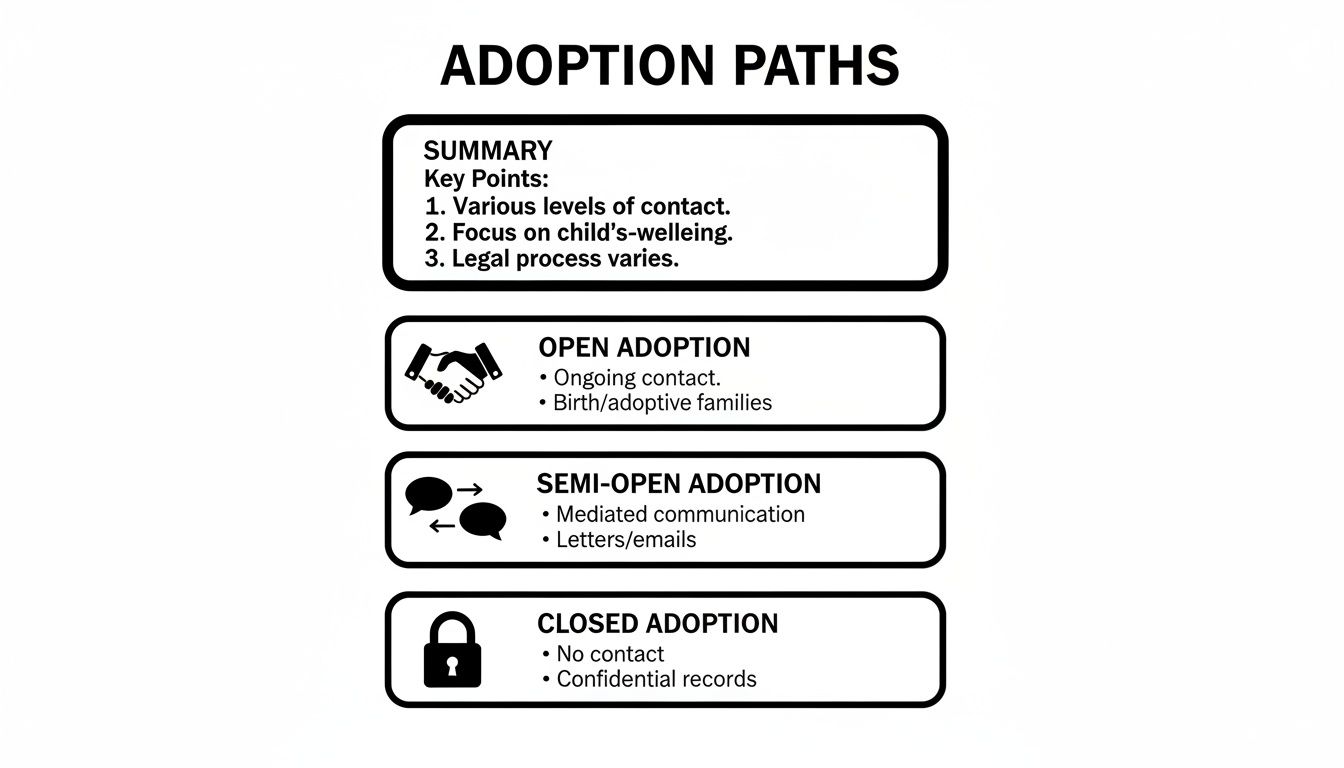
As you can see, each path offers a distinct level of interaction, from direct relationship-building in an open adoption to complete privacy in a closed one.
To help you compare these arrangements side-by-side, here’s a quick breakdown of what each one typically involves here in Texas.
Comparing Open, Semi-Open, and Closed Adoption Arrangements
| Feature | Open Adoption | Semi-Open Adoption | Closed Adoption |
|---|---|---|---|
| Communication | Direct contact between birth and adoptive parents (texts, calls, visits). | Mediated communication through an agency or attorney (letters, photos). | No planned contact after finalization. |
| Information Shared | Identifying information (names, locations) is exchanged. | Non-identifying information is shared; identities remain private. | Identifying information is sealed by the court. |
| Child’s Access to Info | Direct access to birth family, medical history, and heritage. | Access to non-identifying information provided by the agency. | Must petition the court as an adult to access sealed records. |
| Relationship Dynamic | An ongoing, extended family-like relationship is often formed. | A respectful but distant connection focused on the child's well-being. | A permanent separation with a focus on future privacy. |
This table shows the practical side of each choice, but the decision is deeply personal and depends entirely on what feels right for everyone involved.
What These Differences Mean in Real Life
Choosing an adoption path is a significant decision. It shapes long-term relationships and how a child comes to understand their own story.
In an open adoption, the child grows up with direct answers. They have access to their full medical history and can ask questions about their heritage without facing a barrier. Communication might be as simple as texting photos or as involved as yearly visits.
In a closed adoption, all identifying records are legally sealed under the Texas Family Code. For an adoptee, accessing that information later in life is not easy. It often requires a formal legal process once they become an adult, with no guarantee of success.
At its core, the conversation about closed versus open adoption is really a conversation about relationships. The goal is to build a plan that gives the child a foundation of security, love, and a clear understanding of their unique family story.
Real-Life Scenarios
Sometimes, the best way to understand these options is to see them in action. Here are a few examples of how these arrangements might play out:
-
An Open Adoption Scenario: A birth mother, Sarah, chose an adoptive couple, Mark and Lisa. They text updates, share photos in a private online album, and meet at a park once a year for the child’s birthday. The child grows up knowing Sarah and understanding the loving choice she made.
-
A Semi-Open Adoption Scenario: A birth father requested privacy but wanted to know his child was safe and thriving. The adoption agency facilitates an exchange of non-identifying letters and photos every six months, giving him peace of mind without direct contact.
-
A Closed Adoption Scenario: Due to sensitive personal circumstances, a birth mother requested a fully closed adoption. The adoptive parents respect her wishes for complete privacy and will share general, non-identifying information with their child when they are old enough to ask questions.
Each of these paths is a valid, respectable choice, guided by the unique needs of the individuals involved. The most important thing is to make an informed decision that feels stable, respectful, and right for your family's future.
The Emotional Journey for Birth Parents
For a birth parent, the choice between a closed and open adoption is incredibly personal and emotionally complex. This decision goes far beyond logistics or legal papers; it’s about navigating grief, hope, and a deep, profound love for your child. Every feeling you have is valid. Our goal is to help you understand the emotional landscape of each path so you can find the one that brings you the most peace.
Making an adoption plan is an act of incredible strength. Whether you lean toward openness or feel a closed adoption is best for you, your emotional well-being is the top priority.
Finding Peace and Reassurance in Open Adoption
An open adoption can offer a unique kind of healing. For many birth mothers, being able to see their child happy, healthy, and thriving provides immense comfort. It helps them process the grief that naturally comes with placement. This connection isn't about co-parenting; it's about reassurance.
Knowing you can get photos, receive updates, or even have visits can transform the feeling of loss into a sense of an extended family circle. It allows you to answer the question, "Is my child okay?" with absolute certainty. This ongoing relationship can be a powerful tool for finding emotional closure, confirming you made a loving and courageous choice.
- Real-Life Scenario: Imagine a birth mother named Emily. She chose a wonderful couple, and they agreed to an open adoption. On her child's first birthday, she receives a video of him taking his first steps. This small moment doesn't erase her grief, but it fills her with a sense of peace, knowing he is loved and joyful.
This modern approach is now the standard, with 95% of domestic infant adoptions featuring some level of openness. The shift away from the secrecy of past generations began in the 1980s, driven by advocacy and research showing that openness was healthier for everyone involved.
Of course, open adoption also requires emotional work. Setting and respecting boundaries is absolutely key. It's a relationship that requires trust and clear communication from both sides to ensure it stays healthy and positive for everyone—especially the child.
The Need for Privacy and Closure in Closed Adoption
While openness is common, a closed adoption is a completely valid and understandable choice. For some birth parents, a clean break is what’s needed for their own emotional healing and to move forward. The desire for privacy is a powerful motivator.
You may feel that ongoing contact would be too painful or complicated, and that’s okay. A closed adoption allows you to create a future with clear, firm boundaries. It can provide a sense of finality that feels safer and more manageable than navigating the complexities of an open relationship. While focusing on the emotional side, practical steps like having an ultimate hospital bag checklist for birth can also bring a small sense of control during a difficult time.
Choosing a closed adoption is not about loving your child any less. It is a decision made to protect your emotional health and provide what you feel is the most stable path forward for everyone.
It is important, however, to consider the future. A common challenge for birth parents in closed adoptions is the lingering "what ifs." Without updates, you may wonder about your child's life, and this lack of information can sometimes make processing grief harder down the road. Knowing how to put a newborn up for adoption in Texas means understanding these long-term emotional implications.
Ultimately, the best choice is the one that honors your needs and your circumstances. Whether you choose open or closed, you are making a decision rooted in love. Your journey deserves respect, compassion, and support every step of the way.
A Guide for Hopeful Adoptive Parents
For hopeful adoptive parents, the conversation around closed versus open adoption can stir up a complex mix of excitement and anxiety. It's completely natural to feel a fierce desire to protect your future family while also wanting to do what’s best for your child. This decision is deeply personal, and there is no single right answer—only the one that feels true to your family’s story.
For many, the idea of an open adoption can feel a little intimidating at first. A common worry is that an ongoing relationship with the birth family might confuse the child or somehow challenge your role as the parent. The reality, however, is often just the opposite.

The Benefits of Openness for Your Child and Family
Openness in adoption offers incredible advantages, especially for the child at the center of it all. When children have access to their birth family, they gain a much fuller picture of who they are and where they come from.
- A Complete Medical History: Openness provides direct access to vital genetic and medical information, which can be invaluable for your child’s health throughout their life.
- A Stronger Sense of Identity: Children in open adoptions often have fewer unanswered questions about their origins. This can lead to greater self-esteem and a more secure sense of self.
- An Extended Support System: An open relationship can build a wider circle of love and support around your child, reinforcing the beautiful truth that they are cherished by many people.
The fear that a birth parent might try to “reclaim” their child is a deeply felt one, but it’s crucial to understand that an adoption is permanent and legally final. Once the adoption is complete, your parental rights are secure. A healthy, open relationship actually strengthens the adoptive family bond by replacing fear with trust and honest communication.
Navigating Common Worries and Building Trust
Modern adoption trends show a clear shift toward openness. While foster care adoptions often involve mediated contact, private domestic infant adoptions are now 95% open. Research also shows that adoptive parents in open arrangements report higher satisfaction with their experience—a powerful testament to its benefits.
Of course, building this new kind of extended family takes effort and intention. The key is to establish clear, healthy boundaries right from the start.
A secure, open relationship isn't about co-parenting; it's about mutual respect and a shared love for the child. It's an agreement built on trust that honors everyone's unique role in the child's life story.
As you prepare to welcome a child, creating cherished memories is top of mind. A personalized baby name book can become a treasured keepsake, celebrating your child's unique identity within the family. Thoughtful gestures like this help build your family’s story from day one.
Considering a Closed Adoption
While much less common today, a closed adoption may still feel like the right path for some families. You might desire clear parental authority without the added complexity of navigating another family relationship. This is a valid preference, and it’s important to honor it.
If you are leaning toward a closed adoption, it’s helpful to think about the future. Consider how you will answer your child’s inevitable questions about their origins. How will you provide them with a sense of connection to their heritage and medical background without direct contact? Planning for these conversations is an essential part of preparing for parenthood through a closed adoption. You can learn more about open adoption in our detailed guide to explore its emotional and practical aspects further.
No matter which path you choose, the journey is about creating a loving, stable, and honest environment for your child. Building a foundation of trust—whether with the birth family or within your own home as you prepare to share your child’s story—is the most important step you can take.
Understanding the Legal Framework in Texas
Once you’ve worked through the emotional side of the closed vs. open adoption decision, it’s time to understand how those choices become a legal reality here in Texas. This is where your hopes and preferences meet the practicalities of the Texas Family Code, creating a clear and stable roadmap for your family’s future.
The key legal tool for an open adoption in Texas is the Post-Adoption Contact Agreement (PACA). Think of it as a written plan that lays out the type and frequency of communication both the birth and adoptive families agree to. It can be as simple or as detailed as everyone needs.
What Is a Post-Adoption Contact Agreement?
A PACA is a formal, written agreement that outlines your plan for openness. It’s put together with the help of your adoption attorney and signed by both parties before the adoption is finalized. More than just a piece of paper, this document is a powerful symbol of your shared commitment to the child’s well-being.
A typical agreement might spell out things like:
- How often you'll exchange photos and letters.
- The number of video calls or in-person visits per year.
- How you'll handle communication (directly or through an agency).
- Guidelines for interacting on social media.
Creating this agreement isn’t a one-sided deal; it’s a conversation. It pushes everyone to talk openly and ensures you're all on the same page, which goes a long way in preventing misunderstandings down the road.
The Enforceability of Openness Agreements in Texas
This is one of the most critical legal points to understand. In Texas, a Post-Adoption Contact Agreement is generally not legally enforceable by a court in the same way a custody order is. Once an adoption is finalized, the adoptive parents have complete and sole legal authority over the child.
So, what does that mean? It means the agreement is built on a foundation of mutual trust, respect, and a shared promise to do what’s best for the child. It’s a good-faith commitment, not a court-mandated obligation.
While a PACA isn't court-enforceable, it acts as a crucial moral and emotional compass for the relationship. It sets clear expectations and honors the promises made, providing a written guide for everyone to follow as the child grows.
This is exactly why building a strong, trusting relationship from the very beginning is so important. When both sides feel secure and respected, the agreement is far more likely to be honored naturally, without any need for legal threats or intervention.
Formalizing Your Plan with Legal Guidance
The process of creating your PACA is a major step in your adoption journey. It solidifies your decisions and gives you a tangible document that reflects your shared goals for the child.
The steps usually look like this:
- Initial Discussions: The birth and adoptive parents have honest conversations about their comfort levels and hopes for future contact.
- Drafting the Agreement: Your attorney at The Law Office of Bryan Fagan, PLLC, will help you draft the PACA, making sure the language is clear, specific, and captures everyone's wishes.
- Review and Signature: Both parties carefully review the document and sign it, formally acknowledging their commitment to the plan.
- Finalization: The agreement is included with your adoption paperwork, making it part of the official adoption record.
The Texas Family Code (specifically Chapter 162) governs the legal finalization of adoption, which permanently creates the parent-child relationship between the adoptive parents and the child. While the PACA exists alongside this legal finalization, it operates on a different principle—one of relationship, not legal enforcement. To get a better handle on the nuts and bolts of the legal process, you can explore more about Texas adoption laws in our guide.
Walking through these legal details with a compassionate attorney ensures your agreement is clear, thoughtful, and provides a secure foundation for your family’s future.
Making the Right Choice for Your Family
Deciding between a closed and open adoption isn't about checking boxes or finding a single "right" answer. It’s about listening to your heart and figuring out what feels right for your family. There's no one-size-fits-all solution here. The best choice is the one that builds a foundation of security, honesty, and unwavering support for the child at the center of it all.
As you weigh everything, think about your own values, your hopes for the future, and what level of communication you can genuinely and happily commit to for the long haul. Your decision should feel true to who you are.
Questions to Guide Your Decision
It can be incredibly helpful to sit down—either alone with a journal, with your partner, or a trusted friend—and really dig into these questions:
- What does our family life look like in 5, 10, or 20 years? How does our adoption plan fit into that picture?
- How will we tell our child their story in a way that builds confidence and pride?
- What kind of contact feels sustainable and healthy for our own emotional well-being?
- How can we best honor every single person involved in this adoption journey?
Thinking through these points shifts the focus from a rigid "closed vs. open" debate to a much more personal exploration of what your family truly needs to thrive.
The best adoption plan isn’t defined by its level of openness, but by the amount of love, respect, and stability it gives a child. Your commitment is what truly matters.
This is a profound journey, and you absolutely don’t have to walk it alone. Having a compassionate legal guide to answer your questions and formalize your wishes can bring an incredible amount of peace of mind. Every family’s path is unique, and your adoption plan should be, too.
If you're ready to take the next step or just need a safe space to talk through your options, we invite you to schedule a confidential consultation. The Law Office of Bryan Fagan, PLLC, is here to provide the personalized, experienced legal guidance your family deserves.
Frequently Asked Questions About Texas Adoptions
As you dig into the world of open and closed adoption, a lot of questions are bound to pop up. It’s completely normal. To help, we've put together some straightforward answers to the questions we hear most often from families just starting this journey.
Can We Change an Adoption from Closed to Open Later?
Yes, you can, but it’s not a one-sided decision. Transitioning from a closed to an open adoption in Texas requires everyone involved to agree. One person can't just decide to change the arrangement on their own.
If the original adoption records were sealed, getting access to them usually involves a formal legal process. Often, this is started by the adoptee once they're an adult or by using a state registry to search for information. While it’s definitely possible to build a connection later in life, it's far simpler to establish that foundation from the very beginning. Our firm can help you explore your options for reconnecting if your feelings or circumstances change down the road.
What Happens If Someone Breaks an Open Adoption Agreement?
This is a critical question, and the legal answer in Texas is very clear. Post-Adoption Contact Agreements (PACAs) are not legally enforceable by a court. Think of them as good-faith agreements. If one person stops following the terms, you can't go to a judge and ask them to force compliance.
The entire agreement is built on a foundation of mutual trust, not legal threats. If communication starts to break down, the best first step is to seek mediation through your adoption agency or an attorney to find a peaceful resolution. The goal is always to repair that trust for the child’s emotional well-being. This is exactly why building a strong, respectful relationship from the start is so vital.
How Do We Explain Open Adoption to Our Child and Family?
Honesty and age-appropriate language are your best friends here. You can start from a very young age, making adoption a normal, positive, and celebrated part of your child’s story.
- For Your Child: Use simple, respectful words like "birth mother" or her first name. You can explain that their birth family loved them so much that they made a special plan for them to join your family.
- For Relatives: Be clear about your decision and the importance of respecting your relationship with the birth family. A great way to frame it is that your child is lucky enough to have an even bigger family to love and support them.
The key is to create a home where questions are always welcome and the child’s whole story is honored.
The journey of choosing between a closed and open adoption is deeply personal, and you don’t have to navigate it alone. At The Law Office of Bryan Fagan, PLLC, our compassionate attorneys are here to provide the clear legal guidance your family needs to move forward with confidence. Schedule a free, confidential consultation with us today to discuss your unique path to building your family. We are ready to listen and help. Visit us at https://texasfamilyadoption.com to get started.
