
Embarking on an adoption journey is one of the most profound acts of love a family can undertake. It's more than paperwork and legal procedures—it's a journey of the heart, grounded in hope and compassion. Here in Texas, the Texas Family Code provides a clear and supportive framework, not as an obstacle, but as a guide to help you build a secure, loving home for a child.
Your Compassionate Map to Building a Family in Texas
The decision to adopt can bring a mix of incredible excitement and understandable nerves. You are making one of life’s most meaningful choices, and understanding the legal path ahead is the first step toward turning your dream of family into a reality.
Before diving into the details, let's look at the main adoption paths available in Texas. This quick overview can help you see which pathway might best match your family's unique situation.
Key Adoption Pathways in Texas at a Glance
This table provides a simple summary of the most common types of adoptions in Texas and who they are designed for, helping you quickly identify the path that fits your situation.
| Type of Adoption | Primary Candidates | Key Feature |
|---|---|---|
| Stepparent Adoption | Married stepparents | Legally solidifies the stepparent–child bond |
| Relative (Kinship) Adoption | Grandparents, aunts, uncles | Keeps the child within their extended family |
| Private Agency Adoption | Hopeful adoptive parents | Confidential matching with birth parents |
| Foster Care (CPS) Adoption | Licensed foster parents | State-supported, often with financial aid |
Use this quick-reference guide to help you start thinking about the adoption route that feels right for you.
The Heart of Texas Adoption Law
Adoption in Texas is guided by Chapters 162–166 of the Texas Family Code. Think of these chapters as your legal compass. They explain who is eligible to adopt, how birth parent consent is handled, what happens at the final court hearing, and every step in between. This legal framework is built with one primary goal: to protect the best interests of children, birth parents, and you—the hopeful family.
These laws aren't just a set of cold rules; they are designed to recognize that families are built in many beautiful ways. You might be:
- A stepparent ready to make your heartfelt bond with your stepchild official.
- A relative opening your home to a niece, nephew, or grandchild in need.
- An individual or couple hoping to adopt an infant through a private agency.
- A foster parent who has formed a deep connection and is ready to provide a forever home.
A Growing Need for Loving Homes
Every year, thousands of Texas families answer the call to adopt, yet the need for stable, loving homes remains. In fiscal year 2021, the Texas Department of Family and Protective Services reported that 4,586 children in the foster care system found their forever families through adoption.
Kinship adoption, where relatives step in, plays a vital role. For example, relatives adopted more than half of all children from foster care—a testament to the deep commitment of Texas families to keep children connected to their roots.
No matter which path you choose, adoption Texas law shares a single, unifying goal: to bring children and loving families together, offering them stability, security, and a bright future.
The Core Steps of Every Texas Adoption
Beginning the adoption process in Texas can feel like setting out on a big adventure. While every family’s path is unique, the core legal steps are consistent, providing a reliable map to guide you.
Understanding these milestones helps transform what might seem like a mountain of paperwork into a clear, manageable journey toward growing your family. The entire process, as outlined by adoption Texas law, is designed to ensure one thing above all else: that every child is placed in a safe, loving, and permanent home.
Starting with a Strong Foundation
The very first step is often to connect with an experienced adoption attorney. This person will be your guide and advocate, helping you understand your rights and responsibilities. They will start the legal process by preparing and filing an "Original Petition for Adoption," the official court document that begins your journey.
As you begin gathering documents, knowing the best practices for legal document templates can help you stay organized. Your attorney will ensure every form is completed accurately, creating a solid legal foundation for the steps to come.
This flowchart provides a quick look at the most common adoption paths in Texas.
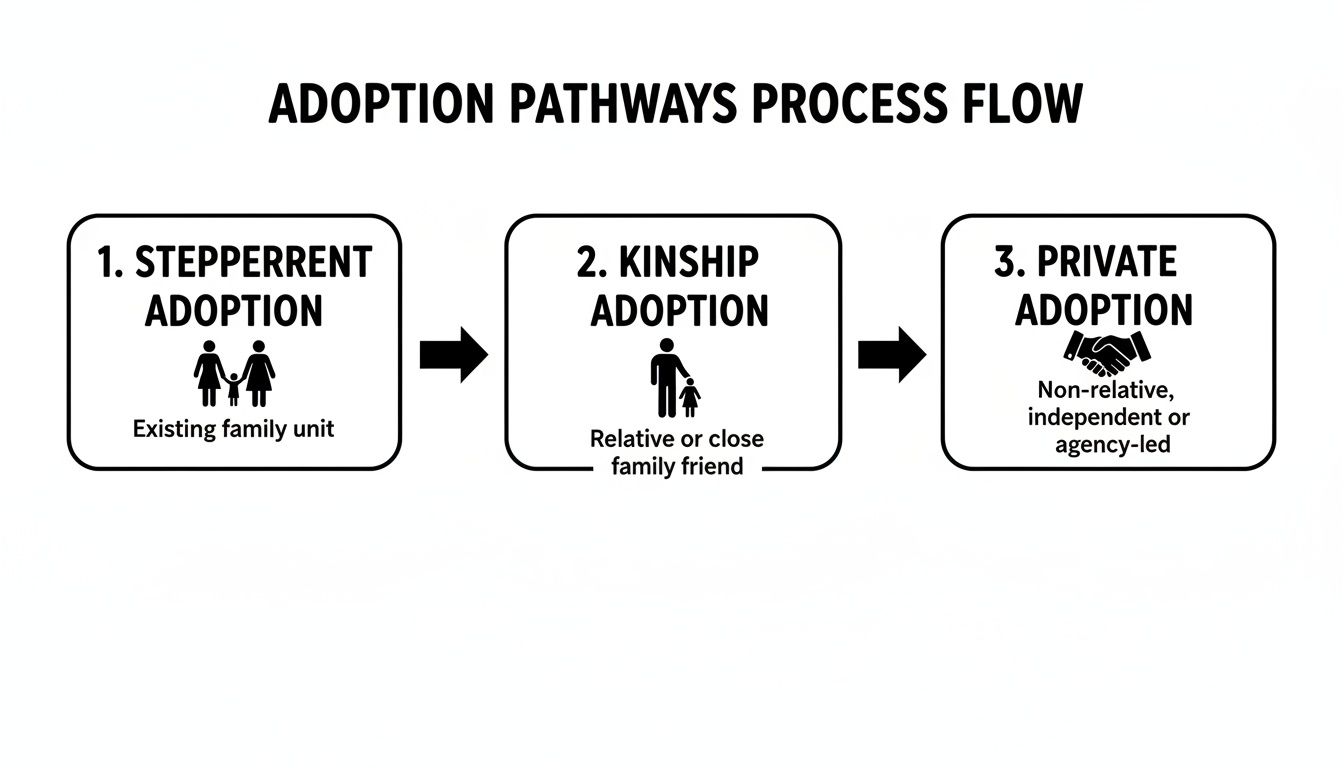
Whether you’re a stepparent, a relative, or pursuing a private adoption, there is a clear legal process designed to support your family’s growth.
The Home Study: A Conversation, Not an Inspection
The home study is often the most misunderstood part of the process. Many hopeful parents worry it will be an invasive, white-glove inspection, but that's not its purpose at all.
Think of the home study as a series of supportive conversations with a licensed social worker. Their goal is simply to get to know you and confirm that your home is a safe and stable environment for a child. It typically involves:
- Interviews: Friendly conversations with you and others in your home about your background, lifestyle, and thoughts on parenting.
- Home Safety Check: A walk-through to ensure your home meets basic safety standards for a child, like having working smoke detectors.
- Background Checks: Standard criminal and child abuse background checks for all adults in the home to ensure a secure environment.
Real-Life Scenario: Sarah and Tom, a couple hoping to adopt, were anxious about their home study. They worried their small apartment wasn't "perfect." However, the social worker was warm and reassuring. She wasn't looking for a mansion; she was looking for love, stability, and preparedness. The process helped them feel more confident and ready to be parents.
Matching and Post-Placement Supervision
Once your home study is approved, the matching process begins. This part of the journey varies greatly depending on whether you are working with an agency, adopting from foster care, or pursuing a private adoption. When a potential match is identified, you will begin having visits with the child to build a bond. It’s a delicate and exciting time focused on creating comfort and trust.
After the child moves into your home, a critical six-month period of post-placement supervision begins, as required by the Texas Family Code. During these six months, you’ll live together as a family while a social worker visits periodically. These check-ins are supportive, offering you a chance to ask questions and ensuring everyone is adjusting well.
This period is vital. It gives everyone—you, the child, and the social worker—time to settle in before the adoption becomes legally final. This six-month window is your opportunity to truly become a family in practice before it's made official in the eyes of the law.
Navigating Parental Rights with Compassion and Clarity
Before an adoption can legally create a new family, the law must address the existing legal ties between a child and their birth parents. This step, known as the termination of parental rights, is often the most emotionally sensitive part of the journey, but it is a necessary one.
Think of it as preparing the foundation before building a new home. The law must create a clear, secure legal slate so that the child and their adoptive family can build a future free from uncertainty. Adoption Texas law handles this delicate process in two main ways, always prioritizing one central question: What is in the child’s best interest?
Voluntary Relinquishment: A Courageous Choice
In many private adoptions, a birth parent makes the courageous and deeply loving decision to voluntarily give up their parental rights. It is a profound choice, and Texas law includes safeguards to ensure it is made with a clear mind and a steady heart, free from any pressure.
A birth mother cannot sign the official document—an affidavit of relinquishment—until at least 48 hours after giving birth. This isn't just a rule; it's a compassionate pause. It gives her time to physically recover and to separate this life-altering decision from the immediate and overwhelming emotions of childbirth.
A birth father can also sign a waiver of interest, either before or after the birth, signaling that he does not plan to parent the child. Once these documents are properly signed, they are legally binding and allow the adoption to move forward on solid ground.
A voluntary relinquishment is often a selfless act rooted in a birth parent's deep love and desire for their child to have a stable, secure life. The legal system honors this decision by ensuring it is made with full awareness and consent.
Involuntary Termination: Protecting a Child's Best Interest
Sometimes, the choice isn't voluntary. A court must step in to terminate a parent's rights when their actions have put a child in harm's way. This is a very serious measure that a judge will only take after carefully reviewing evidence and concluding it is the only way to protect the child.
The Texas Family Code lists specific grounds for involuntary termination, including:
- Abandonment: Leaving a child without contact or financial support.
- Endangerment: Knowingly placing a child in physically or emotionally harmful situations.
- Failure to support: Neglecting the child's basic needs for food, shelter, and care.
- Criminal conduct: Certain criminal convictions can demonstrate that a parent is unfit to care for a child.
This is most common in cases involving Child Protective Services (CPS), where the primary goal is to move a child from a dangerous environment into a safe, permanent home. For a more detailed look at these complex proceedings, you can learn more about terminating parental rights in Texas.
The Putative Father Registry
What happens if a birth father’s identity or whereabouts are unknown? This used to create legal complications, but Texas law now has a clear solution: the Texas Putative Father Registry.
A "putative father" is a man who may be the biological father but is not married to the mother. By adding his name to this registry, he makes an official claim of potential paternity. It's his way of raising his hand and saying, "I want to be notified if an adoption is planned for this child."
This registry is a critical tool. If a man fails to register and cannot be located through other diligent efforts, the adoption can generally proceed without his consent. It provides legal peace of mind for the adoptive family, ensuring every potential parental claim has been handled correctly under adoption Texas law and prioritizing a child’s need for a forever home.
Finding the Right Adoption Path for Your Family
Every family’s story is unique, and Texas law respects this by offering several different pathways to adoption. Think of it less like a rigid maze and more like a set of maps designed to lead you to your destination. Understanding these routes is the first step toward finding the one that best fits your family's story and your dreams for the future.
The goal of adoption Texas law isn't to create roadblocks. It's to provide a clear, supportive framework for building strong, permanent families. Whether you're making a bond official that's already formed in your heart or opening your home to a child you have yet to meet, there’s a legal process designed just for you.

Stepparent Adoptions: Making Blended Families Whole
For so many blended families, a stepparent’s love is already a powerful, everyday reality in a child's life. A stepparent adoption is the legal step that makes that bond official, granting the stepparent the same rights and responsibilities as a biological parent. It’s about giving your stepchild the ultimate sense of security, belonging, and legal permanence.
This process is often more straightforward than other adoptions, particularly when the other biological parent consents and agrees to terminate their parental rights. It is a beautiful way to legally solidify the family unit you have already built in your hearts and your home.
Kinship Adoptions: Keeping Family Together
There’s a special strength that comes from keeping children within their own extended family. Kinship adoptions—also called relative adoptions—occur when grandparents, aunts, uncles, or other family members step up to provide a permanent, loving home. Texas law recognizes the immense value of these relationships and often streamlines the process for relatives.
In these situations, home study requirements may be adapted, and courts generally look very favorably on placements that maintain these vital family and cultural connections. At its core, kinship adoption is a powerful affirmation that family takes care of family.
The single most important principle guiding every adoption in Texas is the best interest of the child. In kinship adoptions, this principle shines brightly, as keeping a child connected to their roots is almost always a profound benefit.
Private Adoptions: A Direct Connection
When most people think of adoption, private adoption is often what comes to mind. Also known as independent or infant adoption, this is the path where hopeful adoptive parents connect with a birth mother, typically with the help of an adoption attorney or a specialized agency. It is a deeply personal journey built on a foundation of trust and communication.
This route allows for significant collaboration. The birth mother often chooses the adoptive family herself and can decide on the level of future contact, which may lead to an open or semi-open adoption. It’s a powerful way for families to be built through a relationship of mutual respect and courage. We explore the different types of adoption in Texas in more detail to help you see which one feels right for you.
CPS Adoptions: A Path of Healing and Hope
Adopting a child from the Texas foster care system, managed by Child Protective Services (CPS), is one of the most incredible ways to grow your family. These are children who are waiting for the stability and unconditional love that only a permanent home can provide. This path often involves little to no cost for the adoptive parents, as the state provides financial assistance and other resources to support the family.
Between 2010 and 2019, Texas saw 53,412 children adopted from the child welfare system. That's a remarkable 27.2% increase, showing just how committed Texas families are. Relatives play a huge role here, too—more than half of children adopted from foster care are placed with family members, underscoring how kinship truly is the heart of the system.
Choosing this path gives a child a chance to heal, grow, and thrive. It's a journey that demands patience and a big heart, but the reward is immeasurable. At The Law Office of Bryan Fagan, PLLC, we are here to provide the compassionate legal guidance you need, no matter which path you choose.
Understanding the Costs and Timelines for Your Adoption
When you're planning to grow your family through adoption, you're preparing your heart and your home. It’s also important to prepare your finances. Getting a clear picture of the potential costs and timelines for adoption in Texas can help replace financial anxiety with a sense of control and readiness.
The path you choose—whether through a private agency, an independent arrangement, or the state's foster care system—will be the biggest factor in shaping both the financial investment and the timeline for welcoming your child home.
A Transparent Look at Adoption Expenses
It can be helpful to see adoption costs not as a single, large price tag, but as a collection of essential services that come together to create a safe, legal, and ethical process for everyone involved—the child, the birth parents, and your growing family.
While the numbers can seem daunting, every expense serves a critical purpose. Here’s a breakdown of what you can typically expect:
- Agency or Attorney Fees: For the professionals who guide you through the legal complexities of adoption in Texas. Their expertise keeps the process on track and legally sound.
- Home Study Costs: A licensed social worker must conduct this review to ensure your home is a safe and prepared environment for a child.
- Court Filing Fees: Standard administrative costs required to process your adoption through the legal system.
- Birth Mother Support: In private adoptions, Texas law allows for helping with reasonable, pregnancy-related living expenses for the birth mother, such as medical care, rent, or groceries.
Comparing Common Adoption Paths
To give you a realistic starting point for planning, here is a straightforward comparison of the most common adoption routes in Texas.
Estimated Costs and Timelines for Texas Adoptions
This table offers a comparative look at the typical financial investment and duration for common adoption pathways in Texas.
| Adoption Type | Typical Cost Range | Estimated Timeline |
|---|---|---|
| CPS (Foster Care) Adoption | Minimal ($0 – $2,500) | 12 – 24 months |
| Private Agency Adoption | Comprehensive ($30,000 – $60,000+) | 6 – 24 months |
| Stepparent Adoption | Moderate ($2,500 – $7,500) | 3 – 9 months |
| Kinship (Relative) Adoption | Lower ($1,500 – $5,000) | 6 – 12 months |
Please remember, these figures are estimates. Every family's situation is unique, and your circumstances will shape the final numbers. For a more personalized look at what to expect, check out our guide on how long the adoption process takes in Texas.
Financial Resources Are Available
The good news is that you don't have to shoulder these costs alone. There are fantastic resources designed to make adoption more financially accessible for loving families. One of the most significant is the Federal Adoption Tax Credit, which can make a substantial difference. In 2024, this credit was worth over $16,000 per child.
If you are adopting from the Texas foster care system, there is even more support available. Adopting a child with special needs may qualify you for state assistance programs that provide monthly financial support and ongoing Medicaid coverage to help with their care.
At The Law Office of Bryan Fagan, PLLC, our goal is to provide you with a clear, actionable plan. We believe that with the right information and guidance, you can spend less time worrying about the numbers and more time focusing on the incredible journey of building your family.
Finalizing Your Adoption and Beginning Your New Chapter
The finalization hearing is the moment every adoptive family dreams of. It’s the culmination of months, and sometimes years, of paperwork, waiting, and hoping. This isn't a typical, formal court hearing; it's a celebration. This is the day a judge signs the final decree of adoption, making legally true what your heart has known all along: you are a family.
Many courts encourage families to bring cameras and loved ones to share in the joy of this milestone. This brief, happy court appearance is the last step required under adoption Texas law to make everything official. Once that gavel falls, you become the child’s legal parents in every sense of the word, with all the rights and responsibilities that entails.

Life After the Final Decree
With the decree signed, your attorney will guide you through the next practical step: applying for a new birth certificate for your child. This amended certificate will list you as the parents and reflect the child’s new legal name, if you chose one. It’s a powerful document that solidifies your child’s place in your family and officially closes the legal chapter of your adoption story.
But your family’s story is really just beginning. While the legal process is over, a new life unfolds, and you’re not alone as you navigate the years ahead. Texas provides a network of post-adoption support services for families who find their needs evolving as their child grows. These resources offer everything from counseling and support groups to practical guidance on parenting strategies and helping your child understand their adoption story.
"Adoption is not the call to have the perfect, rosy family. It is the call to give love, mercy, and patience." – Hope for the First Years
Nurturing Your Family’s Story
For those in open adoptions, this new chapter means thoughtfully managing the relationship with the birth parents as outlined in your agreement. This ongoing connection can be a profound gift to your child, giving them a more complete sense of identity and heritage.
No matter what type of adoption you've completed, creating a safe and open space for your child to ask questions about their origins is essential. It reinforces that their history is not a secret but a cherished part of what makes your family unique.
The legal journey might be over, but the beautiful, lifelong adventure of being a family is just getting started. This is the beginning of countless memories, challenges, and joys. Here at The Law Office of Bryan Fagan, PLLC, we are deeply honored to help families reach this incredible milestone.
If you’re ready to take the next step, our experienced team is here to provide the compassionate legal guidance you need. Please schedule a free, no-obligation consultation with our adoption team today, and let us help you confidently begin your new life together.
Common Questions About Adopting in Texas
Stepping into the world of adoption naturally brings up many questions. Getting clear, straightforward answers is the first step toward feeling confident and prepared for the journey ahead. Below, we’ve addressed some of the most common concerns we hear from families exploring adoption Texas law, offering clarity and peace of mind.
Do I Have to Be Married or Own a Home to Adopt in Texas?
Absolutely not. This is one of the biggest myths about adoption. Texas law focuses on finding loving, capable parents, and that includes single adults from all walks of life. The court’s number one priority is not your marital status or a deed to a house—it's your ability to provide a safe, stable, and nurturing home for a child.
So, whether you rent an apartment or own a home doesn't matter. What the home study and the courts truly evaluate is your emotional readiness, financial stability, and your capacity to care for a child. A supportive, secure home can be created in all kinds of living situations.
What Is the Difference Between an Open and Closed Adoption?
Think of it as a spectrum of communication. An open adoption involves some level of ongoing contact between the adoptive family and the birth parents. This can look different for every family—it might mean sharing photos and letters, texting, or even having occasional in-person visits.
A closed adoption, on the other hand, means no identifying information is shared between the families, and there is no contact after the adoption is finalized.
Today, most adoptions in Texas have some degree of openness, as it is widely believed to be beneficial for the child's sense of identity and well-being. Texas law even allows families to create legally enforceable post-adoption contact agreements, providing clarity and security for everyone involved.
How Does a Stepparent Adoption Work if We Cannot Find the Other Parent?
This is a challenging but common situation, and yes, a stepparent adoption can often still move forward even if the other biological parent cannot be located. The legal process is designed to handle these scenarios, always keeping the child's best interest as the guiding principle.
If you have made a diligent, documented effort to find the parent without success, the court can proceed with terminating their parental rights. This often involves proving that they have legally abandoned the child by not providing support or maintaining contact for a specified period.
Navigating this requires skillful legal guidance. An experienced adoption attorney is critical in these cases to ensure every legal requirement is met, the court has the necessary proof, and the path is cleared for the adoption to become final.
The journey to adoption is deeply personal and filled with unique questions. At The Law Office of Bryan Fagan, PLLC, we provide the compassionate, knowledgeable legal guidance your family deserves. To get clear answers tailored to your specific situation, schedule a free, no-obligation consultation with our adoption team today.
