
When your heart leads you to adoption, one of the first and most practical questions is always, "How long is this going to take?" For families in Texas, the honest answer is: it depends. The timeline can be as short as a few months or stretch over several years, depending entirely on the type of adoption you are pursuing. A straightforward stepparent adoption is typically the fastest path, while international or foster care adoptions are much longer journeys.
Understanding Your Texas Adoption Timeline
The journey to build your family through adoption is not a single, straight road. It’s more like a map with different routes, each with its own terrain and mileage. The specific path you choose—whether it's legally welcoming a stepchild, adopting a relative, or opening your home to a child from foster care—is what sets your unique timeline.
This is because every type of adoption comes with its own set of legal procedures and requirements, all laid out in the Texas Family Code (Chapters 162–166). Some paths are designed to be more direct to preserve and strengthen family bonds, while others involve extensive background checks, agency coordination, and waiting periods to ensure a child's safety and well-being.
Let's take a quick look at what you can generally expect. We'll dive much deeper into each of these throughout this guide.
The infographic below gives you a visual snapshot of the typical timeframes for three common adoption paths here in Texas.
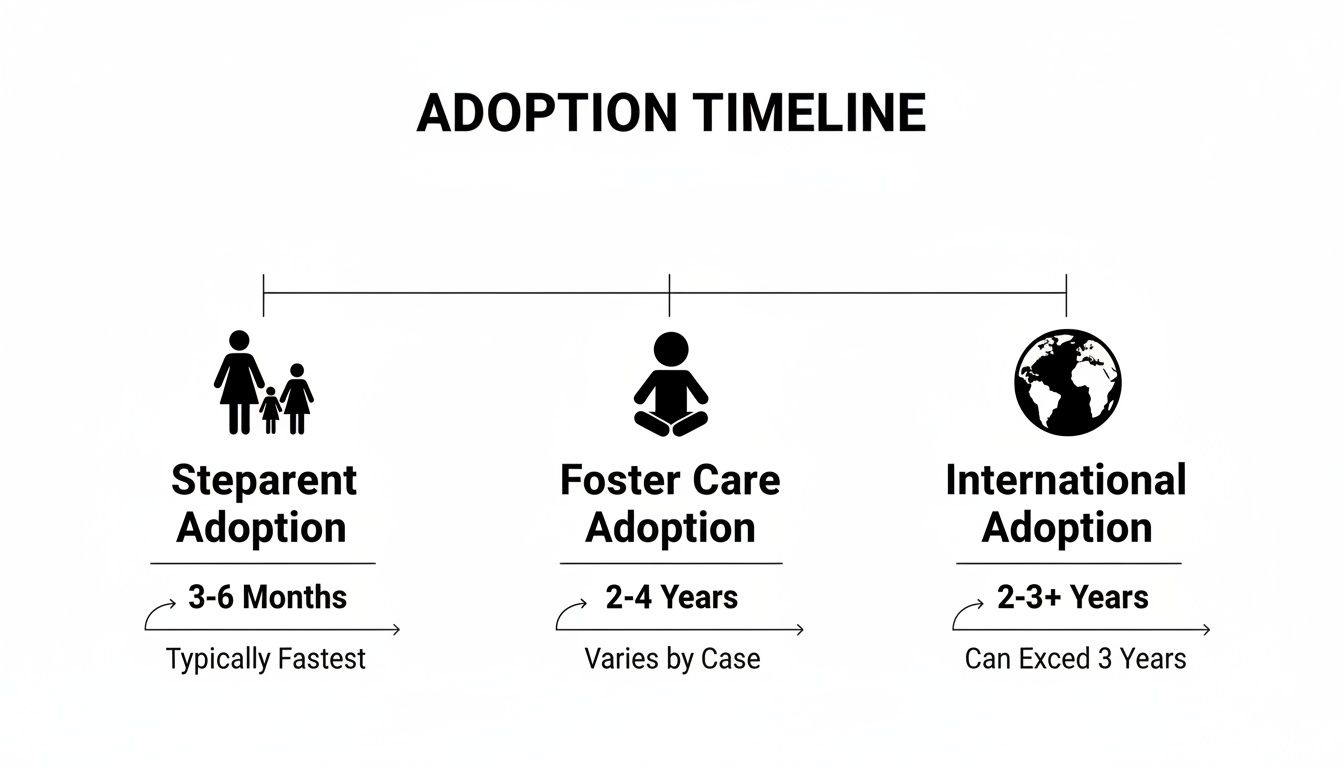
As you can see, adoptions that keep a child within the existing family structure, like stepparent adoptions, tend to move much more quickly than those involving state or international agencies.
For a clearer picture, here’s a table breaking down the estimated timelines for the most common adoption types in Texas. This gives you a quick reference for what to expect as you start your journey.
Estimated Adoption Timelines in Texas at a Glance
| Adoption Type | Typical Timeframe | Key Factors Influencing Speed |
|---|---|---|
| Stepparent Adoption | 3-6 months | Cooperation of the other biological parent; court scheduling. |
| Kinship/Relative Adoption | 6-12 months | CPS involvement; termination of parental rights; home study. |
| Foster Care Adoption | 1-2+ years | Child's legal status; matching process; post-placement supervision period. |
| Private Infant Adoption | 1-2+ years | The matching process with birth mothers; legal consents. |
| International Adoption | 2-4+ years | Country-specific laws; U.S. immigration processes; agency timelines. |
Remember, these are just estimates. Every family's situation is unique, and various factors can either speed things up or cause delays.
Key Factors That Shape the Timeline
No matter which path you take, several key milestones and variables will influence how long your adoption takes. Knowing what they are from the start can help you set realistic expectations and feel more in control of the journey ahead.
- The Home Study: This is a mandatory step for most adoptions in Texas. It involves interviews, home visits, and extensive background checks and typically takes three to six months to complete.
- Legal Consents: The termination of parental rights from biological parents is a critical factor. If a birth parent is cooperative and signs the required legal documents, things move swiftly. But if the termination must be contested in court, it can add significant time and legal complexity.
- Agency and Court Schedules: You’re often working with outside schedules. The caseloads of your adoption agency and the backlogs in local court dockets can create delays that are completely out of your hands.
- The Matching Process: For private infant or foster care adoptions, the time it takes to be matched with a child is often the most unpredictable part of the entire process. It can happen quickly or take much longer than anticipated.
The most important thing to remember is that every single step is designed with one goal in mind: protecting the best interests of the child. While the waiting can feel agonizing at times, each requirement is there to ensure a child finds a safe, stable, and loving permanent home.
At The Law Office of Bryan Fagan, PLLC, our role is to bring clarity and compassion to this process. We believe that an informed family is an empowered one. While we cannot control every variable, we can provide the steady legal guidance needed to navigate each stage as smoothly and efficiently as possible.
The Home Study: Your Official Starting Point
Every adoption journey in Texas, no matter which path you take, kicks off with a critical first step: the home study. This is the official starting point required by the Texas Family Code, but let's be clear about what it really is. It’s easy to think of it as a stressful inspection, but it’s much more of a collaborative process—a partnership between you and a licensed social worker to confirm your home is a safe, stable, and nurturing place for a child.
This is where the "how long will this take?" question starts to get a real answer. For most families, completing the home study takes somewhere between three and six months. The whole point is to create a detailed, authentic portrait of your life, your family, and your readiness to parent.

What Actually Happens During the Home Study
The home study is made up of several key parts, each designed to paint a complete picture of the environment you'll provide. Knowing what's coming can make the whole thing feel much more manageable.
Here’s what you can expect:
- Gathering Important Documents: You'll need to collect and submit paperwork like birth certificates, marriage licenses, financial statements, and health records.
- Background Checks: Every adult living in the house will go through comprehensive criminal background and child abuse registry checks. This is a non-negotiable step to ensure child safety.
- Personal Interviews: The social worker will have heartfelt conversations with you, your partner, and anyone else in your home. This is your chance to talk about your motivations, parenting philosophies, and life experiences.
- Home Safety Visit: An in-person visit makes sure your home meets basic safety standards, like having working smoke detectors and securely storing potential hazards.
This thorough review is the foundation for every adoption, as it officially qualifies you to move forward.
Turning Anxiety into Confident Preparation
The idea of a home study can feel overwhelming, but preparation is the key to turning that anxiety into confidence. The most common delays at this stage boil down to missing paperwork or scheduling conflicts. You can get a huge head start by gathering all your documents before you even officially begin.
The home study isn't about finding a "perfect" family. It's about finding a prepared, loving, and safe one. Honesty and openness are your greatest assets here.
Imagine a couple like Sarah and Mark. They were worried their older home wouldn't pass the safety visit. Instead of just waiting and worrying, they proactively installed new smoke detectors and put a safety latch on the cabinet under the sink. By taking small, practical steps, they felt empowered and ready, and their visit went smoothly.
Ultimately, finishing the home study is a major milestone. It signals the end of the initial administrative phase and the true beginning of your active journey toward being matched with a child. When you approach it with an open heart and a little organization, you set a strong, positive tone for everything that comes next.
The Private Infant Adoption Journey of Waiting and Matching
For many hopeful parents, private infant adoption feels like the most direct path to bringing a newborn into their family. This journey is charged with incredible hope and deep emotion, but its timeline is often the most unpredictable of all. It unfolds in two distinct phases: the deeply personal wait to be matched with an expectant mother, and the structured legal process that begins after the baby is born.

Unlike other types of adoption where you might be waiting on court dates or agency lists, the first stage of a private adoption is all about a human connection. It’s a waiting game of the heart.
The Emotional Wait to Be Matched
After your home study is complete, you’ll pour your heart into creating a family profile—a book or digital portfolio that tells your story. This profile is what expectant mothers review when they’re considering an adoption plan for their child. The birth mother chooses the family she feels is the right fit. This matching phase is where the "how long will this take?" question becomes the hardest to answer.
There is no magic formula here. The wait can be as short as a few months or last for more than two years.
Several things can influence this timeline:
- Your Family Profile: The story you tell and the life you offer are deeply personal. An expectant mother is looking for a genuine connection to your values, your lifestyle, and your hopes for a child.
- Your Openness: Being flexible about different situations—like the level of post-adoption contact or a child’s specific ethnic background or minor health issues—can significantly broaden your pool of potential matches.
- Your Professional Network: The reach and resources of the adoption agency or attorney you partner with can also play a big part in how many expectant mothers see your profile in the first place.
This period is often the most emotionally challenging part of the entire adoption. It requires patience, resilience, and unwavering hope. It’s a time to lean on your support system and trust the process.
While private infant adoptions are a smaller slice of the pie, they are a significant path for many families. In 2022, the National Council For Adoption estimated that about 32% of all non-stepparent adoptions were private domestic placements. And while the legal steps can move relatively quickly after a match, the wait to be chosen is often the longest part, with many agencies citing an average of 12 to 24 months to find a match. You can find more details in the National Council For Adoption's "Adoption by the Numbers" report.
From Birth to Finalization: The Legal Timeline
Once a match is made and the baby is born, the journey shifts from an emotional wait to a clear legal process governed by the Texas Family Code. This is where the timeline becomes much more predictable, adding another six months or more to your journey.
Here are the key legal milestones you can expect after the birth:
- The 48-Hour Waiting Period: Texas law is designed to protect the birth mother’s rights. She cannot sign any legal documents to relinquish her parental rights until at least 48 hours after the child's birth. This provides her crucial time to make this monumental decision without pressure.
- Signing of Relinquishment Documents: After that 48-hour period, the birth mother can sign the legal paperwork, officially terminating her parental rights and consenting to the adoption. The birth father’s rights also have to be addressed, either through his own consent or a separate legal termination process.
- Post-Placement Supervision: Once the baby is home with you, a mandatory six-month post-placement supervision period begins. During this time, a social worker will visit your home a few times to check in and make sure the baby and your family are adjusting well.
- Finalization in Court: After the six-month supervision period is successfully completed, your adoption attorney will schedule a final court hearing. This is the big day! A judge will review all the paperwork and sign the final adoption decree, making your child a legal and permanent member of your family forever.
The entire journey, from completing your home study to that incredible finalization day, typically spans one to three years. Our attorneys can help you better understand the specific legal steps and emotional considerations involved in a private infant adoption in Texas.
Adopting from Foster Care: A Path of Patience and Permanency
Deciding to adopt a child from the Texas foster care system is a beautiful way to offer a permanent, loving home to a child who desperately needs one. This path, however, requires a special kind of patience. The timeline isn't just about your family's readiness; it’s deeply connected to the legal case of the child you hope to welcome home. It often feels like you’re operating on two separate clocks at once.

The journey to adopt from foster care is truly a journey of the heart. It’s built on understanding that every single step is focused on what’s best for the child, and it’s a profound commitment to providing stability to a child who needs it most.
The First Clock: The CPS Reunification Process
Before any child in foster care can be adopted, Child Protective Services (CPS) is legally required to make every reasonable effort to reunite them with their biological family. This is the first—and often longest—part of the timeline. The Texas Family Code’s primary goal is always to keep the family unit together whenever it’s safe and possible.
This reunification phase usually involves a court-ordered service plan for the birth parents. This could include things like parenting classes, therapy, or substance abuse treatment. The court holds regular hearings to check on their progress. This period of services and legal oversight generally lasts from 12 to 24 months. Only if the parents are unable to complete their plan and demonstrate they can provide a safe home will the court move to terminate their parental rights, making the child legally free for adoption.
The Second Clock: The Matching and Placement Timeline
The second clock starts ticking for hopeful adoptive parents who have already completed their home study and are approved to adopt from foster care. This is the matching and placement phase.
- For Foster-to-Adopt Families: If you're already fostering a child whose parents' rights get terminated, this part of the process is much faster. You've already built a bond, and the state will almost always prioritize your home for that child’s permanent placement.
- For Waiting Families: If you're waiting to be matched with a child who is already legally free, this timeline can vary greatly. It might take several months to over a year to find a match that’s the right fit for both your family and the child's unique needs.
Across the country, thousands of children are waiting. On any given day, there are about 391,000 children in U.S. foster care, and roughly 114,000 of them are legally free and waiting for a family. For a Texas family, this means navigating both the CPS case timeline and the matching process, often leading to a total journey of two to four years from a child’s initial removal to a signed adoption decree.
The Final Step: The Mandatory Residency Period
Even after a child is placed in your home with the intent to adopt, the process isn't quite over. Texas law requires one last crucial step to make sure the placement is stable and truly in the child's best interest.
Under the Texas Family Code, a child must live with their prospective adoptive family for a minimum of six months before the adoption can be finalized in court.
This "post-placement supervision" period allows a social worker to visit your home, offer support, and report back to the court that everyone is adjusting well. Once this six-month period is successfully completed, your attorney will schedule the final hearing. This is the day a judge signs the decree, officially and forever making the child a legal member of your family.
The emotional realities of this longer journey can be tough, but knowing the steps provides clarity and hope.
Faster Paths: Stepparent and Kinship Adoption Timelines
Not every adoption journey has to be a marathon. While some paths can take years, Texas law is built on a simple, powerful idea: keeping families together is the priority. That’s why stepparent and kinship (relative) adoptions are often the most direct and fastest ways to give a child legal permanency. They’re designed to strengthen family bonds that are already in place.
These adoptions champion the core principle of family unity. When a loving stepparent or a dedicated grandparent is already acting as a parent in every way that counts, the law provides a more streamlined process to make that relationship official. This focus on existing relationships is exactly what makes these timelines so much shorter.
The Stepparent Adoption Timeline
For blended families, a stepparent adoption is a beautiful way to formalize a bond that’s been growing for years. The single biggest factor that determines how long this adoption process takes is whether the other biological parent (the non-custodial parent) agrees to it.
-
When Everyone's on Board: If the other parent consents and voluntarily terminates their parental rights, the path forward is clear and quick. With their cooperation, the entire process—from filing the first petition to the final court hearing—can often be completed in just three to six months. This is the fastest adoption timeline possible in Texas.
-
When the Adoption is Contested: Things get more complicated if the other parent cannot be located or refuses to consent. In these situations, the journey extends because you have to legally prove that terminating their rights is in the child’s best interest. This means additional court hearings and can easily add several months or more to the process, depending on the specifics of the case.
The Kinship Adoption Timeline
Kinship adoptions—where a relative like a grandparent, aunt, or uncle adopts a child—are also designed to move efficiently. The Texas Family Code recognizes that placing a child with relatives they already know and trust is almost always better than placing them with strangers. It provides stability and protects the child’s sense of who they are and where they belong.
This type of adoption often gets fast-tracked because the child is usually already living with the relative. Imagine a grandmother who has been raising her grandchild since birth. The emotional and practical bonds are already rock-solid; the legal process is just catching up to the reality of their family life.
Because the child is already in a trusted family environment, Texas law often allows for a modified and faster home study process for relatives. This recognizes the existing relationship and focuses on ensuring the home remains a safe and supportive place.
These streamlined requirements help push the process along much faster than a non-relative adoption. While it still involves court filings and ensuring parental rights are properly terminated, a kinship adoption can often be finalized in six to twelve months. The main goal is to provide swift, legal stability for a child within their own family circle, honoring the love and commitment that’s already there.
At The Law Office of Bryan Fagan, PLLC, we deeply respect the unique bonds that stepparents and relatives share with the children in their lives. We can help you navigate the specific legal steps required for these faster adoption paths. To understand your family’s specific situation, we invite you to schedule a free, compassionate consultation with our experienced team.
Navigating International Adoption: The Longest Journey Home
Adopting a child from another country is a journey of incredible love and commitment. It is also, without a doubt, the longest and most complex adoption path you can take. This process demands that you meticulously follow the laws of two different nations—your child’s home country and the United States—on top of navigating strict U.S. immigration procedures.
Over the last two decades, the timeline for international adoption has stretched out considerably. Increased regulations and the requirements of the Hague Convention on Protection of Children, a major international treaty, have added layers of oversight. While these safeguards are absolutely essential to protect children, birth families, and adoptive families, they do mean a much longer wait.
Understanding the Stages and Timeline
The journey often starts with similar steps to a domestic adoption, but international complexities quickly pile on. Families have to work through a multi-layered process that requires an immense amount of patience and organization.
Here are the key stages you can expect:
- Completing a Home Study with an agency specifically licensed for international placements.
- Compiling a Dossier: This is a comprehensive collection of legal documents that must be authenticated for use in a foreign country.
- Securing U.S. Citizenship and Immigration Services (USCIS) Approval to bring an adopted child into the United States.
- Waiting for a Referral, where your agency and the foreign authorities match you with a child.
- Traveling to Meet Your Child, which often requires multiple trips or an extended stay in-country.
- Finalizing the Adoption Abroad or in Texas, depending on the specific country's laws.
This intricate process has completely reshaped how long families wait. Back in 2004, U.S. families completed nearly 23,000 international adoptions. By 2023, that number had plummeted to just 1,275—a staggering 94% decline. This drop is a direct result of longer, more complicated timelines as many countries have tightened their own regulations or even paused foreign adoptions. Today, a realistic expectation is often 2–3 years from the time you start your dossier to the day you finally bring your child home. You can explore the research behind these shifting timelines from Pew Research Center to see the data for yourself.
Why Patience Is More Important Than Ever
Consider a family like Maria and David, who adopted from Colombia. Their process took nearly three full years. They spent months gathering documents for their dossier, waited eight months just for USCIS approval, and then spent another year waiting before they received the referral for their son, Leo. Their journey required two separate trips to Bogotá, including a four-week stay to finalize the adoption in a Colombian court.
Their story highlights the emotional reality of international adoption: it is a marathon, not a sprint. The journey is filled with administrative hurdles and long periods of quiet waiting, all leading to the incredible moment of uniting with your child.
For families committed to this path, understanding the complexities from the very beginning is crucial. At The Law Office of Bryan Fagan, PLLC, we provide transparent guidance on the realities of international adoption while offering the compassionate legal support needed to see you through to the finish line.
Common Questions About the Texas Adoption Timeline
As you get deeper into the adoption journey, many specific questions come to mind. It's completely normal to wonder how the general timeline applies to your unique family. This section is here to give you clear, straightforward answers to the questions we hear most often from Texas families.
Think of this as your quick-reference guide. Our goal is to clear up any confusion and help you feel more confident about the road ahead.
What Is the Fastest Way to Adopt a Child in Texas?
Hands down, stepparent and kinship (relative) adoptions are the fastest paths to finalization in Texas. Because these adoptions are all about legally cementing bonds that already exist, the process is naturally more direct.
If the other biological parent agrees to a stepparent adoption, or if a grandparent is adopting a child who already lives with them, the entire legal process can be completed in just 3 to 6 months. This is because courts often shorten or waive certain requirements, like the long post-placement supervision period, since the child is already in a stable, familiar home.
Does My Personal Background Affect the Timeline?
Yes, it absolutely can, and this usually comes into play during the home study. This is a foundational step where a social worker gets to know you and your life to ensure you can provide a safe, stable home for a child.
They’ll look at a few key areas:
- Financial Stability: Can you realistically provide for a child's needs?
- Physical and Mental Health: Are you physically and emotionally ready for parenting?
- Criminal History: Mandatory background checks are run on every adult in the house.
Minor issues from long ago aren't usually a dealbreaker, but it’s crucial to be honest about them upfront. Addressing any potential red flags early on is the best way to prevent long, frustrating delays down the line. In private adoptions, your family profile also matters—how quickly an expectant mother connects with your story can definitely influence the timeline.
Can We Speed Up the Post-Placement Supervision Period?
This is a frequent and important question. The post-placement supervision period—where a child must live with you for at least six months before the adoption is final—is a required step under the Texas Family Code for most private and foster care adoptions. Its purpose is simple: to make sure the placement is working out well for everyone, especially the child.
While you can’t typically shorten this six-month clock, you can make sure it runs smoothly. The key is to be proactive. Schedule visits with your social worker promptly, turn in your reports on time, and keep communication open. Staying on top of these things will keep your case moving forward toward that final court date without any hitches.
How Can a Texas Adoption Attorney Help?
Think of an experienced adoption attorney as the compassionate guide for your adoption timeline. Their job is to handle all the legal heavy lifting and navigate the court system’s complexities so you can focus on what really matters—your family.
Here’s how an attorney keeps things on track:
- They ensure every piece of paperwork is filled out perfectly and filed on time.
- They manage all communications with agencies, other lawyers, and the court.
- They spot potential legal roadblocks long before they can cause a delay.
This kind of expertise is priceless, especially in more complicated cases like a contested termination of parental rights or an adoption that crosses state lines. By preventing common errors and navigating the system efficiently, a good attorney can save you an incredible amount of time, stress, and uncertainty.
Every adoption story is unique, and so is its timeline. Understanding the legal steps and potential challenges is the first step toward a smooth journey. At The Law Office of Bryan Fagan, PLLC, our dedicated team is here to provide the compassionate legal guidance your family deserves. If you have questions about your specific situation and are ready to take the next step toward building your family, schedule a free consultation with us today. You can reach us at https://texasfamilyadoption.com.
