
Welcoming a child with Down syndrome into your family through adoption is one of life’s most profound and rewarding journeys. For hopeful parents here in Texas, it’s an incredible opportunity to give a loving, permanent home to a child who is waiting. This guide is designed to be your roadmap, walking you through the legal, emotional, and practical steps of adopting a child with Down syndrome in Texas with empathy and clarity.
Embracing the Journey to Adopt a Child with Down Syndrome
Deciding to grow your family through adoption is a huge, beautiful choice. When you feel specifically called to adopt a child with Down syndrome, you’re opening your heart to a unique and deeply fulfilling experience. This isn't just about navigating a process; it's about moving past common misconceptions to see the incredible potential and light within every single child.
Many families we've worked with find that this particular path brings unexpected blessings and a sense of connection they never imagined. It requires preparation, a lot of patience, and a strong support system, but the love and joy a child brings are truly immeasurable.
Understanding the Opportunity
In the United States, over 400,000 people are living with Down syndrome, making it the most common chromosomal condition. With around 6,000 babies born with Down syndrome each year, there is a very real need for loving, prepared families.
Tragically, many of these children end up in the foster care system, joining the approximately 102,000 children across the U.S. who are waiting for a permanent family to call their own. You can find more details on these figures in this breakdown of Down syndrome statistics and prevalence.
This reality isn't just a statistic; it's a powerful opportunity. You have the chance to provide a stable, nurturing home where a child can truly thrive.
Why Families Choose This Path
Hopeful parents are drawn to adopting a child with Down syndrome for all sorts of personal reasons. Some have a relative or friend with Down syndrome and have seen firsthand the joy they bring to a family. Others are simply open to welcoming a child with different needs, grounded in the belief that every child deserves a family.
The decision to adopt a child with Down syndrome is rooted in seeing the child first—their potential, their personality, and their capacity for love—rather than focusing on a diagnosis. It's about building a family, pure and simple, and always acting in the best interest of the child.
No matter your specific reason, the core motivation is always the same: a deep desire to love and parent a child. Yes, the journey involves unique considerations, from medical care to educational planning. But at its heart, it’s about creating family and doing what's best for a child.
Here at The Law Office of Bryan Fagan, PLLC, our goal is to provide the legal clarity and compassionate support you need to confidently take that next step.
Navigating the Texas Adoption Legal Process
Let's be honest: the legal side of adoption can feel like the most intimidating part of the whole journey. But when you break it down, the entire Texas legal framework is built around one simple goal: doing what's best for the child.
Think of it less as a maze of red tape and more as a series of deliberate, thoughtful steps designed to bring you and your child together. We'll walk through what those steps actually look like in plain English, so you can feel confident and prepared for what’s ahead.
Many families find the path feels a lot like this—starting with hope, moving through the journey's steps, and finally, arriving home.
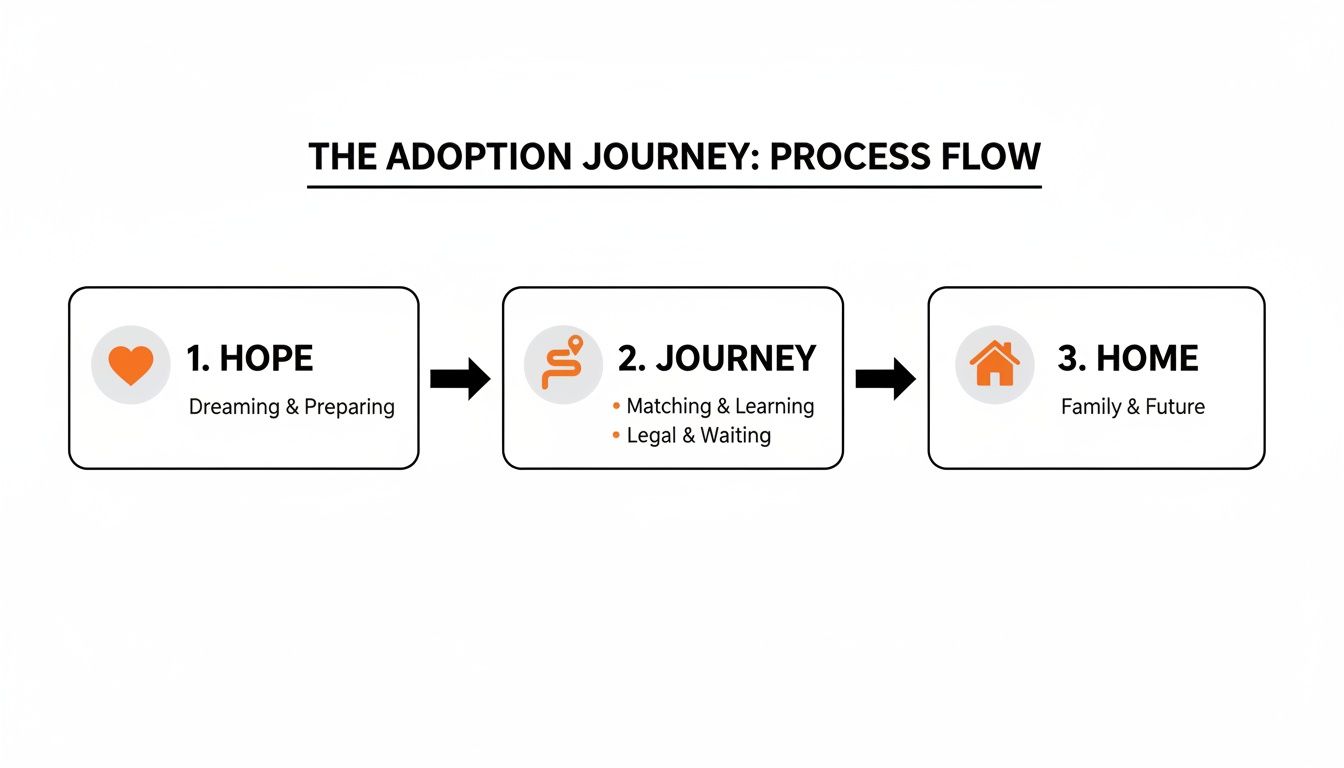
Each stage has its own purpose, requiring a good deal of patience before you reach that incredible moment of finalization.
Getting Started: Who Can Adopt in Texas?
Before you dive in, it’s good to know the basic eligibility requirements. The good news is that Texas keeps it pretty straightforward.
According to the Texas Family Code (specifically, Chapter 162), you need to be:
- At least 21 years old.
- Financially stable enough to provide for a child.
- A mature and responsible adult.
You'll also need to complete an adoption application, go through a home study, and agree to background checks for all adults in your household. It's a common myth that you need to be rich or own a huge house. What the state really cares about is your ability to offer a safe, loving, and stable home.
The Home Study: A Look Inside Your World
The home study is probably the part that makes people the most nervous, but it’s really meant to be a supportive and educational experience. A licensed social worker will come to your home to get to know you, your lifestyle, and what’s motivating you to adopt.
The home study isn’t about judging your paint colors or how you organize your closets. It's about making sure your home is a safe place for a child and that you’re prepared for the realities of parenting—especially for a child who may have unique needs.
Try to see it as a partnership. The social worker is there to help you prepare and connect you with resources. For instance, a couple in Houston hoping to adopt a toddler with Down syndrome from foster care used their home study to talk through their support system, their understanding of potential medical needs, and their plans for early intervention services. Their social worker turned what felt like an inspection into a confidence-boosting conversation that strengthened their resolve to build their family.
You can find a more detailed breakdown of the legal statutes in our guide on Texas law on adoption.
Two Main Paths: Private Agency or CPS
When adopting a child with Down syndrome in Texas, you'll generally choose between two main avenues: working with a private agency or adopting through Child Protective Services (CPS).
-
Private Adoption: This usually means working with an agency that connects you with birth mothers who are considering an adoption plan. The birth mother often selects the adoptive family. This route can sometimes be faster, but it also tends to be more expensive.
-
CPS (Foster-to-Adopt): This is the path for adopting a child who is currently in the state's foster care system. Many children with Down syndrome are waiting in foster care for their forever family. This option is far less expensive, and you’ll almost always have access to financial assistance and medical support through the state.
The right choice really comes down to your family’s timeline, finances, and personal comfort level. Both paths lead to the same beautiful result: building a family.
The Paperwork, the Waiting, and the Final "Yes"
Once a child is placed in your home, a post-placement supervision period begins. This usually lasts about six months. During this time, a social worker will visit periodically to see how everyone is adjusting and to offer support.
The very last step is the finalization hearing in court. This is a happy, celebratory day where a judge reviews all the paperwork and officially, legally recognizes you as the child’s parents forever. It’s the moment everything you’ve worked for becomes real.
Below is a simplified table outlining these major milestones.
Key Stages of a Texas Special Needs Adoption
This table gives you a bird's-eye view of the legal and procedural journey for adopting a child with Down syndrome in Texas, from your first steps to the final court date.
| Adoption Stage | Key Action Required | Typical Timeframe | Legal Consideration (Texas Family Code) |
|---|---|---|---|
| Initial Inquiry & Training | Attend orientation, complete parent training (PRIDE) | 1-3 months | Governed by DFPS policies |
| Home Study (Social Study) | Complete interviews, home visits, background checks | 2-4 months | Chapter 162.003 |
| Matching Process | Work with an agency/CPS to identify a child | Varies (3-12+ months) | Child's "best interest" standard |
| Placement & Supervision | Child moves into your home; post-placement visits begin | 6 months (minimum) | Chapter 162.008 |
| Finalization Hearing | Attend court hearing to legally finalize the adoption | 1-2 months after supervision | Chapter 162.016 |
Navigating these stages requires patience, but each one is a crucial step toward building your family and ensuring every legal detail is handled correctly.
Preparing Your Heart and Home for Your New Child
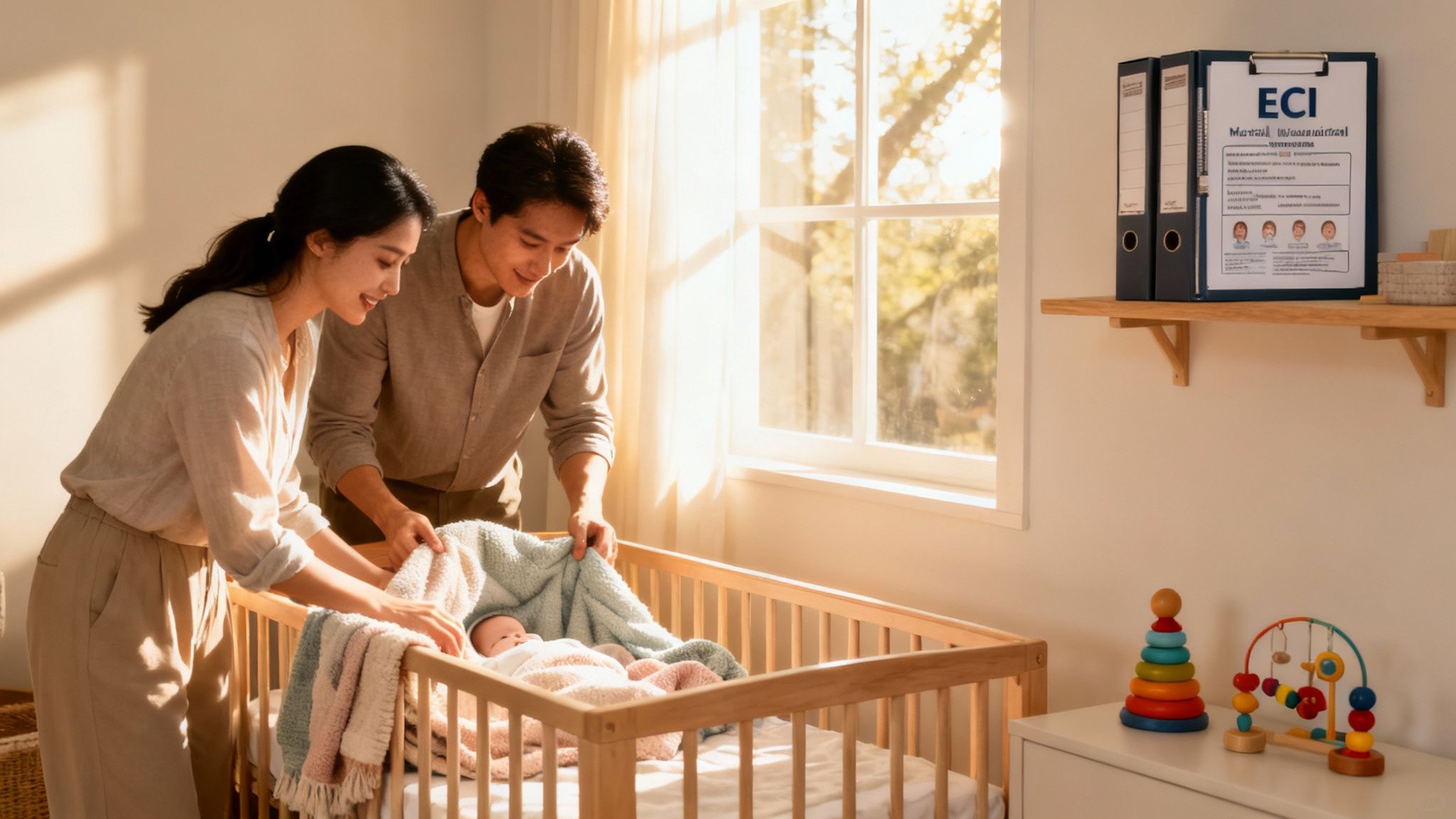
Beyond the legal paperwork and court dates lies the beautiful, essential work of preparing for your child’s arrival. This isn’t just about setting up a nursery; it's about building the emotional and practical foundation where your child can truly flourish. It's the act of love that transforms your house into their forever home.
Finalizing an adoption is a huge milestone, but the journey of parenthood is just beginning. By proactively creating a solid support network and understanding the resources out there, you're taking the most important step toward ensuring your child’s best interests are always at the heart of your family.
Building Your Support Network in Texas
No parent is meant to walk this path alone. When adopting a child with Down syndrome, your "village" becomes an invaluable source of strength, knowledge, and encouragement. Fortunately, Texas has a vibrant community ready to welcome you with open arms.
One of the most powerful first steps you can take is connecting with local Down syndrome associations. Organizations in major cities like Dallas, Austin, Houston, and San Antonio offer parent support groups, educational workshops, and social events. These groups are a safe space to ask questions, share experiences, and celebrate milestones with other families who just get it.
Think about a family from San Antonio we worked with who recently adopted a beautiful baby girl. Before their daughter even came home, they joined a local parents' group. They got fantastic recommendations for pediatricians, learned about the best local parks, and—most importantly—found friendships with people who would become their late-night call for advice and their biggest cheerleaders. This early connection built a foundation of support that made their transition into parenthood so much smoother.
A strong support system is not a luxury; it is a fundamental part of creating a stable and loving environment. It provides resilience for you and a sense of belonging for your child.
Your support network will also include family, friends, and trusted professionals. Being open about your journey allows your loved ones to learn alongside you and become the best possible allies for your growing family.
Medical Preparedness and Early Intervention
One of the most loving things you can do is prepare for your child's health and developmental needs from day one. This proactive approach ensures they have access to every opportunity to thrive.
Finding a pediatrician experienced in caring for children with Down syndrome is crucial. These doctors are familiar with the specific health considerations and developmental timelines, allowing them to provide comprehensive and informed care. Your local Down syndrome association is often the best resource for finding these trusted medical partners.
Beyond a great pediatrician, Texas offers a fantastic resource called Early Childhood Intervention (ECI). This statewide program provides services for children from birth to three years old with disabilities and developmental delays. ECI services can include:
- Speech Therapy: To help with communication skills.
- Physical Therapy: To support gross motor development like sitting, crawling, and walking.
- Occupational Therapy: To assist with fine motor skills and sensory processing.
ECI services are typically provided right in your child's natural environment, like your home or daycare, making them incredibly convenient and effective. Getting your child enrolled early can make a world of difference in their long-term development. As you explore these options, our firm's experience can help you better understand how to adopt a child with special needs while planning for these essential services.
Creating an Enriching and Supportive Home
Your home should be a sanctuary—a place where your child feels safe, loved, and stimulated. When preparing your home for a child with Down syndrome, it’s helpful to consider their specific developmental needs. This might mean creating a sensory-friendly space with soft textures and calming colors.
For instance, you might want to look for the best toys for sensory seekers that can aid their development. Simple additions like a small indoor swing, weighted blankets, or designated quiet corners can make a huge impact.
Remember, this is a journey of learning and adapting together. The most important thing you can provide is unwavering love and a commitment to helping your child reach their full potential, whatever that may be. The Law Office of Bryan Fagan, PLLC, is here to handle the legal complexities so you can focus on what truly matters—preparing your heart and home for your new child.
Financial Planning for a Special Needs Adoption
Let’s be honest: welcoming any child into your family is a major financial decision. When you’re considering adopting a child with Down syndrome, it’s completely normal to feel a little overwhelmed by the potential costs. I’ve seen so many families worry that the expenses will be a roadblock, but I want to put those fears to rest.
There are a ton of resources out there to make this journey possible. Putting together a solid financial plan isn’t just about numbers; it’s about giving yourself the peace of mind to focus on what really matters—the joy of building your family.
Thinking through the finances is one of the most practical and loving things you can do. It’s how you ensure you can provide a stable, secure future for your child. So, let's break down what you can expect and, more importantly, the financial help available right here in Texas.
Understanding Adoption Costs and Financial Aid
The price tag on an adoption can swing wildly. It really depends on whether you go through a private agency or adopt from the foster care system. Private adoptions typically come with agency fees, legal costs, and home study expenses that can add up quickly.
On the other hand, adopting a child from foster care is almost always the most affordable route. In many cases, the state subsidizes most—if not all—of the costs.
No matter which path you take, there's significant financial support available. The biggest one for most families is the federal Adoption Tax Credit. This is a game-changer, designed to help you recover many of your qualified adoption expenses.
I always give my clients this practical tip: start a dedicated folder or spreadsheet for every single adoption-related expense from day one. I'm talking application fees, travel for meet-and-greets, legal bills—everything. This simple habit can make a massive difference when it’s time to claim the tax credit.
If you adopt from foster care, Texas steps up with even more help. The Texas Adoption Assistance Program (TAP) can provide monthly stipends and ongoing Medicaid coverage for eligible children, which is a huge help for covering medical and therapy needs. To get into the nitty-gritty, you can check out our detailed guide to Texas adoption costs.
Navigating Health Insurance and State Benefits
When you're adopting a child with Down syndrome, getting a handle on healthcare costs is crucial. You'll need a good grasp of understanding health insurance for pre-existing conditions. The great news is that federal law prevents insurance companies from denying coverage to children just because they have a pre-existing condition like Down syndrome.
Your first step should be to pull out your current insurance policy and see exactly what it covers for dependents. Pay close attention to the details on therapies (speech, physical, and occupational), specialist visits, and any medical equipment you might need.
Beyond your private insurance, Texas has some incredibly robust support programs you should know about:
- Medicaid: Children adopted from foster care often qualify for Medicaid automatically. This can cover a huge range of medical services with very little, or even zero, out-of-pocket cost.
- CHIP (Children’s Health Insurance Program): If your family's income is a bit too high for Medicaid but you still need help, CHIP offers excellent low-cost health coverage.
- Medicaid Waiver Programs: These are amazing programs that provide services for individuals with disabilities, helping them get the care they need right in their own homes and communities instead of an institution.
These programs exist to make sure every child can get the care they need to thrive.
Planning for the Future
Thinking long-term is another key piece of the puzzle. A lot of families I work with decide to set up a special needs trust. This is a powerful legal tool that lets you put aside funds for your child's future care without messing up their eligibility for essential government benefits like Supplemental Security Income (SSI) or Medicaid.
Pulling all of this together can feel like a lot. Working with an experienced adoption attorney and a financial planner can help you build a plan that covers both the immediate costs and your child’s lifelong needs. Here at The Law Office of Bryan Fagan, PLLC, we can connect you with the right resources and walk you through every financial step, so you feel confident and ready for the amazing journey ahead.
Building a Thriving Life After Finalization
That moment the judge signs the final adoption decree? It’s pure joy and relief. It’s the finish line of a marathon of paperwork and court dates. But it’s also the beautiful, chaotic, wonderful beginning of your family’s actual life together. Building a thriving life post-finalization is all about being intentional—creating a future filled with love, growth, and the right support system.
This new chapter is where the focus finally shifts from legal hurdles to parenting. It’s about creating bedtime routines, celebrating every milestone (big and small), and learning how to be the best advocate for your child as they grow. Your role will constantly evolve, and having a long-term vision is what helps your family flourish for years to come.

Championing Your Child in Texas Schools
When your child hits school age, you’ll step into one of your most important roles: their educational advocate. In Texas, public schools are legally required to provide support for children with disabilities through an Individualized Education Program (IEP). This isn't just a suggestion; it's a legally binding document created by a team that includes you, teachers, therapists, and school administrators.
The IEP details the specific goals and accommodations your child needs to succeed. It's tailored to their unique learning style. An IEP might include things like:
- Help from a classroom aide for a few hours a day.
- Modified homework assignments or extra time on tests.
- Speech, physical, or occupational therapy sessions built right into the school day.
Never forget: you are an equal—and essential—member of the IEP team. Your insights into your child's personality, their strengths, and their struggles are priceless. Go into those meetings prepared. Document your child's progress, know your rights, and be ready to champion the best possible educational path for them.
Nurturing Family Relationships and Support Systems
Adoption doesn’t just create a new parent-child bond; it rewires your entire family dynamic. It’s so important to nurture not only your relationship with your new child but also the well-being of everyone else under your roof.
Siblings, whether they’re biological or adopted, will need time and space to adjust. Keep the lines of communication wide open, carve out one-on-one time, and find age-appropriate ways to involve them. Fostering those healthy sibling bonds is key to creating true family unity.
The emotional health of the adoptive parents is the foundation of a thriving family. You simply can't pour from an empty cup. Actively seeking support through local parent groups or family counseling isn't a sign of weakness—it's a sign of incredible strength.
Finding other families who have adopted children with Down syndrome is a game-changer. These communities are a safe place to share wins, navigate tough spots, and get that powerful reminder that you are not on this journey alone.
Maintaining Connections in Open Adoptions
If you chose an open adoption, your relationship with your child’s birth family remains a significant part of their life story. Keeping that connection healthy requires respect, clear communication, and solid boundaries that honor the agreement you all made.
This relationship can be a beautiful gift to your child, giving them a richer, more complete sense of who they are and where they come from. Regular updates, scheduled visits, or even simple video calls can nurture this bond in a way that feels comfortable and positive for everyone.
It's a sad reality that many children with disabilities wait far too long for a family. In 2021, while 54,111 children were adopted from foster care in the U.S., a staggering 102,000 children were still waiting—many of them with special needs like Down syndrome. You can adopt a child with special needs and see how families like yours are changing these statistics for the better. Your commitment creates a ripple effect of hope.
The journey after finalization is a beautiful mix of continuous learning and love. By focusing on education, family well-being, and community support, you are building a life where every single member of your family can thrive.
Common Questions About Adopting a Child with Down Syndrome
When you decide to explore adopting a child with Down syndrome, a million questions probably pop into your head. It's completely normal. Getting clear, honest answers is the first step toward feeling confident and ready for this incredible journey. Here are some of the most common questions our firm gets from hopeful parents right here in Texas.
How Long Does a Match Take in Texas?
This is the big question, and the honest answer is: it depends. The timeline for being matched with a child with Down syndrome can really vary based on which path you take.
If you go through CPS (the foster care system), a match might happen more quickly. There are many wonderful children with special needs who are already legally free for adoption and just waiting for the right family to find them.
On the other hand, with private domestic adoption, the timeline hinges on birth mothers who are creating an adoption plan and whether they choose your family profile. We can walk you through the pros and cons of both routes to help you figure out what feels best for your family and set realistic expectations from day one.
Are There Special Requirements for This Adoption?
At its core, the foundation for any adoption in Texas is the same. You need to be at least 21 years old, be financially stable, and successfully complete a comprehensive home study. These are the basics laid out in the Texas Family Code.
Where a special needs adoption differs is in the preparation. Agencies and judges will want to see that you've really thought through the child's potential needs. It's about showing you have a solid plan to access the right medical care, therapy, and educational resources. This isn't meant to be a barrier; it's to confirm you're committed to giving the child everything they need to thrive.
The legal process is designed to ensure one thing above all else: that a child is placed in a home that is not just loving, but also prepared and equipped to help them flourish in their best interest.
Can Single Parents or LGBTQ Couples Adopt?
Yes, absolutely. Texas law is clear: adoption is open to single adults and married couples, and your sexual orientation is not a factor. What the courts and agencies care about is your ability to provide a safe, stable, and loving home where a child can grow and feel secure.
At The Law Office of Bryan Fagan, PLLC, we are proud to help all individuals and couples build their families through adoption. Every hopeful parent deserves to be treated with dignity and respect throughout this process.
What Are the Primary Legal Risks Involved?
In any adoption, the number one legal goal is making sure the adoption is permanent and ironclad. This means the biological parents' rights must be properly terminated according to Texas law (as outlined in Texas Family Code Chapter 161), leaving no room for future challenges.
In a CPS adoption, state attorneys usually handle this critical step before a child even becomes available for adoption, which adds a layer of security.
For a private adoption, this is where having a sharp adoption attorney is non-negotiable. Managing the consent paperwork and court filings has to be done with meticulous attention to detail. Our firm double- and triple-checks every legal step to protect your growing family, so you can focus on what matters most—preparing your heart and home.
The journey to adopting a child with Down syndrome is filled with its own unique questions and incredible rewards. At The Law Office of Bryan Fagan, PLLC, we’re here to give you the straightforward legal answers and compassionate support you need, every step of the way. Let's talk about your family's future. Schedule a free, no-obligation consultation with our experienced Texas adoption attorneys today by visiting us at https://texasfamilyadoption.com.
