
Thinking about adoption is a profound act of love, but it almost always comes with a mountain of complex legal questions. Texas law on adoption, which is laid out primarily in the Texas Family Code, is built to do one thing: create safe, permanent, and loving homes for children. This guide is here to turn that legal complexity into clear, manageable steps to empower your family.
Your Adoption Journey Begins with Understanding
Deciding to adopt is one of the most meaningful choices you can make, a decision filled with hope and excitement. It’s also a journey protected by a solid legal framework designed to ensure the well-being of everyone involved—especially the child. Think of the Texas Family Code as your roadmap; it’s there to make sure every step, from the first piece of paperwork to the final day in court, is handled with care and legal integrity.

This guide is meant to be a compassionate companion on that road, clearing up the legal fog and replacing uncertainty with confidence. Our goal is to show you that with the right guidance, you can navigate this path successfully.
The Heart of Texas Adoption Law: The Child’s Best Interest
When it comes to adoption cases, the legal system in Texas cares about one thing above all else: the best interest of the child. This single principle guides every decision a judge, attorney, or agency makes. To uphold this, the law sets out clear requirements for anyone hoping to adopt. If you're wondering about the specifics, our detailed resource breaks down exactly who can adopt in Texas and what qualifications you’ll need to meet.
Once you understand this foundation, it’s easier to see why steps like the home study and background checks are so critical. They aren't just bureaucratic hurdles; they're essential safeguards designed to build a secure future for a child. The process is intentionally thorough to make sure every child is placed in a stable, nurturing home where they can truly thrive.
Preparing for the Emotional and Legal Path
Adoption is just as much an emotional journey as it is a legal one. The feelings that come with building a family this way are powerful, and understanding the role of family counselling and support can be an invaluable part of the process. Preparing yourself for the emotional highs and lows is just as important as getting your legal paperwork in order.
Think of the adoption process like building a house. The Texas Family Code provides the blueprint, ensuring a strong foundation. Your emotional preparedness and support system are the materials you use to build a warm, loving home.
Consider this guide your first conversation—a reassuring overview to help you feel ready as you take that first step toward growing your family. You don't have to walk this path alone. For personalized legal guidance, we invite you to schedule a free consultation with our team.
Exploring the Different Paths to Adoption in Texas
Texas adoption law is built on a simple idea: every family's story is different. Because there are so many ways to build a family, there are also several distinct legal paths to get there. The first step on your journey is figuring out which path best fits your unique circumstances and hopes for the future.

Each type of adoption comes with its own legal framework, emotional journey, and timeline. Whether you're making a long-standing family bond legally permanent or welcoming a new child into your home, there's a process designed to support your family's growth.
To give you a clearer picture, here’s a quick comparison of the main adoption paths in Texas.
Comparing Adoption Paths in Texas
| Adoption Type | Primary Candidates | Typical Timeline | Key Legal Step |
|---|---|---|---|
| Private Domestic Adoption | Families hoping to adopt an infant. | 1-2 years or more | Matching with birth parents and voluntary relinquishment. |
| Stepparent/Kinship Adoption | Stepparents, grandparents, aunts, or uncles. | 3-9 months | Terminating the other biological parent's rights. |
| Foster Care Adoption | Families open to older children, sibling groups, or kids with special needs. | 1-2 years or more | Working with DFPS and termination of parental rights by the state. |
This table is just a starting point. Each path has its own nuances, and understanding them will help you move forward with confidence.
Private Domestic Adoption
When most people think of adoption, this is what comes to mind. Private domestic adoption usually involves a birth mother who thoughtfully creates an adoption plan for her infant, often choosing the adoptive family she feels is the best fit. It’s a process built on a foundation of trust, communication, and mutual respect, typically guided by an adoption agency or attorney.
This path is deeply personal, focused on creating a match that honors the wishes of both the birth parents and the adoptive family. This is also where concepts like open adoption become important, allowing for future contact that can be incredibly valuable for a child's sense of identity and belonging.
Stepparent and Kinship Adoptions
Sometimes, the child you hope to adopt is already sitting at your kitchen table. These adoptions are all about legally formalizing a bond that has already been built through love, commitment, and daily care.
- Stepparent Adoption: This is a beautiful way for a stepparent to become the full legal parent of their spouse’s child. It solidifies the family unit, gives the child priceless legal security, and affirms the stepparent’s role in their life.
- Kinship Adoption: This happens when a relative, like a grandparent, aunt, or uncle, adopts a child in their family. Kinship adoptions are incredibly important because they provide stability for children within their existing family network, which is almost always in the child’s best interest.
For example, imagine a grandmother who has been the primary caregiver for her grandchild for years. A kinship adoption would give her the legal authority to make medical and educational decisions, ensuring the child has the stability and protection they deserve. Because the child is already in a loving and stable home, these adoptions often have a more direct legal process. You can find more insights about these adoption statistics and what they mean for families.
Adoptions from Foster Care
Adopting a child from the foster care system is a profound way to give a permanent, loving home to a child who desperately needs one. These children are in the care of the Texas Department of Family and Protective Services (DFPS) and are waiting for a family to finally call their own.
This path is different because you work directly with a state agency. It comes with its own set of requirements, but it also offers incredible support, including financial assistance and specialized training for adoptive parents. The ultimate goal is always permanency—making sure every child has a safe, forever family to count on.
The journey through foster care adoption is a testament to the idea that family is not defined by biology, but by love and commitment. It is a chance to change a child’s life forever.
No matter which path feels right for you, each one leads to the same incredible destination: creating a legally recognized, loving family. Understanding these key differences is the first step toward moving forward with confidence. Our team is here to provide the compassionate legal guidance you need to explore your options. We invite you to schedule a free, no-obligation consultation to discuss your family’s unique story.
Understanding the Termination of Parental Rights
At the heart of every adoption is a profound and legally essential step: the Termination of Parental Rights, or TPR. Before a child can legally join a new family, the rights of their biological parents must first be brought to a formal, legal end. Texas law handles this process with incredible care, always keeping the child's safe and permanent future as the top priority.
This isn't just about filing paperwork; it's a deeply emotional and significant moment for everyone involved. The law acknowledges this weight by offering two distinct paths to TPR. Each path is designed for very different situations, but both lead to the same crucial outcome: giving a child permanency. Understanding this legal foundation makes it clear why the process is built to protect everyone—especially the child.
Voluntary Relinquishment: A Loving Choice
In many private adoptions, a birth parent makes the courageous and selfless decision to create an adoption plan for their child. This is what we call a voluntary termination. It’s a choice born from careful thought, deep love, and a powerful desire to give their child the best possible future.
The key legal instrument here is the affidavit of relinquishment of parental rights. This is a sworn, formal statement signed by the birth parent that voluntarily ends their legal rights to the child, paving the way for the adoption to move forward.
In Texas, a birth mother cannot sign this affidavit until at least 48 hours after the child’s birth. This waiting period is a critical safeguard, ensuring she has time to recover physically and emotionally from childbirth before making such a permanent decision free from pressure.
Once signed, this affidavit is typically irrevocable, meaning it can't be easily taken back. This creates a foundation of security and stability for the adoptive family and, most importantly, for the child. It marks the moment a birth parent officially entrusts their child to the loving care of the family they have often chosen themselves.
Involuntary Termination: Protecting a Child's Best Interest
The second path, involuntary termination, is a completely different scenario. This happens when a court determines that ending a parent's rights is necessary to protect a child from harm. This is not a step the legal system takes lightly; it only occurs in serious situations where a child's safety and well-being are clearly at risk.
These cases almost always stem from an investigation by the Department of Family and Protective Services (DFPS) following findings of abuse, neglect, abandonment, or endangerment. The court must be presented with clear and convincing evidence that termination is in the child's best interest. You can learn more about the strict legal standards involved in our detailed guide to terminating parental rights in Texas.
A judge will weigh many factors before making such a monumental decision, including:
- The emotional and physical danger the child is currently in or has faced.
- The parent's history and their ability to provide a safe home going forward.
- The stability and support offered by the proposed adoptive home.
Ultimately, whether it happens voluntarily or involuntarily, the termination of parental rights is the legal cornerstone that makes adoption possible. It clears the path for a child to be fully and legally welcomed into a new family, giving them the permanence and security every child deserves. Our compassionate legal team is here to guide you through this sensitive process with the care and respect it demands.
Navigating the Texas Adoption Process Step by Step
The road to adoption in Texas can feel long and winding, but think of it like building a house. Each step, from laying a solid foundation to the final, joyful inspection, is a crucial part of creating a strong, secure, and loving family. With a clear map, every turn becomes a manageable and hopeful milestone on your journey.
Your journey starts with a big decision: will you work with an adoption agency or a private attorney? Agencies often bundle services like matching, counseling, and case management. A dedicated adoption attorney, on the other hand, offers direct legal guidance and can help you navigate a private adoption. Both paths lead to the same beautiful destination; the best choice really depends on the kind of support you're looking for.
Laying The Foundation: The Home Study
No matter which route you take, your first major step is the home study. This is probably the most misunderstood part of the whole process. It's not an intimidating white-glove inspection. Instead, think of it as a collaborative process meant to educate and prepare you for becoming a parent. It’s the legal and emotional foundation of your adoption.
A licensed social worker will meet with you to talk about your background, lifestyle, and how you see yourself as a parent. This process typically includes:
- Interviews: Simple conversations with you (and your partner, if you have one) about why you want to adopt.
- Home Safety Check: A walk-through to make sure your home is a safe environment for a child.
- Document Collection: Gathering key paperwork like birth certificates, marriage licenses, and financial statements.
- Background Checks: Standard, state-required checks to ensure the safety of the child.
Ultimately, this step is all about making sure every child is placed in a stable, nurturing home. Their best interests are always the top priority.
This process flow shows the legal and emotional journey from the birth parent's decision, through the child's protection, to the final placement with a loving adoptive family.
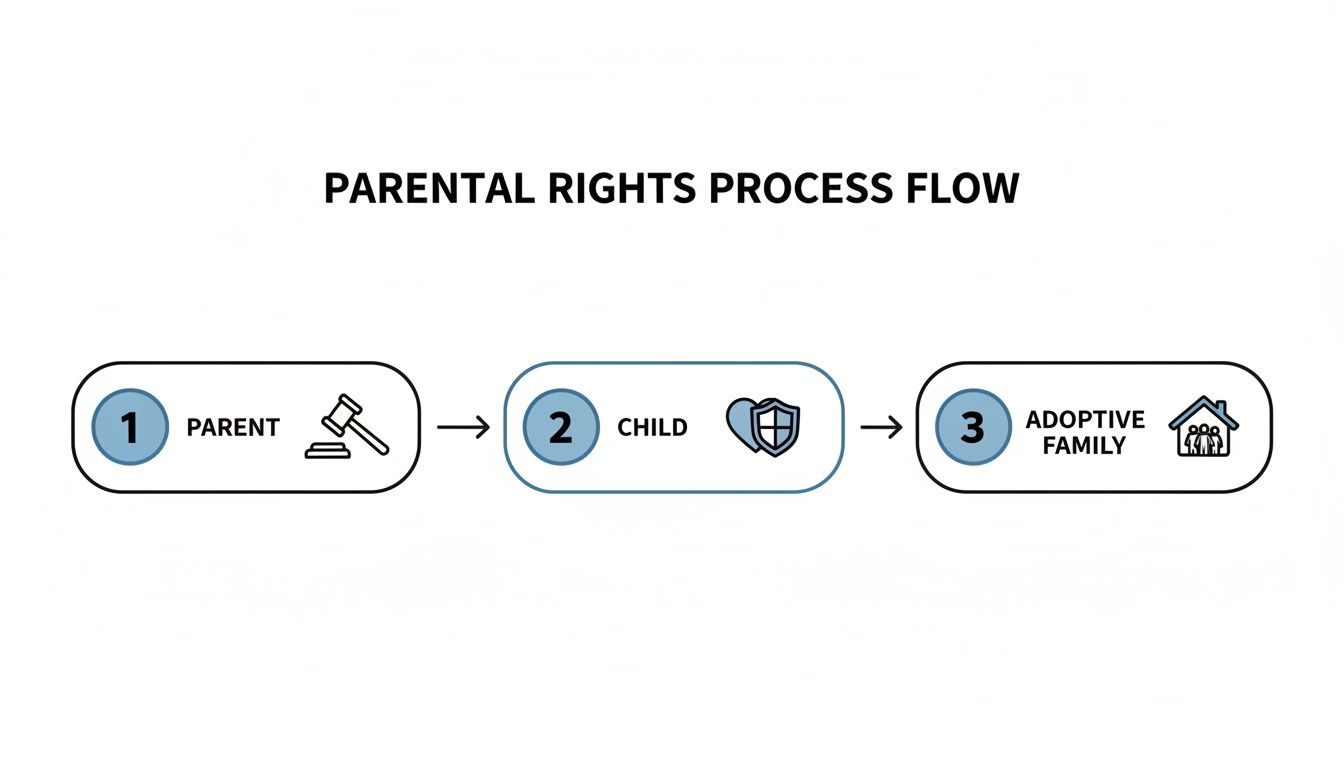
This visual underscores a simple truth: at the heart of every adoption is a child whose future and security are the entire focus of the legal process.
The Heart Of The Journey: The Matching Process
Once your home study is approved, you’ll move into the matching stage. This is where things get real—it's often the most emotional and hopeful part of the entire journey. If you're with an agency, you'll create a profile book filled with photos and letters that tell your story for birth mothers to look through.
The wait time here can vary a lot. In Texas, a private infant adoption typically takes between 12 to 24 months from start to finish. However, we've seen families who are open to a wider range of situations match much faster, sometimes in as little as six months.
When a birth mother chooses you, it’s a moment you’ll never forget. That's when your attorney gets to work on the crucial legal steps, making sure every detail of Texas law on adoption is followed perfectly to protect everyone involved—the birth parents, the adoptive family, and, most importantly, the child.
To give you a clearer picture of what to expect, we've put together a table outlining the general timeline for a private adoption in Texas.
Texas Adoption Process Timeline and Key Milestones
This table outlines the typical stages of a private adoption in Texas and the estimated time commitment for each phase, helping families plan accordingly.
| Adoption Stage | Key Activities | Estimated Duration |
|---|---|---|
| Phase 1: Preparation & Home Study | Choosing an agency/attorney, completing paperwork, attending training, home study visits. | 2 – 4 months |
| Phase 2: Waiting & Matching | Creating a profile, waiting for a match with a birth mother, initial communication. | 6 – 18 months (highly variable) |
| Phase 3: Placement & Legal Steps | Child's birth, placement with the adoptive family, legal relinquishment of parental rights. | 1 – 4 weeks |
| Phase 4: Post-Placement Supervision | Social worker visits to the home to monitor the child's adjustment and offer support. | 6 months (minimum) |
| Phase 5: Finalization | Attorney files the final adoption petition, court hearing to legally finalize the adoption. | 1 – 3 months |
Keep in mind that these are just estimates. Every adoption journey is unique, but this framework provides a solid idea of the road ahead.
From Placement To Finalization: The Final Steps Home
After the baby is born and the birth parents have signed the legal documents relinquishing their parental rights, the child is placed in your arms and your home. This kicks off the final phase of the process, known as the post-placement supervision period.
For at least six months, a social worker will visit your home every so often to see how everyone is adjusting. These are supportive check-ins, not inspections. They’re designed to offer resources and make sure the transition is going smoothly for both you and the child. Once you have a series of positive reports, your attorney will file the final petition with the court.
The very last step is the finalization hearing. This is a happy day in court where a judge officially and forever declares you the child’s legal parents. It’s the day your house legally becomes a home, completing the construction of your family. Our firm has a detailed overview of the Texas adoption process that can provide even more clarity.
While this step-by-step journey has its complexities, it's also filled with moments of incredible meaning. At The Law Office of Bryan Fagan, we're here to be your guides, your advocates, and your support system at every stage. We invite you to schedule a free consultation with us to discuss how we can help you lay the foundation for your family’s future.
Navigating Special Adoption Scenarios in Texas
Not every path to adoption looks the same, and that’s a beautiful thing. Many families find their way to each other through circumstances that require a little extra care and legal know-how. While the same core Texas adoption laws apply to everyone, some situations have unique rules you’ll need to understand.
Whether you’re opening your heart to a child from the foster care system or sorting out the logistics of an adoption across state lines, these journeys add another layer of legal precision. Knowing what to expect ahead of time is the best way to move forward with confidence and focus on what truly matters: building your family.
Adoptions from Foster Care (CPS Adoptions)
Adopting a child from the Texas foster care system is a profound act of love that provides a permanent, stable home for a child who desperately needs one. This journey involves working hand-in-hand with the Texas Department of Family and Protective Services (DFPS), the state agency responsible for children under its care.
What makes these adoptions different is that the state, not a birth parent, is the legal conservator managing the child's case. In most of these situations, the biological parents' rights have already been terminated by a court due to safety concerns, clearing the path for adoption.
Generally, hopeful parents on this path will:
- Become licensed foster parents, even if their ultimate goal is only to adopt.
- Work closely with a DFPS caseworker to find a child who is a good match for their family.
- Go through specialized training and receive support designed to help a child who has experienced trauma.
Texas is deeply committed to finding forever families for children in its care. There are thousands of children in the Texas foster system waiting for a permanent home. According to the latest DFPS regional statistics, the number of children leaving state care for loving, adoptive homes is on the rise—a clear sign of the state's strong focus on permanency.
LGBTQ+ Adoption Rights in Texas
Let's be perfectly clear: LGBTQ+ individuals and couples have the exact same legal right to adopt in Texas as anyone else. The law does not—and cannot—discriminate based on sexual orientation or gender identity. Any qualified adult who can offer a safe, stable, and loving home is eligible to adopt a child.
The legal standard is always the same, no matter who you are: what is in the best interest of the child? Your ability to love, support, and provide for a child is the only thing that matters inside a Texas courtroom.
A family is built on love, commitment, and stability—qualities that have absolutely nothing to do with sexual orientation. Our firm is dedicated to making sure every loving family is treated with the dignity and respect they deserve throughout the adoption process.
An experienced adoption attorney is your best advocate, ready to protect your rights and ensure you are represented fairly at every single step. We are here to help you confidently build the family you’ve always dreamed of.
Interstate and International Adoptions
Sometimes, the child you hope to bring into your family lives in another state or even another country. These adoptions are incredibly rewarding but come with an extra layer of legal coordination to make sure everything is handled correctly across borders.
-
Interstate Adoptions: When you adopt a child from another U.S. state, the process is governed by a federal law called the Interstate Compact on the Placement of Children (ICPC). Think of it as an agreement between all 50 states to coordinate and approve a child’s move from one state to another. Your attorney will handle all the ICPC paperwork, which has to be fully approved by both Texas and the child’s home state before you can legally bring them home.
-
International Adoptions: Adopting from another country is the most complex path, as it involves both U.S. federal immigration law and the specific laws of the child’s country of origin. This process is governed by the Hague Convention on Protection of Children and Co-operation in Respect of Intercountry Adoption. You must work with a Hague-accredited adoption agency to ensure every international and federal rule is followed to the letter.
These special scenarios just mean your journey will have a few more steps. With the right legal team guiding you, each one is entirely manageable.
No matter what your adoption journey looks like, you do not have to walk it alone. To discuss your family’s unique story and get clear answers to your questions, we invite you to schedule a free, compassionate consultation with our experienced adoption attorneys.
How a Compassionate Attorney Can Guide Your Journey
While the Texas law on adoption gives you a roadmap, the actual journey is filled with emotional twists and turns that a statute book can't prepare you for. You've learned about the different paths to adoption, the critical step of terminating parental rights, and the whole process from the home study to the final court date. Now, the most important decision you'll make is choosing who will walk that road with you.
A great family law attorney does so much more than just file paperwork. They're the steady voice of reassurance when you’re feeling overwhelmed, the fierce advocate for your growing family, and the detail-obsessed professional making sure every legal requirement is met with precision. They translate confusing legal jargon into plain English, turning your uncertainty into confidence.
More Than a Lawyer, a Partner in Your Journey
Think of your attorney as a dedicated partner whose sole mission is to protect your family’s future. Their job is to see challenges coming before you do, manage every deadline, and clear a smooth legal path so you can focus on what really matters—preparing your heart and home for a child. This kind of support is priceless, especially when unexpected hurdles pop up.
For instance, if your adoption involves documents from another country, professional help isn't just a good idea—it's essential. You can explore legal document translation solutions to see just how critical absolute accuracy is in these sensitive cases. Your attorney makes sure that every single piece of your case, no matter how small, is handled correctly.
Your dream of building a family through adoption is one of the most important goals you will ever pursue. You shouldn’t have to walk this path alone, trying to interpret complex laws or worrying that you’ve missed a critical step.
Your journey deserves a guide who is not only an expert in the law but is also deeply invested in your family’s happiness. The right legal partner provides the peace of mind you need to move forward with hope and joy.
The path to adoption is a profound one, and we are here to offer the legal guidance and compassionate support you deserve every step of the way. To talk about your unique situation and find out how we can help, we invite you to schedule your free, confidential consultation today.
Frequently Asked Questions About Texas Adoption
The adoption journey is filled with hope, but it's completely normal for it to come with a lot of questions. Getting clear, straightforward answers is the best way to gain the peace of mind you need to move forward with confidence. Here are some of the most common questions we hear about the Texas law on adoption.
How Much Does It Cost to Adopt a Child in Texas?
Adoption costs in Texas can vary dramatically depending on the path you choose. If you're adopting from the foster care system, the costs are often minimal to nothing at all. The state actually provides financial assistance to encourage these adoptions, covering many of the typical fees for the adoptive family.
On the other end of the spectrum, a private agency adoption for an infant can run anywhere from $25,000 to $50,000, sometimes more. This figure typically covers legal fees, the home study, agency fees, and in some cases, support for the birth mother's medical and living expenses. Stepparent and relative adoptions are generally the most affordable, with costs mostly consisting of attorney and court filing fees. A crucial first step is to discuss a detailed cost estimate with your adoption professional.
Can a Single Person Adopt a Child in Texas?
Yes, absolutely. Texas law welcomes any qualified adult to adopt, regardless of their marital status. What matters most to the court is the prospective parent's ability to provide a safe, stable, and loving home for a child. Single parents successfully adopt children of all ages across Texas every year, building strong, happy families.
What Is an Open Adoption and Is It Common in Texas?
An open adoption is a beautiful arrangement where the adoptive and birth families decide to maintain some level of contact after the adoption is finalized. This could be anything from sharing photos and letters through an agency to arranging occasional visits.
Open adoptions are very common and often encouraged in modern Texas adoptions. They are widely seen as beneficial for a child's sense of identity and understanding of their personal story.
The specific terms of an open adoption are thoughtfully worked out between everyone involved to make sure all expectations are clear and respected. These agreements can even be legally formalized, providing a secure framework for the relationship as it grows.
How Long Before an Adoption Is Final in Texas?
After a child is placed in your home, Texas law requires what’s called a post-placement supervision period. This lasts for at least six months. During this time, a social worker will visit your home every so often to see how everyone is adjusting and to offer support and resources.
Once you have a series of positive reports from these visits, your attorney can file the final paperwork with the court. This leads to the finalization hearing—a joyous court proceeding where the judge signs the order that officially, and forever, makes the child a legal member of your family.
Your journey to build a family is one of the most important you will ever take, and you shouldn’t have to walk it alone. The compassionate team at The Law Office of Bryan Fagan, PLLC is here to provide the expert legal guidance and heartfelt support you deserve. To discuss your family’s unique story and get clear answers to all your questions, schedule your free, confidential consultation today.
