 Skip to content
Some readers arrive here late at night, staring at a phone screen, trying to type the words giving baby up for adoption texas without crying. Others are still pregnant and trying to stay calm through work, family pressure, doctor visits, and the physical strain that comes with carrying a baby. If that’s where you are, you deserve clear answers and a space free from judgment.
Adoption is not a careless choice. It’s often a loving plan, carefully made in the middle of fear, grief, and hope. You may be wondering whether you can choose the family, whether you’ll see your baby again, how much time you have to decide, or whether anyone will fully explain the legal papers before asking you to sign them. Those are the right questions.
You may also be dealing with the physical side of pregnancy at the same time. If your body is already under stress, common pregnancy-related health challenges can make every decision feel heavier. That doesn’t make you weak. It makes you human.
Considering Adoption for Your Baby in Texas
A young woman in Texas might spend months going back and forth. One day she thinks she can parent. The next day she worries about housing, support, or safety. Then she feels guilty for even considering adoption. That emotional swing is common.
Many birth parents describe the same tension. They already love their baby, and that love is exactly why they start looking at adoption. They aren’t trying to escape responsibility. They’re trying to make the most careful choice they can.

Why many parents start by asking legal questions
Texas law matters because it shapes when papers can be signed, what rights you keep during the process, and when a decision becomes final. Knowing those rules can lower panic. It gives structure to a time that may feel chaotic.
Some readers also worry that recent changes in Texas law may have altered adoption in ways nobody is explaining. According to Texas adoption guidance on post-Roe changes, Texas's 2021 six-week abortion ban has had no measurable effect on adoption rates, and domestic infant placements have remained steady because most birth parents who choose adoption make that decision for personal reasons early in pregnancy.
Adoption can be a loving plan and still feel heartbreaking.
What you need most right now
You don’t need pressure. You need information, time, and support.
That usually starts with a few simple questions:
- Who would raise your baby: A family you select, a relative, or someone already known to you.
- How much contact you want: Ongoing updates, occasional communication, or more privacy.
- What kind of help you need: Legal advice, counseling, help with making a hospital plan, or just someone to explain each step in plain English.
If you’re still unsure, that’s okay. Uncertainty doesn’t mean you’re failing. It means you’re taking the decision seriously.
Understanding Your Adoption Choices
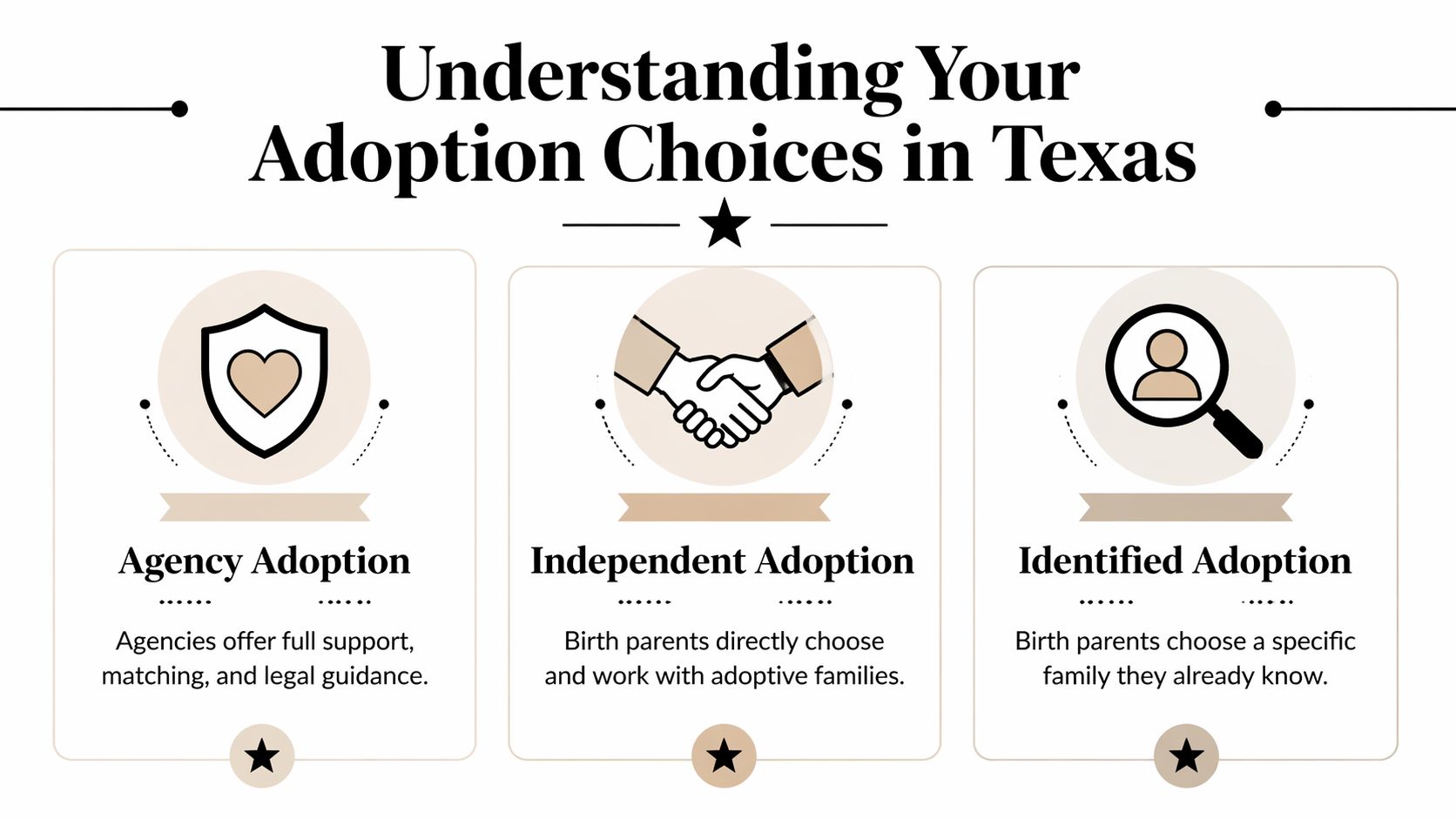
Adoption is often understood as having only one path. In Texas, there are several. The differences matter because each path changes who helps with the process, how much control you have over the match, and how communication may work after placement.
Agency adoption
In an agency adoption, a licensed agency usually helps with counseling, matching, paperwork coordination, and communication between the birth parent and the adoptive family. For many expectant mothers, this feels more structured. There’s often a counselor or coordinator walking with them through the process.
This option can be helpful when you want support finding a family and don’t already know who should adopt your child. Agencies often present family profiles so you can choose based on values, lifestyle, location, religion, or openness to contact after placement.
Independent adoption
An independent adoption is often called a private adoption. Here, the birth parent and the adoptive family may connect more directly, usually with attorneys handling the legal side. Sometimes they already know each other. Sometimes they meet through mutual contacts.
This path can feel more personal, but it also requires careful legal guidance. If there is no agency in the middle, someone still has to make sure every document is prepared correctly, every consent is valid, and no one pressures the birth parent into a rushed decision.
Practical rule: If you’re considering a private match, don’t rely on verbal promises. Put important expectations in writing and have an attorney explain what is enforceable and what is not.
Identified or known-family adoption
Sometimes a birth parent already knows the family she wants. It may be a friend, a relative, or a family she has personally chosen. That’s often called an identified adoption. This can reduce the fear of the unknown because the child’s future feels more visible.
For example, a mother may decide that her sister and brother-in-law can provide a stable home while still allowing healthy family connection. Another mother may choose a close family friend she has trusted for years. The emotional issues can still be hard, but the path may feel less anonymous.
Kinship adoption deserves more attention
Many websites focus on placing a baby with strangers. That’s not the only option. According to Texas DFPS adoption information, kinship adoptions by relatives such as grandparents or aunts are a growing option and account for up to 40% of all adoptions in Texas, often with waived fees and faster procedures under Texas Family Code §262.114.
That matters because some birth parents don’t want to sever family ties. They want their child raised inside the family, with familiar faces, family history, and cultural continuity.
Here’s a simple comparison:
| Adoption path | Who helps manage it | How family is chosen | Common reason someone chooses it |
|---|---|---|---|
| Agency | Licensed agency | Birth parent usually selects from profiles | More support and structure |
| Independent | Attorneys, direct contact | Birth parent often chooses directly | More personal control |
| Identified or kinship | Attorneys and family coordination | Birth parent already knows the family | Child stays with known people |
Texas families also spend a lot of time weighing future contact. If you’re trying to sort through that question, this guide on open vs. closed adoption in Texas can help you think through what level of connection fits your situation.
Foster care is different from private infant adoption
Some people use the word adoption to describe every placement, but foster care adoption is a different system. In foster care cases, the state is often involved because of child protection concerns, and the legal path usually follows court action about parental rights.
That’s very different from a birth parent making an adoption plan for a newborn. If you are pregnant and planning ahead, the more likely comparison is between agency, independent, identified, and kinship options.
The Texas Legal Process for Relinquishment
When people hear legal terms like affidavit of relinquishment, they often assume the process is immediate. It isn’t. Texas law builds in steps, and those steps exist to protect everyone involved, especially the birth mother making the decision.

The first stage is planning, not signing
Before any legal document is signed, most birth parents spend time deciding what kind of adoption they want. They may review adoptive family profiles, talk through hospital preferences, consider whether they want future contact, and ask questions about expenses, counseling, and privacy.
This early stage matters because a good plan reduces confusion later. If you already know whether you want an agency adoption, a private adoption, or a relative placement, your attorney can prepare for the right legal route.
The 48-hour rule protects your decision
Texas does not allow a birth mother to sign away parental rights immediately after delivery. Under Texas adoption law guidance on relinquishment timing, Texas Family Code § 161.103 requires a 48-hour waiting period after birth before she can sign the legal documents to relinquish parental rights. The rule is designed to prevent rushed decisions in the immediate physical and emotional aftermath of childbirth.
That rule often surprises people, but it makes sense. Labor, pain medication, sleep loss, shock, and postpartum hormone changes can all affect judgment. The law slows the process down on purpose.
A waiting period is not a barrier. It is a protection.
What the affidavit actually does
The key document is usually called an Affidavit of Voluntary Relinquishment of Parental Rights. In plain English, it is a sworn statement saying that you are voluntarily ending your legal parental rights so the adoption can move forward.
That document is serious. It must be completed correctly, signed in the required way, and tied to the legal adoption process. If you want to understand the form itself before ever seeing one in person, this explanation of the Texas release of parental rights form can help you understand the language.
What a typical timeline may look like
The process often unfolds like this:
Pregnancy and decision-making
You consider whether adoption is right, explore family options, and get legal advice.Choosing the placement path
You select an agency, choose an adoptive family directly, or decide on a relative placement.Hospital planning
You decide who can be present, who holds the baby, and how discharge should work.Birth and recovery period
The baby is born. No relinquishment can be signed during the first 48 hours.Signing legal documents
After the waiting period, if you still choose adoption, the affidavit may be signed.Court process and finalization
The court reviews the case and, if legal requirements are met, the adoption is finalized later.
A different kind of adoption case may move on a different schedule. For example, private domestic infant adoptions in Texas often involve matching, home studies, and court finalization over time. According to Texas wait time guidance for adoptions, the average wait for domestic infant adoption in Texas is 12 to 24 months, while foster care adoptions often take 9 to 18 months or longer.
Chapters 162 through 166 in plain English
Texas Family Code Chapters 162 through 166 cover major parts of adoption law, including who may adopt, required consents, procedures for placement and finalization, and related court authority. Most birth parents don’t need to memorize chapter numbers. They do need to know what those chapters mean in real life.
Here is the plain-English version:
- Consent matters: The court must have valid legal consent or a lawful basis to proceed without it.
- The child’s best interests come first: Judges focus on safety, stability, and permanency.
- The court finalizes the adoption: An adoption becomes legally complete through a court order, not through a private promise.
- Procedure matters: Even when everyone agrees, the legal steps still have to be done correctly.
For a visual overview of how adoption cases move through family court, this short video may help:
Birth fathers and other required consents
In some cases, the rights of the birth father must also be addressed before an adoption can move forward. Texas law has its own rules about notice, paternity, and when consent is required. If the child is older, additional consent issues may also arise.
That’s one reason legal guidance matters so much. People often assume that if everyone informally agrees, the court paperwork will be simple. Sometimes it is. Sometimes one missing consent issue can delay the case significantly.
Your Rights and What You Can Control as a Birth Parent
Adoption is not something that should happen to you. It should be a decision you understand and shape. Even in a hard moment, you still have choices about your child’s future and about how the process unfolds.

You can choose the adoptive family
Many birth parents don’t realize they can ask detailed questions before choosing a family. You may want to know how they parent, where they live, what support system they have, what they believe about education, or how they talk about adoption with children.
A mother might choose a couple because they value openness and want her child to know his story from the beginning. Another might choose a single adoptive parent because she feels strongly about that person’s values and stability. There is no universal right answer. There is only the answer that feels right to you and serves your child.
You can help define future contact
Open adoption means there is some level of continued communication after placement. That can include photos, letters, messages, or visits, depending on the agreement and the relationship between the adults involved.
Closed adoption means little or no ongoing contact. Some birth parents want privacy for emotional safety. Others want a continuing connection. Both positions are understandable.
Some parents find peace in knowing exactly how updates will happen. Others need more distance to heal. Neither response is wrong.
You should understand the revocation window
One of the most important rights in any Texas adoption decision is understanding when consent becomes final. According to Texas guidance on revoking adoption consent and Safe Haven alternatives, after signing the relinquishment affidavit, a birth mother has a 10-day period during which the decision can be revoked in writing. After the 10th day, the decision becomes irrevocable except in rare cases of fraud or duress. The same resource explains that this differs from Safe Haven, which allows anonymous surrender of an infant up to 60 days old at a designated location without the formal adoption process or a revocation period.
That distinction is huge. Formal adoption gives you planning, choice, and legal structure. Safe Haven is different. It is anonymous and emergency-focused. It is not the same as creating an adoption plan with a chosen family.
What you control and what the court controls
This helps many readers sort out the process:
| You control | The court controls |
|---|---|
| Whether to pursue an adoption plan | Whether legal requirements are satisfied |
| Which family you prefer in many private cases | Whether the adoption is finalized |
| Your wishes about hospital contact | Whether consents and filings are valid |
| Your decision during the revocation period | The final legal order |
Why informed choice matters so much
A thoughtful adoption plan often includes:
- Family selection: Choosing who will raise your child, if you are making a private or agency plan.
- Contact expectations: Deciding whether you want updates, visits, or a more private arrangement.
- Hospital preferences: Choosing who is present and how time with the baby will be handled.
- Legal review: Having every document explained before you sign.
The more clearly you understand those points, the less likely you are to feel pushed along by other people’s timeline.
What to Expect at the Hospital and After Placement
Hospital time can feel slow and blurry at once. Nurses may come in and out. A social worker may ask questions. Your phone may keep buzzing with messages from family members who don’t know what to say, or say too much. If you’re making an adoption plan, this is often the point when emotions hit hardest.
Some birth parents want time alone with the baby. Others want the adoptive parents involved at the hospital. Some want photos. Some don’t. A hospital plan can help everyone know your wishes before labor begins, which reduces confusion during a vulnerable moment.
A simple example
A Texas mother may choose to have her own support person in the delivery room and ask that the adoptive parents come later. She may want to feed and hold her baby privately first. She may also want the hospital staff to use certain language and avoid discussing paperwork in front of visitors.
Another mother may feel more comfortable letting the adoptive parents be present early because she wants them included from the start. Both approaches can be loving. The point is that the plan should reflect your needs, not someone else’s assumptions.
Discharge day can be emotionally complex
The day the baby leaves the hospital may bring grief, numbness, relief, anger, peace, or all of those feelings at once. Many women are surprised by how quickly emotions can change hour to hour. That doesn’t mean the decision was wrong. It means the moment is profound.
You may also feel physical postpartum recovery at the same time. Your body is healing while your heart is trying to catch up. That combination can make ordinary tasks feel overwhelming for a while.
Grief after placement does not erase love. It often proves how deep that love runs.
After placement
The days and weeks after placement are rarely simple. Some birth parents want counseling right away. Others need quiet first and support later. Some feel stable until a holiday, birthday, or random everyday reminder brings the loss back to the surface.
A few practical steps can help:
- Accept support: Let one trusted person help with meals, rides, or basic tasks.
- Keep records: Save contact agreements, names, and important legal papers in one place.
- Protect your healing time: You don’t owe everyone a full explanation.
- Ask for counseling: It can help you process grief without shame.
If your adoption plan includes future contact, it may help to talk through expectations early so there are fewer misunderstandings later.
Why You Need Your Own Attorney and Where to Find Support
One of the biggest misunderstandings in adoption is this: the attorney for the agency or the adoptive parents is not your personal lawyer. That lawyer may be handling the case, but that does not mean they represent your individual interests.
Your own attorney serves a different role. Your attorney explains your rights, reviews documents with you, answers questions that feel embarrassing or uncomfortable, and slows things down if something doesn’t feel right. That matters in any case involving termination of parental rights, because once the legal window closes, the consequences are lasting.
What your attorney should do for you
A birth parent’s attorney should help with practical and emotional clarity, including:
- Document review: Explaining what each paper means before you sign it.
- Timeline protection: Making sure you understand waiting periods and revocation rules.
- Pressure checks: Stepping in if anyone is rushing, confusing, or influencing you unfairly.
- Court coordination: Working with the larger adoption case so your rights are protected from start to finish.
If you’re looking for legal help, one option is to speak with a Texas adoption attorney who handles private, kinship, and related family law matters in this area.
Legal support and emotional support belong together
A lawyer can protect your rights. A counselor, therapist, support group, pastor, or trusted friend can help carry the emotional weight. You often need both.
Some birth parents want someone to help them think through whether adoption is even the right choice. Others already know their decision and need support living with it afterward. In both situations, it helps to build your support system on purpose.
Consider asking for:
- Post-placement counseling: A place to process grief, relief, or uncertainty.
- Peer support: Other birth parents may understand feelings that friends and relatives don’t.
- Medical follow-up: Postpartum care still matters, even when the focus around you seems to shift to the baby.
- A communication plan: If the adoption is open, clear expectations can reduce later stress.
No one should have to sign life-changing papers while feeling alone, confused, or silenced.
A Loving Decision and Your Next Step
The phrase giving baby up for adoption texas can sound harsh. In real life, this choice is often the opposite of giving up. It is planning. It is protection. It is a parent looking at her circumstances and trying to make a careful decision rooted in love.
If you are considering adoption in Texas, remember what matters most. You have options. You have rights. Texas law includes safeguards for a reason. Those rules exist to slow the process down, protect your voice, and help ensure that any decision is informed and deliberate.
You do not have to know everything today. You only need the next right step. That may be asking questions. It may be exploring kinship placement. It may be learning how open adoption works. It may be speaking with your own attorney before you sign anything.
Whatever you decide, you deserve to be treated with dignity. You deserve straight answers. And your child deserves a plan built with care.
If you need guidance about adoption, relinquishment of parental rights, kinship placement, or another family law option in Texas, you can schedule a free, confidential consultation with Law Office of Bryan Fagan, PLLC. An attorney can help you understand your rights, explain your options in plain English, and talk through the next step at your pace.

