
A release of parental rights form, known legally in Texas as an Affidavit of Relinquishment, is a document a parent signs to permanently and voluntarily end their legal relationship with their child. This is a profound legal step, often serving as the critical turning point in the adoption process that clears the path for a child to be legally welcomed into another loving family.
Understanding This Form and Its Role in Texas Adoptions

The decision to sign a release of parental rights form is one of the most significant choices a person can make. It's far more than just paperwork; it’s an act that formally concludes a parent's legal rights and duties, paving the way for a child’s stable and permanent future through adoption. Here at The Law Office of Bryan Fagan, PLLC, we understand the deep emotions and legal complexities tied to this process, and our goal is to offer clarity and compassionate support to Texas families.
This affidavit plays a vital role in several types of Texas adoptions, each with its own unique family story. Understanding its purpose can demystify the legal journey and highlight why it exists: to create permanency for a child, always with their best interests at heart.
Different Paths to Building a Family
The release of parental rights form is a cornerstone in various adoption scenarios. While the legal outcome is the same—clearing the way for an adoption to be finalized—the family circumstances leading to this point differ greatly.
- Stepparent Adoptions: Imagine a stepparent who has formed a deep bond with their spouse's child and wants to become their legal parent. For this to happen, the other biological parent must agree to release their parental rights, allowing the stepparent to formally adopt and solidify their loving role in the child's life.
- Kinship or Relative Adoptions: Sometimes, a grandparent, aunt, uncle, or other relative steps in to provide a stable home when a child's parents cannot. The birth parents might voluntarily sign the affidavit to ensure the child remains within the family circle and receives the legal security of adoption.
- Private Infant Adoptions: In these situations, a birth mother lovingly chooses an adoptive family for her child. Signing the affidavit is a powerful, selfless choice she makes to give her child a future she believes is in their best interest, ensuring they are raised in a secure and nurturing home.
The core principle guiding every adoption in Texas is the "best interests of the child" (Texas Family Code § 162.001). The Affidavit of Relinquishment is the legal instrument that honors this principle by enabling a child to move toward a permanent, secure, and loving home.
Ultimately, the release of parental rights form is designed to provide legal and emotional finality. It ensures that once an adoption is complete, the child has a clear and undisputed legal connection to their new family. This stability is absolutely essential for a child's well-being and development.
This guide will walk you through what this form means, its permanent effects, and the compassionate legal support available to you.
Key Roles and Legal Outcomes in Releasing Parental Rights
To make sense of the process, it helps to see who is involved and what the direct consequences are for each person. This table breaks down the key players and what signing the Affidavit of Relinquishment means for them legally.
| Person Involved | Role in the Process | Primary Legal Outcome |
|---|---|---|
| Relinquishing Parent | The biological parent who voluntarily agrees to end their parental rights. | Permanently severs all legal rights and responsibilities to the child, including custody and support obligations. |
| The Child | The minor at the center of the legal proceedings. | Becomes legally available for adoption by another person or couple, establishing a new legal parent-child relationship. |
| Prospective Adoptive Parent(s) | The individual(s) (e.g., stepparent, relative, or adoptive family) seeking to legally adopt the child. | Gains the legal ability to finalize the adoption and assume full parental rights and duties for the child. |
| The Court | The legal authority that reviews and approves the relinquishment and subsequent adoption. | Ensures the process follows Texas law and confirms the decision is in the child's best interest before issuing final orders. |
Understanding these roles and outcomes clarifies that releasing parental rights is not just a personal decision but a structured legal event with permanent consequences for everyone involved.
The Finality of Relinquishing Parental Rights
Signing a release of parental rights form is one of the most profound and permanent decisions in the entire adoption journey. For everyone involved—the birth parent, the child, and the hopeful adoptive family—this step represents a final, legally binding closure. It’s far more than just putting a signature on paper; it's closing a legal door that, in nearly every single case, can never be reopened.
This finality is intentional. It’s designed to give the child unwavering stability. Texas law is built around one guiding principle: serving the "best interests of the child." Making this decision irrevocable prevents future legal battles and uncertainty, allowing a child to bond deeply and securely with their new family without the fear of disruption.
What Rights and Responsibilities Permanently End
When a parent signs an Affidavit of Relinquishment, they are voluntarily ending all legal ties to their child. This isn't a partial measure; it’s a complete termination that covers every single aspect of the parent-child relationship.
The specific rights that are permanently concluded include:
- Custody and Possession: The right for the child to live with you and the right to physical possession.
- Decision-Making Authority: The power to make crucial life decisions, from healthcare and education to religious upbringing.
- Visitation and Access: All rights to see or communicate with the child, unless an open adoption agreement specifies otherwise.
- Inheritance Rights: The child’s legal right to inherit from the parent—and vice versa—is completely severed.
At the same time, all legal responsibilities also come to an end. This means the duty to provide financial support, like child support payments, and any other legal obligation tied to parenthood is gone. This clean slate is a critical piece of family law, allowing the new family unit to form without legal ambiguity. You can explore the full legal framework in our detailed guide on how to terminate parental rights in Texas.
At its heart, the finality of this document is a protective measure for the child. It ensures that once an adoption is finalized, the child's new legal status is absolute and cannot be challenged, creating the bedrock of a stable new life.
The Irrevocable Nature of This Decision in Texas
Texas law makes the Affidavit of Relinquishment irrevocable to protect the stability of the entire adoption process. Once a birth mother waits the mandatory 48 hours after birth and signs the document correctly—in front of a notary and two credible witnesses—her decision is legally binding and final. This emphasis on permanency isn't unique to Texas. Nationwide, the legal system has become more structured to provide children with stable futures. In 2021, the parental rights for approximately 65,000 children in foster care were terminated, a significant jump from 37,000 in 1997.
Is it ever possible to reverse it? While it’s exceptionally rare, a signature could potentially be challenged, but only under extreme circumstances like proven fraud, coercion, or duress. The legal bar for proving such claims is incredibly high, precisely because the system is designed to uphold the finality of this loving and difficult choice. For all intents and purposes, the act of signing is a permanent one, made with profound consideration for the child's future.
Voluntary Choice Versus Court-Ordered Termination
When it comes to ending parental rights in Texas family law, the journey can take one of two very different roads. One path is a deeply personal and proactive decision a parent makes, while the other is a legal intervention by a court to protect a child. Grasping the difference between a voluntary release of parental rights form and a court-ordered termination is essential, as it gets to the emotional and legal core of the adoption process.
One path is paved with intention and love. The other is a necessary measure to ensure a child’s well-being. Both lead to the same legal destination—the permanent end of parental rights—but they start from completely different places.
An Act of Love: The Voluntary Decision
Picture this: a young birth mother, Sarah, has spent months thinking about the best future for her baby. She’s met with a compassionate adoption agency, looked through profiles of hopeful families, and finally chosen a couple she feels will give her child the stable, loving home she wants for them. After her baby is born and the legally required waiting period has passed, Sarah makes the difficult but deliberate choice to sign the Affidavit of Relinquishment.
For Sarah, this isn't giving up; it's an act of profound love. She is voluntarily choosing this path because she believes it is what’s best for her child. Her signature on that release form is a powerful, personal decision that gives the chosen adoptive family the green light to move forward and finalize the adoption. This entire process is centered on the birth parent’s agency and their deep desire for their child’s happiness.
A voluntary relinquishment is a parent's courageous and thoughtful plan for their child's future. It is a choice made from a place of love, aimed at providing the child with security and opportunity.
This is the most common scenario in private adoptions. It's a collaborative and respectful process where the birth parent is honored for their selfless decision.
When the Court Must Intervene
Now, let’s consider a different situation. A child has been removed from their home by Child Protective Services (CPS) because of ongoing neglect or danger. The parents are given a specific service plan with steps they must take to create a safe home and get their child back. But after months, or even years, they fail to complete the required steps, leaving the child in foster care without a permanent family.
In a case like this, the court may have no choice but to step in. A lawsuit is filed to terminate the parents' rights involuntarily. This isn't a choice the parents are making; it's a legal action taken to protect the child from harm and make them legally free for adoption by a loving family. The final call is made by a judge after hearing evidence that the parents have engaged in conduct outlined in the Texas Family Code that endangers the child's well-being.
Grounds for involuntary termination can include things like:
- Abandonment: Leaving a child without any support or contact.
- Endangerment: Knowingly placing a child in conditions that threaten their physical or emotional health.
- Failure to comply with a court-ordered service plan: Not doing the work required for reunification after a CPS removal.
- Serious criminal conduct: Being convicted of certain crimes that make a parent unfit.
This court-ordered process isn't meant to be a punishment. Its only goal is to give a child a chance at a safe, stable life when their biological parents are unable or unwilling to provide one.
Comparing Voluntary vs. Involuntary Termination
Understanding how these two paths diverge is key to clarifying your own journey. One is a choice made from a place of love and sacrifice, while the other is a legal remedy designed to ensure a child's safety.
Here’s a simple breakdown of the main differences.
| Aspect | Voluntary Relinquishment (Release Form) | Involuntary Termination (Court Order) |
|---|---|---|
| Initiation | The parent makes a personal, proactive decision to sign the legal documents. | A court case is initiated, often by CPS or another party, due to concerns for the child's welfare. |
| Legal Process | Involves signing a legally binding affidavit with specific formalities (notary, witnesses). | Requires a formal lawsuit, presentation of evidence, and a judge's ruling based on the Texas Family Code. |
| Emotional Context | Often an act of love and sacrifice, made with the child's best interests at heart in a private adoption plan. | A difficult and often adversarial process focused on protecting a child from harm or neglect. |
While both processes result in the same legal outcome, their origins and emotional journeys couldn't be more different. One is a parent's plan for their child's future, and the other is the court's last resort to protect it.
How the Texas Legal Process Unfolds
Navigating the Texas legal system can feel overwhelming, especially when the stakes are as high as they are with a release of parental rights form. Every single step matters. Our goal is to give you a clear, step-by-step roadmap for the process, from the emotional decision to sign the form all the way to the final court order.
We'll break down each stage into manageable pieces, explaining the key rules and what everyone’s role is. This isn't just about information; it's about empowering you, so you can replace uncertainty with confidence as you move forward.
The First Critical Step: The Mandatory Waiting Period
Texas law is designed to protect everyone involved in an adoption, but it pays special attention to the birth mother and the child. One of the most important safeguards is the mandatory waiting period before a birth mother can sign the Affidavit of Relinquishment.
Under the Texas Family Code, a birth mother must wait at least 48 hours after the child is born before her signature on the relinquishment form is considered final and irrevocable. This isn't a suggestion; it's a hard-and-fast legal requirement. This buffer ensures the decision is made with a clear head, away from the immediate physical and emotional storm of childbirth.
Any document signed before that 48-hour clock runs out can be revoked, meaning the birth mother can change her mind. This rule makes sure the final decision is deliberate and truly binding.
Formalities of Signing the Document
Once the waiting period is over, signing the release of parental rights form isn't as simple as just putting pen to paper. The law requires very specific formalities. These aren't just red tape; they are crucial safeguards to confirm the parent is signing willingly and with a full understanding of the permanent consequences.
To be legally solid in Texas, the Affidavit of Relinquishment must be:
- Written and Signed: The parent must sign the document themselves.
- Witnessed: Two credible, neutral adults have to watch the parent sign. These witnesses can't have any stake in the adoption.
- Notarized: The signing has to happen in front of a notary public, who will verify the parent’s identity and put their official seal on the document.
These steps create an ironclad record that the relinquishment was done correctly and without any pressure. This legal integrity is absolutely essential for the adoption to move forward and for the final court order to be secure.
The legal process for relinquishment is designed to be methodical and precise. Each step, from the waiting period to the witnessed signature, serves to protect the integrity of the decision and honor its profound importance for the child’s future.
Filing with the Court and Finalizing the Process
After the Affidavit of Relinquishment is correctly signed, witnessed, and notarized, it doesn’t just get filed away in a cabinet. It becomes a key piece of evidence in a formal court case to terminate the parent’s rights and clear the path for adoption.
An attorney for the adoptive parents will file a petition with the court, and the signed affidavit is submitted as proof that the parent voluntarily agrees to end their legal relationship with the child. A judge then reviews every piece of paperwork to make sure all legal boxes have been checked. For a more detailed look at the necessary forms, you can find helpful information by exploring Texas consent to adoption forms.
Finally, the judge signs an order that officially terminates the parent's rights. This court order is the last step—the final, legally binding action that makes the child eligible for adoption. It wraps up the relinquishment process and opens the door for a new family to be legally formed, giving the child the permanency they deserve.
Navigating the Emotional Journey with Support
Behind every legal document and notarized signature is a deeply human story. A release of parental rights form might be a legal tool, but the decision that leads to it is profoundly personal, touching the very core of what it means to be a family. Taking a moment to acknowledge the complex and powerful emotions involved is a critical part of the journey for everyone.
For a birth parent, the choice to sign that form is often an incredible act of love, wrapped in layers of grief, loss, and hope for a better future. It’s a decision made with the child’s well-being as the North Star. There is no right or wrong way to feel about it—it’s a path that requires immense courage and sacrifice.
For the hopeful adoptive parents, this moment is filled with a unique blend of overwhelming gratitude and deep empathy. They understand their joy is only possible because of another person’s profound loss. This mutual respect can build a foundation for a healthy, supportive environment for the child, especially in open adoptions where communication is ongoing.
Finding Strength in Professional Guidance
You do not have to walk this emotional path alone. Professional counseling and support groups are there to provide a safe, non-judgmental space to process these powerful feelings. These resources are invaluable, helping birth parents navigate their grief and adoptive parents prepare for the unique dynamics of their growing family.
- For Birth Parents: Counseling offers a confidential outlet to explore feelings of loss and reaffirm the loving reasons behind the decision, which is a vital step toward healing.
- For Adoptive Parents: Guidance can help you learn how to honor the birth parent's role in your child's story and how to talk about adoption in an age-appropriate, loving way as they grow.
When handled with care and respect, open communication can transform the experience from a cold, legal transaction into a compassionate, shared journey focused on what's best for the child.
The infographic below shows the structured legal steps in Texas, but remember that emotional support is the unseen current carrying you through each stage.
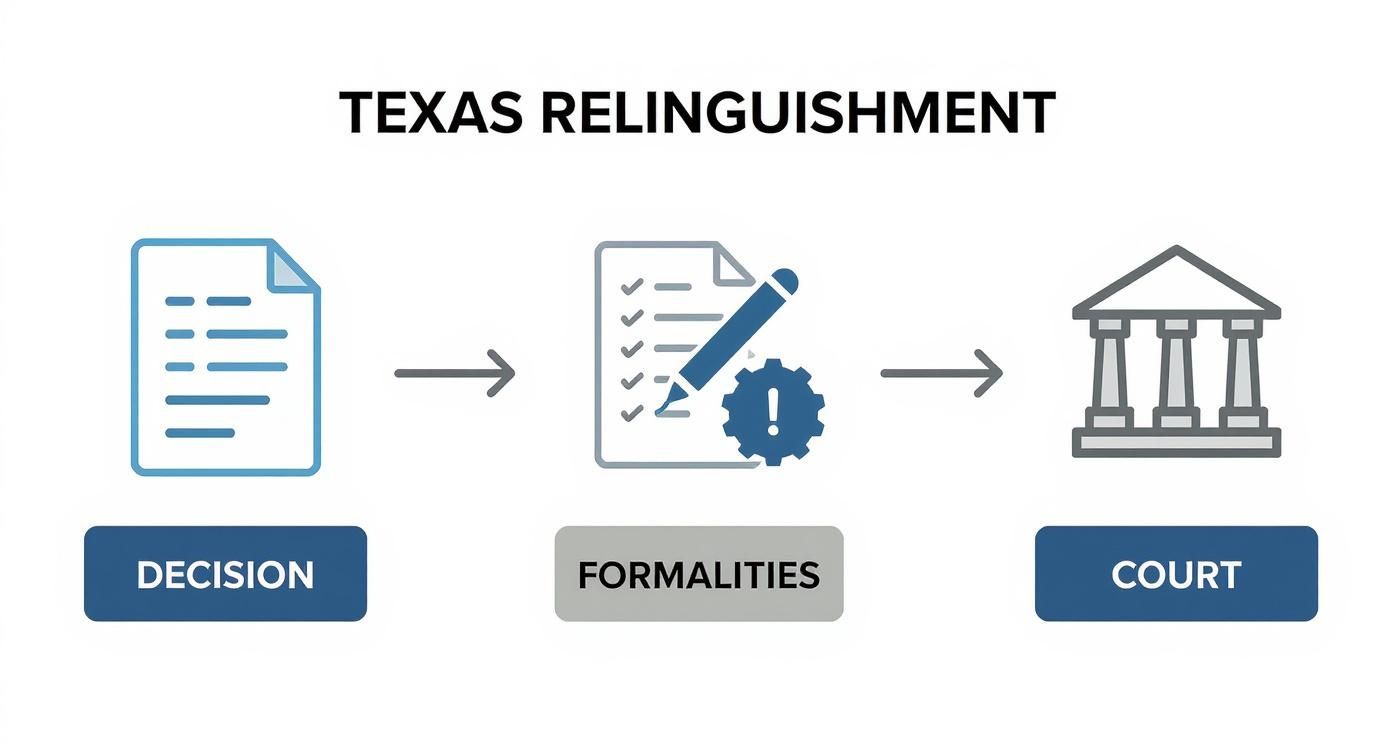
This visual makes it clear: while the legal process is linear—from decision to formalities to court approval—the emotional journey is often far more complex and requires dedicated support.
The legal process provides the structure, but emotional support provides the strength. Both are essential for ensuring the well-being of the child and all the adults who love them.
It's also important to realize that the laws and social norms around terminating parental rights vary wildly across the country. Take West Virginia, for instance, which has a termination rate of 51.1 children per 10,000—more than five times the national average of 8.9 per 10,000. These stark differences highlight how much local policies and resources can shape these deeply personal family outcomes. You can learn more about these national variations on familyjusticeinitiative.org.
For many families, this decision is one of life's toughest moments, prompting a need for support on how to say goodbye to someone you love in a way that feels final and profound. Acknowledging the emotional weight of it all and seeking help isn’t a sign of weakness—it's an act of strength.
Taking Your Next Steps with Compassionate Guidance
https://www.youtube.com/embed/0n_CVVnvwOk
Deciding to sign a release of parental rights form is a journey filled with enormous legal and emotional weight. As we’ve covered, this is a permanent, deeply personal choice that’s part of a formal Texas court process—one designed to put the child’s best interests above all else. It’s a decision that demands careful thought, emotional honesty, and a strong support system.
Understanding the law is the first step, but taking the next one requires personalized, professional advice. While this guide gives you a solid foundation, it can't take the place of an experienced family law attorney who knows how to apply Texas law to your specific situation. A lawyer makes sure every legal detail is handled correctly, protecting the integrity of the adoption and giving you peace of mind.
Preparing for a Legal Consultation
To get the most out of a conversation with an attorney, it helps to do a little reflection first. Thinking through these questions can bring clarity to your consultation and ensure you get the answers you really need.
- Your Goals: What’s the ideal outcome you see for the child? Are you a birth parent considering adoption, a stepparent hoping to adopt, or a relative stepping in to provide care?
- Your Circumstances: Is everyone on the same page, or is there a chance of conflict? Do you know where the other biological parent is?
- Your Support System: Who makes up your emotional support network? Have you thought about counseling or talking with an adoption professional?
- Your Questions: What are your biggest fears or uncertainties about the legal process? What specific information would help you feel confident moving forward?
The reality is, child welfare and adoption are complex. In the U.S., about 1.1% of children will have experienced a legal termination of parental rights by the time they turn 18—a step that often paves the way for adoption. This statistic from a study on ajph.aphapublications.org shows just how many families are touched by this profound legal journey.
Your story is unique, and your legal strategy should be, too. An attorney’s role is to listen with empathy and provide clear, actionable guidance that honors both the law and the human heart.
At The Law Office of Bryan Fagan, PLLC, we are here to provide that compassionate guidance. We understand the courage it takes to explore adoption and are committed to helping you navigate every step with clarity and respect. Finding the right legal partner is key, and our guide on what to look for in adoption attorneys near you can help you make a smart choice.
If you are ready to talk about your options, we invite you to schedule a free, confidential consultation with our team. Let us help you take the next step toward building a secure and loving future for your family.
Frequently Asked Questions
Navigating the emotional and legal maze of a release of parental rights form can be challenging, and it naturally brings up a lot of questions. Below, we've answered some of the most common concerns we hear from Texas families with the clarity and compassion you deserve.
How Soon After Birth Can This Form Be Signed in Texas?
In Texas, a birth mother must wait a mandatory 48 hours after the child is born before she can legally sign an irrevocable Affidavit of Relinquishment. This isn't just a suggestion; it's the law.
This crucial waiting period is designed to ensure the decision is made with a clear head, free from the immediate stress and hormonal shifts of childbirth. Any form signed before that 48-hour mark is revocable, meaning the mother can still change her mind. The two-day pause is a vital safeguard that makes sure the final choice is deliberate and legally sound.
What if the Birth Father Cannot Be Found or Will Not Sign?
Things get more complicated when a birth father is unknown, can't be located after a diligent search, or simply refuses to sign the affidavit. In these cases, the adoptive parents' attorney has to step in and file a lawsuit to terminate his parental rights involuntarily.
This process requires proving to a judge that every reasonable effort was made to find him. Alternatively, it might be necessary to show that his actions—like abandonment or failing to establish legal paternity—justify the termination. The court's number one priority is always what's best for the child, and that means creating a path to a stable, permanent home.
Can I Change My Mind After Signing the Release Form?
Generally, the answer is no. The Texas Affidavit of Relinquishment is designed to be irrevocable for a very important reason: to create absolute stability for the child and allow the adoption to move forward without fear of it falling apart.
Once the form is properly signed, witnessed by two credible people, and notarized, it’s considered final and legally binding. Trying to overturn it is incredibly rare and requires proving extreme circumstances, like clear evidence of fraud or that you were forced to sign under duress. The legal bar is set intentionally high to protect the child’s need for a stable, secure future.
Every family’s situation is unique, and these questions often lead to more personal ones. At The Law Office of Bryan Fagan, PLLC, our compassionate attorneys are here to provide the clear, confidential guidance you deserve. If you're ready to explore your options and understand how Texas adoption law applies to you, we invite you to schedule a free consultation with our team. Visit us at https://texasfamilyadoption.com to take the next step.
