 Skip to content
Some nights are quiet enough that every thought feels louder. You may be sitting on your bed or in your car after an appointment, asking yourself whether adoption could be the right path for your baby. You may love your child and still feel unsure about what you can realistically give right now.
That mix of love, fear, grief, and responsibility is real. Looking up how to put baby up for adoption texas doesn't mean you're giving up. It means you're trying to make an informed, careful decision for yourself and your child.
Many birth parents start here because they want answers without pressure. They want to know what the law says, what their choices are, who gets involved, and whether they still have a voice in the process. In Texas, you do have rights, and you do have choices.
Your First Step Considering Adoption in Texas
A lot of people arrive at this decision slowly. A woman may spend weeks thinking she can make one plan work, only to realize that she needs to consider another. Someone else may already be parenting other children and feel torn between what she wants emotionally and what she can manage day to day.
That inner conflict doesn't make you weak. It shows that you're taking this seriously.

What this first step usually looks like
For many birth parents, the first step isn't paperwork. It's asking simple questions like:
- Can I choose the family: Many private adoptions in Texas allow birth parents to review family profiles and help choose who will raise the child.
- Do I have to decide today: No. Learning about adoption isn't the same as consenting to adoption.
- Can I still have contact later: Sometimes, yes. That depends on the kind of adoption relationship everyone agrees to build.
- What if I'm not sure yet: Then your job right now is to gather information, not force a decision.
Practical rule: You don't need to have every answer before you ask for help. You only need enough clarity to take the next small step.
Why information matters early
Adoption is both emotional and legal. If you only hear the emotional side, you may miss important protections under Texas law. If you only hear the legal side, you may feel like nobody sees what this choice costs you personally.
A better approach is one that respects both. You need room to think, support to process your feelings, and a clear explanation of what happens before birth, at the hospital, and after placement.
Some birth parents also want to compare adoption with guardianship or placement with relatives. That's a valid part of the process. The best decision is the one you understand clearly and make freely.
Understanding Your Adoption Choices in Texas
Texas families often use the term "putting a baby up for adoption," but in practice the path matters a lot. The system, the people involved, and the amount of support you receive can look very different depending on whether the adoption is agency-based, attorney-led, or connected to the foster care system.
In Texas, this process is primarily handled through private domestic infant adoption, where birth parents can voluntarily choose adoptive families. In that setting, birth mothers usually review profiles, and flexibility in preferences can shorten wait times from an average of 12 to 24 months to as little as 6 months, according to Texas adoption statistics and requirements.
The three paths most people hear about
Some birth parents know right away that they want an agency involved. Others want more direct legal guidance. Some hear the term "adoption" and assume foster care is part of the same process, when it often isn't.
Here's a side-by-side look.
| Feature | Private Agency Adoption | Independent Attorney Adoption | Foster Care System |
|---|---|---|---|
| How it usually starts | Birth parent contacts a licensed agency for counseling, matching, and planning | Birth parent works with an attorney, often with separate professionals helping with counseling or matching | Usually begins through child welfare involvement, not a voluntary private infant placement |
| Choosing the family | Often includes reviewing family profiles and selecting the adoptive family | May allow a high level of direct choice, depending on how the match is arranged | Family selection follows state procedures rather than a private matching process |
| Emotional support | Agencies commonly provide counseling and help with hospital planning | Support may be more limited unless separate counseling is arranged | Support is tied to the child welfare system and court process |
| Legal process | Agency coordinates with attorneys and required filings | Attorney manages the legal documents and court steps directly | DFPS and the courts handle the case under a different system |
| Best fit for many voluntary infant placements | Often a common path because it combines matching, counseling, and legal coordination | Can work well for people who already have a match or want direct legal handling | Usually not the route for a parent voluntarily making a private infant adoption plan |
Private agency adoption
This is often the clearest path for a birth parent who wants guidance from start to finish. A licensed agency usually helps with counseling, explains open and closed adoption choices, shows waiting family profiles, and helps create a hospital plan.
The emotional support can matter just as much as the paperwork. When you're dealing with stress, family pressure, or uncertainty about the birth father, having a structured process can make the decision feel more manageable.
A simple example helps. A pregnant woman in Houston may want an adoptive family who lives in Texas, shares her faith, and is open to sending updates. An agency can help her sort through profiles with those exact factors in mind.
Independent adoption with an attorney
Some families and birth parents already know each other. Sometimes a family friend, relative, or identified adoptive couple is already part of the conversation. In those cases, an attorney may handle the legal side more directly.
That can be useful, but it also means the support system may depend on who else is involved. A lawyer can explain rights, prepare legal documents, address consent issues, and guide the court process. Counseling and matching help, however, may need to be arranged separately.
A legal process can be valid and still feel emotionally overwhelming. Support is not a luxury in adoption. It's part of making informed decisions.
Why foster care adoption is different
Foster care adoption serves a different purpose. It usually follows state involvement because of safety concerns, removal, or a longer child welfare case. That is very different from a private infant adoption where a birth parent voluntarily chooses an adoption plan.
This point causes confusion. A person searching online may see large adoption numbers related to foster care and assume those cases work the same way as private placements. They don't.
In private infant adoption, the focus is usually on your voluntary decision, your right to choose a family, and the legal steps for consent and placement. In foster care, the court and DFPS play a central role from the start.
How to think about the right fit
If you're unsure which path fits, ask yourself:
- Do I want counseling built into the process: If yes, an agency may feel more supportive.
- Do I already know the adoptive family: If yes, an attorney-led route may make sense.
- Am I dealing with pressure or conflict from the other parent or relatives: If yes, strong legal guidance becomes especially important.
- Do I want help planning contact after placement: Agency support can be helpful when building an open adoption relationship.
For many birth parents, the right path is the one that protects their voice while also giving them enough structure to breathe.
The Legal Process for a Texas Adoption
The legal part of adoption can sound intimidating until it's translated into plain English. Texas law doesn't treat your decision like a quick signature. It builds in waiting periods, consent rules, and court review because ending parental rights is serious and permanent.
That matters. These rules exist to protect you from pressure, confusion, and rushed decisions.
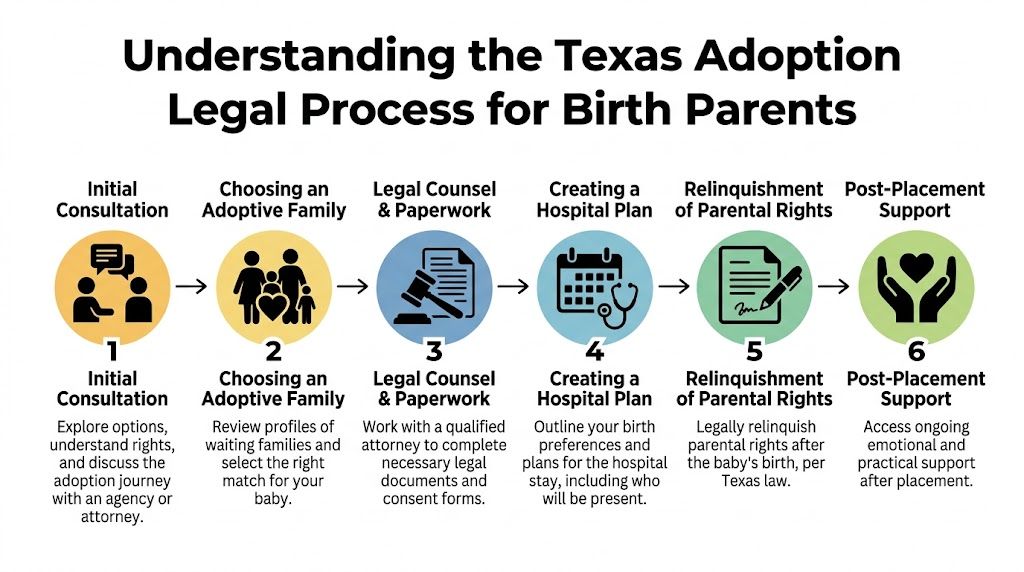
The legal milestones in plain language
A Texas private adoption usually moves through several legal moments. Each one has a purpose.
Initial conversations and planning
You speak with an agency or attorney, learn your rights, and decide whether adoption is something you want to pursue.Matching with an adoptive family
If you're choosing a private adoption path, you may review profiles and decide which family feels right.Hospital and placement planning
Before birth, the adults involved usually make a plan for the hospital experience, including contact, timing, and practical details.Signing consent after birth
Texas law does not allow a birth mother to sign relinquishment papers until 48 hours after birth, and there is a 10-day revocation window after that. Agencies report that about 5% to 10% of birth mothers use that window, according to this Texas adoption step-by-step guide.Court filings and legal review
Attorneys prepare and file the necessary documents, including affidavits and requests for termination or adoption approval.Finalization
The court reviews the case and, if everything meets legal requirements, enters the final order.
Why the 48-hour wait matters
A lot of birth parents are surprised to learn they can't sign immediately after delivery. Texas requires that waiting period for a reason. Birth is physically demanding, emotionally intense, and often overwhelming.
The law creates space. It gives you time to recover enough to understand what you're signing.
This is one of the most important protections in the process. If anyone makes you feel rushed, that's a warning sign.
Important: A decision this significant should never be made while you're exhausted, medicated, or under pressure from someone else's deadline.
The 10-day revocation window
After consent is signed, Texas law provides a 10-day revocation window. During that time, the consent can be withdrawn. For many birth parents, knowing that this safeguard exists helps them feel less trapped by the process.
That doesn't make the decision easy. It does mean the law recognizes how emotional the days after birth can be.
If you're worried about what signing means, careful legal advice becomes especially valuable. A lawyer can explain what documents you are signing, when they become effective, and what rights you still hold during that short window.
A helpful starting point is this guide to Texas consent to adoption forms, which explains the documents involved in plainer language.
The birth father's role
This is one of the areas that causes the most anxiety. Birth parents often ask, "What if the father agrees?" or "What if he won't cooperate?" or "What if I don't know where he is?"
Texas law takes paternal rights seriously. Depending on the facts, the father may need to be notified, may need to consent, or his rights may need to be addressed through another legal process. If he is married to the mother, his legal role may look different than that of an alleged or unknown father.
Situations vary a lot, but common issues include:
- Known and cooperative father: He may sign the required documents after the legal waiting period.
- Known but uncooperative father: The court may need additional steps before rights can be terminated.
- Unknown or absent father: Notice, registry checks, or other procedures may be required.
This is not an area to guess your way through. Even when a father hasn't been involved during the pregnancy, the legal process still has to account for his rights properly.
Chapters 162 to 166 in everyday terms
Texas Family Code Chapters 162 through 166 govern key parts of adoption and related procedures. In plain language, those chapters deal with who may adopt, what consents are needed, how the court reviews the case, what procedures must happen before finalization, and how records and legal effects are handled.
For a birth parent, the practical meaning is simple. The court will not approve an adoption just because everyone says they want it done. The legal steps have to be completed correctly, and the child's best interests remain central throughout the case.
One option families may discuss during this process is working with a private agency or attorney team, including offices such as the Law Office of Bryan Fagan, PLLC, for legal guidance on consent, notice, and finalization.
Creating Your Personal Adoption and Hospital Plan
Once you've learned the legal basics, the next question is often more personal. What do you want this experience to look like?
That question matters because adoption isn't only a court process. It's also your pregnancy, your delivery, your goodbye, and possibly your future relationship with the adoptive family.

Choosing an adoptive family
This part can feel strange at first. You're often reading letters, looking at photos, and trying to understand who these people really are. But the process can also be grounding, because it gives you concrete things to think about.
You might care about where they live, whether they already have children, their religion, their work schedules, or how they talk about adoption. Some birth parents want a two-parent home. Some are open to a single parent. Some want a family that supports LGBTQIA+ children or comes from a certain cultural background.
A simple way to begin is to write down your firm requirements and your preferences.
- Non-negotiables: These are the things that matter most to you, such as location, family values, or openness to ongoing updates.
- Preferences: These are the things you'd like if possible, such as hobbies, pets, extended family closeness, or parenting style.
If you're looking for a starting point, this guide on finding a newborn adoption agency in Texas can help you understand how agencies present waiting families and what questions to ask.
Open, semi-open, and closed adoption in real life
These terms sound simple until you're the one deciding.
Open adoption usually means there is some ongoing contact between birth parent and adoptive family. That might be pictures, texts, phone calls, letters, or occasional visits if everyone agrees.
Semi-open adoption often means contact happens through the agency, attorney, or another structured method. You may receive updates without sharing direct personal information.
Closed adoption means there is little or no ongoing contact after placement.
Here is what those choices may look like in everyday life:
| Type | What it can look like |
|---|---|
| Open adoption | You receive photos and updates directly and may have agreed contact at certain times |
| Semi-open adoption | Messages or photos are shared through a professional or another agreed channel |
| Closed adoption | There is no ongoing exchange, or contact is very limited |
Some birth parents feel peace knowing they'll receive updates. Others need privacy to heal. Neither choice is selfish. The right plan is the one you can live with honestly.
Don't overlook the birth father's emotional role
A lot of adoption guidance centers on mothers. That's understandable, but it can leave fathers underinformed and emotionally sidelined.
Birth fathers are involved in 20% to 30% of contested relinquishments nationwide, and a 2024 Child Welfare Information Gateway report found that father-inclusive counseling programs can reduce revocation rates by 25%, as discussed by Legacy Adoption Services in its Texas adoption resource.
That doesn't mean every father will want counseling or participate well. It does mean that early, respectful involvement can reduce conflict and confusion. If the father is part of the picture, talk with your agency or attorney about how communication, counseling, and legal notice should be handled.
Building a hospital plan that respects your wishes
A hospital plan is one of the most personal parts of the process. It puts your preferences into words so other people know what you want during labor, delivery, and the hours after birth.
Your plan might address:
- Who is in the room: You may want the adoptive parents there, or you may want time alone with medical staff and a support person.
- Time with the baby: Some birth mothers want to hold, feed, name, or spend private time with the baby. Others don't.
- Photos and keepsakes: You might want pictures, a bracelet, footprints, or a blanket.
- When the adoptive family meets the baby: This can happen on your timeline, within the limits of hospital policy and the legal process.
- Communication at the hospital: Decide who speaks with nurses, social workers, and family members so your wishes stay clear.
This short video can help you think through the emotional side of planning:
A hospital plan is not about being cold or formal. It's about protecting your emotional space during an intense moment. Even if you later change parts of it, having a plan can help you feel more steady.
Life After Placement Emotional and Legal Next Steps
After placement, many birth parents expect to feel one emotion. Relief, maybe. Or grief. What often happens instead is both, along with numbness, anger, sadness, love, and second-guessing.
That doesn't mean you made the wrong decision. It means you're human.
Support still matters after placement
Some people around you may act like the process is over once the baby goes home with the adoptive family. Legally, there are still steps ahead. Emotionally, that's often when the hardest part begins.
Counseling after placement can help you process loss, identity shifts, family reactions, and your new relationship to the child and adoptive family. If faith is part of your healing, some birth mothers also find comfort in quiet reflective resources such as these comforting prayers for peace for new mothers, especially during the first weeks after placement.
Healing doesn't follow a schedule. You may feel steady one day and deeply sad the next.
What finalization means
If the adoption is agency-led, the case often continues through a period of supervision before finalization. Some Texas agencies report 92% finalization rates for infants, and that success is often tied to the 6-month post-placement supervision period with monthly reports, which can reduce disruptions by up to 40%, according to DePelchin's guide to adopting a child in Texas.
For a birth parent, finalization usually means the court has completed the legal adoption and the adoptive parents become the child's legal parents under the final order. You may not attend that hearing, depending on the circumstances and the plan.
Open adoption after placement
If you've agreed to an open or semi-open relationship, this is when expectations become real. A promise that sounded easy during pregnancy can feel more complicated once everyone is dealing with real emotions and a new baby.
Keep communication clear. Save copies of messages or written agreements. Ask for help early if contact starts to drift or misunderstandings build.
If you need a better understanding of the legal side of ending parental rights and what that means after placement, this compassionate guide to voluntary termination of parental rights in Texas can help.
Some families benefit from mediation or attorney guidance if expectations around updates, photos, or visits stop matching what was discussed. The sooner concerns are addressed, the easier they usually are to manage.
Common Questions from Birth Parents in Texas
Do I get to choose the adoptive family
Often, yes, in a private infant adoption. Many birth parents review profiles and decide which family feels right based on values, lifestyle, and the kind of future they imagine for their child.
Can I sign adoption papers before the baby is born
No. Texas law requires a waiting period after birth before relinquishment documents can be signed. That rule exists to protect your ability to make an informed decision after delivery.
What if the birth father won't cooperate
That doesn't automatically stop the process, but it can make the legal path more complicated. His rights may need to be addressed through notice, consent, registry checks, or court action depending on the facts. This is one of the clearest times to get legal advice early.
Can I have contact with my child after adoption
Sometimes. That depends on whether you choose an open, semi-open, or closed adoption plan and what the adults agree to. Contact can range from updates and photos to more personal communication.
What if I change my mind
Texas law gives birth mothers a period after signing to revoke consent. If you're unsure, say so clearly and get legal guidance before signing anything.
Is adoption always the right option if I'm struggling
Not always. Some parents decide on adoption. Others explore support from family, guardianship, or temporary help while they sort out housing, health, or finances. A good conversation should help you understand options, not push you toward one answer.
Taking Your Next Step With Confidence and Support
Adoption in Texas is not a single moment. It's a series of choices, each one shaped by your rights, your values, and your love for your child. You don't have to know everything today, and you don't have to carry every legal and emotional question by yourself.
If you're considering how to put baby up for adoption texas, the next best step is a calm, confidential conversation with someone who can explain your options in plain language and help you protect your voice throughout the process.
If you want clear answers about your rights, the father's role, consent, hospital planning, or what happens after placement, you can schedule a free consultation with Law Office of Bryan Fagan, PLLC.

