 Skip to content
You may be sitting at your kitchen table with a notebook open, a browser full of tabs, and a quiet question that feels bigger than words. Can we really do this in Texas? Can we build our family here, legally and securely, without spending every step wondering if someone will question who we are?
Those questions are common. They're also highly personal. For many hopeful parents, the path to adoption begins with joy, then quickly fills with legal terms, forms, waiting periods, and worries about whether being part of the LGBTQ+ community will make the road harder.
It helps to hear this plainly. Gay adoption in Texas is possible, and many families move through this process with love, planning, and strong legal support. What matters most in a Texas adoption case is the child's well-being, the stability of the home, and whether the adoption serves the child's best interests.
This guide walks through the legal and emotional side together. That matters, because adoption is never just paperwork. It's also about trust, readiness, family identity, and protecting your child from uncertainty later.
Your Dream of Family Is Welcome in Texas
Jordan and Miguel had been talking about parenthood for years. First it was casual. Then it became serious. Then one night, after a friend shared photos from an adoption finalization day, they stopped speaking in “maybe someday” language and started asking real questions. Do we need to be married? Will a judge treat us fairly? What if an agency turns us away? What if we love a child and then something goes wrong legally?
Those questions can feel heavy because they touch both hope and fear at once. Many LGBTQ+ individuals and couples in Texas start in that exact place. They aren't just researching forms. They're trying to picture a real life with bedtime stories, school pickups, holiday traditions, and the quiet routines that make a family feel secure.

Texas families come together in many ways. Some welcome a newborn through private adoption. Some adopt through foster care. Some secure a child's future through stepparent or second-parent adoption. In each path, the law is trying to answer one central question. Will this adoption give the child a safe, loving, permanent home?
That's why this conversation shouldn't begin with fear. It should begin with clarity. If you're exploring gay adoption in Texas, you deserve straight answers in plain English, along with room for the emotional side of the process. Family life also grows in ordinary moments after the legal work is done, which is why simple ideas like inspiring family bonding activities can help hopeful parents picture the home they're building.
The legal process matters, but so does the life waiting on the other side of it.
Understanding Your Legal Rights to Adopt
The legal foundation matters because it tells you where you stand before you invest your heart in the process. For married same-sex couples, the Supreme Court's decision in Obergefell v. Hodges established marriage equality nationwide. In practical terms, that means married same-sex couples have the same marriage-based legal status other married couples rely on when they pursue adoption.
Texas law does not create a blanket rule that bars someone from adopting because of sexual orientation. The court's focus is different. Judges look at whether the adoption is in the best interest of the child.
What the best-interest standard means
That phrase sounds broad because it is. Under the Texas Family Code, especially the adoption procedures found in Chapters 162 through 166, courts look at the child's safety, stability, relationships, long-term care, and overall welfare. They are not supposed to be deciding whether one family type is more worthy than another. They are deciding whether this child will be protected and cared for in a lasting home.
For hopeful parents, that usually means the court and the professionals involved will pay attention to things like:
- Home stability: Is the child entering a safe and dependable household?
- Caregiving ability: Can the parent or parents meet daily emotional, medical, and educational needs?
- Commitment to permanency: Are you prepared for the legal and lifelong responsibilities of parenting?
- Child-centered planning: Does the adoption support continuity, security, and healthy attachment?
Where people often get confused
Many couples assume marriage alone automatically secures every parental right. It doesn't always. In some families, especially where one parent is biological or previously recognized and the other is not, an adoption may still be the step that gives the child and the non-legal parent stronger protection. That's one reason many families read a more detailed same-sex couples adoption guide in Texas early in the process.
Another point of confusion involves legal help. Some adoptions are smoother than others, but paperwork errors, consent issues, notice requirements, and court procedure can create avoidable trouble. When to Hire a Texas Adoption Attorney becomes important when you want to protect the case from delays and challenges.
Practical rule: If a step affects parental rights, consent, or the final court order, treat it as legal work, not just administrative work.
Choosing Your Texas Adoption Path
Not every adoption starts the same way. Some families hope to adopt an infant. Others feel called to foster first. Others are already raising a child together and need the law to catch up with the reality of their family. Choosing the right path can make the whole experience feel less overwhelming.
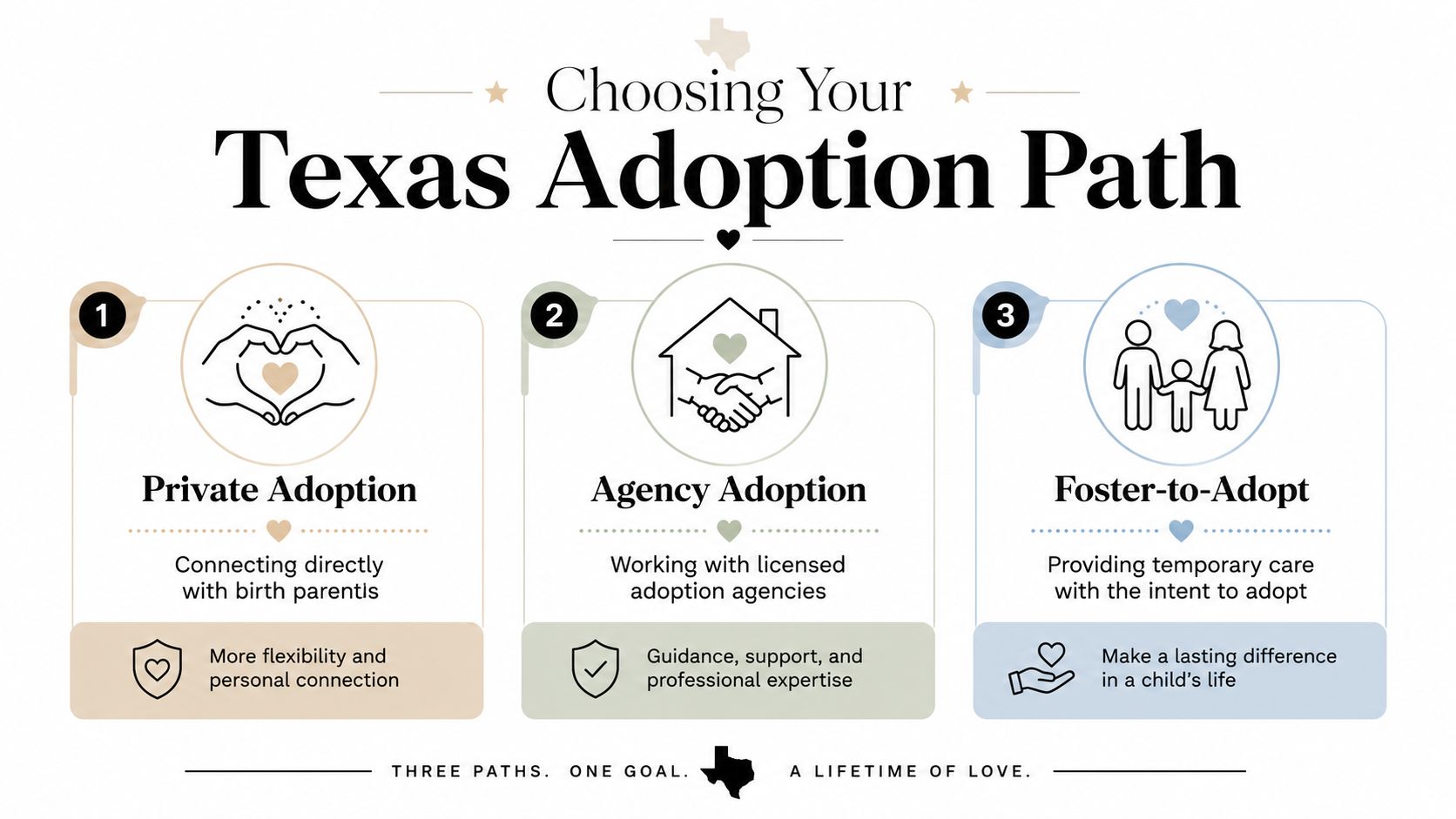
A side-by-side look at common options
| Path | Often fits families who | Main legal focus | Common emotional theme |
|---|---|---|---|
| Private adoption | Want to pursue placement through an agency, attorney, or direct match with birth parents | Consent, placement, court approval, finalization | Relationship-building and uncertainty during matching |
| Foster-to-adopt | Are open to children in state care and understand reunification may be part of the case early on | Child welfare rules, placement, permanency planning, finalization | Patience, flexibility, and loyalty to the child's needs |
| Stepparent or second-parent adoption | Already have a child in the home and need both parents legally recognized | Existing parental rights, termination if required, adoption order | Security, protection, and peace of mind |
Private adoption
Private adoption often involves working with an agency or attorney to connect with an expectant parent or birth parent making an adoption plan. Some couples are drawn to this path because they hope to parent from infancy or because they want more involvement in pre-placement communication.
The emotional challenge here is often the waiting. A family profile may feel personal. You're not just filling out forms. You're introducing your values, routines, relationship, and hopes to someone making a major decision.
If you're looking for agencies that understand LGBTQ+ families, this resource on LGBT-friendly adoption agencies in Texas can help narrow the search.
Foster-to-adopt
This path usually begins with the child welfare system. In some cases, reunification with the birth family remains the first goal for part of the case. If reunification is no longer possible and termination of parental rights occurs, adoption may become the permanency plan.
That can be emotionally complex. You may care for a child while legal decisions are still unfolding. Families who choose this route often do well when they enter with open eyes and a child-centered mindset.
Stepparent or second-parent adoption
This path is common for LGBTQ+ families already parenting together. One parent may be the child's biological parent, or one may be the only parent currently recognized in law. Adoption can secure equal legal rights for the other parent and create stronger long-term protection for the child.
For families in that position, Stepparent Adoption in Texas explains the most common version of this process and how the court handles it.
The Texas Adoption Process Step by Step
The adoption process feels less intimidating once you can see it as a sequence. Texas Family Code Chapters 162 through 166 govern much of the legal framework, including who may adopt, required consents, placement rules, reports to the court, and finalization. The exact order can vary a little depending on the type of adoption, but most cases move through the same core stages.
To make the roadmap easier to picture, here's a visual summary.
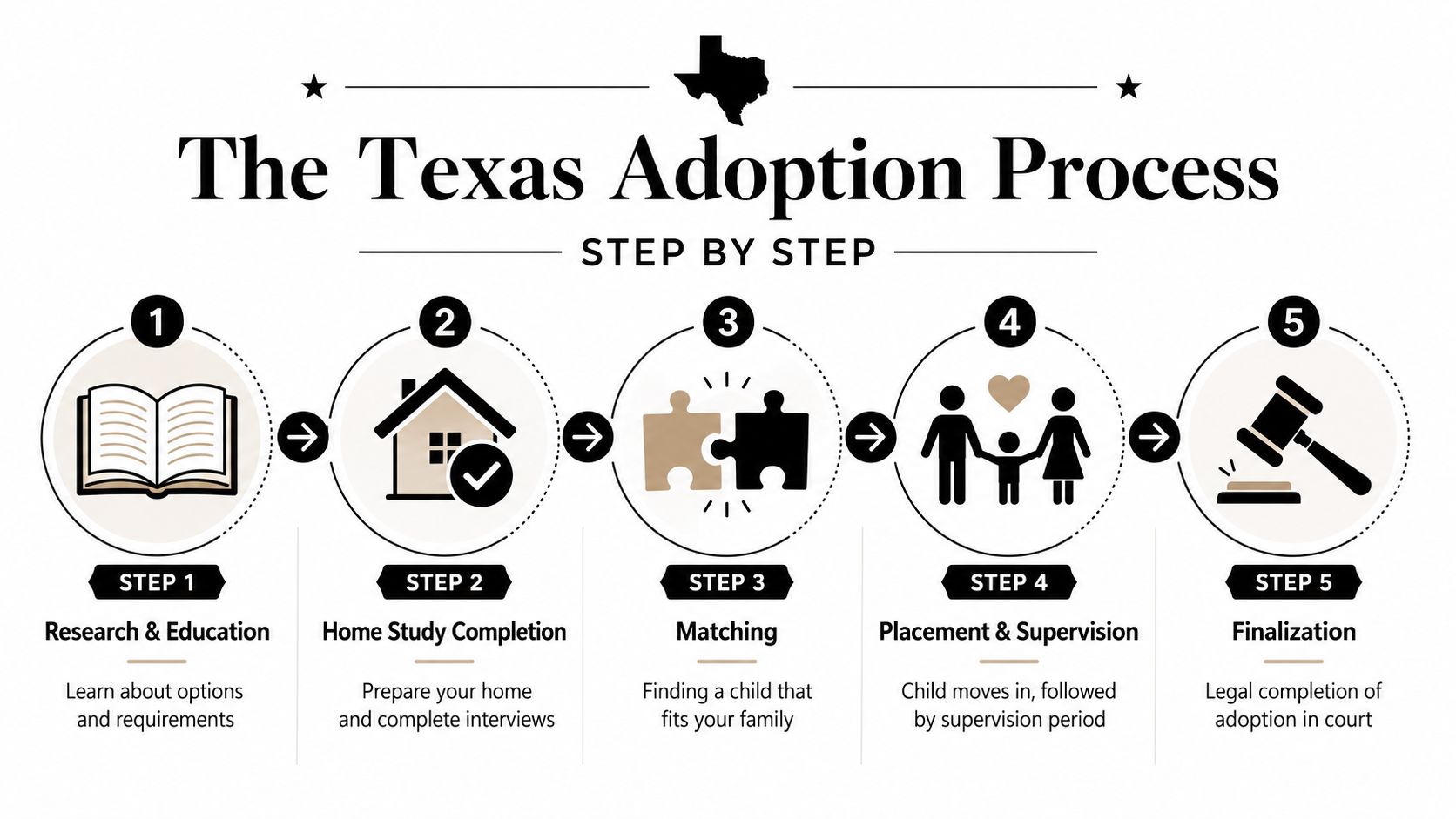
Step one begins before any filing
The first legal choice is often practical. Who will guide the case? That may be a licensed agency, an attorney, or both, depending on the type of adoption. This early stage usually includes intake forms, discussions about the kind of adoption you're pursuing, and a review of whether any prior parental rights or court orders affect the case.
For gay adoption in Texas, this is also the stage where families often screen for fit. You want professionals who understand your path, speak respectfully about your family, and know how to avoid preventable delays.
A short video can help turn the legal roadmap into something more human and understandable.
The home study and pre-placement review
Most adoptions require a home study or a similar evaluative report. This usually involves interviews, background checks, document collection, and a home visit. The social worker isn't looking for a showroom. They're looking for safety, stability, honesty, and readiness.
You may be asked about your relationship, work schedules, finances, support system, parenting philosophy, and experience with children. If you're adopting through foster care or in a kinship setting, the process may include additional training or agency-specific requirements.
A good home study reads like a picture of real family life, not a performance.
Matching and placement
In private adoption, matching may happen when a birth parent chooses your family or when an agency helps make that connection. In foster or CPS-related cases, placement may follow agency review and the child's case needs. In stepparent or second-parent cases, there may be no “match” at all because the child is already home.
Once placement occurs, daily life changes quickly. The law may still be catching up, but the parenting becomes immediate. Meals, routines, school forms, doctor visits, comfort after nightmares, and first family photos all start happening while legal supervision continues in the background.
Consents and termination of parental rights
This is one of the most sensitive legal stages. In many cases, the court must address the rights of existing legal parents before an adoption can be finalized. Depending on the situation, that may involve a voluntary relinquishment, a court order terminating rights, or proof that consent isn't required under the law.
For readers who aren't lawyers, here's the simple version. Texas won't create a new legal parent-child relationship through adoption until the court is satisfied that existing legal rights have been resolved correctly. If this part is mishandled, the adoption can face delays or legal challenges later.
Post-placement supervision
After placement, many cases include a supervision period before the court signs the final order. A social worker or agency representative may check on how the child is adjusting, how the home is functioning, and whether the placement continues to serve the child's best interests.
This stage can feel oddly ordinary and intense at the same time. You're living as a family, but you're also still waiting for the legal finish line. That emotional mix is normal.
Finalization in court
Finalization is the moment many parents remember forever. The court reviews the required paperwork, confirms legal requirements have been met, and, if satisfied, signs the order that makes the adoption final. Once that happens, the adoptive parent or parents have the legal rights and responsibilities of parenthood recognized under Texas law.
Here's a simple way to think about the full process:
- Choose your path and professionals so the case starts on solid footing.
- Complete the required study and screening to show the court your home is safe and stable.
- Move through placement and any needed consents with careful attention to legal details.
- Cooperate with supervision and reports while the child settles in.
- Attend finalization and leave court with a legally protected family relationship.
If you're feeling overwhelmed, that doesn't mean you're unprepared. It means this matters to you.
Navigating Potential Hurdles as an LGBTQ Parent
A legal right and a smooth experience aren't always the same thing. Many LGBTQ+ parents move through adoption without unusual conflict, but some run into hesitation from a private agency representative, an expectant parent, or someone involved in the review process. Those moments can sting because they don't just feel procedural. They can feel personal.
Take a common example. A married couple creates a thoughtful adoption profile with photos, a letter, and a clear description of their home life. They submit it and wait. Then they learn, gently but unmistakably, that a particular professional or birth parent is looking for a different family structure. Nothing about their readiness has changed, but they still have to absorb the disappointment and decide what to do next.
How to respond without losing heart
The healthiest response usually combines realism and self-respect.
- Choose affirming professionals early. Ask direct questions about experience with LGBTQ+ adoptions, communication style, and how they handle matching.
- Tell your family story truthfully. Don't water down your relationship to seem more acceptable. The right match usually depends on authenticity.
- Build support outside the case. Friends, affirming relatives, counselors, and parent groups can hold you steady during waiting periods and setbacks.
- Keep the child at the center. When decisions become emotional, this focus helps you judge each option clearly.
Your profile should sound like you
Many hopeful parents think they need to sound formal or impressively polished. Usually, warmth works better than perfection. If you love quiet weekends, neighborhood walks, game nights, and Sunday dinners with grandparents, say that. If your home includes two dads, two moms, or one parent supported by a close chosen family, present that with confidence.
Rejection from one path doesn't define your fitness to parent. It only means that path wasn't the one that fit.
There can also be tension inside extended families. A grandparent may be supportive of the child but unsure how to talk about adoption in an LGBTQ+ household. A teacher or medical office may need clarity about who holds legal rights. Those practical issues become easier to handle when your legal paperwork is complete and your support network is strong.
Small steps that protect your peace
Some families do well by setting simple rules during the process:
- Only share major updates with people who are consistently supportive.
- Keep copies of every important record in one organized file.
- Write down questions before every meeting.
- Treat pauses and delays as part of the process, not as proof something is wrong.
The emotional side of gay adoption in Texas deserves just as much care as the legal side. You're not overreacting if parts of this feel vulnerable. You're building a family in public-facing systems, and that takes courage.
Preparing for a Successful Home Study
The home study is one of the most misunderstood parts of adoption. Many parents picture a white-glove inspection or a test they can fail over small imperfections. In real life, the purpose is much simpler. The evaluator is trying to determine whether a child will enter a safe, stable, caring home.

What the home study usually includes
You'll usually need to gather documents, meet with a social worker, and prepare for a home visit. Background screening is a regular part of the process, and many parents like to understand that step ahead of time. A plain-language overview of a criminal background check for volunteers can help explain the general idea behind screening procedures, even though adoption cases follow their own legal requirements.
Expect these topics to come up:
- Your documents: identification, household information, and records the evaluator requests
- Your history: relationships, upbringing, health, and prior parenting experience
- Your finances: not to prove wealth, but to show responsible stability
- Your home: basic safety, sleeping arrangements, and child-ready conditions
How to approach the interviews
Answer openly. If you've faced family rejection, career stress, infertility grief, or a hard season in your relationship, that doesn't automatically hurt your case. Social workers are usually looking for honesty, insight, and healthy coping, not a perfectly smooth life story.
A helpful mindset is to think of the home study as a conversation with documentation. You're showing how your household works, how you solve problems, and how a child will be cared for there.
Bring your real life into the room. Prepared and honest beats polished and guarded.
A simple preparation checklist
- Create one folder for requested records so you're not hunting for paperwork last minute.
- Walk through your home with safety in mind, including storage, exits, and sleeping space.
- Talk through parenting roles before the interview so both partners can explain daily responsibilities clearly.
- Name your support system because social workers want to know who can help when life gets busy.
No family looks perfect up close. That isn't the standard. Safe, steady, loving, and ready. That's the standard that matters.
Why an Experienced Adoption Attorney Is Your Best Ally
A lot of couples reach this stage feeling two things at once. Relief that the path is becoming real, and fear that one missed legal step could delay the family they have worked so hard to build.
That concern is understandable. Adoption in Texas is personal, but the court process is still a court process. Petitions have to be accurate. Consents have to be properly prepared and timed. Notice rules, agency records, prior parent-child orders, and final paperwork all have to line up. A mistake here is a little like putting the right family photo in the wrong frame. Your story is still real, but the court needs it presented in the form the law requires.
An experienced adoption attorney brings order to that process. Your attorney reviews the facts of your case, watches for legal issues early, prepares and files the needed documents, works with the agency or other parties when necessary, and appears with you at finalization. For LGBTQ+ couples, that guidance can matter even more when one parent is non-biological, when a prior order needs careful review, or when the goal is to secure parental rights that are clear and durable.
Good legal counsel also helps with the emotional side of the process. Many hopeful parents worry about being treated unfairly, misunderstood, or surprised by a legal issue they did not see coming. A knowledgeable attorney can answer those questions plainly, explain what is routine and what deserves closer attention, and give you a steadier sense of what lies ahead. That kind of clarity lowers stress because you are no longer guessing.
Some families use an agency and hire an attorney for the court portion. Others need legal help from the beginning because the facts are more layered. If you are weighing your options, this guide on how to choose the right adoption attorney in Texas offers a practical way to compare experience, communication style, and fit.
The Law Office of Bryan Fagan, PLLC is one Texas family law firm that handles adoption and guardianship matters across the state.
The right attorney does not speak over you. The right attorney helps protect your family, your timeline, and the legal foundation your child will rely on for years to come.

