
You may be staring at a browser full of law firm websites, trying to figure out which lawyer can effectively help your family move forward. That moment is common in adoption. People feel hopeful, protective, excited, and overwhelmed at the same time.
Choosing an adoption attorney in Texas isn't just about hiring someone to file forms. It's about finding the person who can guide you through one of the most meaningful legal steps your family may ever take. The right lawyer helps you understand what happens next, what could slow the case down, and what your options are when emotions and legal rules start to collide.
For some families, that means a stepparent is ready to make an existing bond legal. For others, a grandparent is raising a child and wants lasting stability. Some hopeful parents are pursuing a private infant adoption. Others are working through foster care or a case that may involve another state. Those paths all fall under the broad label of adoption, but they do not require the same legal experience.
That difference matters. If you want to learn what an adoption attorney does, start with this basic idea: a strong adoption lawyer doesn't just know the law. They know your kind of case.
Your Attorney Is Your Guide Through the Texas Adoption Journey
Starting an adoption often feels like standing at the base of a mountain. You can see the goal. You want to reach it. But the path isn't always obvious, and one wrong turn can cost time, money, and peace of mind.
That is why the attorney-client relationship matters so much in adoption. A good lawyer acts like a guide who knows the route, warns you about steep spots ahead, and helps you prepare before the climb gets harder.

What your lawyer should help you do early
Texas sets baseline requirements before many families can move forward. Prospective adoptive parents must generally be at least 21 years old, be a Texas resident, complete a home study, and pass criminal background and child abuse clearances. A qualified attorney helps make sure those basics are handled correctly from the start, as explained by McCarty Larson's overview of Texas adoption attorneys.
Those requirements may sound straightforward, but families often get stuck on practical questions.
- Home study questions. Who arranges it, when to begin, and what documents should be ready.
- Household screening concerns. Whether every adult in the home needs background checks.
- Case-type confusion. Whether a relative adoption, stepparent adoption, or private placement follows the same process.
A lawyer who focuses on Texas adoption should answer those questions in plain English.
Practical rule: If a lawyer talks only about forms and never about your family structure, your timeline, or your specific adoption path, that lawyer may be too general for this job.
The right relationship should feel steady
A strong adoption attorney should bring two things at once. First, they should understand Texas Family Code procedures, including the steps tied to termination of parental rights, consent, placement, and finalization. Second, they should know that families need calm, direct communication during an emotional process.
Consider a simple example. A stepparent may think, "I've already been raising this child for years. Why is this taking legal work at all?" A good attorney explains that the court isn't judging the love in the home. The court is making sure legal parent-child rights are created properly and that any required parental rights issues are resolved under Texas law.
That kind of guidance protects everyone involved, especially the child.
Why early guidance makes a difference
Families sometimes wait to speak with a lawyer until a problem appears. In adoption, that can be too late. Missing paperwork, misunderstood notice requirements, or assumptions about consent can create avoidable delays.
The best attorneys don't just react. They map the road ahead, explain the legal checkpoints, and prepare you before the court asks for something you didn't expect.
Matching Attorney Expertise to Your Unique Adoption Path
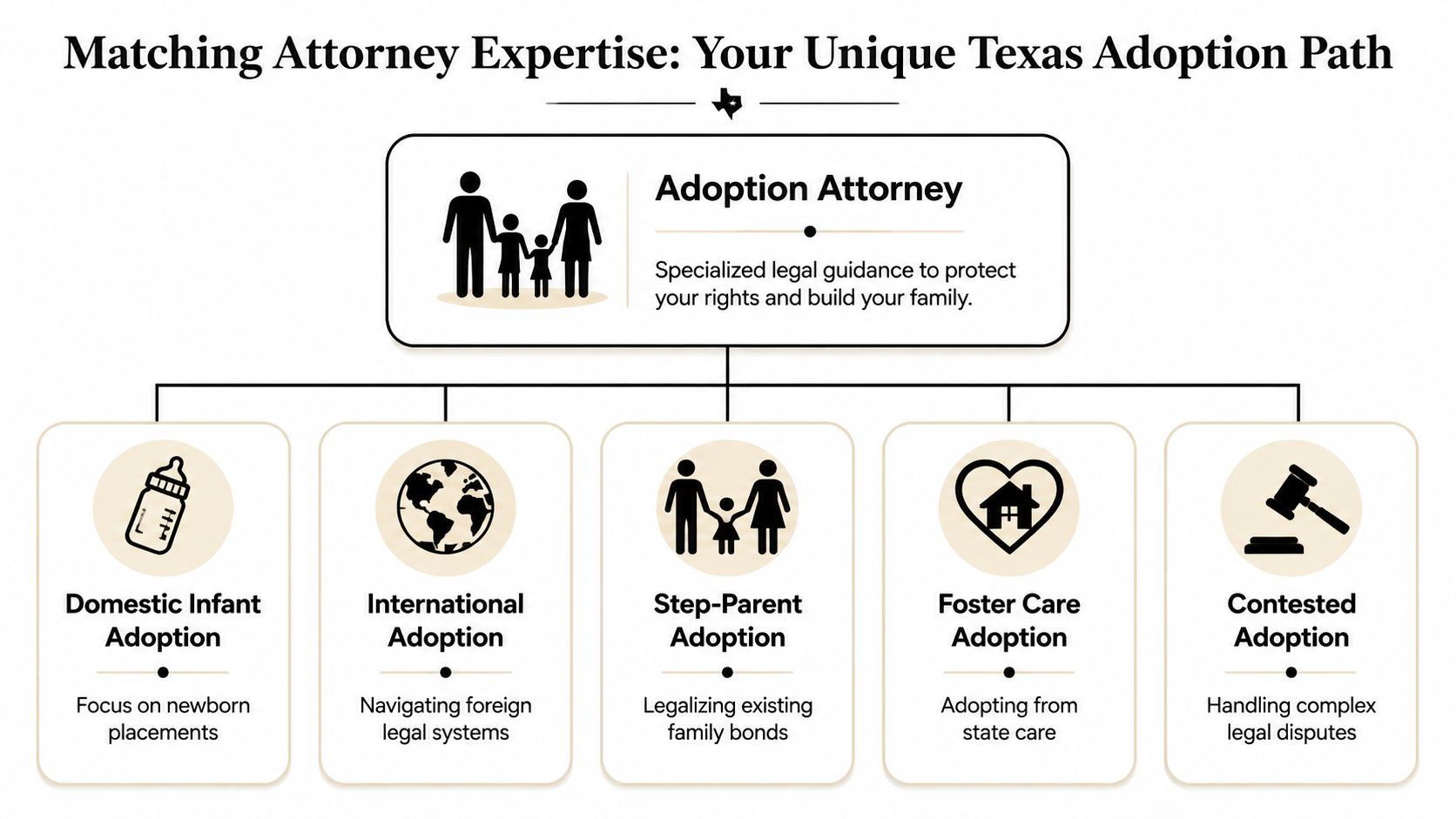
Not every adoption lawyer handles every adoption well. That's the point many families miss. "Adoption attorney" sounds like one category, but in practice, Texas cases can be very different from one another.
That matters even more because there are many lawyers to choose from. Super Lawyers lists 189 adoption attorneys in Dallas alone. So the challenge usually isn't finding an attorney. It's finding one whose daily work matches your exact kind of case.
Start by writing the job description
Before you call a lawyer, define the legal job you need done.
A family looking to find a good family law attorney often starts too broad. Narrow it down. Ask yourself which of these sounds most like your situation.
- Stepparent adoption. You need someone comfortable with existing family relationships, parental rights issues, and court procedures for making a current parenting role legally permanent.
- Kinship or relative adoption. You need someone who understands family placements, caregiver history, and the practical reality that relatives often step in during a crisis.
- Private infant adoption. You need someone who can manage consent timing, matching issues, documentation, and any coordination with agencies or another attorney.
- Foster care adoption. You need someone familiar with state-related procedures, permanency planning, and how adoption fits after foster placement.
- Interstate or contested adoption. You need a lawyer who can handle extra coordination, timing pressure, and higher-risk legal questions.
Different paths call for different experience
A stepparent adoption may seem simple because the child already lives in the home. But if another legal parent's rights must be addressed, the case can turn quickly from routine to highly sensitive.
A kinship case may involve a grandmother, aunt, or adult sibling who has been caring for a child for a long time without formal legal status. That family often needs a lawyer who understands both the court process and the emotional strain of formalizing a role they already live every day.
Private infant adoptions often raise another set of issues. Families may need help with consent documents, timing, agency coordination, matching arrangements, and open-adoption conversations. Interstate matters can add another layer.
The right question isn't "Does this lawyer do adoptions?" It's "Does this lawyer regularly handle my kind of adoption?"
Specialist or general family lawyer
In some communities, families meet with a broad family-law attorney because that office is nearby or someone they trust made the referral. That can work in some matters. But if the case has unusual consent issues, another state involved, post-adoption contact concerns, or conflict about parental rights, a more focused adoption practice may be the safer fit.
A useful way to compare lawyers is to ask what kinds of adoption files they are handling now, not just whether they've done adoptions in the past. Recent, type-specific work tells you more than a general promise of experience.
Essential Questions for Your Attorney Consultation
The first consultation shouldn't feel like a test. It should feel like a working conversation. You're not just asking whether the lawyer can take the case. You're asking how this person thinks, communicates, and plans.
One of the most important topics is timing around parental rights and consent. In Texas, a birth parent often can't sign a voluntary relinquishment document until at least 48 hours after the child is born, according to Family Law of North Texas's step-by-step Texas adoption guide. A seasoned attorney should be ready to explain how timing rules like that affect your situation.
Questions that reveal real experience
Some questions sound simple, but they tell you a lot.
| Category | Question to Ask |
|---|---|
| Experience | Have you handled this specific type of Texas adoption recently? |
| Experience | What parts of this case are most likely to become complicated? |
| Process | Who handles parental rights, consent, and finalization steps in your office? |
| Process | What milestones should we expect from the beginning of the case to the final hearing? |
| Timeline | Are there any waiting periods, consent rules, or court scheduling issues that could affect us? |
| Case management | Will you personally be responsible for our file, or will most work be done by someone else? |
| Communication | How often do you update clients, and how do you prefer to communicate? |
| Communication | If something changes suddenly, how quickly can we expect a response? |
| Fees | What does your retainer cover, and what is billed separately? |
| Fees | How are court costs, home study expenses, and outside professional fees handled? |
Listen for how the lawyer explains the process
The best answers are clear and specific. The lawyer should be able to walk you through the major Texas steps in plain language. In many adoptions, that means dealing with parental rights first, then consent issues, then filing and court finalization.
If the attorney jumps straight to "We'll take care of everything" without explaining the legal checkpoints, that's not reassuring. It's incomplete.
A strong consultation often includes discussion of:
- Your adoption type and how it affects the legal route
- Possible delay points such as service, consent, or court availability
- Who will do the work on your file day to day
- What documents you should begin gathering now
A good consultation leaves you calmer because you understand the road better, not because someone promised an easy result.
Fit matters too
Legal skill matters. Personal fit matters too.
If you're a birth parent exploring adoption, you need a lawyer who explains rights and choices with care. If you're a stepparent, you may want a lawyer who understands family loyalty and conflict. If you're a relative caregiver, you may need someone patient enough to sort through years of informal care arrangements without making you feel behind.
The right attorney should make it easier to ask hard questions.
Understanding Adoption Attorney Fees in Texas
Money is one of the hardest parts of the adoption conversation. Families often worry that if they ask too many fee questions, they will seem difficult. They won't. Fee clarity is part of good legal service.
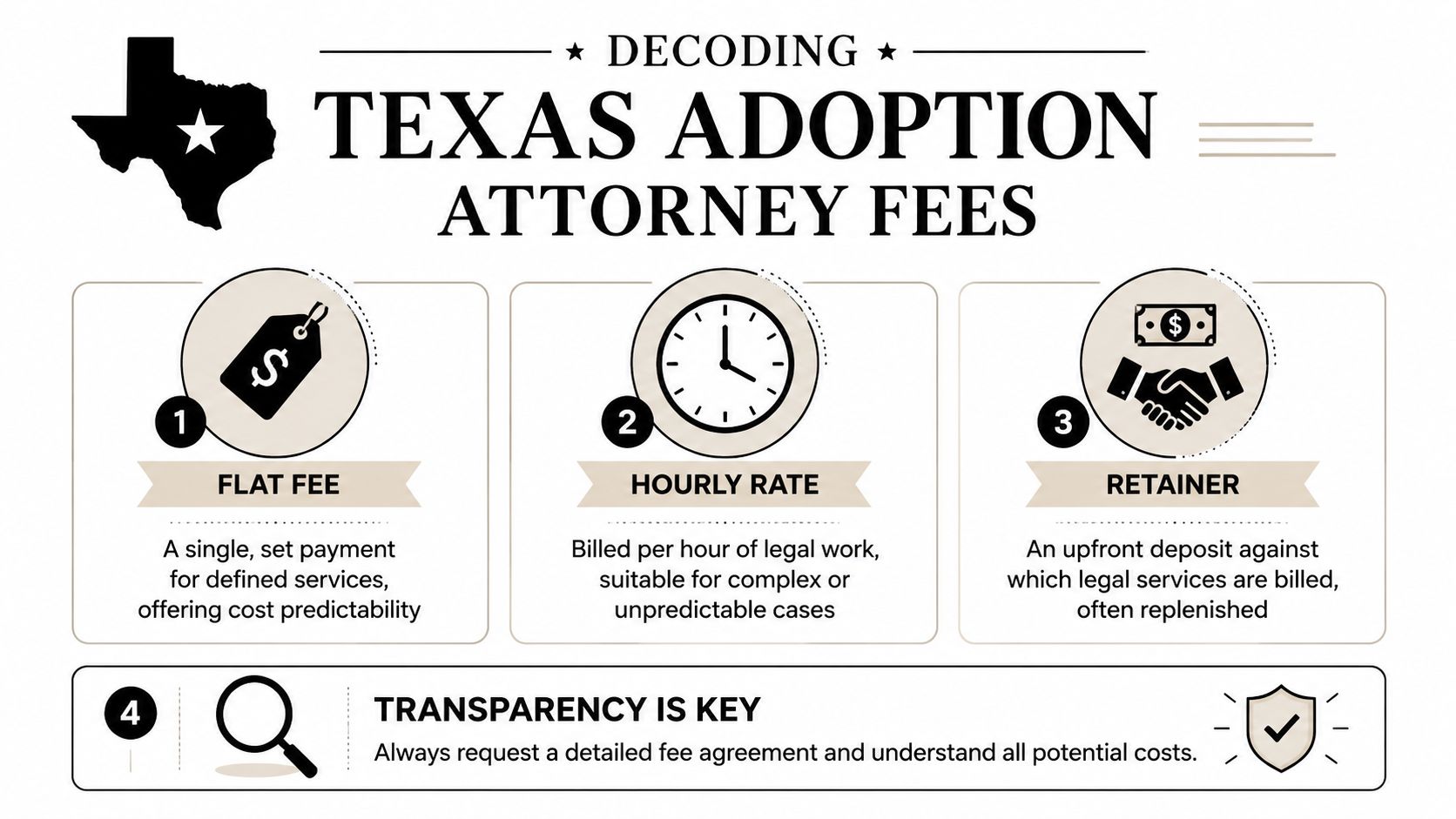
A lawyer should be able to explain the billing structure in ordinary language. That usually means telling you whether the office charges a flat fee, an hourly rate, a retainer, or some combination of those approaches.
What the numbers can tell you
A Texas family-law source says total adoption costs commonly range from $30,000 to $60,000, and that a legal retainer for a consented adoption may begin around $5,000 to $7,500, before additional hourly billing in some cases. You can review that discussion in this Texas adoption cost overview.
Those figures don't mean every case will look the same. They do show why families should ask direct questions before signing a fee agreement.
For a deeper breakdown of legal fees for adoption, it helps to separate the lawyer's charges from other case expenses.
What to ask for in writing
Ask for a written fee agreement that explains:
- What the retainer is for. Is it a deposit billed against future work, or a set fee for defined services?
- What services are included. Drafting pleadings, attending hearings, communication with agencies, and finalization work may not all be bundled together.
- What is billed separately. Court costs, home study expenses, process service, and other third-party costs should be identified clearly.
- What happens if the case changes. If a matter becomes contested or requires extra hearings, ask how billing will shift.
This short video can help families think through costs and legal planning before they commit.
Clarity lowers stress
Some offices offer a straightforward explanation of what their adoption representation includes. For example, Law Office of Bryan Fagan, PLLC provides Texas adoption representation and consultation channels for families comparing legal help. Whether you speak with that firm or another one, the important point is the same. You should understand the fee structure before your case begins.
Red Flags to Watch for When Choosing a Lawyer
Most families can sense when something feels off in a consultation. Trust that instinct, but also check it against concrete warning signs.
A lawyer doesn't need to be warm in the same way a close friend is warm. But the lawyer does need to be clear, respectful, and honest about risk. Adoption is too important for vague answers and sales pressure.
What should make you pause
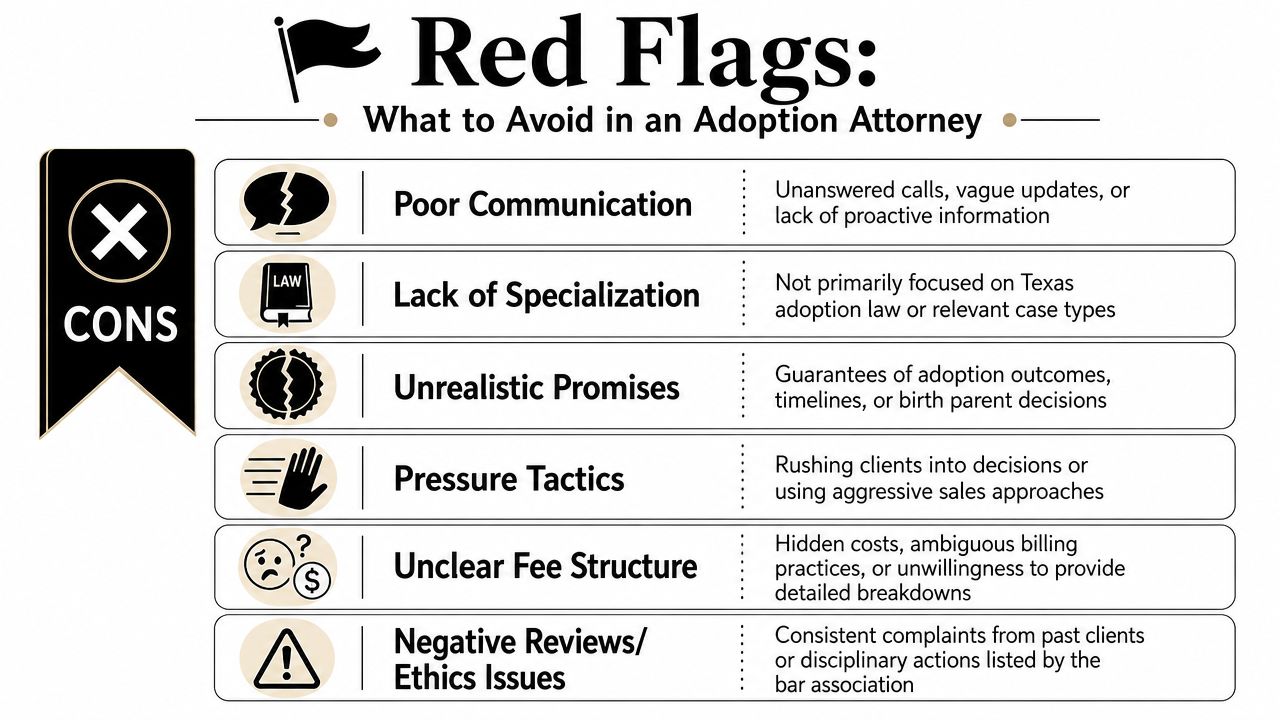
Some red flags are practical. Others are legal.
- They avoid specifics. If the lawyer can't explain your likely path in Texas terms, you may be talking to someone who doesn't do enough adoption work.
- They promise results. No ethical lawyer should guarantee a final outcome, especially in a process that may involve consent, court review, and other people's decisions.
- They rush you. Pressure to sign immediately can keep you from asking smart questions.
- They stay vague about fees. Unclear billing at the start often becomes bigger conflict later.
- They don't explain who is handling the file. You deserve to know whether the person you met will directly manage your case.
Missing the legal gates is a serious warning sign
Some warning signs go deeper than communication style. They show a lack of thoroughness.
Texas adoption can involve statutory gates that affect whether a case can move ahead. For example, a child who is 12 or older generally must consent to the adoption unless the court waives that requirement for the child's best interest, as noted by Texas Law Help's guide to adopting a child in Texas. That same guidance also discusses how some cases involve parental-rights termination issues and, in certain situations, a six-month care requirement or waiver.
If a lawyer doesn't raise issues like those when they clearly apply, that's not a minor oversight.
The attorney doesn't need to scare you. The attorney does need to tell you where the legal gates are.
A quick gut-check question
After the consultation, ask yourself one simple question: "If a problem comes up in this case, do I trust this person to tell me the truth quickly and explain my options clearly?"
If the answer is no, keep looking.
Building Your Family with Confidence and a Trusted Partner
The families who make the best attorney choices usually do one thing well. They match the lawyer to the path. They don't settle for broad promises when their case has its own facts, emotions, and legal demands.
A stepparent may need help turning daily parenting into legal parenthood. A grandparent may need stability after years of carrying the load. A hopeful adoptive parent may need careful guidance through private placement, consent, and court approval. Each family deserves a lawyer who understands that exact road.
When you're deciding how to choose the right adoption attorney in Texas, keep the process simple. Identify your adoption type. Ask focused questions. Get fee details in writing. Pay attention to how the lawyer handles risk, not just how they talk about success.
The legal process under Texas adoption law can feel formal, but the heart of it is deeply personal. Courts are looking at lasting family relationships, parental rights, and the best interests of the child. The right attorney helps you move through that process with honesty, preparation, and steadiness.
Families don't need perfection to move forward. They need clarity, good advice, and a trusted legal partner who can help them take the next step with confidence.
If you're weighing adoption options for your family, a stepparent adoption, kinship case, private adoption, foster care finalization, or another Texas adoption matter, the Law Office of Bryan Fagan, PLLC invites you to schedule a free, confidential consultation. You'll get guidance specific to your circumstances, clear answers in plain English, and support focused on the best interests of your child and your family.
