 Skip to content
You may be sitting at your kitchen table with a notebook full of questions. Maybe you're a stepparent who has already been doing school drop-offs and bedtime stories for years. Maybe you're a grandparent caring for a child who needs stability. Or maybe you're hoping to welcome a newborn and feel overwhelmed by forms, court steps, and unfamiliar legal words.
That mix of hope and worry is normal.
Texas adoption laws can feel heavy at first because adoption is both intensely personal and intensely legal. Families aren't just bringing a child home. They're creating a permanent legal relationship that will shape a child's future. When people understand the process in plain English, the path usually feels far less intimidating.
Your Journey to Building a Family Through Adoption
A lot of families begin in the same place. They know what they want, but they don't know where to start. One couple may be sorting through agency options while also setting up a bedroom. A stepparent may be wondering whether the law can finally match the bond they already have with a child. A relative caregiver may be asking whether adoption is better than guardianship.
Those questions matter because adoption is never just paperwork. It's a decision about permanence, identity, safety, and belonging.
When hope meets legal uncertainty
Take a common example. A stepfather has raised his wife's son for years. He attends parent-teacher conferences, handles doctor visits, and is the person the child calls Dad. But when school forms, medical consent issues, or inheritance concerns come up, the family realizes love and daily care aren't always enough by themselves. The law has its own checklist.
Another family may be preparing for an infant placement and wondering how to get ready emotionally as well as legally. Alongside the legal process, many parents also benefit from practical transition resources like Superstar Nannies' guide for new parents, especially when they're building routines for a child coming into the home for the first time.
Adoption often feels overwhelming because families are trying to manage two things at once: legal requirements and real emotions.
Why a clear map helps
Texas Family Code adoption procedures, especially in Chapters 162 through 166, exist to protect children and create lasting family ties. Once you understand the major parts, the process becomes easier to follow:
- Who can adopt: The court looks at the adoptive home, the caregiver's background, and whether the placement supports the child.
- What has to happen first: In most child adoptions, the legal relationship with the child's current legal parents must be addressed before a new one can be created.
- How the case moves forward: Families typically move through evaluation, placement, supervision, and final court approval.
- Which path fits your family: Stepparent, kinship, CPS, private, adult adoption, and LGBTQ+ family-building situations each have their own practical issues.
The heart of this journey is simple. Texas law wants children in safe, stable, permanent homes. Once you see that principle at work, the legal rules begin to make more sense.
The Legal Heartbeat of Texas Adoption
A family may already feel real long before a judge signs anything. You may be tucking a child into bed, packing lunches, and showing up for school events. Texas law respects that bond, but it still asks one careful question before making it permanent: does this adoption serve the child's best interest?
That question is the legal center of every adoption case in Texas. It is also the human center.
The best interest of the child in plain English
"Best interest of the child" can sound formal and hard to read. In practice, it works like a compass. It points the court back to the same concern over and over: will this child have more safety, stability, emotional security, and lasting family connection through this adoption?
Judges are not grading families against an impossible ideal. They are looking at whether the adoption gives the child a dependable home and a clear legal relationship with the adults who will raise them. That is why the rules can feel careful. The goal is not paperwork for its own sake. The goal is permanence that will hold up over time.
If you want a broader plain-English overview of how these rules fit together, this guide to Texas adoption and the Family Code for parents is a helpful place to start.
Why the law must clear the path first
Adoption creates a new legal parent-child relationship that is meant to last. Because of that, the court cannot leave uncertainty about who the child's legal parents are.
A house analogy helps here. Before you add new walls and a roof, you make sure the foundation lines are clear and solid. Adoption law works in a similar way. The court first makes sure it has the legal authority to place the child in a new permanent family, and that any existing parental rights have been handled correctly.
That is the part many hopeful parents find emotionally difficult. They often ask, "If we already love this child and care for this child every day, why isn't that enough?" The honest answer is that love and legal status are connected, but they are not the same thing. The court's job is to turn a lived family relationship into a legally secure one.
Why parental rights matter so much
In most adoptions involving a minor child, the rights of the child's current legal parents must be terminated before the adoption can be finalized. Texas law treats that step with care because adoption is not a temporary arrangement. It transfers full legal parenthood.
That protection matters to everyone involved. It protects the child from future uncertainty. It protects adoptive parents from a fragile legal outcome. It also helps make sure a birth parent's rights are not ended casually or without the process the law requires.
Here is a simple way to read the court's concerns:
| Legal question | Why it matters |
|---|---|
| Does the court have legal authority to approve this adoption? | A judge cannot create a new legal family relationship without the required legal basis. |
| Have existing parental rights been handled correctly? | The law aims to avoid conflicting legal parentage and future disputes. |
| Will this adoption give the child lasting stability? | The court must keep the child's long-term well-being at the center of the case. |
A safeguard that supports permanence
Families sometimes see these requirements as obstacles because they arrive at an already emotional moment. A better way to view them is as safeguards that help the adoption endure.
For a closer look at why this issue comes first in so many cases, Termination of Parental Rights Before Adoption explains how that legal step supports a secure final adoption order.
Practical rule: Adoption does more than recognize love and caregiving. It creates a permanent legal family, and Texas courts want that new family structure to be clear, stable, and built to last.
Are You Eligible to Adopt a Child in Texas
Many hopeful parents ask the same question first. Can I adopt in Texas? Usually, the answer depends less on fitting one perfect mold and more on whether you can offer a stable, safe, legally appropriate home for the child.
Texas adoption laws don't limit adoption to one family type. Married couples, single adults, stepparents, relatives, and LGBTQ+ parents may all explore adoption. What matters is whether the legal requirements are met and whether the adoption serves the child.
Questions families usually ask first
A practical way to approach eligibility is to ask yourself a few direct questions.
- Can a single person adopt? Yes, many single adults pursue adoption in Texas. The court's focus remains the child's welfare, not whether a home matches one traditional model.
- Can same-sex couples adopt? Families in Texas often ask this because they want reassurance before beginning. In adoption cases, the key legal questions are fitness, stability, and the child's interests.
- Does marriage matter? It can affect how the case is filed and who is listed as a petitioner, but marriage itself isn't the only doorway into adoption.
- Do stepparents count differently? Sometimes, yes. Stepparent Adoption in Texas is the most common Texas adoption and has its own practical path because the child is often already living in the home.
Families who want a focused review of basic qualifications can also read who can adopt in Texas.
What the court wants to know about your home
The court usually isn't expecting perfection. It is looking for reliability. That means a home that is safe, adults who can meet daily needs, and a situation that supports the child emotionally and financially.
One of the biggest points of confusion is "financial stability." Texas courts generally aren't asking whether you're wealthy. They're asking whether you can meet the child's needs in a steady, responsible way.
Background checks and home study review
This part often sounds scarier than it is, but it needs careful attention.
Texas law requires that prospective adoptive parents complete a criminal history background check via FBI fingerprinting and a CPS history check to verify they are not on a central registry for abuse or neglect, and those findings must be included in the adoption evaluation, or home study, report filed with the court before finalization, as explained in this overview of Texas adoption criteria.
That requirement works like a safety screen. The court wants verified information, not assumptions.
Here is a simple way to think about the eligibility review:
| What is reviewed | What it tells the court |
|---|---|
| Background checks | Whether there are serious safety concerns |
| CPS history | Whether there is a record of abuse or neglect findings |
| Home study | Whether the home and caregivers are suitable for adoption |
| Daily stability | Whether the child's needs can be met consistently |
If you have a prior issue in your history, don't assume the case is hopeless. It usually makes sense to get legal advice early so you know how that issue may affect the court's review.
The Texas Adoption Process Step by Step
Most families feel calmer once they can see the adoption process in order. Texas adoption laws can look complicated on paper, but the journey usually becomes easier when you break it into stages.
A visual overview can help you see how the pieces fit together.

Step 1 through Step 3
The first stage is choosing the right path. Some families work through a private agency. Others move forward through CPS, through a stepparent adoption, through kinship care, or with the help of a private attorney. The right starting point depends on how the child is coming into the home and whether parental rights issues have already been addressed.
After that, paperwork begins. That often includes petitions, disclosures, background screening, and the adoption evaluation. In many cases, the home study becomes the first major milestone because it gives the court a picture of the household, routines, safety, and readiness.
Under Texas Family Code Chapter 162.001, a court cannot grant an adoption unless the child has resided with the petitioner for at least six months, though the court may waive that requirement if doing so serves the child's best interest, as explained by Texas Law Help's adoption guide.
Step 4 through Step 7
Placement is the moment many families think of as the finish line, but legally it's closer to the middle of the race. Once a child is placed, the court and professionals involved still need time to confirm that the home is functioning well in real life.
That is one reason post-placement supervision matters. A family may already feel complete, but the court wants to see a caregiving pattern over time.
Later in the process, many families find it helpful to hear a plain-language explanation from a Texas family law source. This video gives a useful overview:
Step 8 through finalization
The final court hearing is often joyful, but it is still a legal event. The judge reviews whether all required steps have been completed, whether consents or termination orders are in place, and whether the adoption serves the child's best interest.
A simple timeline usually looks like this:
- Choose the adoption path: Agency, CPS, private, kinship, or stepparent.
- Prepare and file documents: Start the legal case correctly.
- Complete the home study: The evaluator reviews the home and family circumstances.
- Address consent or termination issues: This must be legally resolved before final approval.
- Placement occurs: The child begins living with the adoptive family.
- Residency and supervision period: The court observes stability over time.
- Attend the final hearing: The judge reviews the full case.
- Receive the adoption order: The new legal parent-child relationship becomes official.
Where families often feel anxious
Three parts tend to cause the most stress:
- The home study: Families worry they'll be judged harshly. In most cases, the evaluator is looking for safety, preparation, and honesty.
- Waiting periods: Time can feel frustrating when your heart already says, "This is my child." The law still requires process.
- Court finalization: Even happy hearings can make people nervous because so much emotion is tied to the result.
A good way to approach the process is one document and one decision at a time. Adoption cases feel heavy when families try to carry the whole timeline in their heads at once.
Navigating Specific Adoption Paths and Hurdles
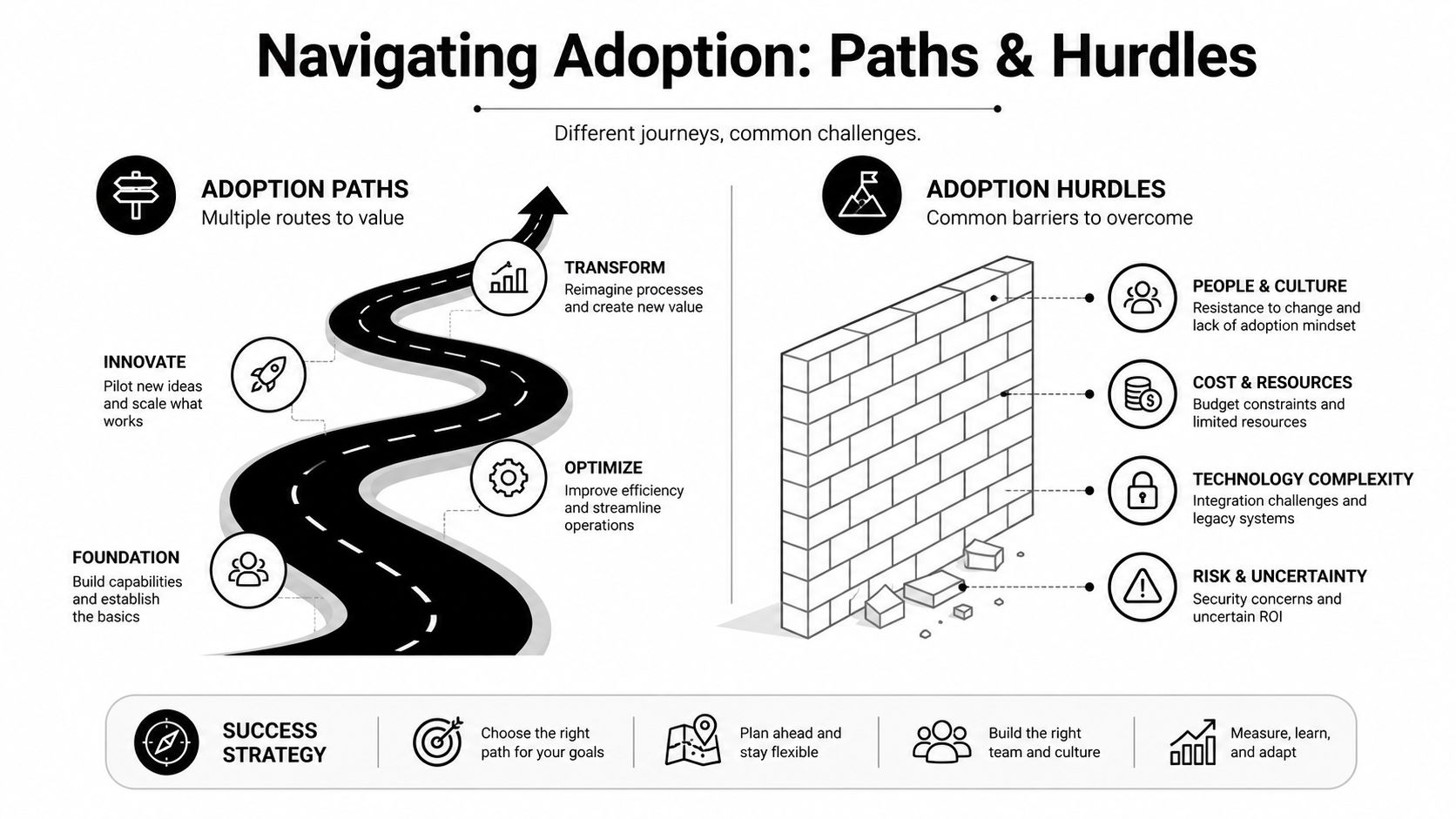
One family may be preparing for a stepparent adoption after years of school pickups and bedtime routines. Another may be caring for a grandchild after a crisis. A foster parent may strongly love a child while still living with uncertainty about whether adoption will ever become possible. Texas adoption laws cover all of these stories, but the legal path changes depending on how the child came into the home and what the court still needs to resolve.
At the center of each path is the same question. Does this adoption protect the child's stability, safety, and long-term well-being? That best-interest standard is the compassionate core of the law. It asks the court to look past labels and focus on what life will be like for the child.
Stepparent and kinship adoptions
In a stepparent adoption, the child often already feels rooted in the home. The daily relationship may be settled. The legal work usually centers on the child's other legal parent, proper notice, and whether parental rights have already been ended or still must be addressed.
Kinship adoptions often carry a similar feeling. A grandparent, aunt, uncle, or sibling may already be parenting. The court still has to turn that lived reality into a permanent legal bond. In simple terms, caregiving and legal parenthood are related, but they are not the same thing.
Families are often surprised by that distinction. They may feel, with good reason, that they have already proven their commitment. Texas courts still need a complete legal record because adoption is permanent, and the judge must be able to say with confidence that this new legal relationship serves the child well for years to come.
CPS adoption and reunification concerns
CPS cases tend to be more layered. A child may have entered care after abuse, neglect, substance use concerns, or another serious disruption. Foster parents and relatives can feel pulled in two directions at once. They want permanency for the child, but they also know the case may have started with efforts to reunify the child with the biological family.
That can be hard on the heart.
Reunification is often considered before adoption becomes the final plan in a CPS case. For foster parents, that can make attachment feel scary. For relatives who come forward later, it can create confusion about timing, placement, and whether they will be considered. The legal system is trying to answer a difficult question carefully, not quickly: what arrangement gives this child the safest and most stable future?
When families need practical legal help with these transitions, the Law Office of Bryan Fagan, PLLC handles adoption and guardianship matters involving stepparent, relative, foster care, and CPS-related paths.
LGBTQ plus parents and single-parent adoptions
LGBTQ+ parents often begin the process with an extra layer of worry. Will the court understand our family? Will both parents be protected? Will this process treat us fairly? Under Texas law, the court's focus still comes back to the child's needs, the stability of the home, and the legal steps required for that particular adoption.
Single-parent adoptions raise a different concern. Some prospective parents worry that a judge will assume a two-parent home is automatically better. Texas courts are expected to examine the actual home in front of them, not rely on stereotypes. A steady, loving, prepared single parent can meet a child's needs very well.
Open and closed adoption concerns
Families also ask whether an adoption should be open or closed. Open adoption usually involves some level of continuing contact or shared information between the adoptive family and the birth family. Closed adoption usually means that direct contact ends after finalization.
A helpful way to view this choice is to treat it like setting boundaries for a child's emotional home. Some children benefit from healthy, carefully structured connection to their history. Others need more privacy and distance so they can settle into a safe routine. The better option is the one that supports the child's sense of security, identity, and emotional peace.
Costs, timelines, ICPC, and expense risks
Costs and timing vary widely by adoption type. A stepparent case may move on a very different schedule than a contested private adoption or a CPS case with a long record of hearings. Interstate cases can take longer because another layer of approval may be required before the child can cross state lines.
Private infant adoption also raises a point families should treat carefully. Texas law does not allow improper payments for placement. Some expenses connected to a birth mother may be allowed in limited circumstances, but families should not assume that any payment is acceptable just because it seems compassionate. Good records and clear legal advice matter.
If questions about parental rights are part of the road ahead, it helps to review how termination of parental rights works in Texas adoption cases. For many families, that issue is the gate the case must pass through before the court can consider final adoption.
Understanding Consent and Parental Rights Termination
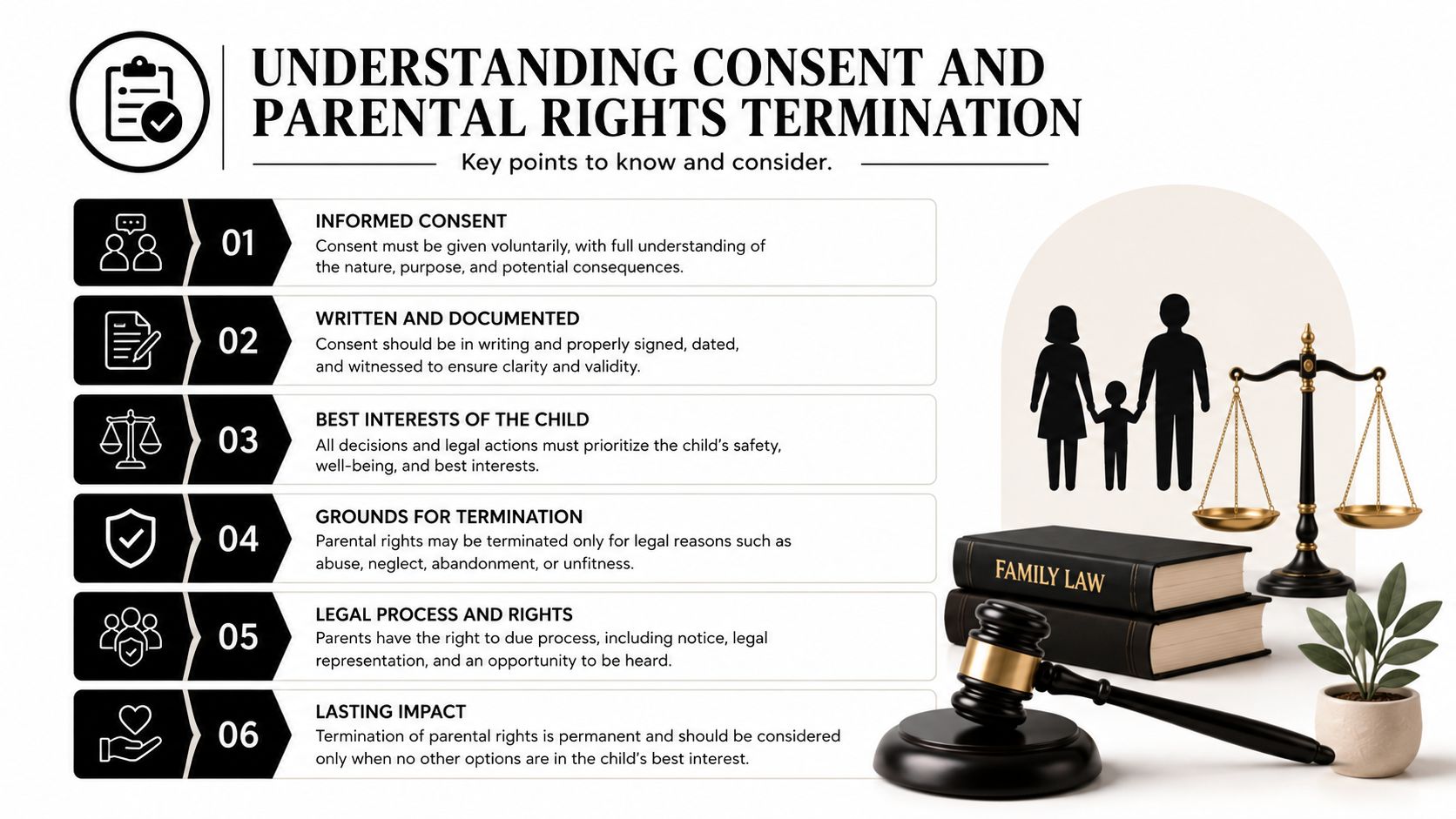
This is often the most emotional part of the case. Adoption creates joy for one family while also closing a legal chapter for another. Texas adoption laws treat this stage seriously because the consequences are permanent.
The key point is simple but weighty. Before a child adoption can be finalized, the law must properly address the rights of the child's legal parents.
Voluntary consent
In some adoptions, a biological parent chooses to sign paperwork voluntarily. Even then, Texas law builds in safeguards so that consent isn't rushed or casually given.
Under Texas Family Code Chapter 162, a minor's parents must have their parental rights terminated before the child can be adopted, and voluntary termination requires the birth mother to wait at least 48 hours after the birth before giving consent, which must then be signed by two witnesses and verified before an authorized person, as described in this overview of termination of parental rights in Texas adoption.
That waiting period matters. Childbirth is physically and emotionally intense. The law gives space before a decision with permanent legal effect can be signed.
Involuntary termination
Some cases don't involve agreement. A biological parent may object, may be absent, or may have a history that leads another party to seek court-ordered termination. Those cases are usually more complex, more fact-intensive, and more emotionally draining.
A judge won't terminate rights lightly. The court expects evidence and careful legal procedure because the stakes are so high for everyone involved.
The child's voice matters too
Texas also recognizes that older children aren't just passengers in this process. A child who is age 12 or older must consent to the adoption unless the court waives that requirement based on the child's best interest, as discussed in this explanation of Texas adoption procedures and requirements.
That rule often surprises adults, but it makes sense. Older children understand family identity in a different way than infants do. The law gives them a voice because adoption will shape their daily life, name, relationships, and sense of belonging.
Consent in adoption isn't only about signatures. It's about making sure every person with a legally protected role is heard in the right way and at the right time.
Why this step deserves patience
Families often want this phase over as quickly as possible. That's understandable. Still, this is one part of the process where careful timing protects everyone. If a consent is defective or a termination case is mishandled, the adoption itself can be put at risk.
A compassionate legal approach doesn't mean rushing. It means handling hard issues with clarity, respect, and precision.
Common Questions and Your Next Steps
By the time families reach this point, they often have fewer vague fears and more specific questions. That's a good sign. It means the process is becoming real and manageable.
What is the difference between open and closed adoption
An open adoption usually involves some level of continued communication or exchange of information between birth relatives and the adoptive family. That contact may be limited, structured, and shaped around the child's needs.
A closed adoption usually means there is no ongoing direct contact after finalization. Some families prefer that privacy. Others prefer openness because it can help with identity questions and medical history. The right choice depends on the people involved and what supports the child's well-being.
What should I know about adult adoption in Texas
Adult adoption is much simpler than child adoption in several ways. Under Texas Family Code §162.501, adult adoption in Texas does not require a home study, CPS investigation, or termination of parental rights, and the statutory requirement is the adult adoptee's written consent, as discussed in this guide to adult adoption in Texas.
Adult adoption often comes up in blended families, long-standing parent-like relationships, inheritance planning, or situations where a formal legal bond was never created during childhood.
When is it necessary to hire an adoption attorney
Some families ask this because they want to keep the process simple. That's understandable. In straightforward cases, people often hope paperwork alone will carry them through.
An attorney becomes especially important when:
- Parental rights are contested: Disputes over consent or termination can quickly become complex.
- The adoption is interstate: ICPC issues can affect timing and placement.
- You're dealing with private expenses: Payments or support arrangements need careful legal review.
- The case involves CPS history or unusual facts: Prior orders, investigations, or family conflict can complicate the path.
- You want the filing done correctly from the start: Many delays happen because forms, notices, or supporting documents were incomplete.
What should I do next if I'm serious about adopting
Start by identifying your adoption path. A stepparent case is different from a kinship case. A CPS case is different from a private infant adoption. Once you know the type of case, gather the basics: names, prior court orders, any existing custody paperwork, and a timeline of the child's living situation.
Then get legal advice before you make assumptions. Families often lose time because they act on what a friend heard or what seemed true in another state. Texas adoption laws are detailed, but they are navigable when the steps are taken in the right order.
Adoption asks a lot of the adults involved. It asks for patience, honesty, and persistence. But it also offers something extraordinary. It gives a child the security of permanence and gives a family legal protection that matches the love already growing in the home.
If you're thinking about adoption, guardianship, or termination issues, a careful legal review can help you move forward with confidence. The attorneys at Law Office of Bryan Fagan, PLLC work with Texas families pursuing stepparent, kinship, CPS, private, LGBTQIA+, and adult adoption matters. You can schedule a free consultation to talk through your circumstances, ask questions in plain language, and get guidance specific to your family.

