
When you are considering growing your family or helping a child in need, the paths of adoption and foster care can seem similar, but they are built on a fundamental difference: permanency.
Adoption is forever. It’s a legal process that creates a brand-new, permanent parent-child relationship. Under Texas law, a final adoption order legally ends the rights of the birth parents, making you the child's parent in every sense of the word. On the other hand, foster care is temporary. It’s a state-run system designed to give a child a safe place to land, but the primary goal is almost always to reunite that child with their birth family.
An Overview for Texas Families
As you begin this journey, the terms "adoption" and "foster care" can feel confusing. Both paths come from a place of love—the desire to give a child a secure, nurturing home—but they are completely different journeys, both legally and emotionally. For any hopeful parent, birth parent, or relative in Texas considering these options, understanding those differences is the most important first step.

At its heart, adoption is about creating a forever family. As outlined in the Texas Family Code (Chapter 162), a final adoption order legally transfers every single parental right and responsibility to the adoptive parents. This isn't just a piece of paper; it's a profound, life-changing commitment that gives a child a permanent place to call home, ensuring their emotional and legal security.
Foster care operates from a different starting point. It’s a temporary service managed by the state, created to provide a safe harbor for a child while their biological parents work to resolve the issues that led to the child’s removal. The system is built around the goal of reunification. While foster parents are essential caregivers who provide love and stability, they don't hold permanent legal rights to the child in their care.
Key Differences Between Adoption and Foster Care at a Glance
To make it clearer, let's break down the core distinctions side-by-side. This table gives you a quick snapshot of how these two paths diverge in Texas.
| Aspect | Adoption | Foster Care |
|---|---|---|
| Legal Goal | To create a new, permanent parent-child relationship in the best interest of the child. | To provide a temporary, safe home with the primary goal of family reunification. |
| Permanency | Permanent and lifelong. The legal decree is final and irrevocable. | Temporary. The placement can last days, months, or years, but is not permanent by design. |
| Parental Rights | Biological parents' rights are legally terminated. Adoptive parents gain full legal rights. | Biological parents retain their rights, which may be limited by the court. The state (DFPS) has legal custody. |
| Legal Process | Governed by the Texas Family Code, ending with a final adoption decree. | An administrative and court-supervised process managed by the Department of Family and Protective Services (DFPS). |
Ultimately, these two paths serve different, though equally vital, functions in a child's life. While adoption focuses on building a new family structure from the ground up, foster care works to support and, hopefully, heal an existing one, always prioritizing the child's well-being.
It’s also helpful to see how these roles compare to other family law arrangements. You can learn more by exploring the distinctions between legal guardianship vs adoption in Texas in our detailed guide. Making the right choice for your family starts with having this foundational knowledge.
Understanding the Journey of Adoption in Texas
Adoption is the profound, emotional, and legal journey of building a forever family. It’s fundamentally different from foster care, which is designed as a temporary safe haven. Adoption creates a permanent, legally binding parent-child relationship. This isn't just about giving a child a home; it's about grafting a new branch onto your family tree—one that’s fully recognized and protected under Texas law.
The moment a judge signs the final Decree of Adoption, everything changes. It marks a complete and irreversible transfer of parental rights and responsibilities. This decree, governed by the Texas Family Code (Chapter 162), grants adoptive parents the full legal authority to make every decision for their child—from healthcare and schooling to upbringing and inheritance—exactly as if the child were born to them. That piece of paper legally solidifies a new family unit for life.
This is the absolute heart of the difference between adoption and foster care: adoption offers finality and unshakable legal security, centered on the best interests of the child.
Exploring the Different Paths to Adoption
In Texas, families have several distinct avenues for adoption, and each one is suited for unique situations. Figuring out which path fits your family is the first crucial step in your journey.
The most common adoption pathways include:
- Private Domestic Adoption: This is often what people picture when they think of adoption. It typically involves connecting with expectant birth mothers through a licensed agency or an attorney to adopt an infant. These arrangements can be open, closed, or somewhere in between.
- Stepparent Adoption: A beautiful and common way to legally solidify a blended family. A stepparent formally adopts their spouse's child, becoming their full legal parent.
- Kinship or Relative Adoption: This happens when a family member—like a grandparent, aunt, or uncle—steps up to adopt a child, making sure they can grow up within their own family network.
- Adoption from Foster Care (CPS Adoption): When reunification is not possible, a child in foster care may become available for adoption, often by their current foster family or another approved family.
This variety shows how adoption serves families in many ways, unlike foster care, which is focused on temporary child welfare within the state system. The paths to adoption are as diverse as the families they create.
The legal finality of an adoption decree provides a child with an unwavering sense of belonging and stability. It tells them, "You are ours, forever," with the full backing of the law.
A Relatable Adoption Scenario
Picture a Houston couple, Sarah and Tom, who have been dreaming of growing their family. They decide to pursue a private domestic infant adoption and connect with a brave expectant mother named Maria through a licensed Texas agency.
Over the course of Maria’s pregnancy, they build a relationship grounded in mutual trust and respect. After the baby is born, Maria signs the legal paperwork to relinquish her parental rights, feeling confident that Sarah and Tom will provide a loving, stable home. Six months later, after completing all the required post-placement visits and legal steps under the Texas Family Code, Sarah and Tom find themselves standing before a judge.
The judge signs the final Decree of Adoption. In that single moment, they become the baby's legal parents forever. A new birth certificate is issued with their names on it. Their journey didn't end with temporary care—it ended with the creation of a permanent, legally protected family. That’s a foundation only adoption can provide.
Exploring the Role of Foster Care in Texas
While adoption is all about creating a new, legally permanent family, foster care in Texas answers a different, but just as critical, call. Think of foster care as a temporary safe harbor for children navigating a crisis. It's a system managed by the state to give a child a stable, nurturing place to land when their own home isn't safe.

The number one goal of the Texas Department of Family and Protective Services (DFPS) is almost always family reunification. Foster care was never designed to be a permanent fix. It’s meant to be a bridge—giving biological parents the time and support they need to address the issues that led to their child’s removal in the first place, with the child's safety and well-being as the top priority.
The Supportive Role of a Foster Parent
Stepping into the role of a foster parent means becoming a licensed caregiver who offers stability, love, and support for a season. It’s a job that demands a huge heart, endless patience, and a genuine willingness to be part of a team working for the child's best interests.
Unlike adoptive parents, you won't hold permanent legal rights. Legal custody of the child stays with DFPS, which means foster parents work hand-in-hand with caseworkers, attorneys, therapists, and the courts to make sure the child has everything they need.
A foster parent's core responsibilities really boil down to this:
- Providing a safe, stable, and welcoming home.
- Meeting the child’s day-to-day physical and emotional needs.
- Working closely with DFPS to follow the child's official case plan.
- Making sure court-ordered visits with the biological family happen as scheduled, supporting the goal of reunification.
This teamwork is the backbone of the foster care system. Your role is to provide care on behalf of the state, which holds the final say on the big decisions in the child's life.
Foster care is an act of profound service to both a child and their family. It’s about holding a safe space for healing with the hopeful goal of seeing a family made whole again.
A Real-World Foster Care Scenario
Let’s imagine a family in San Antonio, the Garcias, who just became licensed foster parents. They get a call and soon welcome two siblings, ages five and seven, into their home after the kids were removed for neglect. The children's single mother is determined to get them back and has a court-ordered service plan to complete.
The Garcias' role is huge. They handle the daily stuff—enrolling the kids in school, taking them to therapy appointments, and making sure they feel secure. But just as critically, they actively support the goal of getting these kids back home.
Every Tuesday, they drive the children to a supervised visitation center to see their mother. They keep communication open and respectful, sharing good news from the kids' week. They aren't trying to replace the children’s parent; they are supporting a family that's trying to heal.
In this situation, the Garcias know their job is temporary. They are caregivers, mentors, and advocates for these kids, all while respecting the deep bond the children have with their mom. After nearly a year of hard work, the mother completes her plan, and the judge approves the children's return home.
The Garcias feel that bittersweet mix of sadness and pride as they say goodbye. They gave these children the safety and stability they desperately needed, and in doing so, they helped keep a family together. That’s the true heart of foster care—a temporary, selfless act focused on what the state often decides is a child's best interest: reunification.
Comparing Parental Rights and Legal Permanence
When you boil it down, the biggest difference between adoption and foster care comes down to two things: parental rights and permanence. These legal concepts are the foundation of the entire experience, shaping everything for the child, the caregivers, and the birth family. Understanding this distinction is the most important step for anyone in Texas considering either path.

Simply put, adoption is designed to create a permanent, legally recognized family. Foster care, on the other hand, is a temporary arrangement where the state holds all the legal cards.
The Irrevocable Rights of Adoptive Parents
In an adoption, the endgame is to grant the adoptive parents full and irrevocable parental rights. This is a massive legal shift. It can only happen after the biological parents' rights have been terminated, which can be done voluntarily or through a court order. This is a serious, final step that permanently severs the legal bond between the birth parents and the child.
Once an adoption is finalized under the Texas Family Code (Chapter 162), the adoptive parents legally step into the shoes of biological parents. They have the exclusive right to make every critical decision for the child, including:
- Medical Care: Choosing doctors, consenting to surgery, and managing health insurance.
- Education: Deciding where and how the child is schooled, whether it's public, private, or homeschool.
- Upbringing: Making choices about religion, values, and day-to-day life.
- Inheritance: The child legally gains the right to inherit from their adoptive parents, just like a biological child.
This legal finality is what gives a child a profound sense of stability and belonging. You can learn more about this crucial first step by reading our guide on terminating parental rights in Texas. Without this process, the new family unit would never be legally secure.
The Limited Authority of Foster Parents
Foster parents provide incredible, essential care every single day, but they operate with a completely different level of authority. In a foster care arrangement, legal custody of the child remains with the Texas Department of Family and Protective Services (DFPS). Foster parents are licensed caregivers acting as agents of the state.
This means their decision-making power is limited. They handle the daily grind—meals, homework, rides to soccer practice—but the big decisions often require a green light from a caseworker or a judge. This includes things like non-emergency medical procedures, taking a family trip out of state, or making significant changes to the child’s routine. The foster parent’s job is to care for the child within the framework set by DFPS, always keeping the primary goal of reunification with the birth family in mind.
Adoption creates a permanent legal parent, while foster care establishes a temporary licensed caregiver.
For kinship caregivers or foster parents in Texas, finalizing an adoption is the only way to gain full parental authority and provide a child with a true forever home. A foster license is always temporary and can be revoked; the rights granted in adoption are forever.
Ultimately, the difference in legal standing is stark. Adoption builds a new family from the ground up, with all the legal rights and responsibilities that come with it. Foster care provides a temporary, safe harbor where the state—not the caregiver—holds the final say over a child's future. This core distinction is what makes the emotional and practical realities of each path so incredibly different.
From Foster Care to Forever Family: The Foster-to-Adopt Pathway
For many Texas families, the journey starts with a simple, powerful act: opening your home to a child in need. You step into the role of a foster parent, offering a safe harbor and loving support while everyone works toward the primary goal of family reunification. But sometimes, that path takes an unexpected turn. What began as a temporary commitment grows into a profound bond, and the possibility of a forever family begins to take shape.
This transition from foster parent to adoptive parent is common, but it’s a journey that requires careful legal guidance. It happens when a Texas court decides that it’s no longer in a child’s best interest to return to their biological family. At that point, the legal goal shifts from reunification to finding a permanent home through adoption. This requires the court to formally terminate the parental rights of the birth parents—a critical step that legally frees the child for adoption. For the foster parents who have already become the center of that child’s world, this moment is a mix of heartbreak for the past and hope for the future.
The Foster-to-Adopt Process in Texas
Once a child in your care becomes legally available for adoption, the process of making your family permanent can officially begin. While you’ve already been through screening and home studies to become a foster parent, adopting from foster care involves its own distinct legal milestones.
Here’s a step-by-step guide of what to expect:
- Stating Your Intent: The Department of Family and Protective Services (DFPS) almost always gives preference to the current foster family. You must formally tell them you want to adopt the child you’ve been caring for.
- Updating the Home Study: Your original home study might need a refresh. This update focuses on the shift from temporary care to a permanent home, ensuring your family is equipped for the child's long-term needs.
- The Supervisory Period: The child is officially placed with you as a prospective adoptive family. This kicks off a mandatory six-month supervisory period. During this time, a caseworker will visit your home to support the transition and compile reports for the court.
- Finalizing the Adoption in Court: Your adoption attorney files all the necessary paperwork. The journey ends at a finalization hearing where a judge reviews everything. With a stroke of the pen on the final Decree of Adoption, the child legally and permanently becomes a member of your family.
This pathway offers incredible stability to children who have known too much uncertainty. We’ve put together a detailed resource to walk you through every stage. You can explore our step-by-step guide on how to foster-to-adopt in Texas for a deeper dive.
From Temporary Caregiver to Permanent Parent
The legal difference between being a foster parent and an adoptive parent is night and day. As a foster parent, you were a licensed caregiver acting on the state’s behalf. As an adoptive parent, you gain full, irrevocable parental rights—the same rights you would have if the child were born to you.
The distinction boils down to permanence. For Texas foster parents ready to provide a permanent home, adoption offers the legal finality and emotional security that temporary care simply cannot.
Moving from foster care to adoption is an emotional journey. It requires acknowledging the loss the child has experienced while celebrating the new, permanent family you are building together.
Making this transition requires both legal precision and a lot of heart. The process can feel tangled with court dates, CPS procedures, and endless paperwork. Having an experienced attorney in your corner provides the clarity and reassurance you need, ensuring every detail is handled correctly. That way, you can focus on what truly matters: giving your child the unwavering security of a forever home.
Choosing the Right Path for Your Family
Deciding between adoption and foster care is a deeply personal choice, one that will shape your family’s future and the life of a child. There’s no single “right” path—only the one that truly aligns with your family’s goals, your capacity for love, and where you are emotionally. The key is to be honest with yourself about what you hope to achieve and what you’re truly prepared to offer.
This isn't about which path is better; both are incredible acts of service to a child. It’s about understanding your own motivations. Is your dream to become a legal parent and provide a permanent, forever home? If that’s your end goal, the legal security and finality of adoption might be the right fit.
On the other hand, is your heart open to providing a safe harbor for a child, knowing it might be temporary? Can you champion the goal of reuniting that child with their birth family? If you can embrace a role that is temporary but incredibly powerful, then foster care could be a profoundly rewarding journey.
Reflecting on Your Goals
To gain clarity, it helps to sit down and ask yourself a few honest questions. Your answers will shine a light on the real differences between what you want and what each path actually involves.
- Permanence vs. Temporariness: Am I seeking to build my forever family, or am I ready to offer a safe, temporary home and then say goodbye if a child is reunified with their birth family?
- Parental Rights: Is it essential for me to have full, legal parental authority to make every decision for a child’s future? Or am I comfortable serving as a licensed caregiver, operating under the state's authority?
- Emotional Readiness: Am I prepared for the legal finality and lifelong commitment of adoption? Or am I emotionally resilient enough to support a child—and their birth family—through all the uncertainty of the foster care system?
This decision tree gives you a visual for how a child’s journey through foster care might unfold.
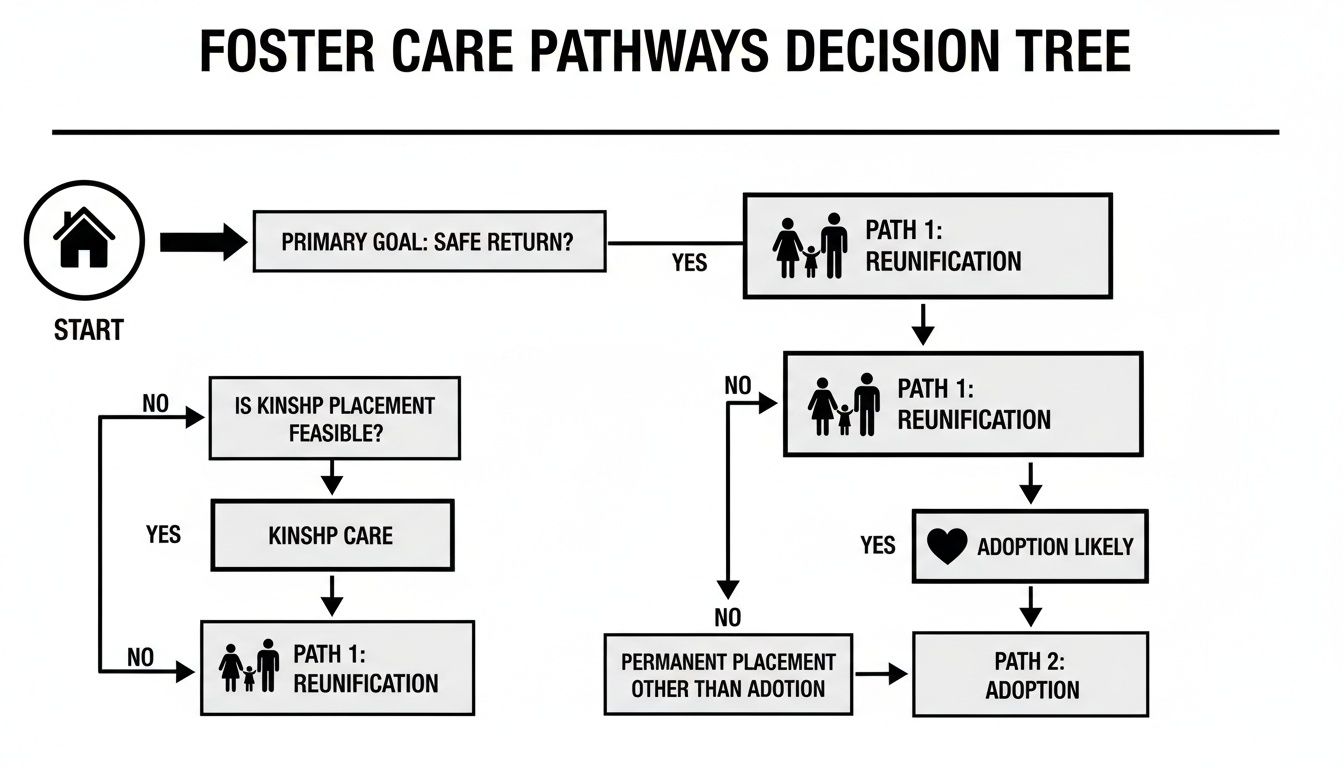
As the flowchart shows, while the primary goal is often reunification, adoption is the path that provides permanence when returning to the birth family is no longer an option.
The most important step is choosing a path that aligns with your heart. Both adoption and foster care require immense love, but they ask for it in very different ways.
No matter which road you’re considering, you don’t have to walk it alone. Understanding the legal fine print and the emotional realities is everything. The compassionate team at The Law Office of Bryan Fagan, PLLC is here to listen to your story and give you clear, empathetic guidance. Schedule a free consultation with us today to talk about your unique circumstances and take the next confident step toward helping a child.
Frequently Asked Questions About Adoption and Foster Care
When families start exploring adoption and foster care, questions come up fast. It's completely normal. Understanding the high-level differences is one thing, but it's the practical, day-to-day concerns that often weigh on your mind. Here, we'll tackle some of the most common questions we hear from Texas families just like yours.
Our goal is simple: to give you the clear, straightforward answers you need to feel confident as you take the next step. It’s all about what matters most—doing what's best for a child who needs you.
How Much Does Adoption Cost Compared to Fostering?
This is where the two paths diverge dramatically, and it's a critical factor for most families. Fostering a child in Texas involves minimal to no personal cost. As a licensed foster parent, you are a caregiver for the state, and you receive a monthly stipend to cover the child's living expenses, medical needs, and other costs. The focus is entirely on providing care, not on a financial investment from you.
Adoption costs, on the other hand, can be a completely different story. A private domestic infant adoption is a major financial undertaking, often running anywhere from $30,000 to $60,000 or even more. That figure typically covers agency fees, legal services, and support for the birth mother.
But here’s the key difference: adopting a child from the foster care system is extremely low-cost, and often, it’s entirely free. The state provides subsidies and financial assistance to encourage these adoptions, recognizing the urgent need to find permanent, loving homes for children in its care.
Can I Adopt a Child I Am Currently Fostering?
Yes, absolutely. In fact, this is one of the most common and beautiful ways forever families are made in Texas. The journey is known as foster-to-adopt, and it's a pathway built on an existing bond.
It all hinges on a critical court decision. When a judge determines that it's no longer safe or possible for a child to be reunified with their birth family, the court will move to terminate the biological parents' rights.
Once that legal step is complete, the child becomes legally available for adoption. In nearly every one of these cases, the child's current foster parents are given the first opportunity to adopt. The system is designed this way for a very important reason: it gives the child stability and continuity, allowing them to stay in a home with caregivers they already know, love, and trust. It prevents the trauma of yet another move.
What Are the First Steps to Becoming a Foster or Adoptive Parent?
While the end goals are different, the starting line for both fostering and adopting looks very similar. No matter which path you're considering, your first stop in Texas will almost always be a licensed child-placing agency.
These agencies are your guide through the essential first stages, which include:
- Attending an Orientation: Think of this as your foundational meeting. You'll learn the real-world details, requirements, and expectations for both paths.
- Completing an Application: This is where you’ll provide detailed information about yourself and your household.
- Participating in Training: Both prospective foster and adoptive parents are required to complete specialized training. It’s designed to prepare you to care for children who may have experienced trauma.
- Undergoing a Home Study: A social worker will visit your home, not to judge, but to ensure it’s a safe and suitable environment for a child and to get to know you better.
No matter which path you choose, the first step is gathering information. For adoption, seeking experienced legal counsel early on is key to ensuring your journey is smooth, legally secure, and focused on building your family.
Understanding the legal landscape of adoption and foster care in Texas is essential to protecting you and the child. The compassionate attorneys at The Law Office of Bryan Fagan, PLLC are here to provide the clear, expert guidance you need to navigate every step with confidence. Schedule a free, no-obligation consultation today to discuss your unique situation and explore your options for building a forever family.
Schedule Your Free Consultation with The Law Office of Bryan Fagan, PLLC
