
You may already know what this feels like. Your grandchild sleeps under your roof, comes to you for comfort, and depends on you for the small daily things that make a child feel secure. Then one phone call from a school nurse or one form at a doctor’s office reminds you that love and responsibility do not always equal legal authority.
If you have been asking, can grandparents adopt in Texas? In many cases, yes. Texas law does allow grandparents to adopt, especially when a grandparent has become the steady caregiver and adoption would give the child lasting safety and stability.
For many grandparents, this question carries two kinds of weight at once. One is legal. Can you enroll the child in school, consent to medical care, or make long-term decisions without running into barriers? The other is personal. You may be trying to protect a child you love while also grieving what your own son or daughter could not provide.
That emotional piece matters. Grandparent adoption often begins after addiction, incarceration, neglect, abandonment, or another family crisis has turned everyday life upside down. A court case can feel intimidating, but adoption is the law catching up to the family role you may already hold.
If you are unsure whether your current role gives you any legal standing now, this guide to grandparent rights in Texas can help you understand where you stand before you decide whether adoption is the right next step.
Adoption can turn an uncertain caregiving arrangement into a permanent parent-child relationship. For a child, that often means more than paperwork. It can mean one clear home, one dependable decision-maker, and the reassurance that the adult who has been showing up all along is now recognized by law as the parent.
Your Heart Says You're a Parent Your Grandchild Needs You to Be One Legally
Maria had been raising her grandson for so long that neighbors assumed he was her son. She knew his teacher’s email address by heart. She kept his favorite cereal in the pantry. She could calm him down after a nightmare faster than anyone else.
Then he needed medical paperwork signed after an urgent appointment, and Maria hit a wall. She was the adult doing everything, but she did not have the legal power to act like a parent in the eyes of the law.
That is where many grandparents find themselves. You are not “helping out” in some casual way. You are often the steady adult. You are the one building routines, offering comfort, and protecting a child from chaos.

Texas law recognizes that reality. Grandparents can adopt in the right circumstances, especially when adoption serves the child’s best interests and gives the child a stable, loving home. If you are still unsure how your current role fits into the law, this guide on grandparent rights in Texas can help you see where you stand.
Why this question feels so personal
Grandparent adoption is rarely just a legal project. It usually grows out of family pain. A parent may be struggling. A child may feel confused, loyal, sad, hopeful, or all four at once. And you may feel torn between protecting your grandchild and worrying about your own adult child.
Those feelings are normal.
Adoption does not erase that history. What it can do is create a safer future. It can give you the authority to make school, medical, and day-to-day parenting decisions without waiting for permission that may never come.
Key takeaway: If you are already acting as the dependable parent in your grandchild’s life, adoption may be the legal step that gives your child the security your home already provides emotionally.
What grandparents often need most
Most grandparents do not need a lecture. They need a clear path and a little reassurance.
They need to know:
- Whether adoption is possible: In many Texas families, it is.
- What must happen first: Some legal steps have to come before the court can approve an adoption.
- How the child’s feelings matter: The law and the family both need room for the child’s voice.
- What life looks like after court: Adoption creates a new legal parent-child relationship that can simplify daily life.
You do not need to know every legal term on day one. You only need to understand the next step in front of you.
Understanding Your Legal Options From Caregiver to Legal Parent
You may already be doing the work of a parent. You wake your grandchild for school, sign permission slips when you can, sit through fevers, calm nightmares, and make sure there is dinner on the table. The law, however, does not always catch up to the reality inside your home.
That gap is what makes this stage so stressful for many grandparents. Love and daily care matter, but courts and schools still look for legal authority. Until your role is legally defined, you can end up carrying the responsibility without having the power to protect the child.
A simple comparison helps. Informal caregiving works like having a house key. You can get through the day, but important decisions still belong to someone else. A temporary court order gives you limited authority for a period of time. Adoption creates a legal parent-child relationship.
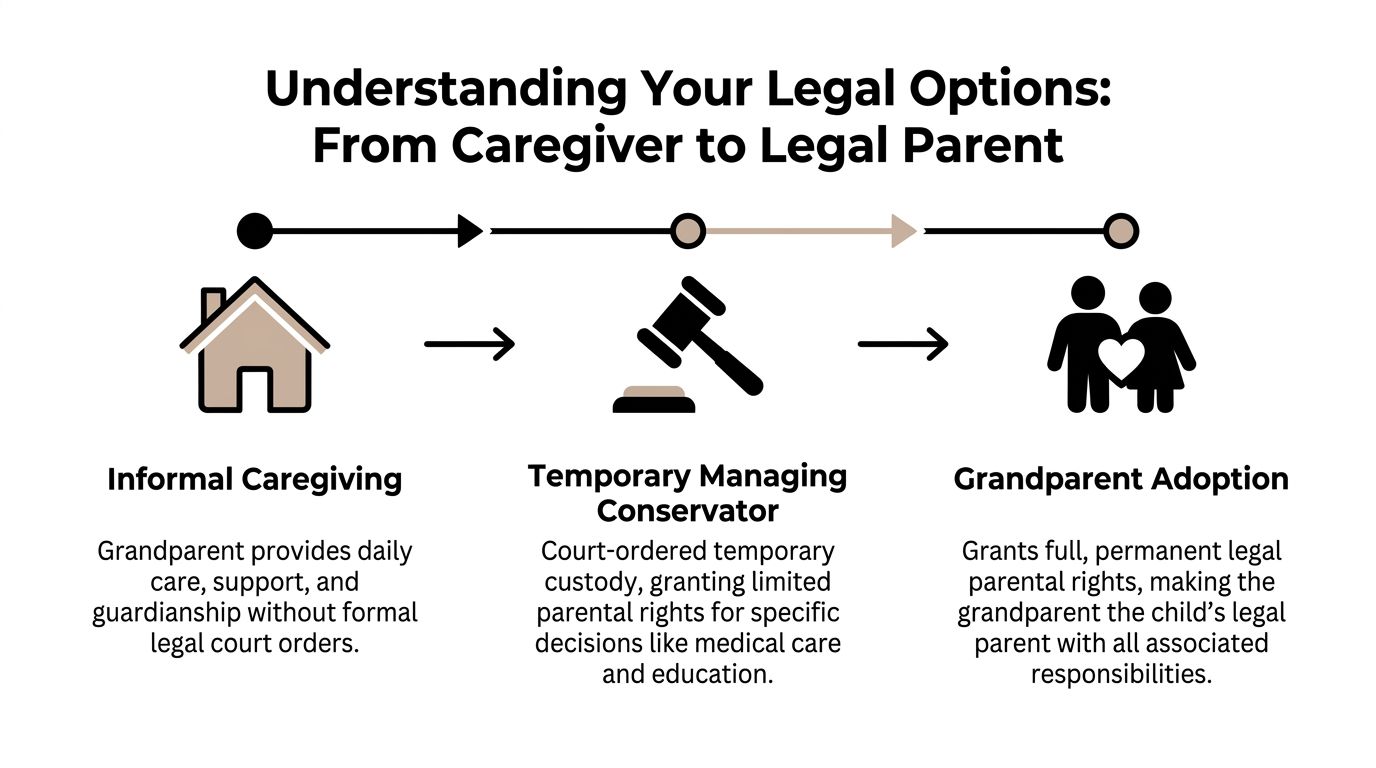
Many grandparents begin as relatives helping out. Then the arrangement lasts longer than anyone expected. A weekend turns into a semester. A short break for the parent turns into a year of school pickups, doctor visits, and bedtime routines. By the time adoption enters the conversation, you may already feel like the child’s steady parent in every way that counts.
Informal caregiving
Informal caregiving is where the story starts.
Sometimes a parent asks you to keep the child safe while they deal with housing, health, addiction, incarceration, or another crisis. Families do this out of love, and it can protect a child in the moment. Still, informal care leaves you in a fragile position because your authority depends on cooperation from the legal parent.
That can create painful uncertainty. If the child needs medical treatment, enrollment help at school, counseling, travel paperwork, or access to benefits, you may hear the same frustrating question again and again. “Do you have legal authority?”
You may be providing:
- Daily care: Meals, homework help, transportation, and supervision
- Emotional stability: Predictable routines during a confusing time
- Financial support: Clothing, school costs, and household needs
Informal care can keep a child safe for now. It just may not give you the legal tools to make longer-term decisions.
Temporary Managing Conservator status
Some grandparents need more than an informal arrangement but are not yet at the adoption stage. In that situation, a court may appoint a grandparent as Temporary Managing Conservator, often shortened to TMC.
TMC gives you court-recognized authority while a case is pending. That can mean you are able to make school and medical decisions without waiting on a parent who is absent, inconsistent, or unable to respond. For many families, it creates breathing room.
Here is where grandparents sometimes feel torn. Temporary orders can bring relief, but they do not always bring peace. A temporary role can still leave a child wondering where they belong and whether the adults around them may change again. That emotional uncertainty matters, especially if the child has already lived through instability.
| Situation | Why temporary authority helps |
|---|---|
| A parent cannot be reached or is not consistently involved | The child needs an adult who can act promptly |
| Medical or school decisions must be made | The court can give you decision-making power |
| The family is still deciding on a permanent plan | TMC provides structure while the case develops |
Adoption
Adoption is the strongest legal option because it makes you the child’s legal parent, not only the adult currently caring for them.
That change affects ordinary life in meaningful ways. You can consent to medical care, deal with schools directly, and make long-term plans without wondering whether your authority will be questioned. Just as important, the child gains permanence. Home stops feeling temporary.
For grandparents, that emotional piece is often as important as the paperwork. Children notice uncertainty even when adults try to hide it. A child may ask, “Do I have to go back?” or “Who decides for me?” Adoption can answer those questions with stability instead of fear.
If you are comparing temporary authority with a permanent legal relationship, this guide on legal guardianship vs adoption in Texas explains how the two paths differ.
Why kinship adoption often feels different
Kinship adoption follows real legal rules, but the family dynamics are different from many other adoptions. Your grandchild may already know your routines, your voice, your rules, and where the cereal bowls are kept. That familiarity can soften some parts of the transition.
It can also complicate others.
A child may love you and still feel loyalty to a parent. You may feel relief that the child is safe and grief about what brought your family here. Those mixed emotions do not mean adoption is the wrong step. They mean you are dealing with a family bond, not a simple legal transaction.
Practical tip: If you are already handling the daily responsibilities of parenting, ask whether your legal authority matches the child’s real needs. If it does not, a more formal legal path may give both of you greater stability.
The Critical Step Terminating Biological Parental Rights
A grandparent can be doing all the actual parenting and still not have the legal right to adopt yet.
That gap often surprises families. You may be packing lunches, sitting through parent teacher conferences, signing school forms when allowed, and calming bedtime fears. In daily life, you already feel like the parent. In court, though, Texas must first decide who holds the legal parent-child relationship before it can create a new one through adoption.
Why termination has to happen first
Texas courts do not stack one set of parental rights on top of another. Before you can become the child’s legal parent through adoption, the biological parents’ rights must be ended. Otherwise, the child is left with overlapping claims about who can make major decisions.
A simple way to view it is this. Adoption creates a new legal parent-child bond, but the court cannot create that bond until the old legal ties are addressed. That rule is about clarity, stability, and protecting the child from conflict over medical care, school decisions, and long term authority.
For many grandparents, this is the moment where the legal process stops feeling like paperwork and starts feeling personal.
Voluntary termination
Sometimes a parent agrees that adoption by a grandparent is the safest path for the child. In that situation, the parent may sign an Affidavit of Relinquishment under Texas law.
That document is serious. It is not just a letter saying, “I agree.” It is a formal legal surrender of parental rights, and it must meet legal requirements to be valid. The court still reviews the case and still asks whether the adoption is in the child’s best interest.
Families are often relieved to hear that a voluntary relinquishment can come from honesty, not indifference. A parent may recognize that they cannot provide safe, steady care and decide the child needs permanence with a grandparent who already has been filling that role.
Involuntary termination
Other families do not have agreement.
A parent may contest the case, avoid service, disappear for long periods, or continue behavior that places the child at risk. In those cases, a judge can terminate parental rights only if the law allows it and the evidence is strong enough. The court looks for legally recognized grounds and must also decide that termination is in the child’s best interest.
That means feelings alone are not enough, even when your concern is completely understandable. The judge will want proof. Records, testimony, prior court orders, missed contact, unsafe conduct, substance abuse history, or failure to support the child may all matter depending on the facts.
If you want a closer look at how courts examine those cases, this guide on terminating parental rights in Texas explains the legal standards in more detail.
The part no statute can make easy
When the parent involved is your own son or daughter, the case can feel like your heart is being pulled in two directions at once.
You may be protecting your grandchild while grieving your adult child’s choices. You may feel guilty for setting boundaries, even when those boundaries are the reason the child is safe. You may also worry about how the child will process it all, especially if the child still loves that parent and hopes things will change.
Those emotions are common. They do not mean you are failing anyone.
A child can love a parent and still need protection from that parent’s instability. A grandparent can love their adult child and still ask the court for legal permanence. Families often carry both truths at the same time.
Gentle reminder: Seeking termination so an adoption can happen is not a punishment. For many grandparents, it is the legal step that matches the care they have already been giving every day.
How this affects everyday life
Termination of parental rights may sound abstract, but its effects show up in ordinary moments that matter to a child’s sense of safety.
- Medical decisions: Consent is clearer when the child has a legal parent who can act without delay.
- School issues: Enrollment, special education decisions, records access, and discipline matters are easier to handle with legal authority.
- Identification and travel: Applications and permissions often depend on recognized parental status.
- Long term stability: Benefits, inheritance rights, and family records are easier to straighten out after adoption.
Where families often get stuck
Many grandparents assume that because the child has lived with them for a long time, the court will treat adoption as a formality. Usually, it does not work that way. The court still has to address notice, service, evidence, consent when required, and the legal basis for ending the parents’ rights.
That is why this stage deserves careful attention. If the foundation is shaky, the adoption cannot be finalized, no matter how loving or stable your home already is.
And that can be frustrating. You know who has been there for the child. The court still needs the legal record to show it.
Navigating the Texas Grandparent Adoption Process Step by Step
The legal process often feels hardest right after you decide, in your heart, that adoption is the right step. You may already be doing the daily work of parenting. The court process is how Texas turns that lived reality into legal security.
Filing the adoption case
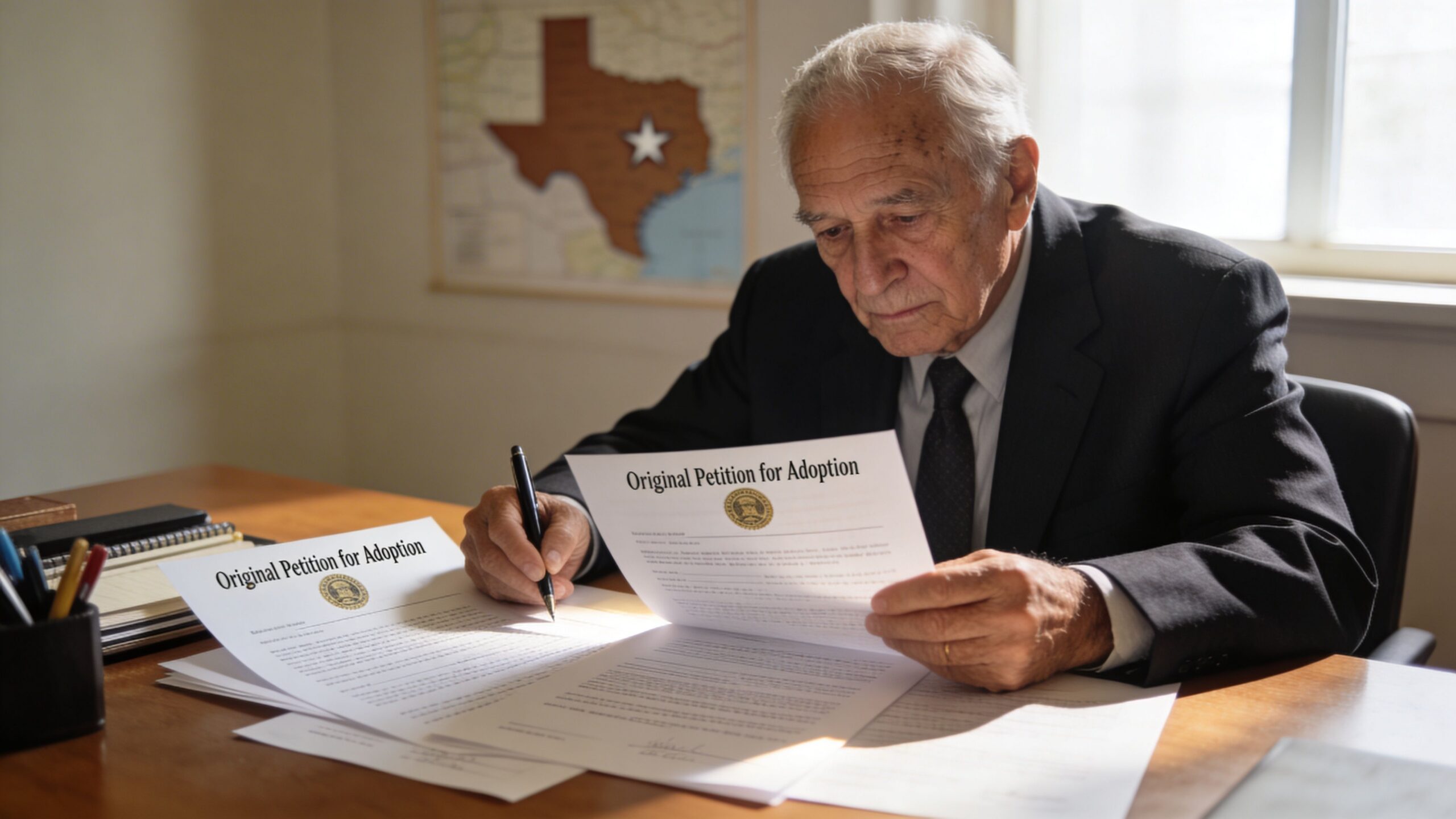
The process usually begins with a court filing called the Original Petition for Adoption. This document asks the judge to recognize you as the child’s legal parent.
At a basic level, the petition introduces the family to the court. It explains who the child is, who is asking to adopt, and what legal facts support the request. If your family already has a conservatorship case, a CPS case, or another order involving the child, the adoption must fit into that history. That part can feel technical, but it matters because courts want a clear record before making a permanent change.
Some grandparents prepare these papers in a straightforward case. Others need legal help because a parent cannot be located, family members disagree, or multiple hearings are likely. One option families use for relative adoptions is Law Office of Bryan Fagan, PLLC, which handles kinship and grandparent adoption matters in Texas.
The home study
The home study is one of the parts grandparents worry about most, and often for the wrong reasons.
Many loving grandparents hear the words "home study" and picture a harsh inspection. In practice, the evaluator is usually looking for something much more human. Is the child safe here? Is there stability? Does this home meet the child’s day-to-day needs?
A home study works a lot like a careful snapshot of family life. The evaluator may ask about your health, your routines, your finances, your background, and the child’s adjustment in your home. The goal is not perfection. The goal is to help the court understand whether adoption would give the child a steady and caring home.
That distinction matters. A tidy house helps, but a calm routine, direct answers, and clear concern for the child often matter more.
What grandparents can do to prepare
Preparation usually looks less dramatic than people expect. It is often a matter of showing the structure you already provide.
- Show your routine: School attendance, meals, bedtime habits, counseling, and medical care help paint a clear picture of stability.
- Gather paperwork: Keep records such as medical information, school documents, and any existing court orders in one place.
- Answer questions directly: Difficult family facts are easier to address when you speak plainly and do not try to smooth over serious issues.
- Keep the child at the center: The evaluator wants to see how your home supports this particular child’s needs, personality, and circumstances.
Your years of caregiving matter here. Patience, consistency, and a strong bond with the child are not small things. They are often the clearest signs that a child already sees your home as home.
Home study tip: The court is looking for a safe, stable, loving environment that can meet the child’s needs.
Background checks and court review
The court will usually want more than your word alone. Background checks, supporting records, and formal review help the judge make a careful decision about the child’s future.
This can feel frustrating, especially if you have been raising your grandchild for a long time. Still, the court’s caution has a purpose. Adoption changes legal parentage permanently, so judges expect the paperwork to be complete and the history to be clear.
Even a case with family agreement can slow down if forms are missing, notice was not handled correctly, or a prior order creates questions that need to be resolved first.
Child consent when the child is older
For many grandparents, this is the most emotional step.
In Texas, a child who is older may need to consent to the adoption unless the court waives that requirement. The legal rule matters, but the emotional side matters just as much. An older child may want the safety and permanence adoption brings while still feeling guilty, confused, or protective of a parent who has not been able to care for them.
That does not mean the child is rejecting you. It often means the child is carrying two truths at once. "I feel safe with Grandma" and "I do not want to hurt my mom" can both exist in the same heart.
How to talk with a child about consent
These conversations usually go better when they feel like reassurance, not persuasion.
- Use simple language: Explain that adoption gives legal protection to the family life you already share.
- Make room for loyalty: Let the child know loving you does not erase love for a parent.
- Invite real questions: Children may worry about names, school, where they will live, or whether they can still talk about their parents.
- Give the child time: A child may need more than one conversation before feeling ready.
If this step feels delicate, trust that instinct. It is delicate. A child is not just signing a legal paper. The child is trying to make sense of family, belonging, and loss all at once.
A short video can also help families get more comfortable with the process before a hearing:
The final hearing
If the legal requirements have been met, the case goes to a final hearing. The judge reviews the record and decides whether the adoption is in the child’s best interest.
For grandparents, this day often carries two very different feelings at once. Relief, because the child can finally have legal stability. Grief, because adoption usually grows out of family hardship, not the plan anyone hoped for at the beginning.
Then the order is signed.
At that point, the law catches up to the role you have already been living. You are no longer only the grandparent who stepped in during a crisis. You are the child’s legal parent, with the authority and permanence that role requires.
Real-Life Scenarios in Grandparent Adoptions
Some grandparents arrive at adoption after years of doing the daily work of parenting. Others are pulled in by a crisis and have to make hard decisions quickly. The legal path may be the same on paper, but the emotional path can look very different from one family to the next.

When everyone agrees
A grandfather has tucked his granddaughter into bed, helped with homework, and shown up for school events for years. Her parents care about her, but they know they cannot give her a safe and steady home right now. After honest and painful conversations, they agree that adoption gives her the security she needs.
These cases are often less combative, but they are not emotionally simple. Consent can lower conflict in court, yet it does not remove sadness, guilt, or the child's worry about what this change means. Families in this position often need help with two things at once. They need to complete the legal paperwork correctly, and they need to reassure the child that love is not being taken away from anyone.
That matters more than many adults expect.
A child may feel relief because life will stay stable. The same child may also feel torn, especially if adoption feels like choosing one family member over another. Grandparents who recognize those mixed feelings early are often better prepared to support the child through the process.
When CPS is involved
Sometimes a grandmother steps in after the state removes a child from a parent’s home. In that situation, the case can feel less like a family discussion and more like a train already moving on fixed tracks. There may be court dates, agency meetings, home requirements, and repeated reviews before adoption is even on the table.
For grandparents, that structure can be both helpful and stressful. Helpful, because there is a formal process. Stressful, because the grandparent may feel they are proving something they have already been living, that they are the safe adult this child counts on.
These cases also carry a different kind of emotional weight. A child involved in a CPS case may be coping with fear, confusion, or divided loyalties. A grandparent may feel anger toward the parent one day and deep grief for that parent the next. Both reactions are common. Keeping the focus on stability for the child usually helps families stay grounded while the case develops.
When a parent contests the adoption
This is often the hardest situation in the room.
A grandmother may have raised her grandson for a long time, only to have a parent object once adoption becomes real. That parent may promise to change, dispute the facts, or ask the court for more time. For the grandparent, it can feel like being asked to defend years of caregiving while also managing heartbreak within the family.
Contested cases require clear evidence and careful preparation. Courts look for proof tied to the child's best interest and the legal standards for ending parental rights and approving the adoption. A judge will not decide the case based on who is angriest, who speaks first, or who has the strongest personal opinion about what should happen.
The family strain can be intense. Grandparents are often trying to protect a child while facing conflict with their own son, daughter, or in-law. That tension can bring guilt, second-guessing, and exhaustion, even when the grandparent is acting out of love and concern.
A helpful anchor in contested cases: Keep returning to the child’s day-to-day needs. Safe housing, steady care, medical treatment, school support, and emotional security give the court a clearer picture than family accusations do.
Families often fall somewhere in the middle
Real life rarely fits neatly into one category. A parent may agree at first, then stop cooperating. A relative placement may begin during a state case and later become a private adoption matter. A child may want the adoption and still cry when talking about a parent.
That does not mean the family is doing something wrong. It means adoption is both a legal process and a family transition. Grandparents often need room to hold two truths at the same time. They can be grateful to give a child safety and still grieve the crisis that made adoption necessary.
In many homes, the law is catching up with what the child already knows. You are the person who stays, comforts, shows up, and keeps life steady. Adoption can give that bond the legal protection to match.
Life After Adoption Finalizing Your New Family
The final hearing is not the end of parenting work. It is the beginning of parenting with legal security.
Many grandparents feel a wave of relief after the judge signs the order. Then real-life questions arrive quickly. What should be updated first? Who needs a copy of the order? How do we help the child settle into this new chapter?
Practical steps after court
Start with the records and institutions that affect daily life.
- Birth records: Ask about the process for obtaining an updated birth certificate after the adoption order
- School records: Give the school the documents it needs so staff know who has legal authority
- Medical providers: Update doctors, dentists, counselors, and insurance records
- Identity documents: Review whether Social Security or other official records need to be updated
Keep certified copies of the adoption order in a safe place. You may need them more often than you expect.
Helping the child emotionally
Children do not all react the same way after adoption. Some feel immediate relief. Some feel happy and sad at the same time. Some need time to trust that the arrangement is permanent.
You can help by keeping life steady.
- Maintain routines: Predictable meals, bedtimes, and school habits build security
- Use reassuring language: Let the child know they are safe and staying with you
- Allow mixed feelings: Joy and grief can exist together
- Celebrate gently: A small family dinner or special day can honor the moment without overwhelming the child
A new legal chapter
Adoption gives your family a firmer foundation. It helps schools, doctors, agencies, and courts recognize what your child already knows. You are the parent in that home.
For grandparents who have carried uncertainty for a long time, that legal recognition can feel like a deep exhale. The work of love was already there. The law has finally caught up.
Frequently Asked Questions About Grandparent Adoptions in Texas
How long does a grandparent adoption take in Texas
The timeline depends on the facts. An agreed case usually moves more smoothly than a contested one. Cases involving missing parents, disputes, or related CPS issues can take longer because the court must resolve those issues before finalizing the adoption.
How much does it cost for grandparents to adopt
Costs vary by county, filing needs, service requirements, home study expenses, and whether the case is contested. A cooperative case is often less complicated than one involving serious disputes. The best way to understand likely costs is to talk with a Texas adoption attorney about your specific facts.
Does being the child’s guardian mean I can automatically adopt
No. Guardianship, conservatorship, or informal caregiving may help show the court that you have been acting as the child’s stable caregiver, but adoption is a separate legal process. You still need to meet the adoption requirements, including dealing with parental rights.
Does the child have to agree
Sometimes, yes. If the grandchild is 12 or older, Texas law requires the child’s consent unless the court waives that requirement. For many families, preparing the child emotionally is just as important as preparing the paperwork.
Can grandparents adopt if a parent does not agree
Possibly, but the case is more difficult. If a parent contests the adoption, the court must address parental rights under the legal standard before adoption can happen. These cases often require strong evidence and careful legal preparation.
Is adoption always better than temporary legal authority
Not always. Some families need a temporary arrangement while a parent resolves a short-term crisis. But when a child needs permanence, adoption often offers the clearest legal protection and the strongest long-term stability.
What should I bring to a first consultation
Bring any court orders, school records, medical paperwork, contact information for the parents if you have it, and a simple timeline of what has happened. A written timeline helps many grandparents explain the family history clearly and calmly.
If you are caring for a grandchild and need clear answers about adoption, the Law Office of Bryan Fagan, PLLC can help you understand your options under Texas law. A free consultation can give you a practical next step, whether your case is agreed, contested, or connected to CPS.
