
A lot of families ask this question, sometimes years after the judge signs the final papers. Life is moving along. A child is thriving in school. A stepparent has become “Mom” or “Dad” in every way that matters. A family is planning for college, holidays, or a graduation. Then a new question appears. Could anything legal still come up after the adoption is over?
The reassuring answer is yes, legal questions can arise years later, but that does not mean your family is fragile. It means adoption, like any major legal event, has lasting effects. A home purchase can lead to title questions years later. A will can raise issues long after it is signed. Adoption works the same way. The decree creates permanence, but it also shapes records, rights, relationships, and future decisions.
Most post-adoption issues are manageable when families understand them early. That's the heart of this discussion. Not fear. Not worst-case thinking. Just peace of mind through clear information.
Your Family's Story Years From Now
A teenager walks across a stage to receive her diploma. Her parents clap from the front row. A grandparent wipes away tears. Later, everyone gathers outside for photos, laughing about how fast the years went.
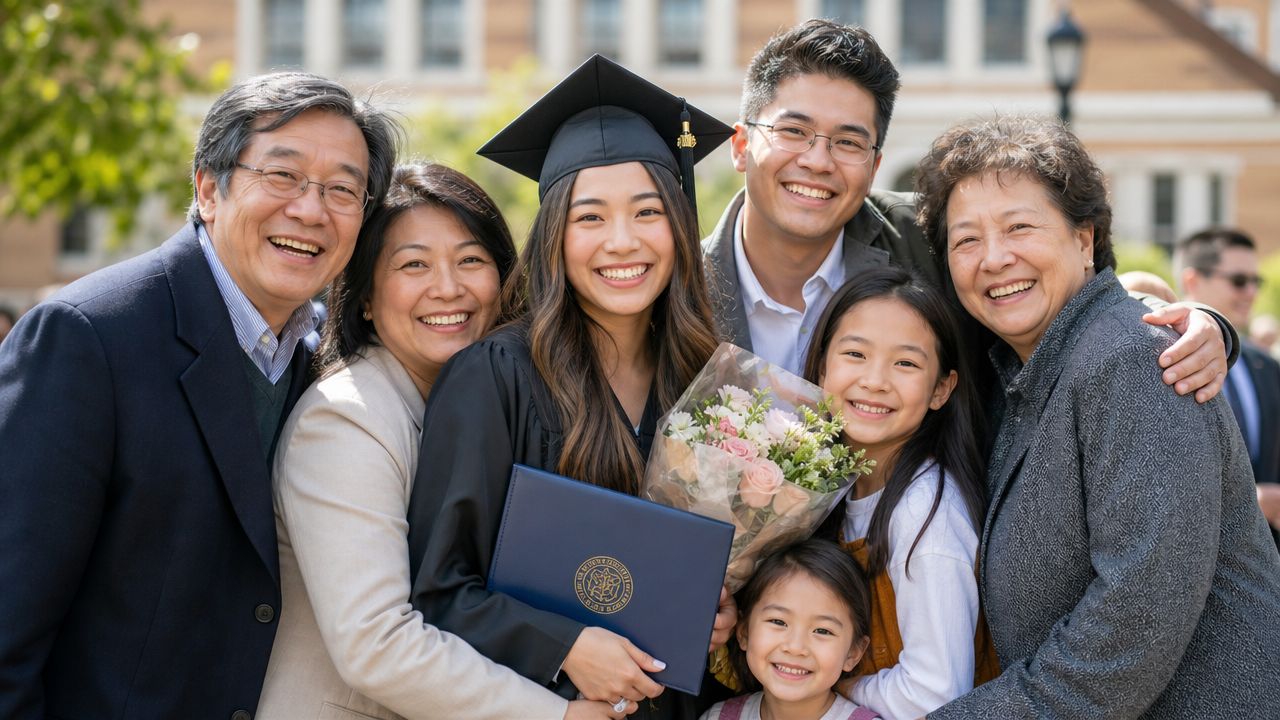
That scene is the goal of adoption. Stability. Belonging. A child who knows where home is. In Texas, courts treat adoption as a serious, permanent act because children need that kind of security.
Still, years later, families sometimes run into practical questions that no one talked much about during the excitement of finalization. A birth relative reaches out. An adoptee wants records. A family wonders how inheritance works. A contact agreement stops working in real life. An old foster care issue resurfaces when the child is older.
Adoption is designed to create a permanent family, not a temporary arrangement. Most later questions involve how that permanency affects real life over time.
That's why it helps to ask what legal issues can arise years after an adoption before a problem lands on your doorstep. Knowing the situation doesn't weaken your confidence. It strengthens it.
For hopeful adoptive parents, birth parents, and relatives in Texas, this kind of planning is part of loving a child well. It says, “We want to build this family on solid ground.” And solid ground is exactly what Texas adoption law is meant to provide.
The Legal Permanence of a Texas Adoption
Texas adoption law starts from a powerful idea. Once the court finalizes an adoption, the law intends that parent-child relationship to be permanent. That permanence matters because children need legal and emotional stability.
Under the Texas Family Code, the adoption process generally works in a sequence. The court must have proper jurisdiction. Required consents or termination orders must be in place. The court reviews the child's circumstances, the proposed placement, and whether the adoption serves the best interest of the child. Chapters 162 through 166 of the Texas Family Code provide the framework for adoptions, termination-related issues, and related procedures that support this final legal step.
What finalization actually changes
Finalization is more than a celebration in a courtroom. It changes legal status. Once an adoption is finalized, adoptive parents generally gain the same legal rights and duties as biological parents, the child is treated as their legal child for support and inheritance, and the biological parents' rights are terminated. In some jurisdictions, the original birth certificate is sealed and a new one is issued listing the adoptive parents, as explained in this overview of adoptive parents' rights and responsibilities.
That's why the final hearing matters so much. For families who want a plain-English look at the courtroom step that makes the adoption legally effective, Finalizing a Texas Adoption: The Final Hearing describes what happens at that hearing that makes the adoption legal.
Why Texas courts treat adoption so seriously
The best interest standard is the court's anchor. Judges don't sign adoption decrees casually. They are being asked to create a permanent family relationship and, in most cases, to permanently end another legal parent-child relationship.
That's also why the earlier steps matter so much:
- Home study and evaluation: The court wants reliable information about the home, the caregivers, and the child's needs.
- Termination or consent: Before an adoption can usually move forward, the legal rights of existing parents must be properly addressed.
- Final hearing: The judge confirms that legal requirements have been met and that the adoption serves the child's welfare.
Practical rule: Finality in adoption doesn't mean “nothing will ever need attention again.” It means the law strongly protects the family relationship created by the decree.
A simple way to think about it
Think of the adoption decree like a foundation poured for a house. The foundation is meant to last. Years later, you might still handle doors, paperwork, neighbors, or repairs. But that doesn't mean the house itself is uncertain. It means permanent things still interact with everyday life.
That distinction helps many families breathe easier. The legal bond is strong. Most later issues involve records, contact, benefits, or rare allegations about what happened during the process, not a routine reopening of the adoption itself.
Challenging an Adoption After Finalization
The fear many adoptive parents carry is simple. What if someone tries to undo the adoption later?
In Texas, that is not something courts treat lightly. A finalized adoption is generally very difficult to overturn. The law favors stability for the child, and judges know that children should not live with an open question over who their parents are.
What kinds of challenges can happen
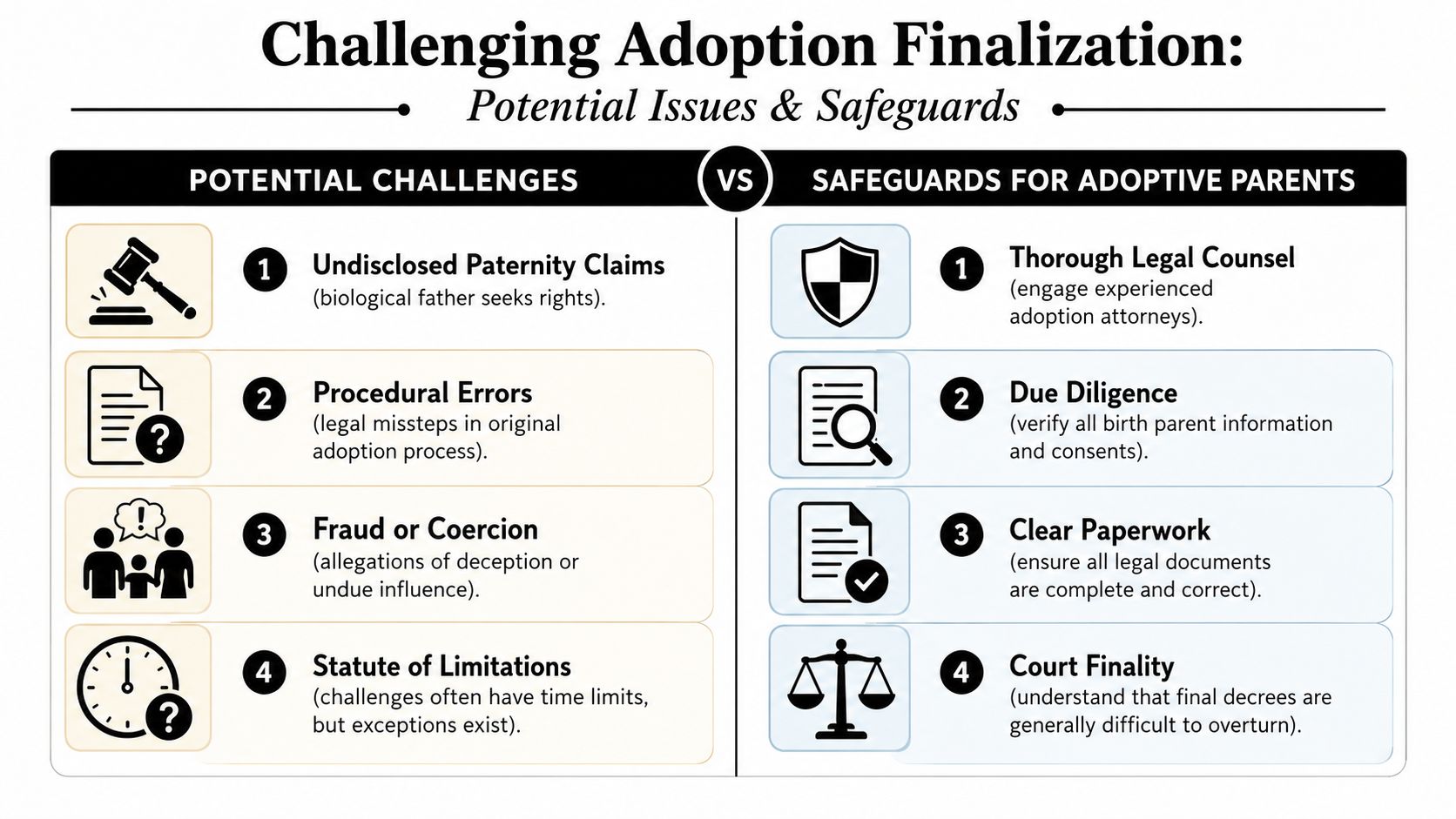
The most serious challenges usually involve claims about the original process, not everyday family conflict. A person might argue that notice was improper, that a consent was obtained through fraud or coercion, or that a biological father's rights were not handled correctly. In some cases, a family also worries about procedural mistakes in the paperwork or hearing process.
Here's a simple example. A couple finalizes an adoption. Two years later, a man claims he is the biological father and says he should have been notified. That sounds alarming, but the court will not start from scratch just because someone appears later. The judge will look closely at whether the original process followed the law, what efforts were made to identify and notify possible fathers, and how reopening the matter would affect the child's stability.
Why final decrees carry so much weight
Texas courts understand that by the time a challenge appears, the child may have spent years in the adoptive home. That lived reality matters. School records, family bonds, medical decision-making, and day-to-day parenting all support the importance of permanence.
A challenge after finalization often faces a steep uphill climb because the court is balancing any alleged defect against the child's need for security. That's why careful work on the front end matters so much. Notice, consent, service, and documentation are not technical trivia. They are the guardrails that protect the decree later.
For families who want a closer look at how these disputes are handled, this article on what happens if an adoption is challenged after finalization gives helpful context.
Rare but real complications
Some later disputes don't come from a birth parent at all. They can arise from larger legal concerns, especially where state and federal law overlap. Adoption law is still largely state-based, but federal rules like ICWA for Native children can shape later disputes. Recent policy discussions also highlight ongoing issues with agency negligence and subsidy failures, suggesting that while rare, legal challenges can emerge from systemic problems discovered years after finalization, as discussed in the National Council For Adoption's review of important adoption laws.
That doesn't mean most families should expect a lawsuit. It means some cases involve more than one layer of law. A tribal rights issue, an agency disclosure failure, or a serious problem in how a case was handled can create questions long after the decree is signed.
What families can do if they're worried
If a concern surfaces, calm and documentation matter more than panic.
| Concern | First practical step |
|---|---|
| A birth relative suddenly contacts the family | Save messages and avoid making legal promises on the spot |
| Someone claims the adoption was invalid | Gather the decree, consents, and court filings |
| A case may involve tribal or interstate issues | Ask a Texas adoption attorney to review jurisdiction and notice history |
| You discover possible agency misconduct | Request the file and timeline in writing |
A final adoption decree is not a flimsy contract. It is a court order built to give a child permanence.
The deeper lesson is reassuring. Most successful defenses against future problems begin years earlier, with a legally sound process from day one.
Navigating Evolving Relationships and Records Access
Many of the legal issues that arise years after adoption aren't about undoing the adoption. They're about people, memory, and information. Families change. Children grow. Questions that didn't seem urgent at age three can feel of great importance at age sixteen or twenty-six.

When open adoption contact gets complicated
A common source of confusion involves post-adoption contact agreements. Families may agree that a child will have visits, calls, letters, or updates with a birth parent or other relatives. These arrangements can be meaningful and healthy. They can also become hard to manage when circumstances change.
In many jurisdictions, post-adoption contact agreements must be court-approved to be enforceable. In states that don't enforce them, a birth parent may have no legal recourse if contact is denied. Courts still focus on the best interest of the child, as discussed in this review of post-adoption contact and other complex adoption issues.
That point matters because families often confuse a heartfelt promise with a legally enforceable agreement. They are not always the same thing.
For example, a birth mother and adoptive family may begin with regular photo updates and yearly visits. Years later, a move, a remarriage, or a conflict changes the rhythm. The birth mother may feel shut out. The adoptive parents may believe the contact has become disruptive. At that point, the legal question becomes less about feelings and more about the wording of the agreement, whether a court approved it, and whether continued contact serves the child now.
Records can matter more as a child gets older
Another issue appears when an adoptee wants more information about their background. That may involve sealed court files, an original birth certificate, medical history, or agency records.
Texas families often assume records are either fully open or fully closed. In reality, access can depend on the type of record, the age of the adoptee, and which agency or court holds the file. This guide on whether adoption records are sealed in Texas and how to access them is a helpful starting point for understanding the process.
Families usually do best when they treat records questions as part legal issue, part identity issue. A child may be asking for paperwork, but they are often also asking where they came from.
This short video helps explain how families can think about adoption issues with care over time.
DNA tests changed the timeline
Home DNA testing has created a new reality. A person may learn about biological relatives before anyone planned for that conversation. A teenager may discover half-siblings. An adult adoptee may find extended family with a few clicks. Sometimes the information is welcome. Sometimes it's destabilizing.
The legal side of DNA discoveries is often narrower than people expect. A DNA result does not automatically rewrite an adoption decree. But it can trigger requests for records, emotional pressure around contact, or renewed questions about how the adoption was handled.
A healthy response usually includes three steps:
- Pause before reacting: Families should avoid making quick promises or cutting off communication in anger.
- Separate legal and emotional questions: “Can we talk?” is different from “Does this person have legal rights?”
- Protect the child's well-being: Any decision about contact should stay grounded in age, safety, and stability.
In plain language, evolving relationships are normal. What helps is having a plan for how to respond when the child's story keeps unfolding.
Securing Your Child's Inheritance and Citizenship Rights
Some of the most important post-adoption issues are quiet ones. No one is arguing. No one is filing a challenge. But years later, a family may discover that they never updated a will, clarified a trust, or confirmed citizenship documents after an international adoption.
These issues are less dramatic than courtroom conflict, but they can affect a child's future in lasting ways.
Inheritance rights after adoption
When an adoption is finalized, the child is generally treated as the legal child of the adoptive parents for inheritance purposes. That sounds simple, but estate planning can still create confusion if family members use old language or leave outdated documents in place.
A common example helps. Grandparents create a trust years before the adoption and leave assets to their “biological grandchildren.” Everyone in the family may assume the adopted child is included. But if the wording is narrow or old-fashioned, the family may end up in a dispute about what the document means.
That's why families should review estate documents after an adoption, not just celebrate the final hearing. This resource on how adoption affects inheritance rights in Texas can help families begin those conversations.
A practical checklist for families
The easiest way to prevent later confusion is to update documents while life is calm.
- Review wills and trusts: Make sure your child is clearly included by name or by legally accurate family language.
- Update beneficiary forms: Retirement accounts and life insurance often pass outside a will.
- Check guardianship provisions: If both parents were unable to care for the child, your documents should say who would step in.
- Store adoption papers safely: Keep certified copies with estate and identity records.
An adoption decree creates the parent-child relationship. Estate planning makes sure the rest of your paperwork catches up to that reality.
Citizenship and identity records in international cases
For families who adopted internationally, long-term planning includes immigration and citizenship records. Parents often assume that because the child entered the United States lawfully and the adoption was completed, every citizenship issue is finished forever. That assumption can become painful later if an adult adoptee applies for a passport, financial aid, employment verification, or other benefits and discovers missing or incomplete documentation.
The safest approach is simple. Confirm what legal status documents were issued, whether a certificate of citizenship or other key records are in hand, and whether any state or federal follow-up was required after the adoption.
Even in non-international cases, identity paperwork deserves attention. Birth certificates, Social Security records, school registrations, and medical files should match the child's legal name and parentage after finalization. Small mismatches can create large headaches years later.
How to Build a Secure Adoption From Day One
A strong adoption is built the same way a safe home is built. The visible parts matter, but the hidden supports matter just as much. In legal terms, those supports are proper notice, valid consent, complete records, and a court process that was handled carefully from start to finish.

The questions worth asking early
Families often feel pressure to reach finalization as quickly as possible. Speed can feel comforting. Careful preparation usually provides more peace of mind later.
Early questions can prevent later disputes:
- Were parental rights handled correctly? Depending on the case, that may require a signed relinquishment, a court order terminating rights, or both.
- Was every required person given notice? Many later challenges begin with an argument that someone who should have been notified was left out.
- Do we fully understand the child's legal and personal history? In foster care adoptions, earlier court involvement, agency records, sibling relationships, and prior placements can continue to matter after finalization, as noted in the National Council For Adoption's foster care and adoption statistics.
That last question often causes confusion. Finalization creates a new legal parent-child relationship, but it does not erase the child's earlier history. If questions come up years later, having clear records and good advice can make those issues much easier to handle.
Texas steps that make a difference later
Texas Family Code Chapters 162 through 166 set the rules that turn an adoption from an intention into an enforceable court order. Families naturally remember the emotional milestones. The legal milestones deserve the same attention because they help protect the adoption years later.
A practical checklist helps:
- Complete the home study with care. It is part of the court's review of whether the placement serves the child's best interest.
- Confirm the legal path for ending prior parental rights. This matters in every adoption, including stepparent and relative cases.
- Write down contact expectations clearly. If the adults hope to maintain some level of contact after the adoption, clarity reduces misunderstandings.
- Save copies of every key document. Keep court orders, consents, agency paperwork, and amended records in a safe place where you can find them later.
Families exploring different adoption paths may also find it useful to compare procedures. For example, Stepparent Adoption in Texas explains one of the most common adoption routes in Texas and how it works.
Support is part of legal planning
Legal protection does not stop on the day the judge signs the decree. A secure adoption also includes a plan for records, future questions, and unexpected facts that may surface as a child grows up.
That can include help with counseling referrals, boundaries around ongoing contact, requests for records, or a legal review if something about the case was unusual. Law Office of Bryan Fagan, PLLC is one Texas family law firm families may consult for adoption and guardianship guidance at different stages of the process.
The reassuring part is simple. Potential legal issues after adoption are usually easier to prevent than to fix. Families who ask careful questions early are not borrowing trouble. They are building stability, reducing risk, and giving themselves more peace of mind for the years ahead.
If you're considering adoption, dealing with a post-adoption concern, or want clarity about how Texas law applies to your family, a free consultation can help you sort through the next step with confidence. The attorneys at Law Office of Bryan Fagan, PLLC work with Texas families on adoption and guardianship matters and can help you understand your options in plain English.
