 Skip to content
Voluntary termination of parental rights isn't about giving up. It's a profound legal step, often taken from a place of deep love, to give a child the stable and secure future they deserve. The process permanently ends the legal relationship between a parent and child, clearing the path for an adoption to take place.
Understanding This Profound Act of Love
Making the choice to voluntarily terminate parental rights is one of the most significant and selfless decisions a parent can make. It’s not an act of abandonment; it’s a carefully considered plan to ensure a child’s long-term well-being and security. At The Law Office of Bryan Fagan, PLLC, we approach this sensitive topic with the compassion and respect it deserves, and we're here to help Texas families understand the legal journey with empathy and clarity.
This guide is for hopeful adoptive parents, birth parents, and relatives exploring adoption or guardianship options in Texas. Our goal is to demystify the legal requirements and empower you with clear, step-by-step guidance, always keeping the child's best interests at the heart of every decision.
Why This Decision Is So Significant
Choosing to end your parental rights is a permanent, life-altering act with deep emotional and legal weight. It's a choice born from complex circumstances, but the motivation is almost always the same: a powerful desire to give a child the best possible future.
Nationally, the landscape of parental rights has shifted over time, with trends showing an increase in termination cases, partly due to policies that prioritize child permanency. Between 2000 and 2016, the rate of children experiencing termination of parental rights rose by nearly 60%. This means about 1 in every 100 American children will have their parents' legal rights severed by age 18. You can learn more about the research behind these child welfare trends and how they have shaped current laws.
At its core, voluntary termination is about creating legal and emotional permanency for a child. It allows another loving adult—like a stepparent or relative—to step in and provide a stable, legally recognized family structure.
Core Components of Voluntary Termination in Texas
Under the Texas Family Code, the process is structured to be deliberate and final, ensuring any decision is made with full awareness and consent. The court's primary focus isn't on the parent's wishes alone, but on whether the termination serves the child's ultimate best interests.
To give you a clear picture, here's a quick look at the fundamental aspects involved.
Key Aspects of Voluntary Termination in Texas
| Aspect | Simple Description |
|---|---|
| Parental Consent | The parent must knowingly and willingly agree to end their legal rights, usually by signing a sworn legal document. |
| Legal Finality | Once a judge signs the final order, the decision is permanent and generally cannot be reversed. |
| Child's Best Interest | A Texas court must find that termination is the best possible outcome for the child’s safety, stability, and future. |
| Path to Adoption | This process legally frees the child to be adopted by another person, creating a new, legally secure parent-child relationship. |
Each of these components plays a critical role in ensuring the process is handled with the gravity it deserves, always prioritizing the child's future above all else.
Navigating the Texas Legal Process Step by Step
The legal road to voluntarily terminating parental rights in Texas isn't just a pile of paperwork; it's a carefully mapped-out journey designed to protect the child and ensure every decision is made with intention. It can feel intimidating from the outside, but when you break it down, each step has a clear purpose.
Think of it less like a legal battle and more like a series of formal, deliberate actions that honor a profound choice. It all starts with the parent’s decision and moves through the court system until a final, binding order is in place.
The Initial Petition and Filing
The first official move is filing a Petition for Termination of the Parent-Child Relationship with the right family court here in Texas. This document is what gets the ball rolling.
It can be filed by the parent who wants to relinquish their rights, but more often, it’s filed by the person hoping to adopt the child—like a stepparent or another relative. The petition lays out the reasons for the request and, most importantly, explains why the termination is in the child’s best interest.
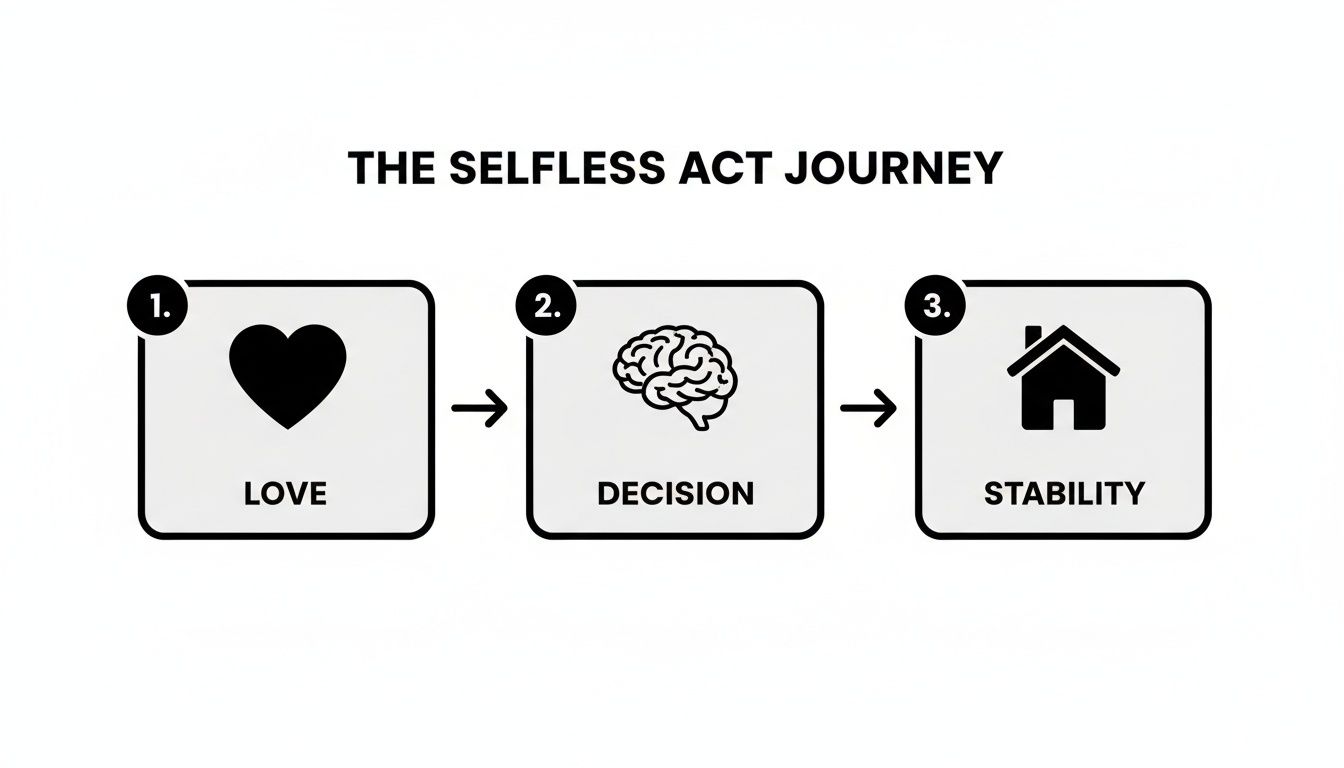
As this shows, the entire journey—from the legal filing to the final outcome—is rooted in a desire to provide a stable, loving future for the child.
Signing the Affidavit of Relinquishment
This is the heart of the matter. A voluntary termination hinges on a sworn legal document called an Affidavit of Relinquishment of Parental Rights. This is the parent's formal, written consent, and it’s taken very seriously.
- Crucial Timing: The Texas Family Code is crystal clear on this: a birth mother cannot sign this affidavit until at least 48 hours after the child is born. This isn't just a suggestion; it's a mandatory waiting period to make sure the decision is made free from the immediate physical and emotional pressures of childbirth.
- Irrevocable Nature: Once this document is properly signed and witnessed, it's legally binding and, in nearly all cases, cannot be taken back. That finality is essential for creating the stability needed for an adoption to move forward.
The weight of this document can't be overstated. For a deeper dive, we have a whole article dedicated to understanding and filing Texas consent to adoption forms.
The Role of the Ad Litem Attorney
A child can't represent themselves in court, so the judge will appoint an attorney ad litem. This is an independent lawyer whose only client is the child. Their sole job is to look out for the child's best interests.
The ad litem digs into the situation. They might talk with the birth parents, the prospective adoptive parents, and even the child, depending on their age. After their investigation, they'll make a recommendation to the court on whether termination and adoption are truly the best path forward for that child.
The Final Court Hearing
Everything leads up to a final hearing before a judge. This isn't a dramatic, confrontational trial you'd see on TV. It's a formal proceeding to make sure every legal box has been ticked correctly.
The judge’s primary duty is to confirm two things: that the parent's consent was truly voluntary and that terminating their rights is definitively in the child’s best interest.
During the hearing, the judge reviews all the documents, hears testimony from everyone involved, and gives significant weight to the ad litem's recommendation. For the attorneys and court staff involved, keeping an accurate record of these proceedings is critical, which is why many rely on professional legal transcription services to create precise written transcripts for the court file.
If the judge agrees that termination is what's best for the child, they will sign a final Order of Termination. This order legally and permanently severs the parent-child relationship, clearing the way for the adoption to be finalized and for the child to begin a secure new chapter.
The Affidavit of Relinquishment Explained
At the heart of any voluntary termination of parental rights in Texas is a single, powerful legal document: the Affidavit of Relinquishment of Parental Rights. This isn't just another form you sign; it’s a sworn statement that makes a parent's profound and permanent decision to end their legal relationship with a child legally binding. Getting this document right is key to navigating the entire process.
Think of the affidavit as the legal key that turns a parent's intention into a court-enforceable action. It's the formal consent that gives a judge the power to issue a termination order, which then creates the legal space for a child to be adopted into a new, stable family. Simply put, without a properly signed affidavit, a voluntary termination can't move forward.

Timing and Irrevocability Are Key
The Texas Family Code is incredibly strict about when this affidavit can be signed, and for good reason. It's all about protecting the person making this monumental decision. A birth mother cannot sign the affidavit until at least 48 hours after the child's birth. This mandatory waiting period is designed to ensure the choice is made free from the immediate physical and emotional pressures of labor and delivery.
Once it’s signed, this document is almost always irrevocable. This finality is a critical part of Texas law, providing certainty and stability for the child. It prevents a child from being stuck in legal limbo and gives the prospective adoptive family the security to move forward. While there are extremely rare exceptions for situations involving fraud or duress, trying to reverse this decision is exceptionally difficult.
The affidavit's finality is there to protect the child's need for a permanent home. It makes sure that once the path to adoption is chosen, it stays clear and secure, allowing a child and their new family to bond without the shadow of legal uncertainty.
This focus on permanency isn't just a Texas thing; it reflects a nationwide shift. The federal Adoption and Safe Families Act of 1997, for example, sped up termination timelines within the foster care system. By 2021, there were 65,000 termination cases in foster care, a huge jump from 37,000 in 1997. This trend underscores just how much the legal system prioritizes getting kids into stable homes quickly.
Different Types of Affidavits
Not all affidavits are identical. A parent has a say in how they structure their consent, which allows for a more personalized adoption plan.
- Affidavit Naming a Specific Person: A parent can sign an affidavit that names the exact person or couple they want to adopt their child. This is the go-to for stepparent, kinship, and many private adoptions.
- Affidavit for a Licensed Agency: On the other hand, a parent can relinquish their rights to a licensed child-placing agency, trusting them to find the right adoptive family.
This flexibility means a birth parent can keep a degree of control over their child’s future, ensuring their decision aligns with their hopes for the child. Our team can help you understand the details of each release of parental rights form to make sure you make the most informed choice. No matter which type you choose, the affidavit does the same job: it provides the clear, legal consent a court needs to finalize the termination and open the door to a child's new beginning.
Real-Life Scenarios Where This Path Is Chosen
It’s one thing to understand the legal definition of voluntary termination of parental rights, but it’s another thing entirely to see how it plays out in the real world. Every family’s situation is different, but the decision almost always comes from a deep-seated desire to give a child a stable, loving, and legally secure future.
To help you connect with the human side of this journey, let's walk through a few common scenarios. These aren't just legal examples; they are stories of love, courage, and what it truly means to build a family. In every case, the guiding principle for everyone involved—from the parents to the Texas courts—is the same: what is in the best interest of the child?

Stepparent Adoptions Forging Stronger Family Bonds
One of the most common—and heartwarming—reasons for voluntary termination is to clear the path for a stepparent adoption. This process allows a stepparent to become a child's legal parent, creating a solid and officially recognized family unit. It’s all about making the legal reality match the emotional reality that already exists in the home.
Consider this story:
Sarah and Tom have been married for five years. Tom has raised Sarah’s son, Leo, since he was just a toddler. Leo’s biological father, Mark, moved out of state years ago and has had very little contact. While Mark loves his son, he recognizes that Tom is the consistent, daily father figure in Leo’s life.
After some thoughtful and respectful conversations, Mark agrees that it’s in Leo’s best interest to be adopted by Tom. He makes the selfless decision to sign an Affidavit of Relinquishment, voluntarily terminating his parental rights. This single act allows Tom to file for a stepparent adoption, giving Leo the legal security and emotional stability of having two committed, legally recognized parents under one roof.
In this situation, the voluntary termination isn't an act of abandonment but a cooperative gesture of love. It allows a child’s family structure to become legally whole, ensuring the stepparent has the right to make medical decisions, enroll the child in school, and provide for him in every legal sense.
Kinship Adoptions Keeping Family Together
Sometimes, the best and most loving place for a child is with another family member. Kinship adoptions—where a grandparent, aunt, uncle, or other relative steps in—are a beautiful way to maintain family connections while providing a child with a permanent, stable home.
Voluntary termination of parental rights is often a key step in making this happen.
- A Grandparent's Unconditional Love: Imagine a young single mother struggling with health issues, knowing she can't provide the stable environment her daughter needs. Her own parents, the child's grandparents, have been the primary caregivers for years. The mother makes the loving choice to voluntarily relinquish her parental rights so that her parents can legally adopt their grandchild, ensuring the child remains surrounded by family.
- An Aunt and Uncle Providing a Safe Haven: A father might be facing a long-term military deployment or personal challenges that make it impossible for him to parent effectively. His sister and her husband offer to adopt his son. By consenting to the termination, the father ensures his child will be raised by family he knows and trusts.
These scenarios highlight how voluntary termination can be a practical and loving solution that prioritizes a child's need for stability while keeping them within the circle of their extended family.
Private Infant Adoptions Creating a Bright Future
The journey of a birth mother choosing an adoptive family for her newborn is one of immense courage and profound love. In a private adoption, the voluntary termination process is the legal mechanism that turns her adoption plan into a reality.
Let’s follow Emily’s journey. During her pregnancy, Emily carefully selected a loving couple, Jessica and David, to adopt her baby. She built a relationship with them and knew they could provide the life and opportunities she wanted for her child.
After her son was born, Emily waited the legally required 48 hours. With the support of her counselor and an attorney from our office, she signed the Affidavit of Relinquishment, specifically naming Jessica and David as the intended adoptive parents. This document formally stated her consent, allowing the court to terminate her parental rights and move forward with finalizing the adoption. For Emily, this decision was the ultimate act of love—a way to ensure her son would have a secure and bright future.
Life After the Judge's Final Order
When a judge signs the final order for a voluntary termination of parental rights, it’s far more than just paperwork. That signature closes a deeply personal and often painful chapter, but it also officially begins a new one. For the birth parent, it provides legal closure. For the child and the adoptive family, it marks the real, tangible start of their life together.
This moment is the culmination of a difficult and courageous journey. The judge’s signature makes the decision permanent and legally binding, creating the stability and certainty a child needs to move forward and thrive. It's the point where a selfless plan becomes a legal reality.

The Legal and Financial Finality
The final order permanently and completely severs all legal ties between the parent and the child. Think of it as a dissolution of the parent-child relationship in the eyes of the law. Once it’s signed, both parental rights and responsibilities are gone for good.
This means the parent no longer has any right to custody, visitation, or making decisions about the child’s schooling, healthcare, or religious upbringing. On the flip side, their financial obligations for the child's future care also end.
Crucially, the order terminates the duty to pay any future child support. But—and this is a big one—it does not erase any past-due child support (known as arrears) that piled up before the termination date. That debt still has to be paid.
This legal finality is what paves the way for adoption. With the previous legal ties officially dissolved, the child is now legally free to be adopted, creating a new, permanent family structure.
To fully grasp the change, it helps to see a side-by-side comparison of what life looks like for a parent before and after this court order.
Rights and Responsibilities Before vs After Termination
| Legal Status | Before Termination Order | After Termination Order |
|---|---|---|
| Parental Rights | Right to custody, visitation, and decision-making for the child. | All rights are permanently severed. No legal right to contact or make decisions. |
| Financial Duty | Legally obligated to provide financial support for the child. | No obligation for future child support. |
| Inheritance | Child has the legal right to inherit from the parent. | Child loses all legal rights to inherit from the parent. |
| Legal Relationship | Recognized as the child's legal parent. Name is on the birth certificate. | Legally a stranger to the child. The child is free to be adopted. |
This table illustrates the absolute nature of the termination order. It’s a clean break, legally speaking, which is necessary for the child’s new family to form its own permanent legal bond without any ambiguity.
From Termination to Adoption Finalization
In many Texas adoptions, especially with stepparents or other relatives, the adoption finalization hearing happens almost immediately after the termination order is signed. Sometimes it’s even in the same court appearance.
This quick transition is by design. It minimizes any legal limbo for the child. Once the judge grants the termination, they can move right into the adoption hearing. This is usually a happy, celebratory moment where the adoptive family stands before the judge, affirms their commitment, and receives the final decree of adoption. That decree creates the new parent-child relationship, and soon after, a new birth certificate is issued with the adoptive parent’s name.
Honoring Relationships in Open Adoptions
The end of a legal relationship doesn’t always mean the end of a personal one. Today, many birth parents and adoptive families choose to maintain a connection through an open adoption.
While the termination order is legally absolute, families can create a Post-Adoption Contact Agreement (PACA). This is a written, good-faith plan outlining future communication, which might include:
- Sending letters, emails, and photos.
- Scheduling phone or video calls.
- Planning for in-person visits.
It's important to know that in Texas, these agreements generally aren't enforceable by a court. Instead, they function as a powerful moral commitment built on trust and mutual respect. This compassionate approach honors the love all parties have for the child, ensuring they can grow up with a meaningful connection to their birth family. It’s a modern way of defining family, centered on what is truly best for the child.
Finding Your Path Forward with Confidence
Making the decision to pursue the voluntary termination of parental rights is a profound act of courage, and it's a path you shouldn't have to walk alone. This choice is permanent, and having a clear, supportive plan isn't just helpful—it's essential for moving forward with peace of mind. Every step you take from here should be intentional and focused entirely on the child's future.
This isn't just about ending one chapter; it's about starting a new one built on stability and love. Having an expert, compassionate guide in your corner is a necessity. A knowledgeable attorney will make sure you understand every document you sign and that every legal box is checked, protecting both you and the child.
Your Next Steps: A Checklist for Clarity
As you think through what comes next, here’s a straightforward plan to help guide you. Remember, this is more than a legal process; it's a deeply personal journey that deserves respect and support.
- Seek Compassionate Legal Counsel: Your first and most important step is talking with an experienced family law attorney. They can explain your rights in plain English, review the specifics of your situation, and give you confidential advice tailored to you.
- Understand the Legal Documents: Before you sign anything, make sure you fully grasp what the Affidavit of Relinquishment means. This document is legally binding and almost always irrevocable, so you have to be completely confident in your decision.
- Prioritize Emotional Well-being: This is an emotionally heavy process. We strongly encourage you to look into resources like the adoptee support groups available in Texas. They can offer a sense of community and comfort for everyone involved.
- Focus on the Child's Best Interest: Keep the child's security and happiness at the center of every choice. This is the guiding principle that will shape every decision, and it’s the exact same standard a Texas court will use.
At The Law Office of Bryan Fagan, PLLC, our job is to provide the clarity and empathetic legal support you need to make the best possible decision for your family. We are here to listen, to guide, and to help you build a future filled with hope and stability.
If you’re ready to take that next step, we invite you to schedule a free, confidential consultation with our team. Let us help you find your path forward with confidence and compassion.
Frequently Asked Questions
The decision to voluntarily terminate parental rights is deeply personal and comes with a lot of questions. It's completely normal to feel a mix of emotions and uncertainty. Below, we’ve tackled some of the most common concerns we hear from Texas families, offering clear, straightforward answers to help you see the path ahead.
Can I Change My Mind After Signing the Affidavit?
This is one of the most critical questions we get, and the answer is usually no. In Texas, once an affidavit for voluntary relinquishment is properly signed, it is considered irrevocable. The law is designed this way to create stability for the child and give the adoption process a firm foundation to move forward on.
While there are rare, very specific exceptions—like proving you were forced to sign under fraud or duress—overturning the decision is incredibly difficult and almost never successful. This is why it is absolutely essential to have compassionate legal counsel and be 100% certain before you sign any final papers.
Do I Still Owe Child Support After Termination?
Once a judge signs the final termination order, your legal duty to pay any future child support comes to a complete stop. However, it's important to understand that the order doesn't wipe the slate clean on past-due payments.
Any child support debt that built up before your rights were terminated, often called arrears, is still legally owed. You remain responsible for that amount up to the date the judge finalizes the order.
What if the Other Parent Does Not Consent?
This is a common scenario that makes things more complicated. If one parent agrees to voluntarily terminate their rights but the other parent refuses, the process splits into two different legal paths. One parent's voluntary choice has no automatic effect on the other parent's rights.
In a situation like this, the person wanting to adopt the child—a stepparent, for example—would have to file a separate lawsuit to involuntarily terminate the non-consenting parent's rights. This means they must prove specific legal grounds under the Texas Family Code, such as abandonment or endangerment. It’s a much higher legal hurdle to clear.
A voluntary termination by one parent and an involuntary termination of the other are two very different legal paths. The court will always decide based on what is in the child’s best interest.
How Is This Different from a Waiver of Interest?
While they might sound similar, a voluntary termination and a Waiver of Interest are used in very different circumstances. A voluntary termination is a formal legal action taken by a legally recognized parent to end all their rights and responsibilities.
A Waiver of Interest, on the other hand, is typically signed by a man who might be the biological father but has never legally established paternity. By signing it, he is essentially saying he has no legal claim to the child and gives up his right to be notified about any adoption proceedings. It clears a path for an adoption to happen without formally terminating rights that were never legally established to begin with.
The journey of adoption and termination of parental rights requires immense courage and careful consideration. At The Law Office of Bryan Fagan, PLLC, our compassionate attorneys are here to provide the clear legal guidance and empathetic support your family needs to navigate this path with confidence. If you are ready to discuss your options, schedule a free, confidential consultation with us today. Let us help you build a secure and loving future for the child at the heart of your story.
Learn more by visiting us at https://texasfamilyadoption.com.

