 Skip to content
Choosing newborn adoption in Texas is a profound, heart-led step toward building your family. It’s a journey filled with hope, important questions, and deep emotions. The path forward involves a series of legal and personal steps, all designed with one purpose: to create a safe, loving, and permanent home for a child. Rest assured, there is a clear process, and understanding it is the first step you can take to turn your dream into reality.
Your Path to Building a Family Through Adoption in Texas
Starting the adoption journey can feel overwhelming, but you don't have to navigate it alone. For every hopeful parent, there’s a path that fits their unique situation. And for every birth parent considering this incredibly selfless choice, there is support and deep respect. The entire process is built around one unwavering focus: the best interests of the child.
At The Law Office of Bryan Fagan, PLLC, our goal is to replace uncertainty with clarity and confidence. We are here to empower you with the knowledge you need to take that next step. Let’s begin by exploring the main pathways to adopting a newborn here in Texas.

Understanding Your Adoption Options
In Texas, you generally have three main roads you can take for a newborn adoption, each with its own map and milestones.
- Private Adoption: Often called an independent adoption, this path usually involves working directly with an adoption attorney to connect with a birth mother. It can offer more flexibility and a direct relationship between the adoptive family and the birth parents, which many families appreciate. For example, a family might learn of a potential adoption through their church community and work with an attorney to legally facilitate the process.
- Agency Adoption: Licensed adoption agencies are structured to guide you through the entire process—from matching you with a birth mother to providing counseling, education, and support long after you bring your baby home. Agencies offer a supportive framework that gives many families peace of mind.
- Foster Care Adoption: While it's less common for newborns, it is possible to adopt an infant through the Texas Department of Family and Protective Services (DFPS). This route often begins with becoming a licensed foster parent, with the goal of adopting a child whose biological parents' rights have been legally terminated.
Each of these journeys will bring key people into your life to support you, including experienced adoption attorneys, licensed social workers, and agency staff. Think of them as your guides. Their role is to help you through each milestone, from the initial home study all the way to the final court hearing that officially makes you a family. You can learn more about how to start the adoption process in Texas in our detailed guide.
The table below offers a simple overview of these stages, helping you see the entire journey at a glance.
Key Stages of Texas Newborn Adoption at a Glance
| Adoption Stage | Primary Goal | Key Action Items |
|---|---|---|
| Preparation & Home Study | To become an approved adoptive family. | Complete paperwork, attend training, undergo background checks, and participate in interviews and a home visit. |
| Matching & Placement | To connect with a birth mother and have the baby placed in your care. | Create a family profile, review potential matches, communicate with the birth mother, and prepare for the hospital plan. |
| Legal & Finalization | To legally complete the adoption and become the child's permanent parents. | Obtain consent from birth parents, file the adoption petition, complete a post-placement supervision period, and attend the finalization hearing in court. |
This table simplifies a complex process, but remember that each step is a significant move toward creating your family.
Adoption is not about finding a child for a family, but about finding a family for a child. The entire Texas legal framework is built around this principle, ensuring every decision is made to promote the child's safety, well-being, and long-term happiness.
Navigating the mix of emotions and practical steps of adoption requires a team that is both compassionate and knowledgeable. As you move forward, remember that every form you fill out, every meeting you attend, and every legal requirement you meet is a concrete step toward creating a stable and loving future for a child.
This guide will walk you through each phase, from explaining the legal process in plain English to celebrating your finalization day. We are here to help you build your family with confidence and care. For personalized legal guidance on your unique situation, we invite you to schedule a free consultation with our team.
Understanding the Legal Framework of Texas Adoption
Navigating the legal side of a newborn adoption in Texas can feel like learning a new language. But it's a language of protection, designed to safeguard everyone involved—the birth parents, the adoptive parents, and most importantly, the child. Think of the Texas Family Code, especially Chapters 162-166, as the strong, steady foundation upon which your family's future is built.
At its core, the legal process ensures the adoption is permanent and secure, giving your child the stability they deserve. This means meeting several critical milestones that transform a hopeful placement into a legal reality. Understanding these steps can demystify the process and bring peace to an emotional journey.
The Irrevocable Nature of Consent
One of the most significant moments in a newborn adoption happens shortly after the baby is born. In Texas, a birth mother cannot sign the legal documents to relinquish her parental rights until at least 48 hours after the birth. This isn't just a rule; it's a compassionate and legally required pause. It gives her time to recover physically and confirm her decision without feeling rushed or pressured.
Once she signs the affidavit of relinquishment, her decision is irrevocable. This legal finality is a cornerstone of Texas adoption law. It’s designed to provide certainty and stability for the child, allowing the adoptive family to bond and move forward without the fear that the decision can be reversed. It’s a profound moment, handled with the utmost respect by legal professionals in a sensitive and caring manner.
Termination of Parental Rights (TPR)
For an adoption to become official, the legal rights of both birth parents must be addressed. This legal step is called the Termination of Parental Rights, or TPR. It generally happens in two ways:
- Voluntary Relinquishment: This is when a birth parent willingly signs legal paperwork to end their parental rights, entrusting their child to the adoptive family.
- Involuntary Termination: In difficult situations where a birth parent is unknown, cannot be located, or is deemed unfit by a court, their rights may be terminated involuntarily to protect the child's best interests.
The TPR process is handled meticulously to ensure the adoption is legally sound. For example, navigating the rights of a birth father who is not named on the birth certificate requires specific legal steps. Our attorneys ensure every legal requirement is met, protecting your family from future challenges and ensuring family unity is legally secure. You can dive deeper into the nuances of adoption law in Texas in our comprehensive overview.
The legal finalization of an adoption is more than just a court proceeding; it's the moment the law formally recognizes the love and commitment that has been growing since day one. It's the state of Texas affirming that you are, in every sense of the word, a family forever.
Privacy and Adoption Records in Texas
After the adoption is finalized, the law continues to protect your family’s privacy. Texas has what are known as "closed-record" laws, meaning adoption records are sealed to protect the privacy of all parties involved. A court order is required for full access. This policy ensures that sensitive information remains confidential, allowing families to move forward with peace of mind.
Understanding these legal pillars helps you appreciate the care and thought behind the Texas adoption process. Each step is a deliberate action toward creating a secure and loving family. If you have questions about your specific situation, we invite you to schedule a free consultation. Our compassionate team is here to provide the legal guidance you need to build your family with confidence.
The Step-By-Step Texas Newborn Adoption Process
Thinking about newborn adoption in Texas can feel overwhelming, but breaking it down into a series of clear, manageable steps transforms the journey from intimidating to hopeful. Every stage is built with one goal in mind: creating a secure and loving family. With a solid roadmap, you can move forward feeling prepared and confident.
The real work begins long before a baby is placed in your arms. It starts with thoughtful preparation, laying a strong emotional and practical foundation for your future family. This proactive approach ensures you’re ready for the incredible experience ahead.
Preparing for Your Adoption Journey
Your first big decision is choosing the right professional to guide you. This will likely be an experienced adoption attorney or a licensed adoption agency. An attorney is your expert for direct legal advice and can facilitate a private adoption, while an agency offers a more structured path with built-in support, counseling, and educational resources. For a closer look at your options, our guide on choosing from different newborn adoption agencies in Texas is a great place to start.
Next up is the home study. The term "home study" can sound intimidating, but it’s really more about education and preparation than a formal inspection. A licensed social worker will meet with you to discuss your background, your reasons for adopting, and your family life. They are there to ensure your home is a safe and stable environment, but just as importantly, they’re there to equip you with the tools you'll need as an adoptive parent.
This visual guide breaks down the critical legal timeline that begins at the hospital, highlighting the 48-hour waiting period before a birth mother can give her final, irrevocable consent.
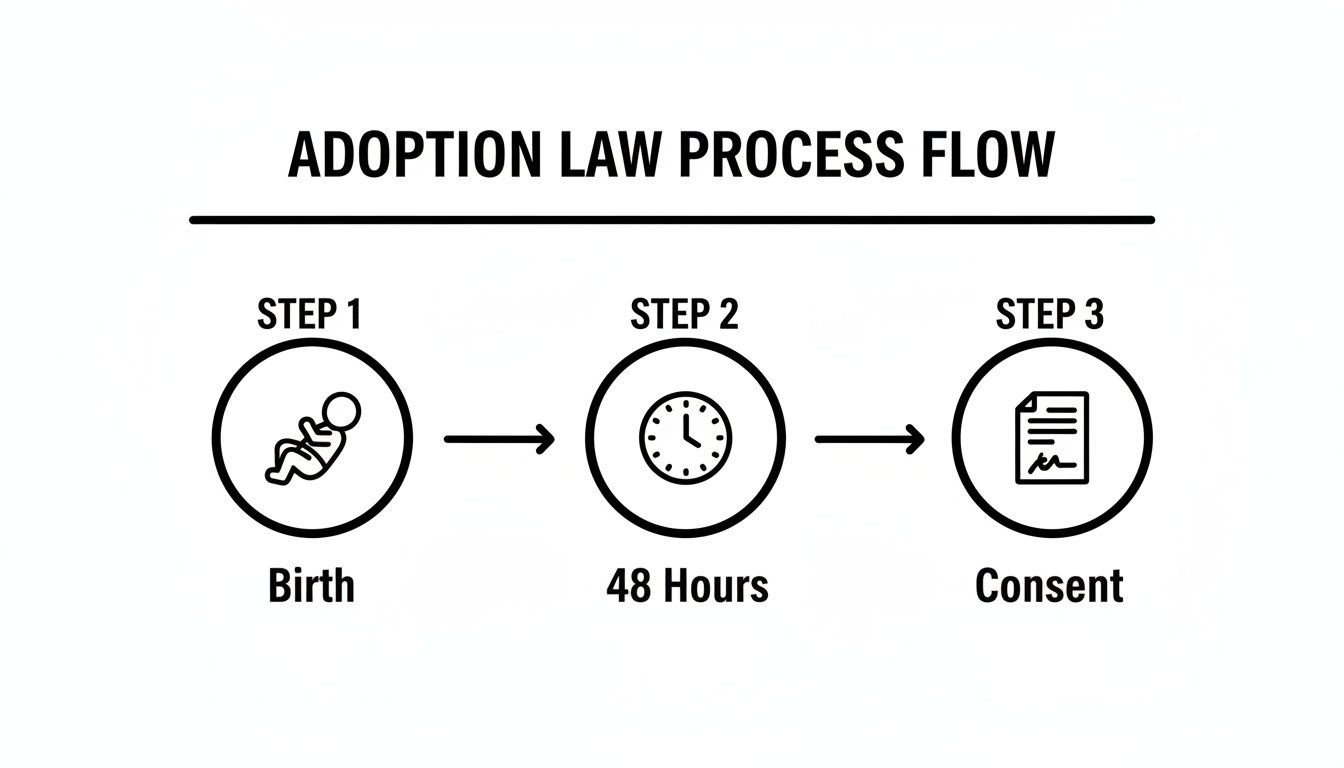
This flow chart shows how Texas law provides a compassionate but firm structure, protecting everyone involved and ensuring the adoption is legally sound.
While your home study is in progress, you’ll also put together an adoptive parent profile. Think of it as a heartfelt scrapbook or online portfolio that tells your story through pictures and words. It’s your chance to give expectant mothers a genuine glimpse into who you are and the life you hope to share with a child.
From Matching to Finalization
The matching process is where everything starts to feel real. Your attorney or agency will share your profile with birth mothers they believe are a good match. When a birth mother chooses you, it's a deeply emotional and significant moment. This begins a period of communication, which might include phone calls or in-person meetings, depending on the type of adoption and everyone's comfort level.
When the baby is born, you’ll navigate the hospital stay with grace and sensitivity. It's a delicate time for the birth mother, and your role is to be respectful and supportive. As mentioned, she cannot legally sign any consent documents until 48 hours after the birth. Once she signs the relinquishment paperwork, the baby can be placed in your care.
Placement is that incredible moment you finally bring your baby home. It’s the start of your new life together and the beginning of the final legal chapter of your adoption.
For the next six months, you’ll be in what’s called the post-placement supervision period. During this time, your social worker will visit your home a few times to see how everyone is adjusting. These are not tests; they are supportive check-ins to ensure you and the baby are thriving. The social worker then submits positive reports to the court documenting the child’s well-being.
The entire journey comes to a beautiful conclusion at the finalization hearing. This is a joyful day in court where a judge reviews your case and signs the final decree of adoption. In that moment, your child becomes legally and forever a part of your family. It’s the official and heartfelt end to your adoption process, a true celebration of family unity.
The path to adoption is a journey of the heart, supported by careful legal steps. If you're ready to take the first step, our compassionate team at The Law Office of Bryan Fagan, PLLC, is here to help. Schedule a free consultation to discuss your dreams of building a family.
Comparing Your Options for Newborn Adoption
While the end goal is always a loving family, the road you travel for a newborn adoption in Texas can look very different depending on the path you choose. Each route is a unique journey, and figuring out which one fits your family’s needs and comfort level is a critical first step. The three main avenues are private adoption, agency adoption, and adopting from the foster care system.
Think of it like planning a trip. Do you prefer a self-guided tour with more direct control, or an all-inclusive package where a dedicated guide handles all the details? Let's take a closer look at what each journey involves.
Private or Independent Adoption
A private adoption, also known as an independent adoption, is almost always guided by an experienced adoption attorney. In this scenario, the hopeful adoptive parents and the birth mother often find each other directly—perhaps through word-of-mouth, personal networks, online profiles, or an attorney's connections.
This path often creates a very direct and personal relationship between the birth and adoptive families from the beginning. It allows for more flexibility in communication and arrangements. The trade-off is that you and your attorney are responsible for coordinating all the details, from the home study to finding counselors.
Licensed Agency Adoption
Going through a licensed adoption agency offers a much more structured and comprehensive support system. Think of an agency as a one-stop resource that handles nearly every piece of the adoption puzzle for you.
- Matching Services: Agencies have established networks to connect waiting families with expectant mothers.
- Counseling and Support: They provide essential counseling for birth mothers and offer educational resources and emotional support for adoptive parents.
- Logistical Coordination: The agency manages the home study, legal paperwork, and post-placement supervision, creating a guided and well-supported experience.
For many families, having a dedicated team manage all the complex details brings a great deal of peace of mind.
Adopting a Newborn from Foster Care
While most people associate foster care with older children, it is possible to adopt a newborn through the Texas Department of Family and Protective Services (DFPS). This journey usually starts with becoming a licensed foster parent.
It’s important to understand that the primary goal of the foster care system is always reunification with the biological family whenever possible. Adoption becomes the plan only after a court has legally terminated the biological parents' rights because it is in the child's best interest.
Foster-to-adopt plays a huge role in building Texas families. Nationally, of the 57,200 children adopted from foster care in 2016, more than half were five years old or younger. And in 2021, Texas finalized 4,586 adoptions from DFPS, with over half of those children being adopted by relatives—showing just how vital kinship placements are. You can learn more from the latest adoption statistics for kids in foster care from the Annie E. Casey Foundation.
No matter which path you choose, the legal foundation is the same—everything is centered on the best interests of the child. Your choice really comes down to the level of support, direct involvement, and financial investment that feels right for your family.
Each of these avenues leads to the same beautiful outcome: a permanent, loving family. Taking the time to understand the differences in the process, the support you'll have, and the potential timeline is the best first step you can take toward making a confident decision.
As you consider these options, you don’t have to figure it all out alone. The compassionate team at The Law Office of Bryan Fagan, PLLC, is here to offer clarity and solid legal advice. We invite you to schedule a free consultation to talk about your unique situation and find the best route for your family's journey.
Planning for the Financial and Emotional Costs of Adoption
Adoption is a significant investment—not just of your finances, but of your heart. When you’re preparing for a newborn adoption in Texas, it's essential to be realistic about both sides of that coin. Getting your finances and your emotional health in order is just as critical as filing the legal paperwork.

Think of it as building a strong foundation for your new family, one that can support you through any challenge so you can focus on the joy of bringing your child home.
Understanding the Financial Picture
Adopting a newborn can be expensive, and the final cost can vary widely depending on the path you take. Whether you work with a private attorney, an adoption agency, or adopt through foster care will make a significant difference. Knowing the potential costs upfront helps you budget realistically and avoid surprises.
Most Texas newborn adoptions will include some combination of these costs:
- Legal Fees: This covers your attorney's work—handling court filings, managing the termination of parental rights, and representing you at the finalization hearing.
- Agency Fees: If you use an agency, their fees often bundle services like matching, birth mother counseling, and administrative coordination.
- Home Study Expenses: You'll need to pay a licensed social worker or agency to conduct the mandatory home study.
- Birth Mother Support: Texas law allows for reasonable living and medical expenses to be provided for the birth mother. This support must be handled ethically and legally through an attorney or agency.
All told, you can expect private and agency adoptions to range anywhere from $25,000 to over $50,000. While this is a significant number, don't let it discourage you. Resources like adoption grants, loans, and the federal adoption tax credit are available to help families manage the costs.
Nurturing Your Emotional Well-Being
Just as important as financial planning is emotional preparation. The road to adoption is a journey with incredible highs and moments of deep uncertainty. A strong support system is absolutely essential.
The emotional work of adoption—managing hope, navigating relationships, and preparing your heart—is the invisible foundation upon which your family will be built. It is as vital as any legal document or financial plan.
Consider how you’ll handle the anxiety of the matching process or the delicate emotions involved in building a relationship with a birth mother. It’s also wise to think ahead to the post-placement period. While filled with joy, it's also a major life adjustment for everyone. Leaning on your partner, friends, family, or a support group can make all the difference.
And as you prepare for that incredible day when you finally bring your baby home, allow yourself to enjoy the little things. Finding the perfect coming home outfit is one of those small, happy tasks that help you focus on the beautiful future you’re building.
Ultimately, preparing for a newborn adoption in Texas means taking care of your finances and your heart. This journey demands patience, resilience, and a tremendous amount of love.
At The Law Office of Bryan Fagan, PLLC, we believe in supporting families through every part of this life-changing process. If you’re ready to explore your options with a legal team that understands, schedule a free consultation with us today.
When Your Adoption Journey Looks a Little Different
Not every path to adoption follows the same map. While many families pursue a traditional private or agency adoption, it's common for unique situations to arise. Understanding these special scenarios for a newborn adoption in Texas will help you feel prepared for whatever your family's story holds.
These paths might have their own set of rules and timelines, but they all share the same destination: giving a child a safe, permanent, and loving home.
Kinship and Stepparent Adoptions
When a grandparent, aunt, or other family member steps up to adopt a child, it’s called a kinship adoption. It's a beautiful way to preserve family bonds and give a child the stability they need within their own family circle. Similarly, a stepparent adoption legally formalizes the bond between a stepparent and their stepchild, making them a legal parent in every way that matters.
The legal journey for these adoptions is often more straightforward. For instance, the home study requirement might be waived or simplified, and the post-placement supervision period can sometimes be shorter. This is because the child is usually already living in the home and has an established, loving relationship with the person adopting them.
Kinship placements are a cornerstone of child welfare in Texas. In fiscal year 2021, relatives adopted more than half of all children and teens placed through the Texas Department of Family and Protective Services (DFPS). This highlights the incredible commitment families have to keeping their own safe and connected. You can learn more about these trends in the Texas adoption statistics on BobLeonard.com.
Interstate Adoptions and the ICPC
What happens if you live in Texas but the birth mother you’ve connected with is in another state, like Florida? This is called an interstate adoption, and it brings a specific legal process into play, governed by the Interstate Compact on the Placement of Children (ICPC).
The ICPC is essentially a legal agreement between all 50 states. It exists to ensure that any child being adopted across state lines is placed in a safe and suitable home. It acts as a protective measure, requiring both the sending state and the receiving state to give their approval before the baby can travel home.
This means that after the baby is born, paperwork must be submitted to ICPC administrators in both states for their review and sign-off. While it's a crucial protection for the child, you should be prepared for a waiting period. This can add a week or more to your time in the other state before you can finally bring your baby home to Texas. Having an experienced adoption attorney manage the ICPC process is vital to ensure it moves as smoothly as possible.
No matter how unique your family's situation feels, there is a clear legal path to making your adoption dream a reality. Our team is here to offer the expert, compassionate guidance you need. We invite you to schedule a free consultation to talk about your specific circumstances and see how we can help.
Common Questions About Newborn Adoption Answered
If you’re considering newborn adoption in Texas, you’ve probably got a long list of questions. That’s completely normal. This journey is filled with unknowns, so let's tackle some of the most common concerns we hear from families. Our goal is to give you clear, straightforward answers to bring you peace of mind.
How Long Does a Typical Newborn Adoption Take in Texas?
There’s no single answer, but most newborn adoptions in Texas are completed within 6 to 24 months. The timeline depends on a few key factors: how long it takes to complete your home study, the unpredictable nature of the matching process, and navigating the required legal steps.
A private adoption can sometimes move faster if a match happens quickly. Agency timelines vary based on their internal processes and the number of families they are working with. And remember, Texas law requires a six-month post-placement supervision period after the baby comes home with you. Only after that period is successfully completed can you go to court for the finalization hearing.
What Are a Birth Father's Rights in a Texas Adoption?
A birth father's rights are a critical piece of the legal puzzle and must be handled with care to ensure a secure adoption. In Texas, a presumed or legally recognized father must have his parental rights terminated before an adoption can be finalized. This can happen in one of two ways: he can voluntarily consent to the adoption, or a court can terminate his rights involuntarily if it's in the child's best interest.
What if the father is unknown or cannot be found? The law requires specific, diligent steps to try and notify him, which often involves checking the state's paternity registry. This is where an experienced adoption attorney is essential—they know how to navigate these complexities to ensure the adoption is legally sound and protected from future challenges.
Can a Birth Mother Change Her Mind After Placement?
This is one of the biggest fears for adoptive parents, and it’s completely understandable. In Texas, the law is designed to provide finality and stability. Once a birth mother signs the official legal documents to consent to the adoption, her decision is irrevocable.
To protect her, Texas law mandates a 48-hour waiting period after the baby is born. She cannot legally sign any documents relinquishing her rights until at least that much time has passed.
This waiting period is a compassionate, legally required pause. It ensures her decision is made without pressure and with a clear mind. Once that affidavit of relinquishment is signed, the law provides stability for the child and legal finality for everyone involved. It’s also vital that the birth mother has her own independent legal counsel to protect her rights and help her feel confident in her choice.
Building your family through adoption is a profound journey, and you shouldn’t have to walk it alone. The team at The Law Office of Bryan Fagan, PLLC is here to provide the compassionate, knowledgeable legal guidance you need, every step of the way. To start the conversation about your future, please contact us today to schedule a free, confidential consultation.

