
Let's get straight to the question that's likely on your mind: No, you absolutely do not have to be married to adopt a child in Texas. The path to parenthood is open to you, regardless of whether you have a spouse. What truly matters is your heart for a child and your ability to provide a safe, stable, and loving home.
Building Your Family on Your Own Terms
If you've ever found yourself wondering, "Can I adopt as a single person?" or worried that being unmarried would be an automatic "no," we want to put those fears to rest. The State of Texas, through its Family Code, has one primary mission: to protect the best interests of the child.
This means your character, your stability, and your capacity to love and nurture are what the courts focus on—not a marriage certificate.
Because of this focus, single-parent adoption has become an increasingly common and celebrated way to build a family. You are far from alone on this journey.
Who Can Adopt in Texas?
Texas law isn't designed to put up roadblocks; it’s meant to open doors for loving, capable individuals, not just married couples. The core requirements are all about your readiness to be a parent.
Generally, the state is looking for prospective parents who can show they have:
- Emotional and Financial Stability: Can you provide a secure and consistent environment?
- A Safe Home: Will a child be safe, supported, and nurtured in your care?
- A Clean Background: Have you completed the required criminal background checks successfully?
This inclusive approach means that your dream of adoption is within reach. If you are starting down this path, you can find a deeper dive into the specifics in our guide on whether a single person can adopt.
Before we dive deeper into the different adoption types, here’s a quick overview of who can adopt in Texas. This table helps clarify that marital status is not a barrier to creating a loving family.
Texas Adoption Eligibility at a Glance
| Prospective Parent(s) | General Eligibility in Texas | Key Considerations |
|---|---|---|
| Single Individuals | Fully eligible | Must demonstrate financial and emotional stability independently. |
| Married Couples | Fully eligible | Must adopt jointly. |
| Unmarried Couples | Fully eligible | One partner typically adopts as a single parent, or a second-parent adoption may follow. |
| LGBTQIA+ Individuals/Couples | Fully eligible | Laws apply equally, regardless of sexual orientation or gender identity. |
This table shows that the door is open. The process focuses on your ability to parent, not your relationship status.
A Growing Trend of Single Parent Adoptions
The idea of a single person adopting isn't just legally possible—it's a beautiful and growing reality across the nation. National data reveals that thousands of single men and women successfully adopt every single year.
Just look at the numbers from 2021: single women adopted approximately 13,000 children, while single men and unmarried couples each adopted about 2,000 children. This trend sends a clear message: families are built with love, and single individuals are actively and successfully doing just that.
"The law doesn't see a marital status; it sees a potential parent. It sees your capacity for love, your stability, and the safe home you can offer a child. That is the true foundation of a family."
Whether you are single, in a committed partnership but not married, or part of the LGBTQ+ community, your path to adoption is valid and fully supported by Texas law. The journey can feel complex, but every step you take is one step closer to building the family you've always imagined. At the Law Office of Bryan Fagan, PLLC, we're here to provide the clear, compassionate guidance you deserve.
How Texas Law Views Unmarried Adoptive Parents
One of the biggest myths we hear from hopeful parents is that you must be married to adopt in Texas. Let’s clear that up right now: it’s simply not true. When you’re ready to build your family, the last thing you need is a legal roadblock based on a misunderstanding.
The good news is that Texas law is far more focused on a child’s future than on your marital status. The entire system, governed by the Texas Family Code, revolves around one single, powerful principle: the best interest of the child.
The Foundation of Texas Adoption Law
Think of it this way: when a judge considers an adoption, they aren't looking for a specific family blueprint. They’re inspecting the foundation you can provide—a safe, stable, and loving home where a child can finally put down roots.
The legal rules for this are found in Chapter 162 of the Texas Family Code. If you read through it, you'll see requirements for age and stability, but you won't find a single word that says an adoptive parent must be married.
Instead, the law sets a baseline for everyone hoping to adopt. In Texas, you must:
- Be at least 21 years old.
- Show that you are financially stable and can provide for a child.
- Successfully pass a comprehensive adoption home study.
- Clear a criminal background check.
These aren't barriers designed to keep people out. They are safeguards designed to protect children. Whether you’re single, married, or in a committed partnership, the state’s primary concern is your ability to be a great parent.
In Texas, your ability to be a great parent is measured by your character, stability, and love—not by a marriage certificate. The law prioritizes a child's best interests, opening the door for dedicated single individuals to build their families.
A Real-World Example of Single Parent Adoption
So, what does this look like in a real courtroom? Imagine a single, dedicated schoolteacher in her late 30s. She has a strong bond with a former student who is now in the foster care system and wants to give him a permanent home. She has a steady job, a safe apartment, and a network of friends and family who are thrilled to support her.
Here’s how her journey unfolds:
- She Completes the Home Study: A social worker visits her home, looks over her finances, and talks with her and her references. The report concludes she is a responsible, caring person with a solid plan for raising a child.
- She Passes Background Checks: Her record is clean, confirming she is a safe and trustworthy person to be granted guardianship.
- She Goes to Court: In front of the judge, the questions aren’t about her relationship status. They’re about her ability to provide for the child, her understanding of his emotional needs, and the stable environment she offers.
The judge sees a prepared, loving adult who is clearly the best choice for this child. The adoption is finalized, and she walks out of the courthouse as a legal mother. This kind of story happens all the time in Texas, proving that your personal readiness to parent is what truly matters.
Understanding that you don't have to be married to adopt is the first step. The next is preparing for the practical parts of the journey, like the home study, with confidence.
Navigating the Home Study as a Single Applicant
For most hopeful parents, the home study feels like the most intimidating hurdle in the entire adoption journey. It's easy to picture a stranger with a clipboard, ready to judge every inch of your home and life. But let’s look at it another way.
The home study isn't a test you pass or fail. Think of it as a collaborative process—a conversation designed to prepare you for parenthood and ensure a child is welcomed into a safe, supportive home. It’s part education, part preparation, and all about giving you a chance to show you’re ready.
If you’re a single applicant, the home study is a powerful moment to shine. It's where you get to show off your unique strengths and prove just how solid the foundation you’ve built for a child really is. Social workers aren’t searching for a perfect life; they’re looking for a prepared one.
What Social Workers Really Look For
The person conducting your home study is zeroed in on the core ingredients of a healthy childhood. They want to see that you’re emotionally ready for the road ahead and have a real-world plan. Your marital status is just a fact, not a focus—your ability to provide a nurturing home is what truly matters.
Here are the key areas they’ll look at:
- A Safe and Stable Home: This is about safety, not square footage. They’re checking for basics like working smoke detectors and a home that’s free of obvious hazards.
- Financial Stability: You don't need to be wealthy. You just need to show you have a steady income, a responsible budget, and the means to cover a child's needs.
- Emotional Readiness: They want to hear your story. Why are you adopting? Do you understand the challenges involved? They’re looking for self-awareness and emotional maturity.
- A Strong Support System: For single parents, this is your superpower. Your "village" is one of your greatest assets, and they want to know who is in it.
So many single applicants get hung up on their income or the size of their apartment. Let's be clear: stability and resourcefulness count for far more than the numbers on a bank statement or the number of bedrooms you have. A small, loving home is infinitely better than a large, empty one.
The goal of the home study is not to find perfect parents, but to prepare capable and loving ones. For a single applicant, it's your chance to demonstrate that your readiness and support system make you an exceptional choice for a child.
Showcasing Your Strengths as a Single Applicant
As a single person, you offer incredible strengths, like the ability to give a child focused, one-on-one attention. The trick is to show these strengths and your support network in a concrete way. Don’t just say you have support; show it.
For instance, you can:
- Create a "Support System" Map: Actually draw it out. List the names of family, close friends, and neighbors who will be there for you and your child. Note their roles—who’s on call for emergency babysitting? Who will be a mentor figure?
- Write a Detailed Parenting Plan: Show you’ve thought it through. Outline how you’ll handle childcare, doctor’s visits, and school runs. This proves you have a practical strategy for managing parenthood on your own.
- Gather Letters of Recommendation: Ask your "village" to write letters vouching for your character, stability, and readiness to be a parent. These personal stories can be incredibly powerful.
Imagine you're a single professional living in an apartment. You might worry it’s not the "ideal" family home. But you can show the social worker the well-maintained park just down the street, introduce them to the retired neighbor who is thrilled to be a "grandparent figure," and share a budget that proves you’ve already planned for childcare costs.
By preparing thoroughly, you can turn the home study from a source of anxiety into a moment of empowerment. If you’re looking for more guidance on what to expect, our detailed adoption home study checklist can help you get organized and feel confident.
Ultimately, your home study is your story. It’s your opportunity to show an agency that you are more than ready to provide a child with a lifetime of love and security.
Finding Your Adoption Path as an Unmarried Parent
Now that you know the answer to "do you have to be married to adopt?" is a firm "no," the real journey begins: figuring out which path to parenthood is the right fit for your life. As a single person or an unmarried couple in Texas, you have several incredible options for building your family. Each route has its own rhythm and challenges, and understanding them will give you the confidence to move forward.
Think of this as your starting map. We’ll walk through the most common avenues, from the structured process of adopting from foster care to the deeply personal connections of private infant adoption. Here at The Law Office of Bryan Fagan, PLLC, our goal is to give you the clarity you need to choose the path that feels like home.
Adopting From Foster Care
For many single adults, adopting from the foster care system is one of the most direct and deeply rewarding ways to become a parent. The Texas Department of Family and Protective Services (DFPS) is focused on one thing: finding permanent, loving homes for children who can't safely go back to their biological families. The child's well-being is the top priority, which means dedicated, stable single parents are in high demand.
Foster care adoption has become a vital way for single parents to grow their families. In fiscal year 2024 alone, more than 46,900 children were adopted from foster care across the country, with countless of them finding their forever homes with single moms and dads.
As you weigh your options, it's important to have a clear-eyed view of what each path entails. For those thinking about foster-to-adopt, this means understanding the realities of foster care, including managing court dates and biological parent visits. It’s a process that calls for a lot of heart and patience, but it offers the profound opportunity to give a waiting child the stability they deserve.
This graphic breaks down the three pillars of readiness—a safe home, a solid financial plan, and a strong support system—that are key for any adoption, especially from foster care.
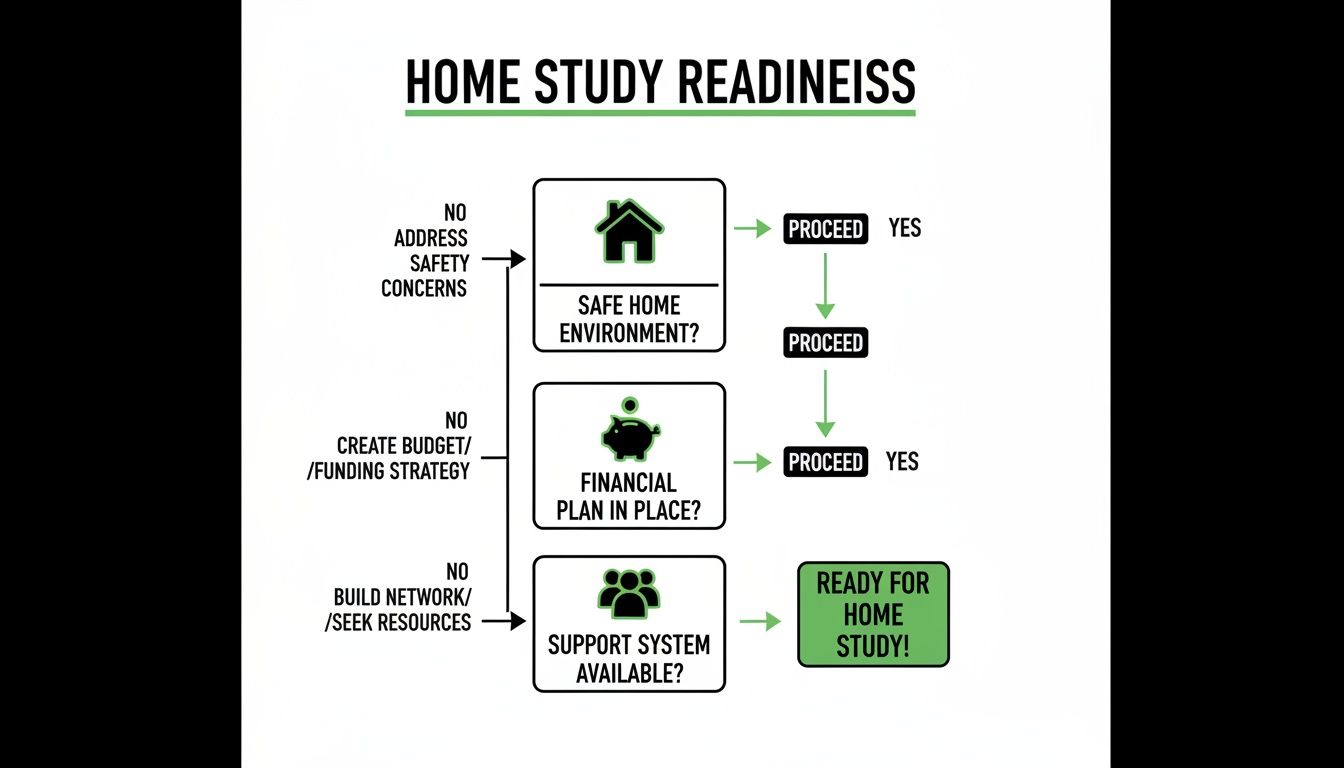
As you can see, it’s not about being perfect. It’s about being prepared with a foundation strong enough to welcome a child.
Private Infant Adoption
If you dream of adopting a newborn, private adoption is likely the route for you. This journey involves working with an agency or an attorney to connect with an expectant mother who is considering an adoption plan for her child. We’ll be honest: some birth mothers do hope to find a two-parent family.
But many others are specifically drawn to the unique strengths a single parent offers. They might see you as a focused, devoted individual who can give their child undivided attention and build a powerful one-on-one bond. Your story is your biggest strength here. A genuine, compelling profile that shows who you are, what you value, and the love you’re ready to share can make all the difference.
Stepparent and Relative Adoptions
So many families are built on love that extends beyond traditional lines. For unmarried couples and extended family members, stepparent and kinship adoptions are extremely common and powerful ways to formalize a bond.
- Stepparent Adoption: If you’re in a committed, long-term relationship and have been raising your partner’s child as your own, a stepparent adoption makes your role legal. It gives your stepchild the lifelong security of having two legal parents.
- Relative/Kinship Adoption: When a grandparent, aunt, uncle, or other relative steps up to raise a child, a kinship adoption creates legal permanency. This ensures you have the authority to make crucial medical and educational decisions, solidifying your role as the child’s parent.
These adoptions often have a more streamlined legal process because they are built around protecting existing family bonds and giving the child stability.
International Adoption
Adopting a child from another country is another possibility, but it's often the most complex and expensive path. The rules for single parents vary wildly from one country to the next. Some nations welcome single applicants with open arms, while others have strict rules against it.
This is a constantly shifting landscape. It is absolutely essential to work with an experienced legal team and a reputable international agency. They can help you identify countries where you are eligible to adopt and guide you through the maze of navigating both U.S. law and the laws in the child's country of origin.
Building Your Family: A Guide for LGBTQ+ Texans
Let's get straight to the point: your right to build a family through adoption is protected here in Texas, no matter your sexual orientation or gender identity. For LGBTQ+ individuals and couples, the question "do you have to be married to adopt?" often comes with a heavy dose of valid fear about facing discrimination. We're here to cut through the noise and reassure you that the law is on your side. Your dream of becoming a parent is absolutely within reach.
The courts have been clear. Landmark decisions have cemented the right for all qualified individuals, including LGBTQ+ Texans, to adopt. At the end of the day, Texas adoption law hinges on one guiding principle: the best interest of the child. What truly matters is your ability to provide a safe, stable, and loving home—not who you love.

How to Secure Your Legal Rights as a Family
For LGBTQ+ families, especially those who aren't married, understanding the specific legal steps is key to making sure both parents have secure, legally recognized rights from the start.
- Adopting as a Single LGBTQ+ Person: If you're single, your path to adoption is the same as any other single applicant. You'll move through the home study and file your adoption petition as an individual, highlighting your personal strengths and the support system you have in place.
- Adopting as an Unmarried Couple: This is where the process gets more specific. In Texas, an unmarried couple can't file a single, joint petition to adopt. The established legal route is for one partner to adopt the child first as a single parent. Once that's finalized, the second partner can then adopt the child through a second-parent adoption.
A second-parent adoption is the legal process that gives the non-adopting partner full, equal parental rights. It's the step that ensures both parents can make medical decisions, both are listed on the birth certificate, and both have protected rights to custody and visitation. It's what legally makes you a two-parent family.
Navigating the Journey with Confidence
We know that even with legal protections, the fear of running into prejudice from an agency or during a home study is real. This is where having a strong, experienced advocate in your corner becomes so important. An adoption attorney who is deeply committed to supporting LGBTQ+ families can connect you with inclusive agencies, help you prepare for your home study with confidence, and make sure you are treated with the dignity you deserve every step of the way. You can learn more in our detailed guide on LGBTQ+ adoption rights in Texas.
Think of a couple we worked with, Sarah and Maria, who welcomed a newborn through a private adoption. Sarah was the initial adopting parent. While they were overjoyed, a quiet anxiety lingered until Maria’s parental rights were also secured. We walked them through the second-parent adoption, a fairly straightforward but absolutely vital process. When the judge declared them both legal parents at the final hearing, the sense of relief in the room was palpable. Their family was finally whole and legally protected, no matter what came next.
Your family is valid. Your desire to be a parent is a powerful gift. At The Law Office of Bryan Fagan, PLLC, we are proud to stand with all Texas families, ensuring your path to parenthood is supported by compassionate and knowledgeable legal guidance.
Your Next Steps on the Path to Adoption
So, you’ve learned the truth: you absolutely do not have to be married to adopt a child in Texas. It’s not about a marriage certificate. It's about your ability to give a child a safe, loving, and stable home. Now what? This is where your journey shifts from a hopeful idea into a real, actionable plan.
Taking that first step can feel huge, but breaking it down makes the path forward clear. Your immediate next moves are all about reflection, research, and reaching out for the right kind of help.
Building Your Personal Adoption Plan
Before you start making calls and filling out paperwork, take a moment to prepare. Think of this as building a strong foundation for the entire journey ahead.
Your plan should cover a few key areas:
- Honest Self-Check: Get real with yourself about your emotional readiness. If you're single, who is your support system? Make a list of the friends and family—your "village"—who will be there for you and your child.
- Focused Research: Dig into the adoption paths we've talked about. Does foster care, private infant adoption, or even a relative adoption feel right for your life and your heart?
- Financial Game Plan: Create a budget that makes sense. The goal isn’t to prove you’re wealthy, but to show you’re financially stable. Think about potential agency fees, legal costs, and all the day-to-day expenses of raising a child.
Why You Need an Expert in Your Corner
While preparing on your own is a great start, the single most important step you can take is to get professional legal guidance. An adoption attorney is your advocate, your guide, and your source of clarity through a process that can get legally tangled. They make sure everything is done right the first time.
This is especially true if you’re looking at international adoption. While many countries are opening up, the requirements for unmarried parents can change quickly and vary widely. Some of the most common countries for U.S. adoptions, like Colombia and South Korea, have been open to single parents, but every nation has its own set of rules. You can explore detailed orphan statistics and international adoption data to learn more about these global trends.
The right legal partner does more than just file paperwork; they give you peace of mind. They protect your rights, make sure the adoption is legally solid, and free you up to focus on what really matters—getting ready to welcome a child into your life.
Your dream of becoming a parent is real and achievable. The team at The Law Office of Bryan Fagan, PLLC, is here to offer the compassionate, expert support you need to make that dream a reality. We invite you to schedule a free consultation with us. Let’s talk about your hopes and build a clear plan to grow your family, one step at a time.
Frequently Asked Questions About Unmarried Adoption
The path to adoption is lined with questions, and when you’re single or in an unmarried partnership, those questions can feel even more urgent. We get it. To bring you some clarity and confidence, here are straight answers to the most common concerns we hear from hopeful adoptive parents in Texas.
Can My Unmarried Partner and I Adopt Together in Texas?
Yes, you can, but the legal mechanics are very specific. In Texas, you can't file a single, joint adoption petition as an unmarried couple. The tried-and-true path is for one partner to go through the process first, adopting the child as a single parent.
Once that adoption is legally finalized, the other partner steps in to complete what’s known as a second-parent adoption. This is the critical move that gives them full, equal legal rights, making sure you are both recognized as the child's parents. Having a seasoned adoption attorney is essential to navigate this two-step method correctly and avoid any pitfalls.
Will I Face Discrimination from Adoption Agencies for Being Single?
While Texas law officially prohibits discrimination based on marital status, the reality on the ground can feel different. Private agencies all have their own cultures, and birth parents, of course, have their own personal preferences. In a private adoption, the birth mother has the final say in choosing the family she believes is right for her child.
Here's the encouraging part: many birth parents are actively looking for a single parent. They're often drawn to the idea of their child receiving the focused, one-on-one devotion that a dedicated single mother or father can offer. The trick is to find an agency that doesn't just tolerate single-parent adoptions but truly champions and advocates for them.
Do I Need a Certain Income to Adopt as a Single Person?
Absolutely not. There is no “magic number” or minimum income required to adopt in Texas. The home study is all about evaluating your financial stability, not how much money you have in the bank. What they really want to see is that you can manage your resources responsibly and provide for a child's needs.
This means you’ll need to show you have:
- A steady and reliable source of income.
- A realistic household budget that makes sense.
- A clear plan for health insurance and childcare.
Social workers are looking for responsibility and a thoughtful plan, not a massive bank account. This is especially true if you’re adopting from foster care, where significant financial support—like monthly subsidies and tax credits—is often available to help you.
Is It Harder to Adopt a Newborn as a Single Parent?
It can bring its own unique set of challenges, but it is entirely possible. Success in private infant adoption often boils down to making a genuine, heartfelt connection with an expectant mother. While some birth mothers might have a two-parent family in mind, many others are deeply moved by the strength, love, and commitment a single person is ready to offer.
Your adoption profile is your chance to share your authentic story. It’s where you open up about your values, your support system, and the incredible love you’re ready to pour into a child’s life. A compelling, honest profile is your most powerful tool.
At The Law Office of Bryan Fagan, PLLC, we believe every loving, prepared person deserves the chance to build their family through adoption. If you're ready to explore what's next, our compassionate team is here to answer your questions and guide you with the clarity and care you deserve. Schedule a free, confidential consultation with us today to map out your path. Visit us at https://texasfamilyadoption.com to get started.
