
A closed adoption is a deeply personal choice that creates a legal and emotional boundary, keeping all identifying information between the birth and adoptive families confidential. Once the adoption is finalized by a Texas court, the original birth certificate and court records are sealed, creating a new, legally secure family and offering privacy for everyone involved. For hopeful adoptive parents and brave birth parents alike, understanding what this path means is the first step in a life-changing journey.
The Foundations of a Closed Adoption

When families first explore adoption, "closed adoption" is often one of the first terms they encounter. For many years, it was the standard practice across the United States. The idea is straightforward: after the adoption is finalized, there is no planned contact or exchange of names, addresses, or other personal details between the birth parents and the adoptive family.
This arrangement establishes a firm boundary, giving both families the privacy to move forward. For a birth parent, it can bring peace of mind, knowing their child is in a permanent, loving home while they heal and continue on their own path. For adoptive parents, it creates an unambiguous family unit from day one, focusing on the best interests of the child.
Key Characteristics of a Closed Adoption
What does a closed adoption mean in practice for Texas families? The choice is always deeply personal, centered on what everyone involved believes is best for the child. The main features include:
- Complete Confidentiality: All identifying records are sealed by a court order under the Texas Family Code. The original birth certificate is replaced with an amended one that lists the adoptive parents.
- No Direct Contact: There is no planned communication—no letters, phone calls, or visits—between the birth family and the adoptive family after the adoption is complete.
- A "Fresh Start": Historically, this model was designed to protect everyone from social stigma and allow the child to bond completely with their new family without outside complexities.
It's important to remember that a closed adoption is about privacy, not secrecy. It's a legally sound and emotionally valid choice that honors the desire for a clean slate and a secure beginning for a new family.
While closed adoptions are less common today, with many families opting for open or semi-open arrangements, they remain a crucial option. The right choice depends entirely on the unique circumstances of the birth parents, the adoptive parents, and the child.
To help you see the differences more clearly, we've created a simple comparison table below. You can also explore our detailed guide on closed vs. open adoption to understand how each structure works.
Quick Guide to Adoption Types in Texas
This table provides a simple, at-a-glance comparison of the three primary adoption arrangements to help you quickly understand the key differences.
| Adoption Type | Identifying Information | Ongoing Contact | Best For Families Seeking |
|---|---|---|---|
| Closed Adoption | Kept confidential and sealed | None | Complete privacy and a "fresh start" with clear boundaries. |
| Semi-Open Adoption | Usually shared through an intermediary (agency or attorney) | Non-identifying contact like letters or pictures, often mediated. | Some connection and updates while maintaining privacy. |
| Open Adoption | Shared directly between families | Ongoing, direct contact (visits, calls, emails). | A collaborative relationship and ongoing connection with the birth family. |
Understanding what a closed adoption really means is the first step in deciding if this path aligns with your family’s hopes and needs.
The History of Closed Adoptions in America
To truly understand what “closed adoption” means today, it’s helpful to look at where it came from. The concept of confidential, sealed-record adoptions didn't appear overnight. It grew out of a specific time in American history, driven by intense social pressures and a genuine desire to protect everyone involved—especially birth mothers and the children they placed for adoption.
The practice of sealing adoption records took hold in the United States around the mid-20th century. During that era, the social stigma surrounding out-of-wedlock births was incredibly harsh. For a young, unmarried woman facing an unplanned pregnancy, there were few support systems. A closed adoption was seen as a compassionate path forward, offering a stable, two-parent home for her child while keeping her identity completely private. This allowed her to move on with her life without facing public shame or judgment.
The Rise of Confidentiality in Adoption
This period, often called the “Baby Scoop Era,” saw a dramatic increase in these confidential adoptions. The legal system adapted to these societal norms by creating a process that offered what was considered a “clean break.” Courts began sealing the original birth certificate and all other files related to the adoption.
This was not intended to be a cold or secretive act. On the contrary, it was designed with three specific protective goals in mind:
- For the Birth Mother: To shield her from shame and give her the privacy to rebuild her life.
- For the Adoptive Family: To create a secure, unambiguous family unit without the fear of outside interference or challenges to their parental role.
- For the Child: To ensure they could bond fully with their new parents and grow up in what was seen as a normal, stable home.
Closed adoption, also known as confidential adoption, became the default model, with its popularity peaking from the 1940s through the 1970s. During these decades, it was understood that once a court sealed the records, they would stay sealed unless a truly compelling legal reason arose. Historical data shows that by the 1950s, over 90% of domestic infant adoptions in the U.S. were closed arrangements, cementing it as the undisputed standard. You can explore more about these historical adoption trends and their effects in the Pew Research Center's analysis of adoption data.
A Cultural Shift Toward Openness
Then, beginning in the 1980s, the cultural tide began to turn. A new generation of adult adoptees who had grown up in closed adoptions started to speak out. They shared a powerful, collective desire to understand their own stories—to find their biological roots, access crucial medical histories, and gain a deeper sense of their identity. This movement directly challenged the long-held assumption that a complete separation was always in a child's best interest.
As advocates and adoptees told their stories, society started to grasp the profound human need for connection and information. This sparked a gradual but powerful shift away from secrecy and toward transparency in adoption.
Understanding this history is key to seeing why Texas adoption laws look the way they do today. While closed adoption is still a valid and important choice for some families, the push for openness has paved the way for semi-open and open adoptions, which are far more common now. It also provides the context for modern laws about accessing sealed records, a topic we’ll explore later in this guide.
The Legal Process of a Closed Adoption in Texas
Navigating the legal side of adoption can feel overwhelming, but breaking it down step-by-step makes the journey feel manageable. In Texas, a closed adoption follows a precise legal path designed to create a permanent, secure family and protect everyone’s confidentiality. At The Law Office of Bryan Fagan, PLLC, we have guided countless families along this path, and we are committed to making it clear and compassionate.
The entire process is governed by the Texas Family Code, specifically Chapters 162–166. These laws outline the procedures for creating a new, legal parent-child relationship. The first and most significant legal step is the termination of the birth parents' rights. This is not just a signature on a form; it's a profound and final legal action that takes place in a courtroom.
The Finality of Terminating Parental Rights
In a closed adoption, the termination of parental rights is permanent and cannot be undone. Once a judge signs that order, the birth parents’ legal connection to the child is completely and forever severed. This single step provides the unshakeable legal and emotional foundation for the new adoptive family to grow without any fear of future legal challenges.
This finality is central to the meaning of a closed adoption. It ensures the adoptive parents become the child's sole legal parents, giving them all the rights and responsibilities that come with raising a child. For a birth parent, this is an incredibly emotional moment, but it can also bring a sense of closure, knowing their child is safe in a stable, permanent home.
A Real-Life Scenario: Sarah, a young birth mother, knew in her heart that a closed adoption was the right choice for her baby. She wanted to give her child a two-parent home with the financial stability she couldn't provide, but the legal system felt intimidating. Our attorneys sat down with her and explained in plain English that terminating her rights was a final, loving act that would secure the future she dreamed of for her child. Understanding that this step legally protected both her child’s new family and her own privacy gave Sarah the confidence to move forward.
Sealing the Records to Ensure Confidentiality
After the termination of parental rights and just before the adoption is finalized, the next legal milestone is sealing the records. This is where the “closed” part of the adoption becomes legally real. A common myth is that the original records are destroyed—they are not.
Instead, the court orders that the original birth certificate and all court files related to the adoption be sealed. This makes them legally off-limits to the public, the birth family, and even the adoptive family. The Texas Vital Statistics Unit then issues a brand-new, amended birth certificate that names the adoptive parents as the child's parents, just as if the child had been born to them. You can learn more about how this works in our guide to understanding your child's new birth certificate after adoption.
This sealing process is governed by strict Texas laws to protect everyone’s privacy. It guarantees that:
- Identifying information about the birth parents is kept completely confidential.
- The adoptive family’s privacy is shielded from any future contact or disruption.
- The child’s new legal identity is securely and permanently established.
Having an experienced adoption attorney at this stage is absolutely critical. We ensure every petition and court order is filed correctly, providing the legal certainty and peace of mind your family needs to build its future.
Navigating the Emotional Journey of a Closed Adoption
The legal paperwork is just one part of the story. A closed adoption is a profound and deeply personal journey, and the emotions involved are just as real and important as any court filing. Understanding and preparing for this emotional landscape is a critical step for everyone involved.
For birth parents, choosing to place a child for adoption is often an act of immense love, but it almost always comes with a powerful mix of grief and loss. It is completely natural to feel sadness, even when you are certain you’ve made the right choice. Giving yourself the space and permission to grieve is a healthy and necessary part of healing.
Many birth mothers and fathers eventually find a sense of peace, knowing their selfless decision gave their child a future filled with love and opportunity. This feeling doesn't erase the loss, but it can coexist with it, allowing them to move forward with hope.
The Emotional Experience for Adoptive Parents
For hopeful adoptive parents, the day a closed adoption is finalized is often a moment of overwhelming joy, relief, and gratitude. After what may have been a long and uncertain journey, your family is finally whole. It’s a moment to truly cherish.
At the same time, a closed adoption brings its own unique emotional responsibilities. Without direct contact with the birth family, you become the sole keeper and teller of your child’s adoption story. It falls to you to share this story with them in an age-appropriate, loving, and positive way as they grow.
Creating an open dialogue about adoption within your home is essential. A "closed" adoption refers to the records, not the conversation. Your child should always feel that their adoption story is a beautiful and celebrated part of who they are.
The legal process itself is what creates the private, secure foundation for your new family to grow.
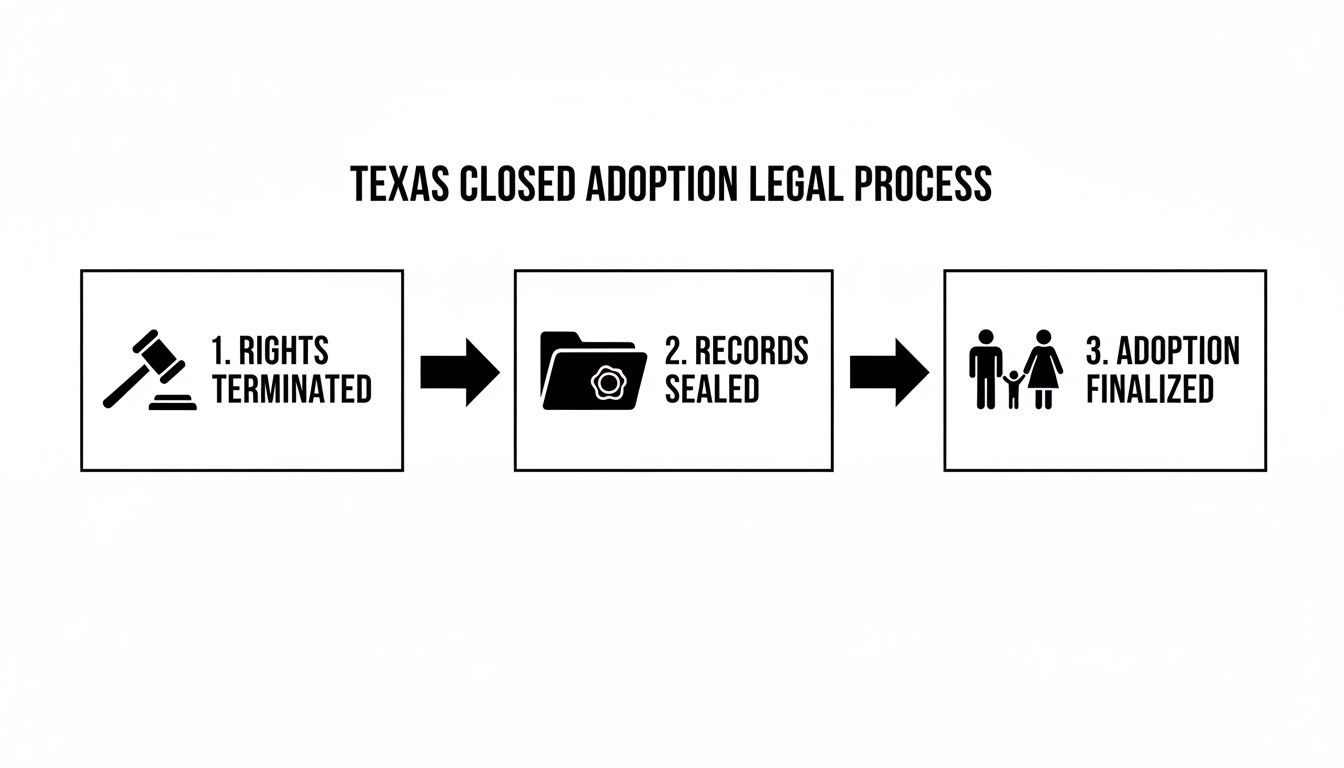
This legal finality—from the termination of rights to the sealed records—is designed to provide the security that allows your family to bond and thrive without outside interference.
Fostering Empathy and Building Support
Both birth and adoptive families walk distinct but equally significant emotional paths. Empathy is the bridge that can connect these different experiences. Adoptive parents can honor the birth family’s sacrifice by raising their child with a deep appreciation for the loving choice that made their family possible.
A strong support system is non-negotiable for everyone. This can include:
- Professional Counselors: Therapists who specialize in adoption can provide invaluable tools for processing grief, navigating identity questions, and strengthening family bonds.
- Support Groups: Connecting with other birth parents or adoptive families who have been through a closed adoption creates a community where you feel understood, not judged.
- Trusted Friends and Family: Don't be afraid to lean on the people in your life who offer unconditional love and a listening ear.
For adult adoptees, the emotional complexities of a closed adoption can surface later in life. Seeking support for challenges like addressing childhood traumas to foster healing in adulthood can be a critical step toward well-being. Understanding the roots of feelings related to identity and relinquishment is key to finding personal growth and peace.
Ultimately, the emotional journey of a closed adoption is one of love, loss, and the creation of a new family. By acknowledging the feelings of everyone involved and building a strong foundation of support, you can navigate this path with grace and compassion.
Why Modern Families Still Choose Closed Adoption
With open adoption becoming more common, it’s easy to think of closed adoption as a thing of the past. But for many Texas families today, choosing a closed adoption is a deeply personal and protective decision—one made not out of a desire for secrecy, but to create the safest, most stable environment for everyone, with the child's best interests at the forefront.
For example, a birth mother might be escaping a domestic violence situation and need absolute confidentiality to protect herself and her child. In these cases, a closed adoption isn't just a preference; it’s a legal fortress that prevents a dangerous person from ever finding them.
Prioritizing Privacy and a Clean Slate
Sometimes, the need for privacy is about protecting a future, not just escaping a past. A birth parent may have moved on, built a new family, and feels that ongoing contact would be too disruptive for everyone involved. A closed adoption honors their need to heal and move forward, giving them peace of mind that their child is safe and loved in a permanent home.
A closed adoption is often the most compassionate choice in complex situations. It is a protective measure, intentionally designed to create a safe harbor for the child and bring emotional closure to the birth parents.
For some adoptive parents, a closed adoption provides the clearest path to forming a strong family bond. It allows them to establish their roles as parents without the potential for confusion or external complexities, especially in the child’s early years. It creates a space where they can focus completely on parenting and building family unity.
This isn’t just a niche choice. While intercountry adoptions have seen a massive 93% decline between 2004 and 2022, domestic adoptions have remained steady at around 24,000-25,000 annually from 2019 to 2022. Within that, closed adoptions are still a vital option, making up an estimated 18-22% of private placements here in Texas. You can explore more of the data in the latest U.S. and global adoption statistics from the Christian Alliance for Orphans.
A Decision Based on Individual Needs
Ultimately, choosing a closed adoption is never a decision made lightly. It’s a thoughtful choice that puts the child's well-being first while respecting the very real and unique circumstances of both the birth parents and the adoptive family.
Here are just a few of the modern reasons families still choose this path:
- Safety and Protection: To shield the child and birth mother from a dangerous or unstable environment.
- Emotional Closure: To give birth parents the space they need to heal and build a new life.
- Family Stability: To allow the adoptive family to bond and grow without outside interference.
- Personal Privacy: To protect a birth parent’s current life from a painful chapter in their past.
Choosing a closed adoption is a valid, loving, and often necessary path. At The Law Office of Bryan Fagan, PLLC, we honor the deeply personal reasons behind your choice and provide the legal expertise to ensure your adoption is handled with the confidentiality and security you deserve.
Can an Adult Adoptee Access Sealed Records in Texas?
For an adult who was adopted through a closed arrangement, questions about identity and heritage can become deeply personal. The very nature of a closed adoption means the records holding those answers are sealed by a court order. This can feel like hitting a brick wall, but Texas law does offer a couple of narrow paths for an adult adoptee to seek information about their birth family.
Closed adoptions were once the standard in the U.S. In 1980 alone, 49,000 children were adopted domestically—dwarfing the 8,000 international adoptions that year. Texas saw a similar trend, finalizing around 4,500 adoptions each year in the 1980s, most of which were private, closed adoptions of infants. While open adoptions now make up the majority, closed adoptions still account for 15-25% of placements nationally, often chosen by families who prioritize privacy. You can discover more insights about this shift in the changing climate of adoption.
The Texas Voluntary Adoption Registry
The most straightforward way to potentially connect is through the Texas Voluntary Adoption Registry. This is a mutual consent registry run by the Texas Department of State Health Services. Think of it as a secure matching service designed to connect adult adoptees (age 18 or older) with their birth parents and biological siblings.
Here’s how it works:
- An adult adoptee can register their information and their desire to make contact.
- A birth parent or biological sibling can do the same.
- If both parties have independently signed up, the registry makes the connection and can help facilitate contact.
This system is built on mutual consent, so it fully respects the privacy that was central to the original closed adoption. No information is ever shared unless both sides have willingly come forward.
Petitioning the Court for Good Cause
If the registry doesn't lead to a match, the only other legal route is to petition the court that originally finalized the adoption to unseal the records. This is a significant legal hurdle because Texas law requires you to prove "good cause" for why the records should be opened.
"Good cause" is a high legal standard. It means you must present a compelling reason that outweighs the state's interest in protecting the confidentiality of the adoption. A judge will not unseal records simply to satisfy curiosity.
A common example of good cause is a serious medical issue where accessing the birth family’s genetic history is critical for diagnosis or treatment. For adult adoptees trying to piece together their origins, a professional genealogy research service can also be a powerful tool for tracing biological family history, especially when official records remain sealed.
The search for this information can be emotionally draining, and it’s important to be ready for the possibility that a judge may deny the request. Our guide on how to unseal adoption records in Texas offers a more detailed look at the steps involved. If you believe you have a strong case, talking with an experienced adoption attorney is the best first step.
Common Questions About Closed Adoption in Texas
When you're exploring adoption, the questions can feel endless, especially when it comes to a path as private as closed adoption. It’s natural to have concerns about permanence, privacy, and what this all means for your child’s future story.
We understand. These aren’t just legal questions; they’re deeply personal ones. Let's walk through some of the most common questions our team hears from families across Texas, so you can move forward with clarity and confidence.
Is a Closed Adoption Legally Permanent?
Yes, absolutely. Once a Texas judge finalizes an adoption, it is legally permanent and just as secure as if the child were born to you.
This finality is often the biggest source of relief for adoptive families. The entire legal process, including the irrevocable termination of the birth parents' rights as outlined in the Texas Family Code, is designed to create an unshakeable, lifelong family bond. The final adoption decree gives you sole and complete parental authority, offering total legal security for your family.
Can a Birth Parent Change Their Mind Later?
No. After a closed adoption is finalized, the agreement for no future contact is legally binding. The court’s order to seal all identifying records is what locks that privacy in place.
There are no legal avenues for a birth parent to force contact or attempt to reverse the adoption. The only way any connection could happen down the road is if the adoptee, as an adult, and the birth parent both independently decide to connect through a state-run system like the Texas Voluntary Adoption Registry. The legal finality of the adoption is built to protect the adoptive family from any future disruption.
Key Takeaway: A closed adoption isn't just a social agreement; it's a legally binding court order. It provides permanent security for both the child and the adoptive parents.
Does "Closed" Mean My Child Can Never Know They Are Adopted?
Not at all. This is one of the most significant and common misconceptions about closed adoption. The term "closed" only refers to the confidentiality of the records and the lack of direct contact between the birth and adoptive families.
In fact, adoption professionals and child development experts all agree: it's incredibly important to talk openly and honestly with your child about their adoption story. Building a positive and loving narrative around their adoption from a young age helps them form a strong, healthy sense of identity. Being adopted is a beautiful part of who they are, and a closed adoption simply means you’ll be the ones to lovingly share that story with them.
Deciding on the right adoption path for your family is a deeply personal choice. If you have more questions about the closed adoption meaning or are ready to take the next step, the compassionate legal team at The Law Office of Bryan Fagan, PLLC is here to help. We provide clear, empathetic guidance to Texas families. Schedule a free, confidential consultation with us today to understand your options and empower you to build your family with confidence. Learn more at https://texasfamilyadoption.com.
