 Skip to content
At its heart, an open adoption is a commitment between birth parents and adoptive families to stay in touch after an adoption is finalized. In Texas, this is more than just an informal promise; it's a relationship built on trust, respect, and a shared love for a child. It’s less about a set of rigid rules and more about building a relationship that honors a child’s whole story—where they came from and where they’re going, always with their best interests as the guiding star.
Building a Family Through Open Adoption
When families in Texas explore adoption, the term "open adoption" can bring to mind a single type of arrangement. The reality is much more flexible. Think of it as a spectrum of connection, not a one-size-fits-all contract. The core idea is to create a supportive, extended family network where the child can thrive.
This modern approach is a world away from the secrecy that once defined adoption. Instead of closed doors and unanswered questions, it embraces honesty and communication. It acknowledges that a child's story begins with their birth family, and honoring that connection is one of the most powerful gifts an adoptive family can give. An open adoption is built on mutual trust and a shared promise to put the child first, a principle deeply embedded in the Texas Family Code.
What Openness Can Look Like
There's no single way to have an open adoption. The level of contact is something birth parents and adoptive parents decide on together, creating an agreement that feels right for everyone involved, especially the child.
This connection can be as simple as:
- Sharing Updates: Exchanging letters, emails, or photos on birthdays and holidays.
- Direct Communication: Staying connected through occasional phone calls, video chats, or texts.
- In-Person Visits: Getting together once or twice a year, giving the child a chance to build a face-to-face relationship with their birth family.
This model isn't just an option anymore; it's become the new standard. Today, an estimated 95% of domestic infant adoptions in the U.S. have some degree of openness. This shift reflects a deeper understanding of a child's emotional health and the importance of knowing their roots. You can explore more adoption statistics to see this trend for yourself.
To get a clearer picture of how these arrangements differ, it helps to see them side-by-side.
Understanding the Spectrum of Adoption Communication
This quick reference can help you see the key differences in communication and contact across adoption types.
| Adoption Type | Typical Communication | Information Sharing |
|---|---|---|
| Open Adoption | Direct contact: visits, calls, emails, texts. | Identifying information (names, locations) is shared and updated over time. |
| Semi-Open Adoption | Mediated contact: letters, photos, and updates shared through the adoption agency or attorney. | Identifying information is kept confidential; a third party facilitates all communication. |
| Closed Adoption | No contact between birth parents and adoptive family after finalization. | Records are sealed. No identifying information is exchanged. |
Ultimately, the goal is to find the right balance for your unique family, ensuring the child always knows they are loved by everyone in their story.
An open adoption isn’t co-parenting. It’s an agreement to maintain a respectful, loving connection that supports the child's identity. It gives a child the freedom to know their full story without shame or secrets, providing a foundation of truth as they grow.
When it's all said and done, the goal is to create a healthy, supportive world where the child feels cherished by all the important people in their life.
Comparing Open, Semi-Open, and Closed Adoptions
To truly understand what open adoption is, it helps to see where it fits on the spectrum of adoption choices. Every path offers a different level of communication, and the right one depends on the unique needs and comfort levels of everyone involved—especially the birth parents and the adoptive family. The goal is always the same: creating a stable, loving environment for the child.
Think of the different adoption types like this: a closed adoption is like a house with a sealed door. Once the adoption is finalized, there’s no planned contact. This was the standard for many years, but it has become much less common as we’ve come to understand the powerful benefits of connection for a child's sense of self.
The Middle Ground of Semi-Open Adoption
A semi-open adoption is like communicating through a mail slot. Contact is handled by a neutral third party, usually the adoption agency or an attorney. This allows for letters, photos, and updates to be exchanged without sharing identifying information like last names or addresses.
This approach offers a degree of privacy while still letting the child grow up knowing their birth family is thinking of them. It acts as a bridge of information without the direct relationship you see in a fully open adoption. Many families find this is a comfortable middle ground that balances privacy with connection. For a deeper look at these differences, feel free to explore our detailed comparison of open versus closed adoption.
Open Adoption as a Bridge
If semi-open is a mail slot, then an open adoption is building a bridge between two homes. It’s a direct connection built on mutual respect, trust, and a shared commitment to the child’s well-being. Everyone knows each other’s names, and the lines of communication are open for calls, emails, and even in-person visits.
This next visual really drives home how open adoption places the child at the center of a connected, supportive network between their birth and adoptive families.
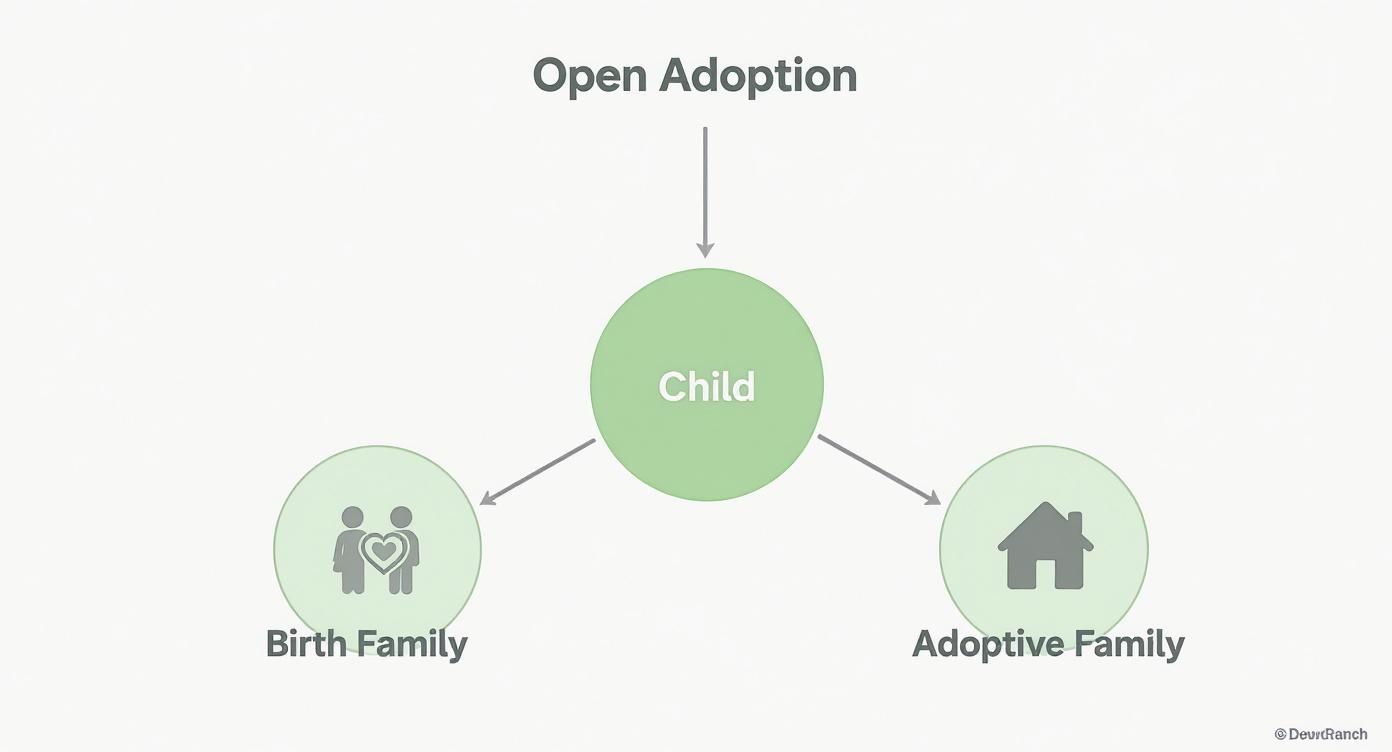
As you can see, both families are united in their love for the child, creating an extended family. In Texas, these relationships can be formalized through a Post-Adoption Contact Agreement (PACA), which we'll discuss next. This legal tool helps set clear expectations and provides a roadmap for how the relationship will work, ensuring every decision is made with the child's best interests at heart.
The Benefits for Children, Birth Parents, and Adoptive Families
When families first ask, **what is open adoption**, they quickly realize it’s less about a legal process and more about building a relationship centered on the child’s well-being. It’s a collaborative approach that creates an environment of honesty and support, and the benefits ripple out to touch the child, the birth parents, and the adoptive family in profound ways. Everyone in this extended family circle gains something special that helps create a healthier, more complete family story.
The most important benefits, of course, are for the child. Open adoption gives them a clear and honest sense of who they are. They grow up knowing their full story, which can prevent feelings of abandonment and identity struggles that often come from unanswered questions about their origins. This connection also provides direct access to vital medical history and cultural heritage, painting a complete picture of their background.
Peace of Mind for Birth Parents
For birth parents, an open adoption offers a deep sense of reassurance and peace. The decision to place a child for adoption is born from immense love, and having ongoing contact allows them to see their child thriving in a happy, stable home. For example, a birth mother might find comfort in receiving a photo on her child's first day of school or hearing about a new milestone. This visibility is a powerful part of the healing process, helping to process grief with confidence in the choice she made.
Instead of a lifetime of uncertainty, birth parents can build a real, meaningful relationship with their child. This connection validates their role in the child’s life and provides a sense of closure and ongoing love that closed adoptions simply can't offer.
A Stronger Family for Adoptive Parents
Adoptive parents also gain tremendously. They are empowered to answer their child’s questions about their background with honesty and confidence, which strengthens the parent-child bond. There are no secrets to manage, creating a family dynamic that’s rooted in trust.
Beyond that, birth parents can become a valuable source of support, creating an extended family network focused on the child's best interest. It also provides a beautiful opportunity to model empathy, respect, and unconditional love.
In an open adoption, love is not divided; it's multiplied. The child is surrounded by a larger circle of family who cares deeply for their happiness and well-being, creating a rich tapestry of support that lasts a lifetime.
Navigating these new relationships takes time and support. Many families find strength by connecting with others who have walked a similar path. Exploring resources like adoptee support groups in Texas can provide an invaluable sense of community for everyone in the adoption circle as they grow together.
The Legal Process for Open Adoption in Texas
Navigating the legal side of open adoption can feel overwhelming, but the process in Texas is designed to bring clarity and security to everyone involved. This is the stage where heartfelt promises turn into a structured plan, ensuring the child’s best interests are legally protected under the Texas Family Code.

The key legal tool for this is the Post-Adoption Contact Agreement, or PACA. This isn't a cold contract; it’s a written roadmap that everyone agrees on before the adoption is finalized. This document is where the specific details about future contact are spelled out and made official, turning good intentions into a clear, reliable plan.
Crafting a Post-Adoption Contact Agreement (PACA)
Creating a PACA is a collaborative effort between the birth parents and the adoptive parents, usually guided by their respective adoption attorneys. This approach ensures both parties have a voice and that the final agreement is fair, clear, and completely voluntary.
A PACA typically defines expectations for things like:
- Frequency of Visits: How often will everyone meet in person? For example, it might specify one visit per year at a neutral location like a park.
- Communication Methods: What is the plan for staying in touch? This could be phone calls, video chats, or texts.
- Information Exchange: How will updates and photos be shared? A common agreement is to email photos and a letter twice a year, on the child's birthday and a holiday.
Laying it all out with this level of detail helps prevent misunderstandings down the road. The world of adoption is always evolving. To give you some perspective, in 2020, there were about 99,547 domestic adoptions in the United States. Of those, roughly 26.53% were private domestic adoptions—the area where open adoption is most common. If you're interested, you can explore a global view of adoption trends to see these dynamics more broadly.
Making the Agreement Legally Binding in Texas
Once everyone agrees on the terms, the PACA is presented to the judge handling the adoption case. Under Texas Family Code § 162.019, the court will review the agreement to confirm that it is truly in the best interest of the child.
If the judge approves the PACA, it becomes a legally enforceable court order. This is a massive step because it gives everyone a sense of security, ensuring the agreed-upon terms for contact will be honored.
This legal recognition is what gives an open adoption its strength. It elevates a good-faith promise to a court-backed plan, giving both birth and adoptive parents confidence in the future of their relationship and, most importantly, in the child's ongoing connection to their full life story.
Setting Healthy Boundaries in Your Adoption Relationship
An open adoption is a beautiful, evolving human relationship. To thrive, it needs care, respect, and clear communication—just like any other family connection. It’s not about perfection, but about navigating the journey together with grace and a shared commitment to the child's well-being. Building that healthy foundation from the very beginning is the key to a lasting, positive connection.

This all starts with establishing clear, healthy boundaries. Think of boundaries not as walls to keep people out, but as gentle fences that define everyone's roles. For instance, the adoptive parents are the child's parents, making day-to-day decisions. The birth parents are cherished, important relatives. This structure makes the relationship feel safe and predictable, helping to prevent misunderstandings and ensuring everyone feels valued.
Practical Communication Strategies for a Strong Relationship
Effective communication is the cornerstone of any successful open adoption. It's about more than just what you say; it's about listening with an open heart, managing expectations honestly, and handling disagreements with compassion. The goal is to build trust and adapt together as the child grows.
Here are a few practical strategies to guide your interactions:
- Be Clear and Consistent: From the start, have open conversations about expectations. Sticking to the plan you've agreed upon builds reliability and, most importantly, trust.
- Listen to Understand, Not Just to Respond: When a concern comes up, take a breath and truly listen to the other person's perspective. Acknowledging their feelings can de-escalate tension and pave the way for a solution.
- Embrace Flexibility: Life happens. Be prepared to adjust your arrangements over time, always keeping the child’s needs at the center of any new decisions.
An open adoption relationship is a marathon, not a sprint. There will be moments of joy, adjustment, and learning. By focusing on empathy and consistent communication, you can build a stable, child-centered connection that lasts a lifetime.
Adapting Your Agreement Over Time
As your child grows, their needs and understanding of their adoption story will change. What works for a toddler might not work for a teenager. This is why having a strong, communicative foundation is so important—it allows you to revisit your agreements and make adjustments that reflect your child’s developmental stage.
Many of these expectations can be formalized from the outset. For those looking for more structure, learning about understanding Texas Post-Adoption Contact Agreements can provide a solid legal framework for your relationship. Remember, challenges are a normal part of any relationship. They are manageable with support, patience, and a shared focus on the child you all love.
Common Questions About Open Adoption in Texas
Exploring open adoption is a huge step, and it’s normal to have questions. This journey is filled with unique emotional and practical decisions, and the best way to move forward is with clear, reliable information. We’ve gathered some of the most common questions we hear from hopeful adoptive parents and birth parents in Texas to give you that clarity.
Our goal is to provide straightforward answers rooted in the Texas Family Code, helping you feel more prepared for the path ahead.
Is a Post-Adoption Contact Agreement Legally Enforceable in Texas?
Yes, this is one of the most important protections Texas law offers. Once a court reviews and approves a Post-Adoption Contact Agreement (PACA), it becomes a legally enforceable order. This isn't just a casual promise; it carries the full weight of the law.
For the court to approve it, the PACA must:
- Be entered into voluntarily by all parties.
- Be in writing and signed by everyone involved.
- Most importantly, be deemed by the judge to be in the child's best interest.
This legal backing ensures the promises made about future contact are honored, giving both adoptive and birth families peace of mind and a stable foundation for their relationship.
Can the Level of Openness Change Over Time?
Absolutely. An open adoption is a living relationship, not a static contract. It’s natural for the dynamic to shift as a child grows and life circumstances change. What works for an infant will likely look different for a teenager.
Many families find their communication style evolves organically. The key is maintaining open and respectful communication. If a significant change is needed, the PACA can be legally modified. However, any modification requires everyone to agree, and a court must approve it as being in the child’s best interest. This flexibility ensures the relationship can adapt to meet the child’s needs at every stage of life.
What if a Birth Parent Does Not Want an Open Adoption?
The birth parents' wishes are at the heart of the adoption process. If a birth parent prefers a semi-open or closed adoption, that decision is always respected. The adoption plan, including the level of openness, is designed to create a path that the birth mother, in particular, feels comfortable and secure with.
An experienced adoption attorney is invaluable here. They can help facilitate these sensitive conversations, ensuring everyone’s needs are heard and understood. The ultimate goal is to find a solution that honors the birth parents’ decision while creating a loving, permanent home for the child. Every family's journey is unique, and the right path is the one that brings peace and stability to everyone involved.
Building a family through adoption is a journey of the heart, and you don’t have to walk it alone. If you have more questions or are ready to take the next step, our team at The Law Office of Bryan Fagan, PLLC is here to provide the compassionate legal guidance you deserve. We invite you to schedule a free consultation with us today to discuss your unique situation and learn how we can help you achieve your family's dreams.

