
When you decide to adopt a child with special needs, you’re choosing a deeply rewarding path. You're not just building a family; you're giving a child the loving, permanent home they deserve. In Texas, the term "special needs" is broader than you might think. It goes beyond medical conditions to include older children, groups of siblings who need to stay together, or kids who have come from difficult backgrounds. This journey is unique for every family, but with the right support, it is a beautiful way to build your family.
Your Compassionate Journey to Special Needs Adoption

Starting the process to adopt a child with special needs in Texas is a decision rooted in love. It’s a powerful commitment to give stability, care, and unconditional support to a child who needs it most. While the term "special needs" might first bring to mind specific medical or developmental diagnoses, the definition under Texas law is actually much wider.
This broader understanding is important because it opens the door for many more children to find their forever families. A child might be considered to have special needs for several reasons, including:
- Age: Many older children and teenagers wait much longer for adoption.
- Sibling Groups: Brothers and sisters who need to be adopted together to keep their family bond intact.
- Background: Children who have lived through trauma, abuse, or neglect.
- Medical or Developmental Conditions: Physical, emotional, or learning challenges that require specialized care.
Understanding the Scope and Opportunity
The need for loving adoptive families is significant. Right now, in the United States, about 102,000 children in the foster care system are waiting for adoption, and many of them have unique needs. You can find more insights on the global need on worldforgottenchildren.org. This number isn't just a statistic; it represents an incredible opportunity for hopeful parents in Texas to make a profound difference in a child's life.
As you start this journey, one of the most powerful things you can do is educate yourself. Understanding the potential challenges helps you prepare your heart and your home. For example, it’s incredibly helpful to learn about conditions a child might face, like understanding what Sensory Processing Disorder is and its signs.
Your willingness to learn and adapt is your greatest asset. The goal isn't to be a perfect parent from day one, but to be a prepared, patient, and persistent one who can advocate for your child’s best interests.
This guide is here to walk you through the process with clarity and empathy, grounded in the specifics of Texas law. We’ll look at the different paths to adoption, from working with Child Protective Services (CPS) to private agencies, and give you the practical information you need to move forward with confidence.
Preparing for the Texas Adoption Home Study
The home study. For many hopeful parents, just hearing those words can stir up a mix of excitement and anxiety. But let's reframe this. The home study isn't an inspection where you have to prove you're perfect. Think of it more as a guided conversation—a foundational step designed to make sure you and your future child are set up for success from day one.
Mandated by Chapter 162 of the Texas Family Code, the home study is a required part of every Texas adoption. A licensed social worker will get to know you, your family, and what is driving your desire to adopt. They aren't looking for a flawless home; they're looking for a prepared and loving one.
What the Home Study Actually Looks At
The process is a partnership between you and the home study professional. Their job is to get a clear picture of your life and your ability to provide a safe, stable, and nurturing home. Honesty is your best friend here. Being open about your strengths and where you might need extra support allows them to truly understand your family.
Here’s what’s typically on the checklist:
- Candid Interviews: You’ll talk through your personal history, your relationship, parenting philosophies, and life experiences. It’s all about getting to know the real you.
- Financial Review: This isn't about being wealthy. It’s about showing you have the financial stability to support a child responsibly.
- Background Checks: Criminal and child abuse registry checks are mandatory for all adults living in the home. This is a crucial safety measure.
- Home Safety Inspection: The professional will do a walkthrough to check for basic safety features, like working smoke detectors and ensuring hazardous items are stored securely.
Getting your paperwork in order ahead of time can make everything feel much less stressful. For a complete rundown of what to gather, check out our guide on the essential required documents for a Texas adoption home study.
Focusing on Special Needs Preparedness
When you’re planning to adopt a child with special needs, the home study conversations will naturally go a bit deeper. The goal is to explore your readiness to embrace the unique challenges and incredible joys that come with this specific journey.
Be ready to talk about what you already know and, just as importantly, your willingness to learn more. Have you researched specific conditions? Have you connected with other parents who have adopted children with similar needs? Showing this kind of initiative tells the social worker you're a proactive and thoughtful parent-in-waiting.
The home study professional isn't just assessing your house; they are assessing your heart and your readiness. They want to see your capacity for empathy, your resilience in the face of challenges, and your unwavering commitment to advocating for a child.
Building Your Support System
One of the most important topics you'll discuss is your support network. Raising a child with special needs is a team effort, and your social worker will want to see that you have people in your corner.
Before your interview, think through a few key questions:
- Who is in your immediate circle? Think about family, close friends, and neighbors who could offer practical help or just be a shoulder to lean on.
- What community resources have you found? Have you looked into local support groups for adoptive parents, therapists specializing in trauma, or doctors experienced with certain medical conditions?
- How do you handle stress? Be prepared to talk about your own coping strategies and how you’ll manage the inevitable appointments, therapies, and potential setbacks.
Your answers help paint a picture of a well-supported family, ready to provide a loving and resilient home. This self-reflection might just be the most valuable part of the entire home study, preparing you for the incredible child who is waiting for you.
Choosing Your Adoption Path in Texas
Once you’ve made the incredible decision to adopt, the next big question is: how? In Texas, families looking to adopt a child with special needs have a few different routes they can take. Each one offers a different journey, timeline, and level of support, so getting clear on your options is the best first step you can take.
The three main pathways are adopting through the state’s foster care system, working with a private agency, or pursuing an international adoption. Your family’s unique circumstances, financial picture, and comfort level with different needs will guide this decision. Making an informed choice now lays the foundation for a much smoother process down the road.
Adopting Through the Texas Foster Care System
By far the most common way to adopt a child with special needs is through the Texas Department of Family and Protective Services (DFPS). Most people know this as the "foster-to-adopt" process. This path is filled with immense opportunity, as the vast majority of children waiting for a forever family are currently in state custody.
The journey often starts with becoming a licensed foster parent. A child might be placed in your home, and if their birth parents' rights are later terminated by the court, you may have the first opportunity to adopt them.
- Minimal Costs: Adopting from foster care is the most affordable route. There are usually no agency fees, and families often get financial help and reimbursement for their legal costs.
- Built-In Support: This path gives you direct access to state-funded support, including the Texas Adoption Assistance Program, which can provide a monthly subsidy and ongoing Medicaid coverage for your child.
Working with a Private Adoption Agency
Partnering with a licensed private adoption agency here in Texas is another excellent option. While this route generally comes with higher costs, many families find the personalized support and one-on-one guidance to be invaluable.
For example, a family with a medical background might feel uniquely equipped to adopt a child with a known heart condition. A private agency specializing in medical needs adoption could help connect them with birth parents seeking a family with that specific experience, ensuring the child receives expert care from day one.
International Adoption Considerations
A third path, international adoption, brings its own unique set of rewards and complexities. Families who go this route must navigate the laws of both the United States and the child's home country. The process is often longer and more expensive, but it can be a beautiful way to build your family.
It's absolutely crucial to work with an experienced, Hague-accredited agency. You want a team with a strong reputation for ethical practices and a deep understanding of the needs of children coming from institutionalized care settings.
This chart helps visualize the main paths you can take to adopt a child with special needs right here in Texas.
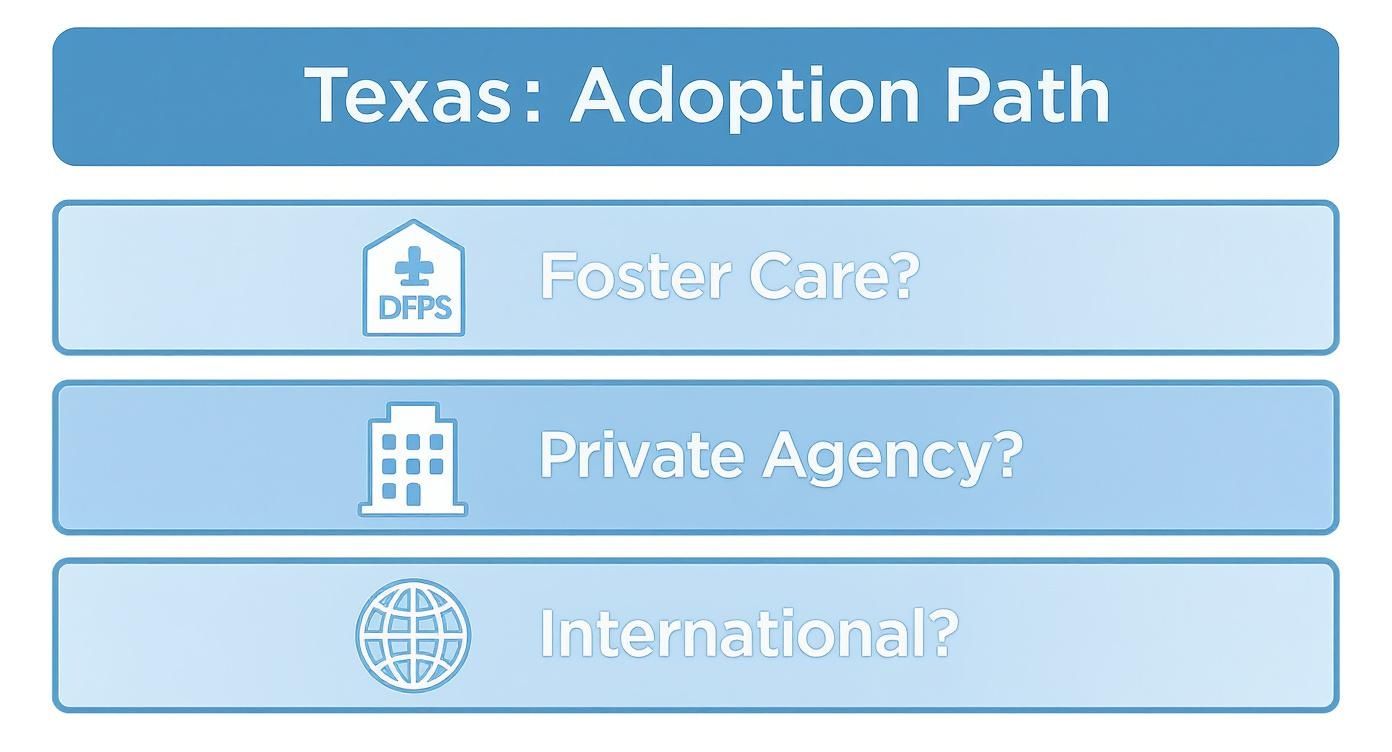
As you can see, while each road leads to the same destination, the journey and the resources available can differ quite a bit.
To help you weigh the pros and cons, here's a side-by-side look at what you can generally expect from each adoption path in Texas.
Comparing Adoption Paths in Texas for Children with Special Needs
| Feature | Foster Care / DFPS | Private Domestic Agency | International Adoption |
|---|---|---|---|
| Typical Cost | Low to no cost; often state-reimbursed. | $20,000 – $50,000+ | $30,000 – $60,000+ |
| Average Timeline | 1-2 years, can vary based on foster placement. | 1-3 years. | 2-5+ years, highly variable. |
| Child's Background | Detailed history often available through DFPS. | Background info varies by situation. | Information can be limited, especially from institutional care. |
| Available Support | Strong state support (subsidies, Medicaid). | Agency-provided support and counseling. | Agency support, post-adoption resources are critical. |
| Best For Families Who… | Are open to older children, siblings, or significant needs and want robust state support. | Prefer more personalized guidance and may have a specific need in mind. | Are prepared for a longer, more complex process and cross-cultural challenges. |
This table is a starting point. Your personal experience will depend on the professionals you work with and the specific circumstances of the child you welcome into your home.
A Growing Trend Toward Public Adoption
Over the last few decades, we've seen a major shift in how families are built through adoption. Public agency adoptions, especially from foster care, have become a much more common and celebrated path.
This trend is partly due to greater awareness and federal initiatives aimed at finding permanent homes for kids in state care. Between 1992 and 2001, adoptions through public agencies shot up from just 18% to 39% of all new adoptions in the U.S. There was a notable increase in children with special health care needs finding their forever families this way. You can dig into the data yourself through this detailed HHS report on adoption trends.
Choosing your adoption path is a deeply personal decision. There is no single "right" way—only the way that is right for you, your family, and the child you are waiting to welcome home.
Whether you feel drawn to the urgent need within the Texas foster care system or you prefer the specialized guidance of a private agency, each option leads to the same beautiful destination: family. An experienced adoption attorney can help you understand the legal ins and outs of each path, ensuring your journey is secure from start to finish.
Financial Aid and Support Systems for Your Family

One of the first questions families ask is, "Can we really afford to adopt a child with special needs?" It’s a completely practical and important concern. The good news? In Texas, the answer is often a resounding yes.
The state has put strong financial support systems in place to make sure cost isn't a barrier for loving families. This support acknowledges that specialized care can come with extra expenses. The goal is simple: empower you to focus on providing a safe, nurturing home for a child. Understanding these resources from the start can bring incredible peace of mind.
The Texas Adoption Assistance Program
At the heart of Texas's support network is the Adoption Assistance Program. This program is designed specifically to help families who open their homes to children from the foster care system with qualifying needs. For many, it's a critical lifeline that provides ongoing stability for both parents and children.
Eligibility is tied to the state's definition of "special needs," which, as we've discussed, is quite broad. If a child qualifies, your family may be eligible for several forms of aid:
- Monthly Financial Subsidy: A regular payment to help with the day-to-day costs of raising a child.
- Medicaid Coverage: Your child receives ongoing health insurance through Texas Medicaid until they turn 18, covering medical, dental, and therapeutic services.
- Reimbursement for One-Time Costs: You can get help with non-recurring expenses tied to finalizing the adoption, like court costs and attorney fees, up to a certain limit.
These benefits are grounded in Texas Family Code Chapter 162, which outlines the state's commitment to finding permanent families for children in need. You can get a clearer picture of what this looks like by exploring how much the adoption subsidy is in Texas.
Federal and Private Financial Resources
Beyond the state-level programs, there are other powerful financial resources you can tap into. These options can often be combined with state assistance to create a comprehensive financial plan for your family.
The most well-known is the Federal Adoption Tax Credit. This nonrefundable credit can help you recoup thousands of dollars spent on qualified adoption expenses. For the 2024 tax year, the credit is substantial, providing significant relief. The IRS definition of "special needs" for this credit includes most children adopted from foster care, making it a valuable tool.
One key advantage for families adopting from foster care is that you may be able to claim the full tax credit amount, regardless of your actual expenses. This is a powerful way to build your family's financial security.
Don't overlook other potential sources of support, either. Many companies now offer employee benefits that include adoption assistance, providing grants or expense reimbursement. There are also numerous non-profit organizations that award adoption grants to families.
Building Your Emotional and Practical Support Network
Financial stability is just one piece of the puzzle. Just as important is the emotional and practical network you build around your family. When you adopt a child with special needs, you aren't expected to have all the answers or to go it alone.
Think of building your "village" as a proactive step in your adoption plan. This network will be your source of strength, advice, and a much-needed break when you need it most.
Here are a few places to start building that network right here in Texas:
- Local Parent Support Groups: Connecting with other adoptive parents who just "get it" is invaluable. They can offer practical tips and emotional solidarity that no one else can.
- Specialized Therapists: Seek out counselors and therapists who have real experience with adoption, trauma, and specific developmental or medical conditions.
- Educational Advocates: These professionals are experts at navigating the school system. They can help ensure your child receives the right accommodations and services through an Individualized Education Program (IEP) or 504 plan.
Knowing these resources exist before you even bring your child home sets you up to be prepared, confident, and ready to be the best parent you can be.
Navigating the Legal Road to Finalization
After months of paperwork, interviews, and emotional preparation, you’ve finally reached the last mile of your adoption journey. These final legal steps are what officially transform your house into your child’s forever home. This is the moment you’ve worked so hard for, where legal processes give way to a lifetime of family memories.
The path to finalization is clearly defined by Texas law, ensuring every detail is handled with the child's best interests at heart. Think of this stage less as an evaluation and more as a period of observation and legal confirmation. It’s a time for your family to settle into its new rhythm, knowing the finish line is just ahead.
The Post-Placement Supervision Period
Once a child is placed in your home, a mandatory waiting period begins. As outlined in the Texas Family Code, this post-placement supervision period has to last for at least six months before the adoption can be finalized in court.
Don't worry—this isn't a test you can fail. Instead, it's a supportive phase designed to help your entire family adjust. During these months, a caseworker from your agency or DFPS will visit your home several times. They are there to see how everyone is bonding, offer resources, answer your questions, and just make sure the placement is thriving.
Think of these visits as supportive check-ins. For instance, if you're struggling to find a therapist who understands your child's specific background, your caseworker is the perfect person to connect you with the right professionals.
Filing the Petition to Adopt
When the six-month supervision period wraps up successfully, your adoption attorney steps in to handle the critical legal paperwork. They will file an official Petition to Adopt with the court, which is the legal document that formally asks the court to recognize you as the child’s legal parent.
This is where having an experienced adoption attorney becomes invaluable. They make sure every document is filed correctly and on time, preventing frustrating delays that can be emotionally taxing for a family that’s ready to make things official.
In some cases, the biological parents' rights may not have been legally terminated yet. Your attorney will manage this sensitive but necessary part of the process, ensuring the child is legally free for adoption. For a deeper dive into this specific legal action, you can learn more about the Texas termination of parental rights process in our detailed guide.
The legal finalization is more than just a court date; it's the culmination of your journey. It is the moment the law formally recognizes the family that has already been forming in your heart and home.
The Finalization Hearing: A Day of Celebration
The final adoption hearing is something to look forward to—it’s not a trial, but a celebration. You, your child, and your attorney will go before a judge, often in a relaxed and joyful courtroom setting. Many families bring grandparents, relatives, and close friends to witness this incredible milestone.
During the hearing, the judge will:
- Review the final adoption paperwork your attorney prepared.
- Ask a few simple questions to confirm your commitment to your child.
- Sign the final decree of adoption.
With the strike of a gavel, the judge legally declares that your child is a permanent member of your family. In that moment, you are granted all the same rights and responsibilities as if the child were born to you. It's a powerful, emotional, and unforgettable day.
This trend of building families through adoption has grown worldwide, especially for children with special needs. For example, the share of children with special needs in intercountry adoptions from China grew from just 9% in 2005 to nearly 49% by 2009, highlighting a global commitment to finding homes for these wonderful children. You can explore more on this topic and its policy implications.
From the initial placement to the final hearing, the legal road can seem complex. But with compassionate legal guidance, you can focus on what truly matters: bonding with your child and enjoying the first of many memories as an official family.
Common Questions on Special Needs Adoption in Texas
Stepping into the world of special needs adoption is a huge decision, and it’s completely normal to have questions. In fact, asking them is the first sign you're a thoughtful and prepared parent. Below, we've gathered some of the most common questions we hear from families across Texas, offering clear, straightforward answers to help you move forward.
Can I Specify the Types of Needs I Can Handle?
Yes, absolutely. A critical part of the home study process is having an honest conversation about your family’s strengths, limits, and comfort level. This isn't about judgment; it’s about making a successful, sustainable match for both you and your future child.
You'll talk openly with your caseworker about various medical, developmental, and behavioral conditions. Being realistic about what you can manage is a sign of a strong, prepared parent and is essential for a child’s long-term well-being. Your agency will always respect your preferences and work to find a child who is set up to thrive in your home.
What if My Child's Needs Become More Complex?
This is a very real and common concern. While agencies do their best to provide a complete history, some needs only begin to surface after a child feels safe, secure, and truly settles into your family.
This is where your support network becomes your lifeline. In Texas, children adopted from the foster care system almost always keep their Medicaid coverage, which is a huge help for a wide range of medical and therapeutic services. The state also offers post-adoption services to connect you with resources long after the ink on the adoption decree is dry. On top of that, connecting with local adoptive parent support groups can provide invaluable real-world guidance from others who have walked this exact path.
Your journey doesn't end on adoption day; it's just the beginning. The support systems you build will be the foundation your family stands on for years to come, helping you navigate any challenges that arise with strength and resilience.
How Long Does Adopting from Foster Care Usually Take?
Timelines can vary, but adopting a child with special needs through the Texas foster care system is often quicker than other adoption routes.
After you complete your home study and become a licensed adoptive home, the matching process begins. This can take anywhere from a few months to over a year, depending on your family's preferences and the children who are waiting.
Once a child is placed in your home, Texas law requires a minimum six-month post-placement supervision period. This gives everyone—you, the child, and the agency—time to adjust before the adoption is legally finalized. Once that period is successfully wrapped up, your attorney can file the paperwork to schedule your finalization hearing. An experienced adoption attorney can be a huge asset here, ensuring the legal process moves along efficiently and avoids unnecessary delays.
Understanding Specific Diagnoses
Many prospective parents have questions about specific diagnoses, and it's a great idea to educate yourself. For example, exploring resources on conditions like autism spectrum disorder (ASD) or sensory processing disorder (SPD) can provide clarity. Getting a better handle on understanding diagnostic complexities of autism and sensory processing disorder-or-sensory-processing-disorder-(spd)-a-diagnostic-dilemma) can equip you with the knowledge and confidence to be a more effective advocate for your child from day one.
Working through these questions is a normal and healthy part of the journey. Each answer brings you one step closer to building the family you've been dreaming of.
The journey to adopt a child with special needs is filled with unique questions and legal steps. At The Law Office of Bryan Fagan, PLLC, our compassionate attorneys are here to provide the clear answers and dedicated legal guidance your family deserves. Schedule a free, no-obligation consultation today to discuss your adoption goals by visiting us at https://texasfamilyadoption.com.
