
Deciding to grow your family through a Texas infant adoption is a profound moment—one filled with hope, anticipation, and a deep well of love. Whether you are a hopeful adoptive parent, a birth parent considering an adoption plan, or a relative stepping up for a child, this journey is deeply personal. We created this guide to walk you through the process with empathy and clarity, translating complex legal steps into plain English so you can feel confident and supported.
Your Compassionate Guide to Adopting an Infant in Texas
Welcome. Taking this first step is a beautiful move toward building your family. Here at The Law Office of Bryan Fagan, PLLC, we understand that adoption is one of the most significant and heartfelt decisions you will ever make. It’s a path that calls for courage, patience, and unwavering love, and we are honored to be a part of it.

Think of this guide as a conversation with a trusted friend who knows the legal and emotional landscape of adoption in Texas. We will explore the journey from beginning to end, reminding you that you are not alone and that the family you are dreaming of is absolutely possible.
What to Expect on Your Adoption Journey
The road to a Texas infant adoption is carefully structured to protect the best interests of the child, as outlined in the Texas Family Code. While every family’s story is unique, the core steps provide a secure and predictable path forward.
Here's a brief look at what's ahead:
- Understanding Your Options: First, you’ll learn about the different paths available, such as working with a private agency or pursuing an independent adoption with the help of an attorney.
- The Home Study: This is a collaborative process—not an inspection—designed to ensure your home is a safe, loving, and prepared environment for a new child.
- Matching with a Birth Mother: This is the heart of the journey, where courageous birth parents and hopeful adoptive parents connect to create an adoption plan together.
- Legal Procedures: This covers all the official steps, from the birth mother’s consent—which, by law, cannot be signed until at least 48 hours after birth—to the joyful day of finalization in court.
Our goal is simple: to empower you with knowledge and surround you with support. An informed family is a confident family, ready to navigate the emotional and practical steps of adoption with grace.
A Journey of Heart and Law
Adoption is where deep personal emotion meets the structure of the law. The legal framework provides the security and permanence your family deserves, while your love and commitment create its true foundation. It’s easy to feel overwhelmed by paperwork, but with the right guidance, you’ll see it not as a hurdle, but as the very tool that makes your family official and forever.
We’ll break down intimidating topics like the termination of parental rights and post-placement supervision into simple, understandable terms. Our aim is for you to walk into every conversation—whether with social workers, attorneys, or birth parents—feeling capable and prepared.
Every step, from your first call with our office to the final rap of the judge's gavel, is a move toward the incredible moment you legally become parents. It's a journey with emotional peaks and valleys, but the destination—a whole and loving family—is worth every bit of it. We're here to make sure your path is as smooth and clear as possible.
Understanding the Texas Infant Adoption Process
The path to adopting an infant in Texas is more than a list of legal tasks; it's a carefully structured journey with one primary focus: protecting the best interests of the child. Think of it like building a home. Every step, from the foundation to the roof, is designed to create a safe, stable, and permanent place for your family to flourish. This legal roadmap, guided primarily by Chapter 162 of the Texas Family Code, brings security and clarity to a process filled with emotion.
From the start, you'll choose between pursuing a private adoption or working with a licensed adoption agency. Both paths lead to the same beautiful destination, but the routes differ slightly. Agencies often offer bundled services, including counseling for birth parents and matching support. A private adoption, usually handled by an attorney, can sometimes offer a more direct and personalized experience.
The First Steps: Your Home Study and Matching
No matter which route you choose, one of the first and most important milestones is the adoption home study. This is a mandatory step in every Texas infant adoption. Instead of viewing it as a stressful inspection, think of it as a collaborative process. A licensed social worker will get to know you, help you prepare for this new chapter, and ensure your home is a safe and nurturing environment for a child. The process involves conversations, a home safety review, and routine background checks.
Once your home study is approved, the journey moves to its emotional heart: the matching process. This is where a birth mother, in an incredible act of love and courage, reviews profiles of hopeful adoptive families like yours. Your profile is your chance to tell your story—who you are, what you value, and the life you dream of sharing. Authenticity is key; it’s about making a genuine human connection.
A Crucial Waiting Period: A Note on Consent
The Texas Family Code includes a vital safeguard for birth mothers. She cannot legally sign the papers to relinquish her parental rights until at least 48 hours after the child is born. This waiting period ensures her decision is made with a clear mind, free from the immediate stress and emotions of labor and delivery.
Key Legal Milestones Explained Simply
As you get closer to welcoming a child into your home, you'll encounter some legal terms. Don't let them intimidate you. Understanding them in plain English demystifies the process and empowers you. The legal side of a Texas infant adoption is what makes your family official, permanent, and secure.
Here are a few core concepts you'll come across:
- Termination of Parental Rights (TPR): This is the legal action that permanently ends the rights of the biological parents, making the child legally available for adoption. This can be voluntary, where a birth parent signs a relinquishment document, or involuntary, which is decided by a court in situations involving the child's welfare.
- Post-Placement Supervision: After your baby comes home, a social worker will visit you a few times over several months. These are not judgmental inspections but supportive check-ins to see how your new family is adjusting and to offer any resources you might need.
- Finalization Hearing: This is the finish line—the joyful last step! It’s a court hearing where a judge reviews all the paperwork, confirms every legal requirement has been met, and signs the final decree of adoption. At that moment, your child legally and forever becomes a part of your family.
Navigating these steps can feel like a lot, but you don't have to do it alone. Each requirement is a safeguard designed to build a legally secure and loving family. With the right legal partner, you can walk through each stage with confidence and peace of mind.
Building your family through adoption is a profound journey of love and commitment. If you have questions about the Texas infant adoption process or feel ready to take the next step, our team at The Law Office of Bryan Fagan, PLLC is here to help. Schedule a free consultation with our compassionate team to get the clear, supportive legal guidance you deserve.
Navigating the Home Study and Matching Process
For most hopeful parents pursuing a Texas infant adoption, two milestones represent the heart of the journey: the home study and the matching process. It's completely normal to feel a mix of excitement and anxiety about the home study, but we encourage clients to see it differently. Think of it less like an inspection and more like a collaborative conversation to prepare you for parenthood.

This step is all about ensuring your home is a safe, stable, and loving environment for a child to thrive. From a legal standpoint, it's a foundational piece of the adoption puzzle, guaranteeing the child's best interests are always the top priority.
Preparing for Your Texas Home Study
A licensed social worker will be your guide through the home study, which consists of a few key parts. Knowing what to expect can make the entire experience feel much more positive and less intimidating.
Here’s what the process generally includes:
- Interviews: You’ll sit down with the social worker to talk about your background, your relationship, your parenting philosophies, and your motivations for adoption. Honesty and openness are your greatest assets here.
- Home Safety Assessment: This is simply a walkthrough to check for basic safety features, like working smoke detectors and ensuring hazardous materials are stored securely. No one expects a perfect home, just a safe one.
- Background Checks: Every adult living in the home will need to complete criminal background and child abuse registry checks. This is a standard, non-negotiable part of the process for everyone's protection.
- Document Collection: You’ll be asked to gather important paperwork, such as financial statements, medical records, and personal references from friends or family.
For a deeper look into what this evaluation involves, we put together a guide covering the top components of a Texas adoption home study. Being prepared can turn this requirement into a confident step forward on your path.
The Heart of the Matter: The Matching Process
Once your home study is approved, you officially enter the matching phase. This is where you’ll create an adoptive parent profile—a book or online portfolio that tells your family's story. This isn’t about crafting a perfect image; it's about sharing who you genuinely are, your values, and the love you're ready to give. A birth mother will then review these profiles to find a family she feels a real connection with.
The waiting period during matching is often the most emotionally challenging part of a Texas infant adoption. It demands patience, hope, and a strong support system. Remember that your story is unique, and the right connection will happen at the right time.
The average wait time for a domestic infant adoption in Texas can range from 12 to 24 months. Of course, some families match much faster, while others may wait a bit longer. Your timeline can be influenced by how open you are to different situations regarding the child’s background and potential needs.
The degree of your flexibility on factors like race, gender, and potential health issues can significantly shorten or lengthen your wait. Here’s a quick look at how different preferences can shape your timeline.
How Different Factors Impact Your Adoption Wait Time
| Factor | Impact on Wait Time | Explanation |
|---|---|---|
| Gender Preference | Can significantly increase wait | Insisting on a specific gender reduces the number of potential matches by about 50%. |
| Race/Ethnicity | Can increase wait time | A narrow preference for a specific race may lengthen the wait, as it limits the pool of expectant mothers. |
| Medical History | Can significantly increase wait | Being unwilling to consider a child with any level of prenatal substance exposure or minor, correctable health issues will narrow your options considerably. |
| Contact with Birth Family | Can shorten wait time | Being open to some level of post-placement contact is increasingly common and desired by many birth mothers, expanding your potential matches. |
Ultimately, being more open in your preferences gives your profile a chance to be seen by more expectant mothers, which naturally increases the odds of a faster match.
Once you are matched with an expectant mother, the excitement truly begins! This is the time to start preparing for your baby's arrival. You'll want to check out a comprehensive newborn essentials shopping list to ensure you have everything ready. It’s a wonderful, tangible way to channel all that happy energy as you prepare to finally welcome your child home.
Key Legal Steps from Placement to Finalization
Once you’ve been matched and a beautiful new life has entered the world, your Texas infant adoption journey transitions from the emotional realm of waiting into a series of crucial legal steps. This is the roadmap that takes you from the hospital to the courthouse. While it involves legal procedures, it’s fundamentally about creating a secure, permanent family, and understanding the path can bring a great deal of peace of mind.
The entire process begins with the single most critical legal document in any adoption: the termination of the birth parents' rights. This is the step that legally makes a child available to be adopted by another family. In Texas, this is handled with the utmost care to protect everyone involved—especially the birth mother.
The 48-Hour Waiting Period: A Critical Safeguard
Texas law is very clear and compassionate on this point. A birth mother cannot sign any legal documents to voluntarily relinquish her parental rights until at least 48 hours have passed after the baby’s birth. This is a non-negotiable waiting period, and it exists for a very important reason.
This waiting period is a vital safeguard. It ensures her decision is made with a clear mind, free from the immediate physical and emotional intensity of labor and delivery. It gives her time to recover, reflect, and confirm her choice without pressure, which solidifies the integrity and emotional honesty of the adoption plan for everyone.
Understanding the Termination of Parental Rights
The legal process of ending a birth parent's rights is called Termination of Parental Rights, or TPR. In a Texas infant adoption, this usually happens in one of two ways:
-
Voluntary Relinquishment: This is the most common path in private infant adoptions. The birth parent (or parents) signs a legal document, often called an Affidavit of Relinquishment of Parental Rights, before a notary. By signing, they are knowingly and willingly agreeing to end their legal relationship with the child. We take a detailed look at this in our guide explaining the release of parental rights form.
-
Involuntary Termination: This is less common in infant adoptions but can occur if a birth parent is unable or unwilling to consent, and a court finds that terminating their rights is in the child’s best interest for reasons such as abandonment or endangerment.
Once the birth parents' rights have been legally terminated, the baby can be placed in your care. This is the moment you've been dreaming of—when you finally bring your child home.
Post-Placement Supervision and Finalization
After placement, Texas law requires a period of post-placement supervision. Don't let the legal term worry you. It simply means that over the next several months, a social worker will visit your home periodically. These are not inspections to be feared; they are supportive check-ins to ensure you and the baby are adjusting well and to offer resources or guidance. The social worker will then compile a positive report for the court.
The final step is the adoption finalization hearing. This is a joyful court appearance and the culmination of your entire journey. Your attorney will file a petition to adopt, and you’ll appear before a judge who reviews all the legal paperwork, including the positive post-placement reports.
A Real-Life Scenario: Imagine Sarah and Tom, who have just brought baby Emily home. Over the next six months, their social worker visits three times, watching them bond and become confident parents. Their attorney then schedules the finalization hearing. In the courtroom, surrounded by family, the judge smiles, signs the final decree, and declares them Emily's legal parents forever. That piece of paper represents the security, love, and permanence they worked so hard to build.
This hearing is often a celebration. The judge will confirm that all legal requirements have been met and then sign the final decree of adoption. At that moment, your child is legally and forever a member of your family.
Financial Planning for Your Texas Adoption
Let’s talk about the financial side of a Texas infant adoption. For many hopeful parents, this is one of the most stressful parts of the journey. But thinking about the costs doesn't have to be overwhelming. With a solid plan, you can shift your focus from worrying about numbers to preparing your heart and home for your new child.
Think of it less like paying a bill and more like making the most important investment of your life—an investment in your family’s future. Creating a financial roadmap gives you a clear, manageable path forward.
Breaking Down Adoption Expenses
Every adoption story is different, and so is the final cost. However, most expenses fall into a few key categories. Understanding these helps demystify the process and allows you to plan with confidence.
Here’s a look at the typical costs you can expect:
- Agency or Attorney Fees: This covers professional services, whether for agency matchmaking and administrative support or for an attorney handling the critical legal work from start to finish.
- Legal Costs: These fees ensure that crucial steps like the termination of parental rights and the final adoption petition are handled correctly in court.
- Home Study Expenses: This fee pays for the licensed social worker who conducts your home study, a required step for every adoption in Texas.
- Birth Mother Support: As allowed by Texas law, these are reasonable living expenses provided to the birth mother during her pregnancy to ensure she and the baby are healthy and safe.
We’ve put together a much more detailed guide to give you a clearer picture. You can learn more about the average cost of adoption in Texas and what goes into those numbers.
How to Fund Your Adoption Journey
The good news is that you don't have to figure this out alone. Many financial resources are designed specifically to help families like yours grow through adoption. A little research and planning can make a significant difference.
The federal Adoption Tax Credit is one of the most helpful resources available. For 2024, it allows families to claim up to $16,810 in qualified adoption expenses for each child. This is a significant credit that can greatly ease the financial burden.
Don’t stop there. Here are a few other avenues worth exploring:
- Employer Benefits: Check with your HR department. More and more companies offer adoption assistance in their benefits packages, often providing thousands of dollars in reimbursement.
- Adoption Grants: Numerous non-profit organizations offer grants to hopeful adoptive parents. These are gifts—you don't have to pay them back—and are awarded based on various criteria.
- Adoption Loans: Some financial institutions offer low-interest loans specifically for adoption, providing a structured way to manage costs over time.
This chart helps visualize the key legal stages that happen after you bring your baby home, from the initial placement to the big day in court when it's all official.
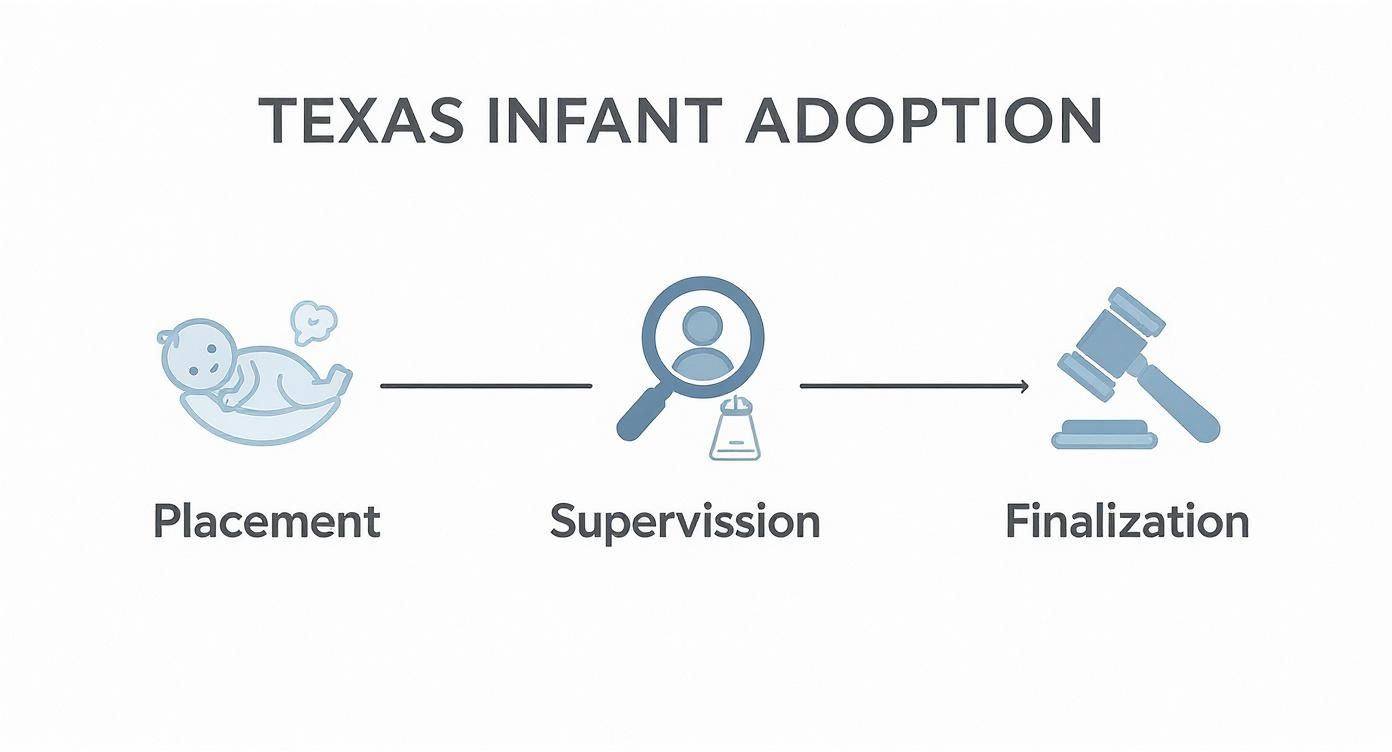
As you can see, the journey doesn't stop once the baby is in your arms. There’s a required supervision period before the final legal step, which is designed to ensure your new family is well-supported and thriving.
Creating a budget and exploring these funding options can turn what feels like an insurmountable mountain into a series of small, manageable steps. With careful planning, you can handle the financial part of your Texas infant adoption with confidence.
Building your family is one of the most profound things you’ll ever do, and finances shouldn't stand in your way. If you have questions about planning for your adoption, our team at The Law Office of Bryan Fagan, PLLC is here to help. Schedule a free, confidential consultation for supportive legal guidance.
Special Considerations in Texas Adoption
While every Texas infant adoption follows a similar legal framework, no two family stories are ever the same. Many hopeful parents we meet at The Law Office of Bryan Fagan, PLLC come to us wondering if their unique circumstances will alter the adoption process.
The short answer is: a little. The core requirements—like a home study and a final court hearing—are always part of the journey. But the path you take can look quite different depending on your situation.
Affirming LGBTQ+ Adoption Rights in Texas
Let's be perfectly clear: LGBTQ+ individuals and same-sex couples can and do build beautiful families through adoption here in Texas. Since the Supreme Court’s landmark Obergefell v. Hodges decision, married same-sex couples have the exact same legal rights to adopt as any other married couple in the state.
This means you can adopt jointly, and your path will follow the same legal steps. What truly matters is your love, your stability, and your commitment to giving a child a safe, permanent home. The law is on your side, and our firm is dedicated to ensuring your rights are protected every step of the way.
A Note on Family Unity: Whether you are pursuing a joint adoption from the start or a stepparent adoption to secure legal rights for a non-biological parent, the goal is always the same: creating a legally secure family where the child's best interests come first.
Kinship and Relative Adoptions
Sometimes, the best place for a child is with the family they already know and love. When grandparents, aunts, uncles, or other relatives adopt a child, it’s known as a kinship or relative adoption. This approach is a cornerstone of Texas family law because it keeps vital family bonds intact.
These adoptions are often more streamlined. For instance, some home study requirements might be adjusted since the child is already in a familiar, loving environment. This path prioritizes the child’s need for continuity and stability. In fact, data from the Texas Department of Family and Protective Services shows that in fiscal year 2021, of the 4,586 children adopted from state care, more than half were adopted by their relatives. You can discover more about Texas adoption statistics to see just how important kinship care is across the state.
Infant Adoption vs. Adopting from CPS
It's also crucial to understand the difference between a private infant adoption and adopting a child through Child Protective Services (CPS). While both paths lead to a "forever family," they begin from very different legal places.
- Private Infant Adoption: This is almost always a voluntary choice. A birth mother makes a courageous, loving plan to place her newborn with an adoptive family she has chosen. The legal process centers on ensuring her consent is fully informed and that the transfer of parental rights is handled with the utmost care and respect.
- CPS Adoption: Children in the foster care system are there because a court has determined it was unsafe for them to remain with their biological parents. Adopting from CPS means welcoming a child who has likely experienced trauma and loss. The legal process here involves the state terminating parental rights due to abuse or neglect.
Knowing these distinctions can help you determine which path aligns with your family’s heart and your readiness for the journey ahead. But no matter which road you're considering, you don't have to walk it alone.
Our compassionate legal team is ready to offer clear, supportive guidance tailored to your family's unique story. If you're ready to explore your options for a Texas infant adoption, schedule a free consultation with The Law Office of Bryan Fagan, PLLC today.
Common Questions About Infant Adoption in Texas
Starting the Texas infant adoption journey always brings up a lot of questions. It’s an emotional process, but it’s also a deeply legal one, so wanting to understand every detail is completely normal. We’ve gathered some of the most common questions we hear from hopeful adoptive families to provide clear, straightforward answers and help you feel more confident.
What Is the Difference Between Open and Closed Adoption?
Think of the "openness" of an adoption as a spectrum of communication. There’s no right or wrong answer; the best choice is the one that feels right for everyone involved, especially the birth mother and the adoptive family.
- Open Adoption: In this arrangement, the birth parents and the adoptive family share identifying information and agree on a plan for future contact. This can range from sharing photos and letters to arranging visits, creating a unique, extended family dynamic that honors the child's story.
- Closed Adoption: This is a more traditional approach where no identifying information is exchanged. After the adoption is finalized, there is no planned contact between the birth family and the adoptive family.
Texas law supports both paths, giving the birth mother and adoptive parents the flexibility to design a communication plan that honors their comfort levels and wishes.
Can a Birth Father Stop an Adoption in Texas?
Yes, a birth father has legal rights that must be addressed for an adoption to be secure. If he is a legally recognized father and does not consent to the adoption, he has the right to contest it in court, which can stop the process.
However, the adoption can move forward if his parental rights are terminated. This can happen in two ways: he can voluntarily sign away his rights, or a court can terminate them for specific legal reasons, such as abandonment. This is one of the most complex areas of adoption law, and having an experienced attorney to guide you is critical.
In Texas, a birth mother cannot legally consent to the adoption until at least 48 hours after the baby is born. This waiting period is a crucial safeguard. If she changes her mind before signing the relinquishment documents, she has every right to do so. Once the documents are properly signed, they are generally considered irrevocable.
Is an Attorney Required for an Infant Adoption?
While the law may not explicitly state you must hire an attorney, trying to complete a Texas infant adoption without one is a significant risk. An experienced adoption attorney is more than just a legal advisor; they are your advocate, guide, and safety net, ensuring every step complies with the Texas Family Code.
Your attorney will handle all court filings, ensure the termination of parental rights is done correctly, and represent you at the finalization hearing. This legal oversight isn't just a formality—it provides priceless peace of mind, protecting your family and guaranteeing your child's adoption is permanent and legally sound.
The journey to build your family through adoption is one of the most meaningful you will ever take. The team at The Law Office of Bryan Fagan, PLLC is here to provide the compassionate legal guidance you need to navigate every step with confidence. Schedule your free, no-obligation consultation today to discuss your adoption goals. Learn more and book your appointment here.
