
Welcoming a baby into your family through adoption is a decision rooted in immense love, hope, and courage. Whether you’re a hopeful parent dreaming of filling a nursery, a birth parent considering a brave and loving plan for your child, or a relative ready to step in, the path ahead is profound. At The Law Office of Bryan Fagan, PLLC, we understand the emotional and practical journey you're on, and we are here to help you navigate the adoption process in Texas with empathy and clarity.
Your Journey to Adopting a Baby in Texas Starts Here
This guide is for you. It’s for the couple feeling that mix of excitement and anxiety, for the birth mother making a courageous choice, and for the family member prepared to provide a stable, loving home. At The Law Office of Bryan Fagan, PLLC, we see firsthand every single day how adoption creates beautiful families, and we’re here to offer the compassionate, expert guidance you deserve.
Think of this as your roadmap. We’ll walk you through the landscape of infant adoption in Texas, translating the legal complexities of the Texas Family Code into clear, understandable steps you can actually use.
A Path for Every Family
The road to adoption looks different for everyone, and that's okay. Whether you are a married couple, an LGBTQ+ family, or a single individual ready to become a parent, Texas law provides a solid framework to help you succeed. The entire process is built around one single, unwavering focus: the best interests of the child.
For instance, a young couple in Houston might feel most comfortable working with a licensed adoption agency that offers structured support and carefully matches them with birth parents. At the same time, a family in Dallas could connect with a birth mother through their personal community, choosing to pursue a private adoption with the help of a dedicated attorney. Both paths are valid, and both lead to the same beautiful result—a child finding their forever home.
The heart of adoption isn't about finding a baby for a family, but about providing a loving, secure family for a baby. It is an act of profound love from all sides—from the birth parents who make a selfless choice to the adoptive parents who open their hearts and homes.
Understanding the Legal Framework
The legal side of adoption can feel overwhelming, but it’s really just a series of manageable steps designed to protect everyone involved—especially the child. We'll help you get comfortable with concepts like:
- The Home Study: A crucial step to prepare your home and your life for a new baby. It’s not about being perfect; it’s about being ready.
- Termination of Parental Rights (TPR): A critical legal action that concludes one chapter to begin another. It must be handled with the utmost care, respect, and compassion.
- Finalization: This is the joyful day in court where your family legally becomes permanent and you can finally exhale.
Our goal is to give you the knowledge and confidence to move forward, knowing you have a dedicated partner committed to the well-being of every child and family we serve. Let’s start this journey together.
Exploring the Pathways to Infant Adoption
Once you’ve made the heartfelt decision to adopt, the next big question is… how? Deciding on the right path to grow your family is one of the most important choices you’ll make. In Texas, there isn't just one road to adoption; there are several distinct routes, and each comes with its own map, timeline, and emotional landscape.
At The Law Office of Bryan Fagan, PLLC, we’ve seen every kind of family find their way to a child. Whether you're a single parent ready to start a family, an LGBTQ+ couple, or a couple who has longed for this moment for years, there's a path for you. The key is to understand what each one involves so you can choose with confidence.
Comparing Infant Adoption Paths in Texas
To help you see the big picture, let's break down the most common ways to adopt a baby in Texas. This table gives you a side-by-side look at the key differences in cost, timeline, and how much control you can expect.
| Adoption Type | Typical Timeline | Estimated Cost Range | Level of Control | Key Consideration |
|---|---|---|---|---|
| Private/Independent | 6-24 months | $35,000 – $60,000+ | High | Requires proactive networking and a strong attorney to manage legalities. |
| Agency Adoption | 12-36 months | $40,000 – $70,000+ | Medium | Offers built-in support, screening, and counseling for all parties. |
| Foster-to-Adopt | 12-24 months | $0 – $3,000 | Low | The primary goal is reunification; adoption only becomes an option later. |
| Stepparent/Kinship | 3-12 months | $2,500 – $7,500+ | High | Focused on legalizing an existing family bond; requires termination of the other parent's rights. |
Each of these paths leads to the same destination: creating a permanent, loving family. The best route for you depends entirely on your resources, your timeline, and your comfort level with the process.
Private and Independent Adoptions
A private adoption, often called an independent adoption, is when hopeful parents connect with a birth mother directly, without an agency acting as the middleman. This connection might happen organically through your community, a friend of a friend, or even online platforms designed for this purpose.
This path puts you firmly in the driver's seat. You have a ton of personal involvement and direct communication from the very beginning. For instance, a family in Austin might hear through their community that a young woman is making an adoption plan for her baby. They can then build a relationship with her directly, founded on mutual respect and open dialogue.
An experienced adoption attorney is non-negotiable in a private adoption. Your lawyer ensures everything is done according to the Texas Family Code. They will manage the legal payment of birth mother expenses, file all the necessary court petitions, and handle the delicate process of terminating parental rights. This legal oversight protects everyone involved and ensures the adoption is ethical and sound.
This chart helps visualize the different roles everyone plays in the adoption process, whether you’re a hopeful parent, a birth parent, or another family member.
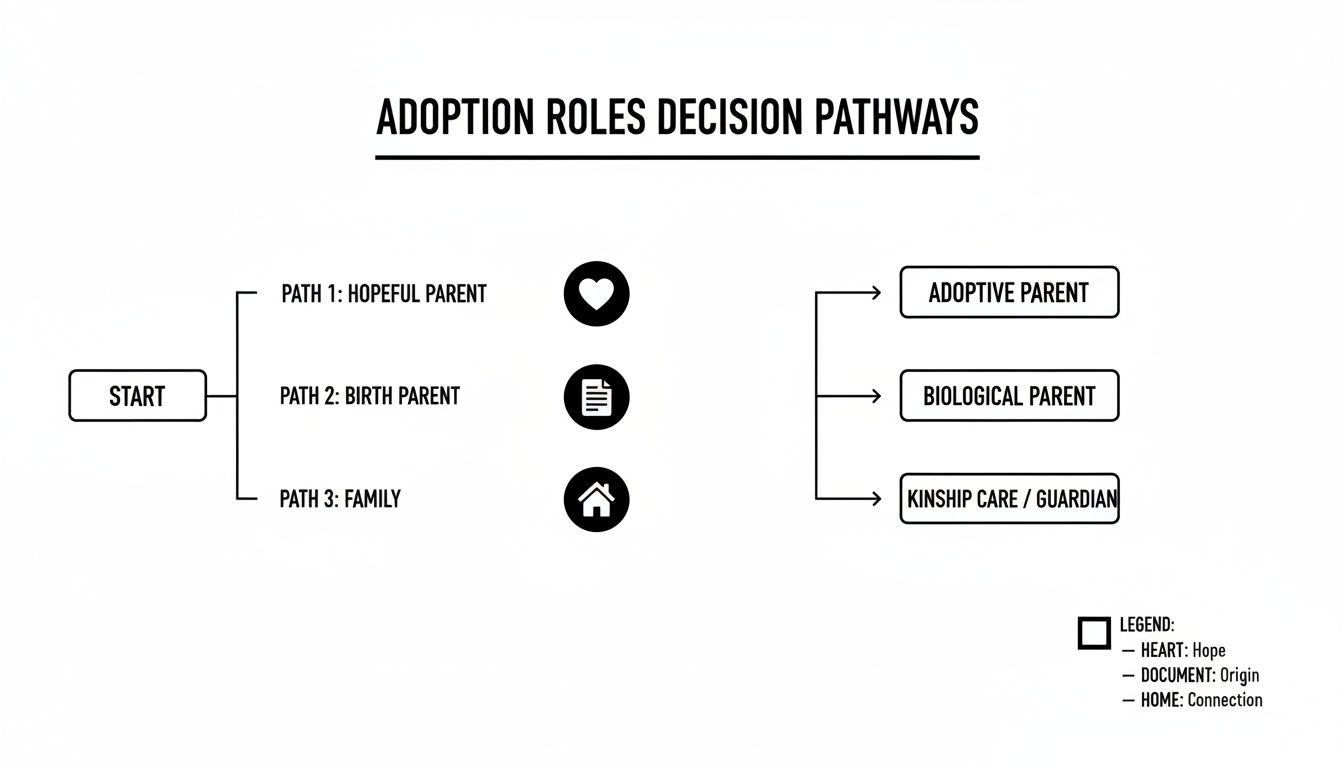
As you can see, while everyone starts from a different place, all paths are focused on one thing: giving a child a secure and loving future.
Agency Adoptions
For many families, navigating an adoption alone is daunting. That's where a licensed adoption agency comes in. Working with an agency adds a layer of structure and support that can be incredibly comforting. They act as a guide and intermediary for both the birth parents and the adoptive family.
An agency handles the heavy lifting: matching, counseling, parent education, and all the case management in between. A couple in Houston, for example, might choose this route because they value the agency’s thorough screening process and the dedicated emotional support offered to birth mothers. A well-supported birth mother is often more confident in her decision, which brings peace of mind to the adoptive family.
There are many kinds of agencies out there, so it’s crucial to find one whose philosophy and approach resonate with you. You can learn more about the different types of adoption in our detailed guide to help you explore these options further.
Stepparent and Kinship Adoptions
Sometimes, the child you’re meant to adopt is already part of your life. Stepparent and kinship (relative) adoptions are beautiful and powerful ways to make an existing family bond legally permanent.
- Stepparent Adoption: This is when a stepparent legally adopts their spouse's child. It transforms you from "stepmom" or "stepdad" into a full legal parent, giving you the same rights and responsibilities as if the child were born to you. It’s a profound way to affirm that your emotional bond is also a legal one.
- Kinship Adoption: This happens when a relative—a grandparent, aunt, uncle, or even an older sibling—adopts a child in their family. It is common in situations where the child's biological parents can no longer care for them, and it ensures the child can stay with people they already know, love, and trust, promoting family unity.
Both of these adoptions have specific legal requirements under the Texas Family Code. The biggest hurdle is often securing the consent of the non-custodial parent or legally terminating their parental rights. Ultimately, these adoptions provide a child with an unshakable sense of belonging and stability for life.
Navigating the Texas Adoption Legal Process
The legal side of adopting a baby in Texas can feel intimidating. It’s filled with official documents, court dates, and legal terms that sound like a foreign language. But every rule, every form, and every hearing is there for one reason: to build a rock-solid legal foundation for your new family and protect the child at the center of it all.
The entire journey is laid out in Chapters 162–166 of the Texas Family Code. Think of it not as a maze, but as a series of well-marked steps, each one designed to ensure the child lands in a secure, permanent, and loving home.

To make sense of it all, let’s walk through the process with a hypothetical couple, Maria and David, as they hit each legal milestone on their path to adopting a baby.
The First Step: The Home Study
Before Maria and David can even be matched with a birth mother, they have to complete a home study. This is a mandatory first step under Texas Family Code § 162.001. A lot of hopeful parents worry about this part, picturing a white-glove inspection, but that’s not what it is.
The home study is really about preparation and education. A licensed social worker will guide them through a process that includes:
- Interviews: To talk about their life, their relationship, their reasons for adopting, and how they plan to parent.
- A Home Visit: To make sure the home is a safe and stable environment—think smoke detectors and a plan for childproofing, not a design review.
- Paperwork: Gathering documents like financial statements, reference letters, and submitting to background checks.
The goal isn't to find "perfect" parents—they don't exist. The goal is to find prepared, committed, and loving parents. The home study is the cornerstone on which the rest of the adoption will be built.
The Critical Legal Milestone: Termination of Parental Rights
Once Maria and David are matched with an expectant mother and the baby is born, the most sensitive legal phase begins: the Termination of Parental Rights, or TPR. This is the formal court process that permanently severs the legal ties between the biological parents and the child, making the baby legally free for adoption.
This step has to be handled with incredible care and legal precision. The birth mother cannot legally consent to the adoption until at least 48 hours have passed since the baby’s birth. She signs a document called an Affidavit of Relinquishment of Parental Rights, and this waiting period ensures her decision is fully voluntary, not made under the pressure of labor.
Under Texas Family Code § 161.103, once a birth mother properly signs this affidavit, her decision is irrevocable. This creates legal finality and gives the adoptive family the security to move forward and bond with their new child without fear of legal challenges.
For Maria and David, this is when their attorney’s role is most crucial. Their lawyer will coordinate with the birth mother’s legal counsel to ensure every document is prepared flawlessly and signed at the right time. This is the moment that legally clears the path for them to become the baby's parents. For a deeper look at these steps, you can review our in-depth guide on the Texas adoption process.
The Waiting Period: Post-Placement Visits
After the TPR is complete and Maria and David bring the baby home, they enter a mandatory waiting period. Texas law requires the child to live in the adoptive home for at least six months before the adoption can be finalized in court. During this time, they’ll have post-placement visits.
A social worker—usually the same one who conducted their home study—will visit them a few times. These visits are supportive check-ins, not inspections. The social worker is there to:
- See how the new family is bonding and adjusting.
- Offer resources, support, and parenting advice.
- Assess the child’s well-being in the new environment.
After these visits, the social worker writes a final report for the court, recommending that the adoption be finalized. This six-month period gives everyone—the parents and the baby—time to settle in and ensures the placement is a success before it becomes legally permanent.
The Finalization Hearing: A New Beginning
The last step is the finalization hearing. After the six-month post-placement period is over, Maria, David, and their baby will go to court with their attorney for a short hearing. This isn't a dramatic courtroom battle; it’s almost always a happy and emotional celebration.
The judge will review all the paperwork one last time—the home study, the TPR order, and the positive post-placement reports. The judge will then ask Maria and David a few simple questions to confirm they want to adopt the child. With their "yes," the judge signs the final decree of adoption.
In that moment, the adoption is complete. Maria and David are, in the eyes of the law, the baby’s parents forever. A new birth certificate is issued with their names on it, and their family is officially whole.
Understanding the Costs of Adopting a Baby
Let’s talk about one of the most practical parts of the adoption journey: the cost. For most hopeful parents, financial concerns are a very real part of the conversation. Our goal is to provide transparency so you can move past the anxiety and build a clear, manageable financial plan. With the right information and resources, growing your family is absolutely within reach.

The first thing to know is that there's no single price tag for adoption. The path you choose—whether it's a private adoption or through an agency—will create a different financial roadmap. Understanding where the money goes is the key to budgeting effectively and avoiding surprises along the way.
Breaking Down Adoption Expenses
While every journey is different, most adoption budgets are built from the same core components. It helps to see these not just as expenses, but as crucial investments in building your family securely and ethically.
Here are the most common costs you'll see:
- Legal Fees: This covers the essential work your attorney performs, from filing court documents and navigating the termination of parental rights to representing you at the finalization hearing. This is a non-negotiable investment to ensure your adoption is legally sound for life.
- Agency Fees: If you partner with an adoption agency, their fees bundle together a wide range of services. This usually includes matching you with birth parents, providing vital counseling and support, and managing the entire home study process.
- Birth Mother Support: Texas law allows adoptive parents to provide financial help for a birth mother’s reasonable living expenses during her pregnancy. This support, which can cover things like housing, maternity clothes, and medical bills, is always managed through an attorney to ensure every dollar complies with state law.
Making Your Adoption Dream Affordable
The sticker price of adoption rarely tells the full story. There is a huge network of financial resources out there designed specifically to help families like yours bring a child home. Thinking about these options early can make all the difference.
The most important thing to remember is that you are not alone in figuring this out. From federal tax credits to employer benefits and community grants, there are many avenues to help fund your adoption journey.
Take some time to explore these powerful financial tools:
- The Federal Adoption Tax Credit: This is a substantial, non-refundable credit that directly reduces your federal tax liability. The credit amount is adjusted annually and can dramatically offset your expenses after the adoption is finalized.
- Employer Benefits: More and more companies are offering adoption assistance as part of their standard benefits packages. Check in with your HR department to see if they offer reimbursement for adoption costs or provide paid leave.
- Adoption Grants: Dozens of non-profit organizations offer grants to hopeful adoptive parents. These grants, which can range from a few thousand dollars to over $15,000, do not have to be repaid.
- Fundraising: Never underestimate the power of your community. From local bake sales to online fundraising platforms, many families successfully raise a portion of their funds from friends and family who want a tangible way to show their support.
Financial planning is a key step in the adoption process, but it should never be a barrier that stops you. An experienced attorney from The Law Office of Bryan Fagan, PLLC can bring much-needed clarity, helping you map out a realistic budget and connect with the right financial resources. A stable financial start is one of the greatest gifts you can give your new family.
Adopting an Infant Through the Foster Care System
Choosing to adopt a baby from the Texas foster care system is a calling. It’s a path for families whose main goal is to give a permanent, loving home to a child in state care—a process often called "fost-adopt." This journey, typically managed by the Department of Family and Protective Services (CPS), requires a special kind of heart, a deep well of patience, and an unwavering commitment to a child who needs you more than anything.
Many babies enter the foster care system for reasons completely out of their control. They might be there because of neglect, abuse, or a parent’s struggle with issues that make it impossible to provide a safe home. The good news is that Texas provides a strong network of support, from medical assistance to financial subsidies, to make sure these children and their adoptive families have the resources they need to thrive.
The Goal of Reunification
Before you start this journey, it’s critical to understand that the primary goal of the foster care system is almost always family reunification. When a baby is placed in care, CPS is legally obligated to work with the biological parents. They provide services and a detailed case plan to help them get back on their feet and address whatever issues led to the child’s removal.
This creates a period of real emotional uncertainty for fost-adopt parents. You’re pouring your heart into providing a safe, loving home for a baby, all while knowing that the child could ultimately return to their biological family. This duality—hoping for the birth parents to succeed while also hoping to become the child’s permanent family—is one of the toughest parts of a CPS adoption. It demands incredible emotional strength and a selfless focus on what’s best for the baby, no matter where that path leads.
When Adoption Becomes the Path Forward
If, after a certain amount of time, the biological parents are unable to complete their service plan and fix the situation, a judge may decide to terminate their parental rights. This is the legal turning point that makes a child officially available for adoption. When this happens, the foster family who has been caring for the baby is almost always given the first opportunity to adopt.
This is where your role shifts from a temporary safe harbor to a prospective adoptive parent. With thousands of children in Texas foster care each year, having an experienced attorney is vital for navigating the complexities of a CPS case and ensuring the child's best interests are protected in court. An attorney can help you communicate with caseworkers and prepare for court reviews.
The fost-adopt journey is an exercise in loving a child unconditionally, no matter the outcome. It’s about being their safe harbor in a storm, celebrating every milestone, and being their fiercest advocate until a permanent, safe future is secured.
The legal process for a CPS adoption shares similarities with other adoptions, involving a home study, post-placement supervision, and a finalization hearing. However, it also comes with its own unique court proceedings tied to the foster care case itself. Our firm is deeply experienced in helping clients through these specific hurdles. We can help you prepare for court reviews, communicate effectively with caseworkers, and make sure every legal box is checked on the way to finalization. Our extensive guide on newborn foster care adoption can give you even more detail on this specific path.
Take the Next Step to Grow Your Family
You've explored the different roads that lead to adoption, from private agreements to the foster care system, and you have a better picture of the legal steps involved. This is a journey of the heart, full of big emotions and even bigger decisions. But it’s not a path you have to walk by yourself.
We know that reading about adoption is one thing, but taking that first real step is another. It’s completely normal to still have questions buzzing in your mind. What does the timeline really look like for a family like mine? How do we budget for this? Where do we even start with the home study? The information you’ve gathered is your map, and now it’s time to find a guide to help you navigate the terrain.
Partnering with a Compassionate Attorney
Navigating the Texas Family Code isn't just about knowing the rules; it's about having an advocate who can bring clarity and confidence to a process that can feel overwhelming. A good adoption attorney does so much more than file paperwork. They become your guide, your strategist, and your steadfast support, making sure every detail is handled ethically and legally.
We’re here to help you:
- Talk through your specific options in plain English.
- Create a realistic financial plan so there are no surprises.
- Connect you with trusted agencies and professionals.
- Move through the legal maze with confidence, not confusion.
As you get ready to welcome a child into your home, you might also find a resource like a comprehensive guide to preparing for your first baby helpful for getting your house and your heart ready for this beautiful new season.
Your Free Consultation Awaits
The Law Office of Bryan Fagan, PLLC, invites you to schedule a free, no-obligation consultation with one of our adoption attorneys. We offer appointments at our offices across Texas as well as virtual meetings to fit your busy life.
This conversation is your opportunity to ask anything and everything in a safe, judgment-free space. There's no pressure and no commitment. It's simply a chance for you to get the clarity you need to decide what’s next.
Your family’s future is waiting. Let’s start the conversation about bringing your baby home.
Frequently Asked Questions About Infant Adoption
The path to adopting a baby is naturally paved with questions. It’s a huge decision, and getting clear, straightforward answers is the best way to move forward with confidence. Here are some of the most common questions our team hears from families considering adoption in Texas.
How Long Does It Take to Adopt a Baby in Texas?
The timeline can vary significantly depending on the route you take. For private and agency adoptions, you could be looking at anywhere from a few months to over two years, since so much hinges on finding the right match with a birth mother.
On the other hand, stepparent or relative adoptions are often much faster, typically wrapping up in about 6 to 9 months. Foster-to-adopt timelines can be the most unpredictable, as they're tied to court dates and the primary goal of reuniting the biological family.
No matter which path you’re on, once a baby is placed in your home, Texas law requires a six-month supervision period. This is a non-negotiable step that gives everyone—the child, the new parents, and the state—time to adjust and bond before the adoption is made legally permanent.
Can a Birth Mother Change Her Mind in Texas?
Yes, a birth mother absolutely can change her mind—but only within a very specific and legally protected window of time. The Texas Family Code is crystal clear on this: a birth mother cannot sign the legal documents to relinquish her parental rights until at least 48 hours after the child is born.
This crucial waiting period is designed to protect her, ensuring the decision is made with a clear head, away from the intense physical and emotional pressures of labor and delivery.
Once that 48-hour period has passed and she signs the Affidavit of Relinquishment, her decision is legally irrevocable. This law is incredibly important because it provides finality and emotional security for both the birth family and the adoptive parents, allowing everyone to move forward without uncertainty. Having an experienced attorney is vital here to make sure this sensitive step is handled with absolute legal precision and compassion.
What Is the Difference Between Open and Closed Adoption?
The terms "open" and "closed" simply refer to how much communication and contact happens between the adoptive family and the birth parents after the adoption is finalized. Think of it as a spectrum. This is a deeply personal decision made together by both parties, always with the child’s best interests at heart.
- Open Adoption: This means there's ongoing, direct contact. It could look like anything from sharing photos and emails to scheduling occasional in-person visits. The goal is to allow the child to know and have a relationship with their birth family.
- Closed Adoption: This is the opposite end of the spectrum. No identifying information or contact is shared between the families. While this used to be the standard, it's become much less common over the years.
- Semi-Open Adoption: This is the sweet spot for many families today. All communication, like photos or letters, is passed through a neutral third party, such as the adoption agency or an attorney. It allows for connection without direct contact.
Our role is to help families explore these options and craft thoughtful adoption agreements that honor everyone’s wishes and build a healthy, supportive foundation for the child.
The journey to adopting a baby is profound, and you don’t have to navigate it alone. The Law Office of Bryan Fagan, PLLC is here to provide the compassionate legal guidance you need to grow your family with confidence. We invite you to schedule a free, no-obligation consultation with our experienced adoption attorneys by visiting us at https://texasfamilyadoption.com.
