
Open Adoption in Texas lets birth and adoptive families share updates, health history, and cultural traditions. Closed Adoption seals records, ends legal ties, and keeps everyone’s identities private once the final decree is signed.
When you’re choosing between these two paths, think about contact plans, record access, and how enforceable each option is under Texas law. Below, we break down the essentials so you can decide what feels right for your family.
Key Differences Between Open And Closed Adoption
| Criteria | Open Adoption | Closed Adoption |
|---|---|---|
| Contact Frequency | Regular letters, calls, video chats, or in-person visits | No contact once adoption is final |
| Privacy Level | Shared names, addresses, and medical details by agreement | Completely private; birth parent details withheld |
| Record Access | Records sealed but can be unsealed by court petition | Permanently sealed; rarely opened |
| Contact Plans | Court-approved schedule for visits and communication | No formal contact arrangements |
| Legal Commitments | Enforceable under Texas Family Code Chapters 162–166 | Final decree ends all post-adoption claims |
“Open adoption can support a child’s identity journey while closed adoption protects privacy and closure.”
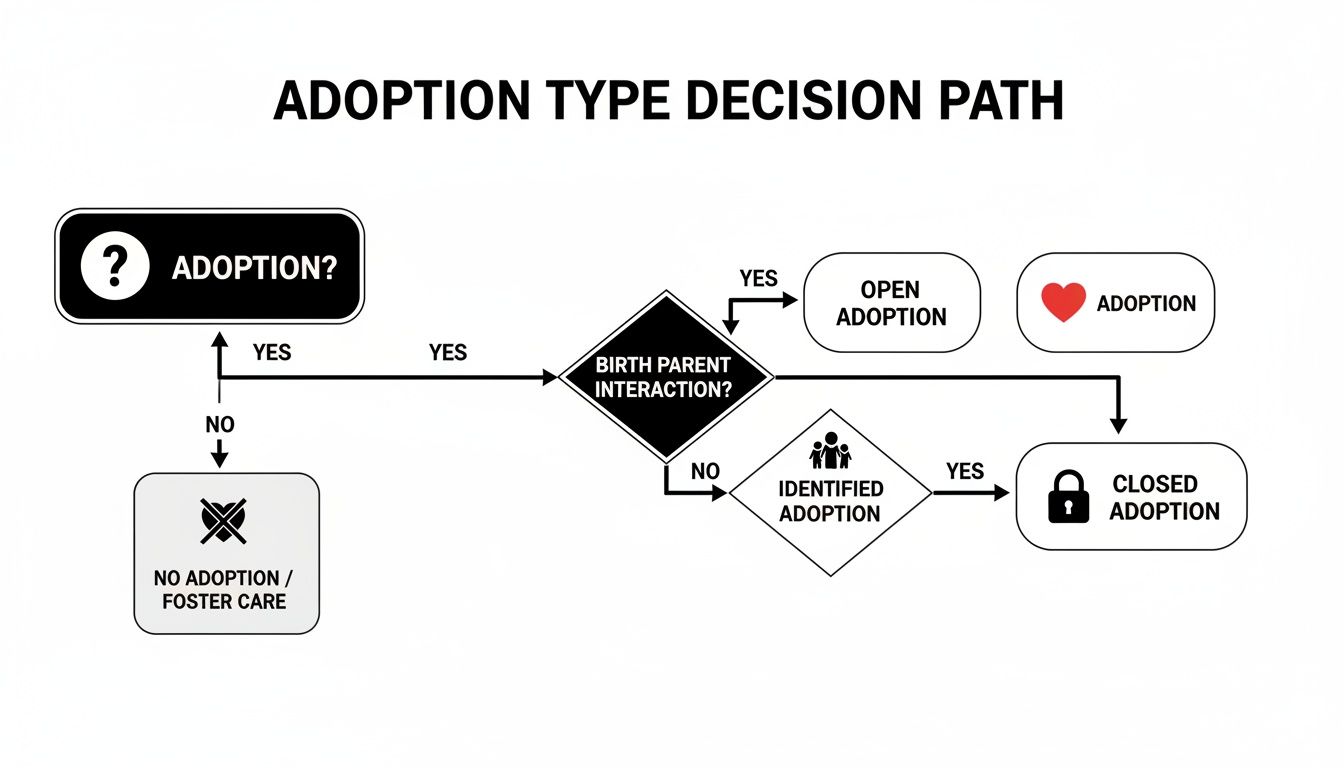
As you read on, you’ll get plain-English explanations of Texas Family Code procedures (especially Chapters 162–166), step-by-step guidance from home study to final decree, real-life scenarios, and gentle advice to help your family move forward with confidence.
When To Choose Open Adoption
- You value ongoing medical updates, counseling history, and milestones.
- You want your child to stay connected to their birth family’s culture and traditions.
- You believe a regular communication plan will serve the child’s best interests.
Many Texas families find that agreed-upon visits, letters, or photo updates help a child feel secure and proud of their heritage.
When To Choose Closed Adoption
- You prefer a clean break after the final hearing, with no future contact.
- You need maximum privacy for everyone involved—birth parents, adoptive parents, and the child.
- You want sealed records that are very rarely opened, even by court order.
Closed adoption can offer closure and simplicity for families who want to focus on the child’s life going forward without ongoing connections.
Explore each phase in the Adoption Process Overview or review our full suite of adoption services.
Next Steps For Texas Families
Follow these steps to move forward with your adoption—open or closed—and make sure you meet all Texas Family Code requirements:
- Complete a Home Study (Chapter 163)
Schedule a licensed social worker or agency to visit your home, interview your family, and document your support network and communication preferences. - Decide on Openness and Draft a Contact Plan (Chapter 162)
Think through visits, letters, photos, and medical history sharing. Write your plan in clear language so everyone knows what to expect. - File Your Adoption Petition (Chapter 165)
Work with an attorney to prepare and file the paperwork with your county clerk. Attach your home study report, contact agreement, and pay the filing fees. - Attend the Final Hearing (Chapter 164)
A judge reviews your petition, confirms consents, checks the home study, and signs the adoption decree—officially making the child yours. - Follow Your Post-Adoption Agreement (Chapter 166)
Carry out visits or exchanges as agreed. If life changes, you can update the plan by petitioning the court or through mediation.
Deciding between open and closed adoption comes down to what serves the child’s long-term well-being. At the Law Office of Bryan Fagan, PLLC, we guide Texas families every step of the way. Schedule a free consultation today to find the path that fits your family.
Understanding Adoption Options
Under Texas Family Code Chapters 162–166, each chapter covers key parts of the adoption journey:
- Chapter 162: How to create enforceable contact agreements and adoption orders.
- Chapter 163: Home study requirements and social worker assessments.
- Chapter 164: Finalization rules—when the court can seal files and grant full parental rights.
- Chapter 165: Petition steps—filing requirements, consents, and notice to birth parents.
- Chapter 166: Effect of the decree on legal ties and post-adoption contact.
Open adoption keeps doors open with agreed letters, calls, photo or video updates, and in-person visits. Closed adoption seals records forever and ends legal ties once the decree is signed.

Key Elements Under Texas Law
- Identifying Details: Decide which names, addresses, and medical backgrounds can be shared.
- Contact Plans: Outline who communicates, how often, and by what methods—letters, calls, or visits.
- Privacy Protections: All adoption records stay sealed unless a judge grants “good cause” to unseal them.
In 2022, Texas finalized over 8,500 private domestic infant adoptions, with a growing number choosing open arrangements. For deeper data, read the Adoption by the Numbers report.
Comparing Legal Terms For Open And Closed Adoption
Texas law offers two clear routes under Chapters 162–166. Once a judge signs your decree, the terms become enforceable:
| Feature | Open Adoption | Closed Adoption |
|---|---|---|
| Record Status | Sealed but may be unsealed by petition | Permanently sealed |
| Contact Terms | Court-approved visits, calls, letters | No post-placement contact |
| Legal Basis | Enforcement under Family Code 162–166 | Final decree ends all claims |
Sample Agreement Elements
A strong contact agreement uses plain English and covers:
- Visit Schedule: Exact dates, locations, and responsible parties.
- Communication Methods: Letters, email, video chats, or phone calls.
- Modification Clause: Steps to update the plan if circumstances change.
Role Of Home Study On Openness
Your home study report (Chapter 163) reflects your family’s comfort level with contact. Social workers tour your home, interview all adults, and document any privacy concerns. Judges refer to this report when drafting your final decree.
In one recent Texas case, a biannual photo update recommendation in the home study became a binding court requirement.
Filing Procedures And Fees
- Draft your petition and contact agreement.
- Attach the home study report and signed consents.
- File with the county clerk and pay $190–$300 in fees.
- Set a final hearing date at least 30 days after filing.
Enforcing Contact Agreements
If agreed visits or updates don’t happen, you can:
- File a Motion to Enforce under Texas Rules of Civil Procedure.
- Seek mediation to resolve minor disputes.
- Request attorney-fee recovery under Family Code 162.015 when enforcing your plan.
“Courts enforce contact agreements when they serve a child’s best interests, balancing stability and connection.”
Unsealing Closed Records
Closed adoption files stay sealed unless an adult adoptee or birth parent petitions under Section 261.405 for medical or identity reasons. If the court denies unsealing, a confidential intermediary can share non-identifying updates instead.
Weighing Benefits And Challenges For Families
Choosing open or closed adoption affects a child’s identity, privacy, and family unity. Here’s what to consider:
| Factor | Open Adoption | Closed Adoption |
|---|---|---|
| Identity Support | High—ongoing heritage links | Low—limited biological access |
| Privacy | Moderate—based on agreed limits | High—strict confidentiality |
| Flexibility | Adaptable with court amendments | Static unless court orders otherwise |
| Family Connection | Broader support network | Focus on core adoptive family |
Emotional Well-Being And Identity
Open adoption gives children a clearer sense of self through photos, letters, and visits. Well-planned boundaries prevent confusion and protect everyone’s role.
Boundary Setting And Communication
Clear, written limits—how often, where, and by whom contact happens—help relationships thrive. Texas law lets you build these rules right into your decree.
Long-Term Family Unity
Open plans can extend your support circle to birth grandparents and siblings. Closed adoptions focus on creating stability within your immediate household.
Practical Advice
- Review medical needs: Will sharing health history prevent future surprises?
- Listen to birth parents: Their comfort level matters for a smooth process.
- Coordinate with your social worker: Align your draft plan with home-study feedback.
A 2019 study found initial post-placement contact in 60.2% of families, dropping to 39.2% over time. In-person visits fell to 6.2% at later stages. Learn more about adoption openness findings on Adoption Support Alliance
Real World Adoption Scenarios

Here are five Texas case studies showing how different families tailor open or closed plans:
Stepparent Adoption (Houston)
They chose monthly photo updates and an annual visit. The clear calendar—and legal enforceability under Chapters 162–166—built trust and routine.
Kinship Adoption (San Antonio)
A grandparent agreed on supervised video chats quarterly, with a plan review at the child’s fifth and tenth birthdays. Shared history and clear rules eased the transition.
Foster Care Adoption (Dallas)
Foster parents used a year of no contact to let their foster child settle in. After 12 months, they started biannual photo and health updates, with a joint review at two years.
Private Domestic Adoption (Austin)
From day one, this couple set up monthly emails, quarterly video chats, and annual visits—adding a modification clause at age ten to adjust as the child grows.
LGBTQ Adoption (Fort Worth)
A same-sex couple shared full medical histories on request and sent photos every two months, with optional annual gatherings. Community groups helped shape an inclusive agreement.
Each plan blends legal clarity with emotional support. Use these examples to guide your own contact agreement—and focus on your child’s best interests.
Adjusting Contact Agreements After Placement

Life changes. Under Texas law, you can update your agreement through court or mediation:
1. Amend Through Court (Texas Family Code §162.015)
- File a petition with the county where your decree was signed.
- Attach your original contact agreement and any affidavits.
- Request a hearing at least 30 days later.
2. Use Mediation
- Talk through needed changes with a neutral mediator.
- Draft an addendum with new terms.
- Get court approval by filing the signed addendum.
3. Timeline And Forms
| Stage | Action Required | Typical Duration |
|---|---|---|
| Prepare Petition | Draft amendment and gather documents | 1–2 weeks |
| Court Review | Judge sets hearing date | 3–4 weeks |
| Updated Decree | Judge signs the amendment at hearing | Hearing day |
For more details, see our guide on Understanding Texas Post-Adoption Contact Agreements Key Considerations for Families.
FAQ
How Do I Switch From Closed To Open Adoption?
File a petition under Texas Family Code §162.015 to modify your decree. Draft new terms—like quarterly photo updates or annual visits—get signatures, attend the hearing, and finalize the order. See Adjusting Contact Agreements for step-by-step instructions.
Are Contact Agreements Enforceable?
Yes. These plans are in your adoption decree under Chapters 162–166 and work like contracts. If someone doesn’t follow the plan, you can mediate or file a motion to enforce. Courts approve over 60% of these petitions when both sides cooperate.
What Identifying Information Can I Share?
In open adoption, you can exchange names, birthdays, and medical history within agreed limits. Closed adoptions keep this information sealed unless the court orders unsealing—often for urgent medical needs. A confidential intermediary can send non-identifying updates without revealing personal details.
What Does the Home Study Cover?
Social workers assess your home, interview adults, and note preferences for visits, updates, and privacy. They report on stability, community support, and any special needs. Different paths—stepparent, kinship, foster, private domestic, LGBTQIA+—bring specific questions. Knowing what to expect helps you prepare for a smooth hearing.
Still have questions? Our team at the Law Office of Bryan Fagan, PLLC is here to help. Schedule your free consultation for personalized advice and support.
Ready to discuss your adoption options? Contact Law Office of Bryan Fagan, PLLC to get started.
