
You may be reading this because your niece or nephew is already sleeping in the next room. Maybe you've been handling school pickup, doctor visits, bedtime routines, and all the small daily moments that make a family. What started as “helping out for a while” may now feel like something much bigger.
That shift brings a mix of love and worry. You want to protect this child. You also want to understand what Texas law requires, what the court will look for, and whether adoption is the right path or whether another option, like guardianship, makes more sense for your family.
In Texas, kinship adoption can give legal stability to a child who is already well-established in your home and heart. If you're considering adopting a niece or nephew, the process is about more than forms and hearings. It's about creating a secure future while handling difficult family relationships with care.
From Loving Relative to Legal Parent
Aunt Maria never planned to become a full-time parent again. Her sister was struggling, and Maria stepped in because there wasn't another safe option. At first, she signed school papers when she could, kept track of medications, and tried to keep life calm. Over time, one question kept coming back: what happens if there's an emergency and I don't have the legal right to act as this child's parent?
That's where kinship adoption often enters the conversation. It's the legal process that allows a relative, such as an aunt or uncle, to become the child's legal parent. For many families, it matches what has already become true in daily life.

Why families choose this path
Kinship adoption can provide:
- Permanent legal authority so you can make decisions about school, healthcare, and daily care
- Emotional security for a child who needs consistency
- Family continuity because the child remains connected to relatives, traditions, and familiar relationships
This isn't a rare path. The role of relatives in adoption is significant. In Fiscal Year 2020, approximately 35% of all adoptions from the U.S. foster care system were completed by family members, showing how important kinship adoption is in keeping children connected to family, according to the Adoption Council's discussion of kinship adoption.
Practical rule: If you're already raising your niece or nephew, adoption may be the step that brings your legal rights in line with your daily responsibilities.
Why this feels harder inside a family
Adopting a niece or nephew often carries a special kind of grief. You may love the child's parent. You may feel torn between protecting the child and trying not to hurt your sibling, in-law, or another close relative. That tension is real, and it's one reason these cases deserve both legal care and emotional patience.
The law focuses on the best interests of the child. Texas courts do too. That doesn't mean ignoring family bonds. It means creating a safe, stable structure for the child while treating everyone involved with dignity.
Families in this position often look at related topics too, including how to adopt a child in Texas, how CPS and reunification affect permanency, and how open or closed adoption choices may shape family relationships after finalization. Those questions matter because kinship adoption doesn't happen in a vacuum. It happens inside a family system that already has history, pain, and love.
Eligibility for Kinship Adoption in Texas
Texas law gives relatives a meaningful advantage when they seek adoption. Under Chapter 162 of the Texas Family Code, a relative adoption includes situations where the adoptive parent is related to the child by blood, marriage, or prior adoption within the required degree of kinship. For many aunts and uncles, that means the law recognizes the family relationship from the start.
One practical benefit is speed. Under Texas law, a relative adoption can often move more quickly because the court may waive the usual six-month post-placement waiting period that applies in non-relative cases, as explained in this guide to adopting a family member in Texas.
Who can qualify
For most relatives considering adoption in Texas, the starting points are straightforward:
- You must be a qualifying relative. An aunt or uncle usually fits within the kinship rules.
- You must show stability. That includes a safe home and the ability to care for the child.
- You must pass background review. Courts take safety seriously, even when the child is already living with family.
- If you're married, your spouse may need to join the adoption case. That issue should be reviewed early with counsel.
If you want a broader overview of the basic standards Texas uses, Who Can Adopt in Texas? Eligibility Requirements gives a factual summary of the basic requirements to become an adoptive parent in Texas.
What “financial stability” really means
Many relatives get nervous here. They assume they need a large income, a perfect house, or an ideal family setup. Usually, that's not what the court is asking.
The court wants to know whether you can provide a stable, safe home. That often means showing regular income, manageable living conditions, and a plan for the child's schooling, medical care, and everyday needs. You do not need to be wealthy to be a loving and capable adoptive parent.
The question is usually not “Are you rich enough?” It's “Can you provide a dependable home for this child?”
How kinship adoption differs from a non-relative case
A relative adoption and a non-relative adoption share core legal steps, but kinship cases often feel more practical because the child and caregiver usually already know each other well.
| Issue | Relative adoption | Non-relative adoption |
|---|---|---|
| Existing relationship | Child usually already knows the caregiver | Relationship often begins through placement |
| Waiting period | Court may waive the usual post-placement wait | Waiting period more commonly applies |
| Family history | Court often reviews long-standing caregiving | Court focuses more heavily on new placement transition |
For many readers, this complete guide to kinship adoption in Texas requirements and process helps place those differences in a bigger legal context.
Where confusion usually starts
Most relatives aren't confused about whether they love the child. They're confused about whether they're “allowed” to adopt. If you've already become the daily caregiver, don't assume your family relationship alone creates legal rights. It doesn't. Adoption is what can turn your caregiving role into full legal parenthood.
That legal difference matters in medical emergencies, school decisions, relocation questions, and long-term planning. It also matters for the child's sense of permanence.
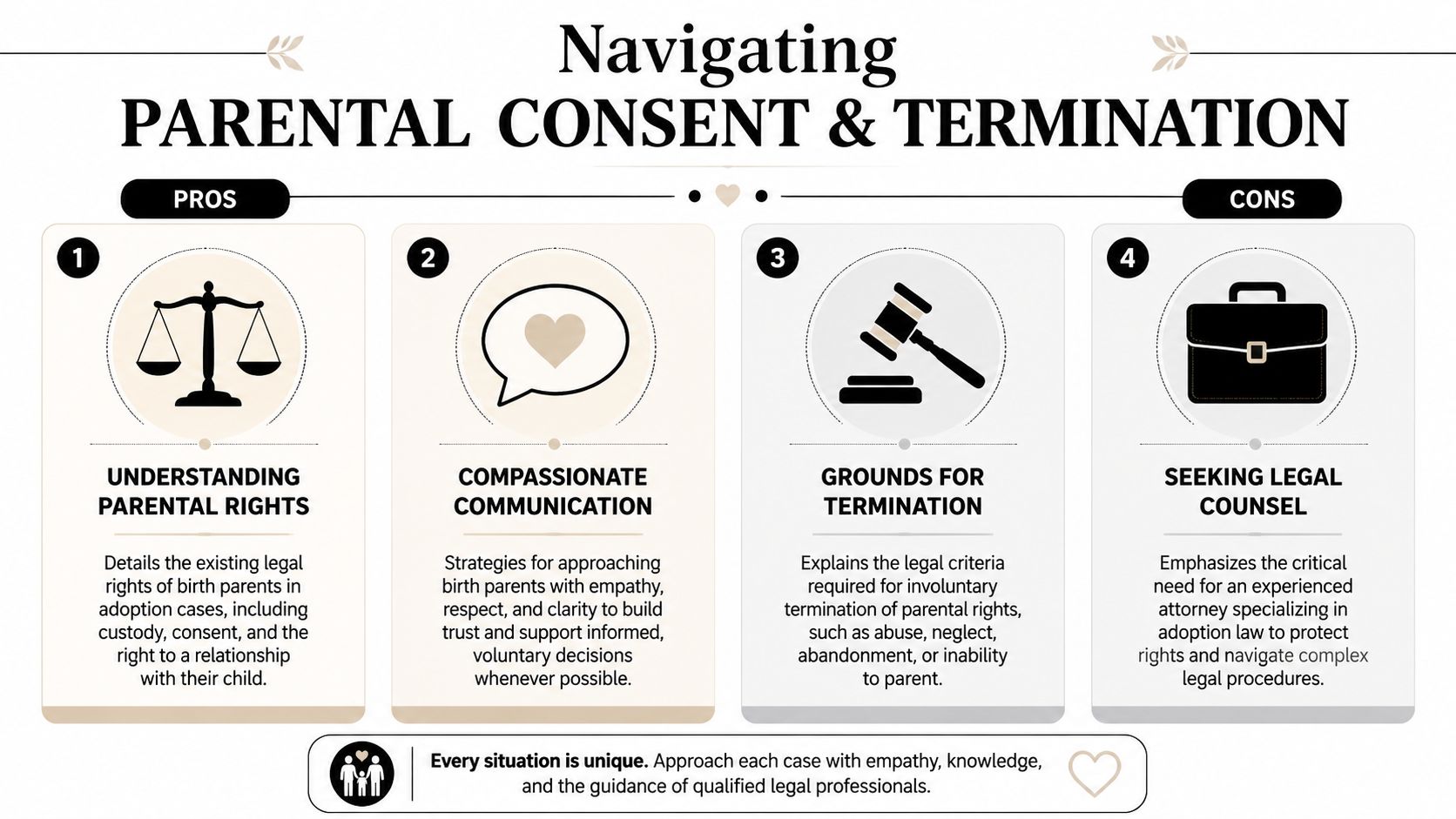
Navigating Parental Consent and Termination
The hardest part of adopting a niece or nephew is often not the home study or the hearing. It's dealing with the rights of the birth parents.
That can feel personal. If the child's parent is your sibling, you may be carrying years of shared history into a legal process that feels painfully final. Even so, Texas courts can't finalize an adoption until parental rights are handled correctly.
The easier path is voluntary consent
Sometimes a birth parent understands that the child needs stability and agrees that adoption is the right step. In that situation, the parent can sign written consent that meets Texas legal requirements.
When this happens, the process is usually less combative and less emotionally draining. It can also preserve more space for respectful family communication later. That matters in kinship cases, where the child may continue to know the birth parent or extended family after the adoption.
When consent isn't possible
Some cases aren't that simple. A parent may be missing, refusing to cooperate, struggling with addiction, incarcerated, or unable to safely parent. In those situations, the adoptive relative may need to ask the court to terminate parental rights.
Texas law requires careful handling here. Birth parents must consent in writing unless there is a legal basis to proceed without that consent. If a parent is unreachable or unwilling, the adoptive relative must petition for termination of parental rights under Texas Family Code §161.001, based on grounds such as abandonment or failure to support the child for at least six months, as described in this discussion of relative adoption and parental rights issues.
A common family scenario
A child has been living with her aunt for a long time. Her father hasn't visited, hasn't provided support, and can't be located. Her mother loves her, but her instability has made safe parenting impossible. The aunt wants to adopt so the child can stay in the same school, continue counseling, and avoid another period of uncertainty.
That case may involve two very different legal tracks at once. One parent may consent. The other parent's rights may need to be terminated through court action.
Some parents are absent in practice long before they are absent in law. Adoption requires those two realities to be brought into alignment.
What the court will care about
Texas courts won't terminate parental rights just because adoption seems convenient. The judge will want lawful grounds and evidence. The court will also look closely at the child's best interests.
That usually means attention to issues like:
- Contact history between the parent and child
- Support history and whether the parent has taken responsibility
- Safety concerns such as neglect, abandonment, or other serious parenting failures
- Current stability in the relative's home
For readers dealing with that issue, termination of parental rights in Texas offers a closer look at the legal standards involved.
Compassion still matters here
Even when termination is necessary, families often need help approaching conversations with care. Children may ask difficult questions. Relatives may disagree. A parent may swing between agreement and resistance.
A steady legal process can help contain that conflict. One option families sometimes consider for guidance through paperwork, hearings, and Chapter 162 through Chapter 166 adoption issues is the Law Office of Bryan Fagan, PLLC, which handles Texas adoption and guardianship matters.
The legal standard remains the same throughout. The child needs a safe, lasting home, and the court needs a legally sound path to create it.
The Texas Adoption Process Explained
Once parental rights are resolved, the process becomes more concrete. Families often feel relief here because the path is easier to see. The legal work is still important, but it's no longer centered on uncertainty about consent.
A home study is one of the first major steps. In nearly all Texas adoptions, including relative adoptions, a home study is required and involves visits to review the home's safety and stability under Texas Family Code §162.017, as outlined in this California court overview of relative adoption procedures used here for the cited home study point.
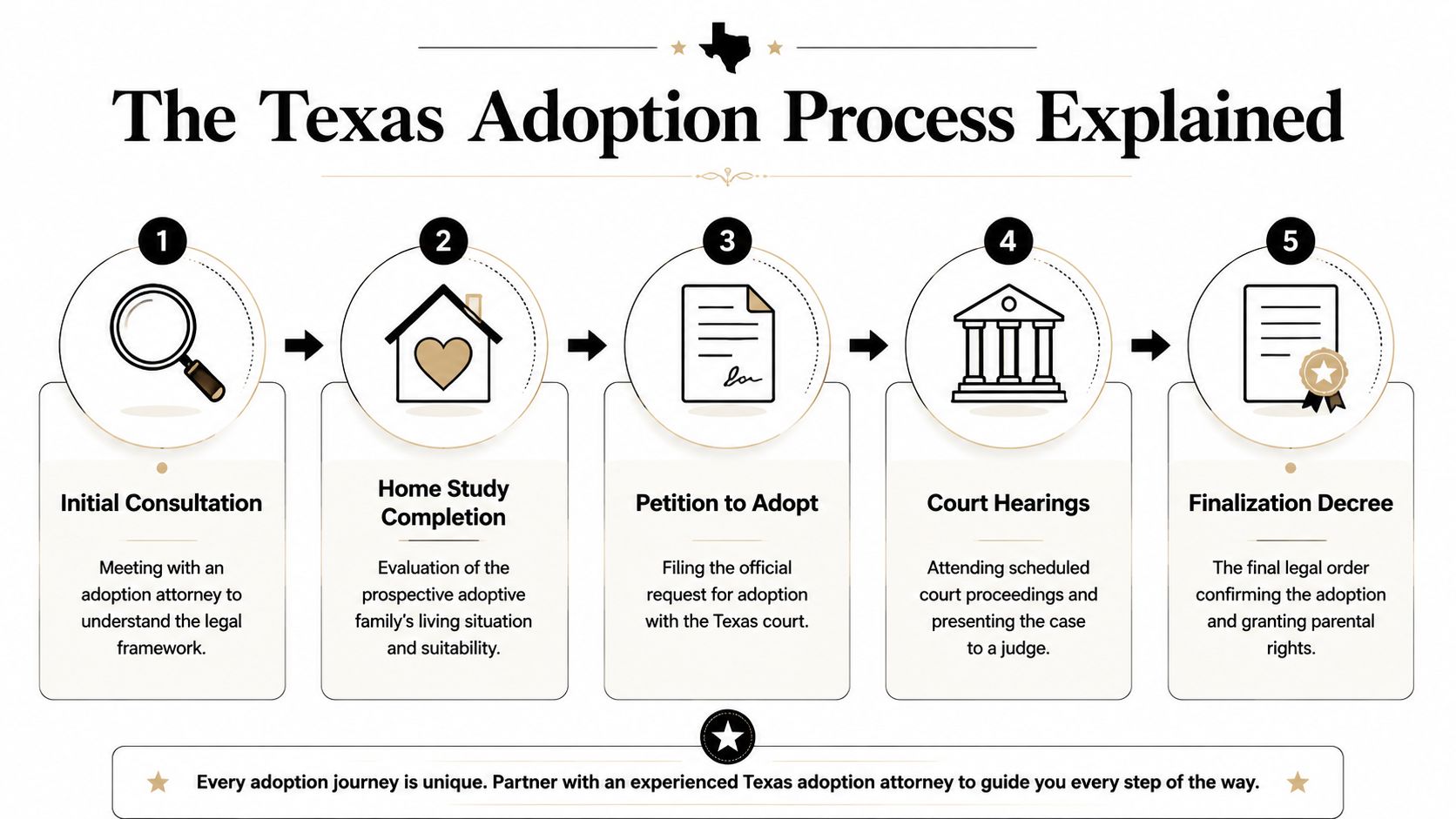
Step one through step three
Meet with an adoption attorney
This early meeting helps identify the legal path, possible challenges, and whether adoption, guardianship, or another option fits the family best.Complete the home study
A social worker usually visits the home, asks questions about your household, and reviews whether the child's environment is safe and stable. For relatives, this can feel less like an investigation and more like confirmation of what the child is already experiencing.Finish background checks and gather records
Courts want clear information about the adults in the household and the child's circumstances. Missing documents can slow a case, so organization matters.
To make the process less abstract, it often helps to watch an overview before diving into forms and hearings:
What the home study is really about
The phrase “home study” can sound intimidating. Many relatives worry someone will judge their furniture, compare them to an unrealistic standard, or expect perfection.
That's not the point. The home study is about whether the home is safe and whether the adults are prepared to care for the child. A lived-in, ordinary family home can absolutely meet that standard.
Keep in mind: A home study is not a test of perfection. It is a review of safety, stability, and readiness.
Filing and hearing
After the required groundwork is complete, the adoption petition is filed with the court. The court will review the file, confirm that parental rights have been properly handled, and set the matter for hearing when the case is ready.
At the final hearing, the judge looks at whether the adoption meets legal requirements and serves the child's best interests. For many families, this is one of the most emotional moments in the entire process. It may be held in a courtroom, but it often feels more like a formal recognition of a family that already exists.
What finalization changes
When the court signs the adoption order, the adoptive aunt or uncle becomes the child's legal parent. That usually means full authority to make decisions about:
- Education and school enrollment
- Medical care and treatment decisions
- Residence and daily parenting choices
- Long-term planning for the child's future
Families exploring related issues often compare this process with Texas stepparent adoption requirements, CPS adoption and reunification options, or open versus closed adoptions. The details differ, but the core principle stays the same. Texas courts focus on permanence, legality, and the child's welfare.
Considering Alternatives Guardianship and Conservatorship
Adoption isn't always the right answer, even when your heart says you'd do anything for this child. Some families want to preserve the legal parent-child tie while still giving a relative the authority to care for the child. In those cases, guardianship or conservatorship may deserve serious attention.
How these options differ
Here's a simple comparison:
| Option | Parental rights | Permanence | Decision-making authority |
|---|---|---|---|
| Adoption | Birth parents' rights are ended or relinquished | Permanent | Full parental rights transfer to adoptive parent |
| Guardianship | Birth parents' rights usually remain in place | Can be temporary or ongoing | Guardian receives limited or court-defined authority |
| Conservatorship | Birth parents may retain some rights depending on the order | Can last long term | Conservator may receive broad caregiving authority |
When another path may fit better
A family might choose an alternative if:
- The parents are expected to recover stability and reunification remains realistic
- The child needs immediate authority in place for school or medical decisions, but adoption would be too disruptive right now
- Relatives want legal protection without permanently ending the child's legal bond with a parent
For some Texas families, what is kinship guardianship is a helpful starting point when comparing those options.
A gentle way to think about it
Adoption creates permanence. Guardianship and conservatorship create authority. Sometimes a child needs both, and sometimes the family is only ready for one.
That's why these decisions shouldn't be made from pressure alone. They should be made by looking carefully at the child's safety, the parents' circumstances, and the long-term emotional reality of your family.
Your Kinship Adoption Questions Answered
Will my niece or nephew have to change their last name
Not always. A name change can be part of an adoption, but families can discuss whether that feels right for the child. In kinship cases, some relatives want a shared last name. Others want to preserve part of the child's identity and connection to their birth family.
Is adoption the same as temporary custody
No. Adoption is permanent and creates a legal parent-child relationship. Temporary custody, guardianship, or conservatorship may give you authority to care for the child without making you the legal parent in the full sense.
Does a teenager get a voice in this process
Yes. Older children often have strong feelings about adoption, especially when they've lived through family instability. Even when the law focuses on adult filings and court orders, wise families make space for the child's voice and emotional readiness.
What if we're also worried about benefits or support
That's an important question to ask before filing. In some situations, changing the child's legal status can affect benefits tied to foster care or other programs. Families should review that issue carefully before choosing adoption over another arrangement.
What if my case seems emotionally messy
That's common in kinship adoption. You may be helping a child, grieving for a parent, and trying to preserve family peace at the same time. A messy emotional situation doesn't mean adoption is impossible. It means the case needs careful legal and personal handling.
If you're considering adopting a niece or nephew in Texas, personal guidance can make the process feel much less overwhelming.
If your family is weighing adoption, guardianship, or another kinship option, a conversation with Law Office of Bryan Fagan, PLLC can help you understand the next legal step in plain English. The firm works with Texas families on adoption and guardianship matters, including relative and kinship cases. You can schedule a free consultation to talk through your situation, your concerns, and what path may best protect the child you love.
