
Deciding to adopt a newborn in Texas is one of the most heartfelt decisions a person can make. It’s a journey filled with incredible excitement and deep love, but it’s natural to also feel a sense of uncertainty. At its heart, adoption is about building a permanent, loving home for a child, guided by a legal process designed to protect everyone involved—especially the child.
Your Texas Newborn Adoption Journey Begins Here
If you’re reading this, you’ve already taken the first brave step. The dream of growing your family through adoption is powerful, and it’s completely normal to feel a whirlwind of emotions. One moment you’re picturing your new life with joy, and the next you’re feeling a little overwhelmed by the legal system. That's why we created this guide. At The Law Office of Bryan Fagan, PLLC, we want to be your roadmap, here to translate the complexities of the Texas Family Code into clear, simple actions.

We'll walk you through the different paths you can take, whether that’s working with a licensed agency or pursuing a private adoption with an attorney. Our goal is to replace confusion with confidence, so you can focus on what truly matters: preparing your home and heart. As you start this journey, you’ll find yourself thinking about all the little details—even things like choosing the best personalized baby blankets to welcome your little one home.
What to Expect on This Journey
Consider this guide the start of a supportive conversation. We’re going to cover every critical milestone on the path to bringing your child home, always focusing on the best interests of the child and your future family.
Here's what we'll break down together:
- The different types of newborn adoption available right here in Texas.
- The legal requirements and paperwork, explained in plain English.
- The home study process—and what it’s really like.
- The sensitive legal and emotional sides of birth parent consent.
This journey is about so much more than forms and court dates; it’s about building a family with love, intention, and respect. We're here to help you navigate each step with clarity, making sure you feel empowered to move forward.
Choosing Your Path to Infant Adoption in Texas
When you decide to adopt a newborn in Texas, the first big question you'll face is how. Understanding your options is a critical first step. The path you choose will define your entire journey, from the people you meet to the final moment in court. It’s about finding a process that feels right for your family and aligns with your hopes for the future.
In Texas, there are two main roads you can take to adopt an infant. Each one has its own unique process, emotional landscape, and legal steps. Making an informed choice from the start can make all the difference.

Private Domestic Adoption: The Most Common Route
The vast majority of newborn adoptions in Texas happen through private domestic adoption. This is when a birth mother or birth parents voluntarily make an adoption plan for their child. You have two main ways to approach this: working with a licensed agency or hiring an adoption attorney.
Agency Adoption: This is a more structured, full-service option. Agencies handle nearly everything for both the birth parents and the hopeful adoptive family. They provide counseling, help you create a family profile, match you with an expectant mother, and manage the legal paperwork. They act as the central hub for the entire process.
Attorney-Assisted Adoption (Independent Adoption): This path offers more flexibility and is often more direct. An adoption attorney facilitates the legal connection between you and the birth parents. For example, if a family friend knows an expectant mother considering adoption, an attorney can step in to ensure every legal detail is handled correctly and that everyone's rights are protected under the Texas Family Code.
With an attorney-assisted adoption, you might play a more active role in finding a match, but it also allows for a more personalized experience.
At the heart of every private adoption is the "match"—the deeply personal moment when an expectant mother chooses the family she feels is right for her child. It's a relationship that must be built on trust, respect, and a shared love for the baby.
Understanding the Nuances of Each Private Path
So, agency or attorney? It really comes down to your comfort level and how involved you want to be. Agencies have established networks and offer comprehensive support services, which can feel incredibly reassuring. They guide you from the home study all the way through post-placement visits.
On the other hand, an attorney-assisted adoption can sometimes move faster, especially if you’ve already been connected with a birth mother. It also gives you a direct line to legal expertise, making sure every step—like the critical 48-hour waiting period a birth mother must observe before signing her consent—is handled perfectly. That kind of legal peace of mind is priceless.
Adopting a Newborn from Foster Care
While less common for newborns, adopting an infant directly from the Texas foster care system is another possible path. This usually happens when a baby must be removed from their family’s care right at the hospital due to serious safety concerns, and the state has determined that reunification is not a safe option.
The primary goal of the Texas Department of Family and Protective Services (DFPS) is always to reunite a child with their biological family if possible. But when that's not in the child's best interest, the state seeks a loving, permanent adoptive home. This route often involves lower costs and provides a home to a child in immediate need. The first step is to become a licensed foster-to-adopt parent.
You can dive deeper into this specific journey in our guide on newborn foster care adoption.
No matter which road you take—private agency, attorney, or foster care—they all lead to the same beautiful destination: building your family.
Meeting the Legal Requirements for Texas Adoption
Diving into the legal side of adoption in Texas can feel overwhelming, like learning a new language. But every rule, form, and step outlined in the Texas Family Code exists for one critical reason: to protect the child and build a strong, secure family.
Instead of seeing these requirements as hurdles, think of them as the foundation you're building your family's future on. With the right guidance, they become clear, manageable milestones on your journey to becoming a parent.
At its core, Texas law simply wants to ensure that any adult choosing to adopt is ready for the incredible responsibility and joy of raising a child. The state is welcoming to all kinds of families—you don’t have to be married or wealthy to qualify.

Who Is Eligible to Adopt in Texas?
The Texas Family Code is quite flexible about who can adopt. The focus is on your ability to provide a stable, loving home, not on your marital status or income.
Generally, to adopt a child in Texas, you must:
- Be at least 21 years old.
- Be financially stable and able to provide for a child's needs.
- Successfully complete an adoption home study.
- Pass thorough criminal background and child abuse history checks.
These criteria are just the starting line. The real journey begins with the home study—a process that sounds intimidating but is actually meant to be supportive and educational. For a complete look at what's involved, you can review our detailed guide on the requirements for adoption in Texas.
The Home Study: A Partnership in Preparation
The term "home study" makes many people nervous, picturing a white-glove inspection of their house. The reality is much different. It’s a series of supportive conversations and a collaborative process with a licensed social worker to help prepare you for parenthood. It’s less about having a perfect home and more about having a safe, loving, and prepared one.
The process has a few key parts:
- Documentation: You’ll gather important papers like birth certificates, marriage licenses, financial statements, and personal references.
- Interviews: The social worker will talk with you (and your partner, if you have one) about your life, your parenting philosophies, and what led you to adoption.
- Home Safety Check: This is a basic review to ensure your home is safe for a child. Think working smoke detectors, safe storage for cleaning supplies, and general cleanliness.
- Background Checks: This is a non-negotiable step. It involves state and federal criminal history checks for every adult living in the home.
The home study is not a test to pass or fail. It is a partnership designed to educate and equip you for the journey ahead, ensuring you have the resources and support system needed to thrive as a family.
Understanding the Paperwork and Legal Filings
Once your home study is complete and you've been matched with a birth mother, the legal paperwork begins. This is where having an experienced adoption attorney becomes invaluable. The main legal document you'll encounter is the Petition to Terminate the Parent-Child Relationship and to Adopt.
This petition officially asks the court to do two things at once:
- Legally end the parental rights of the birth parents.
- Grant you full, permanent parental rights to the child.
Filing this petition is a huge step forward. It sets the court process in motion that will eventually end with the finalization of your adoption. Your attorney will handle filing this and all other legal documents, making sure every detail is correct and every deadline is met. This careful legal work gives you the peace of mind to focus on what truly matters—preparing to bring your newborn home.
The Hospital Experience and Birth Parent Consent
The time at the hospital is one of the most emotionally charged and delicate moments in the entire journey of adopting a newborn in Texas. It's a time overflowing with love, courage, and a complex mix of emotions for everyone involved—the hopeful adoptive family, the brave birth parents, and the precious new baby.
Our approach is always guided by compassion, deep respect for the birth mother's choices, and a firm understanding of Texas law. The hospital isn't just where a baby is born; it's where two families' paths meet, all centered on what is best for one child.
The 48-Hour Waiting Period Explained
Texas law is very clear and protective when it comes to a birth mother’s rights. The Texas Family Code (Chapter 162) states that a birth mother cannot legally sign any documents to relinquish her parental rights until at least 48 hours have passed after the child's birth.
This isn't just a technicality; it's a critical safeguard. This mandatory waiting period ensures her decision is made with a clear mind, free from the immediate physical and emotional intensity of childbirth and without any external pressure. It gives her a moment to breathe, reflect, and confirm her choice with absolute certainty.
This 48-hour window is a cornerstone of ethical adoption in Texas. It honors the gravity of the birth mother's decision and ensures her consent is fully informed, voluntary, and legally sound, providing a secure foundation for the child's future.
The Power of a Hospital Plan
To help navigate this sensitive time, many birth mothers work with an advocate or adoption professional to create a hospital plan. Think of this plan as a roadmap that outlines her wishes for the hospital stay, empowering her to control the experience on her own terms.
A hospital plan might lay out details like:
- Who is in the delivery room: She decides exactly who she wants there for support during labor and birth.
- Time with the baby: She can specify how much time she wants to spend with the baby, both alone and with the adoptive parents present.
- Contact with adoptive parents: The plan clarifies when and how she'd prefer to interact with the adoptive family at the hospital.
- Naming the baby: It can also outline her wishes for the name on the baby's original birth certificate.
For example, a birth mother might need a quiet, private experience. Her plan could state that she wants the first 24 hours alone with her baby and asks the adoptive parents to visit only during specific times on the second day. This ensures her needs are respected, creating a peaceful and dignified environment for everyone. As the due date gets closer, preparing for this stay is key, including knowing what to pack in your hospital bag for both comfort and practicality.
Understanding Irrevocable Consent in Texas
Once the 48-hour period has passed and the birth mother signs the affidavit of relinquishment of parental rights, her decision in Texas is legally binding and irrevocable. This finality is a critical aspect of Texas adoption law.
What does this mean? Once the document is properly signed and witnessed, she cannot change her mind. The only exceptions are in extremely rare cases involving proven fraud, duress, or coercion. For a deeper dive into the specific paperwork, you can learn more about understanding and filing Texas consent to adoption forms in our detailed article.
This finality provides essential stability and security for the child and the adoptive family. It allows the new family to bond and move forward with confidence, knowing the legal foundation of their family is secure. At the same time, it honors the birth mother’s brave, deliberate, and loving choice for her child's future. Our role is to ensure this entire process unfolds with both legal precision and heartfelt compassion.
Finalizing Your Adoption: Costs, Timelines, and Next Steps
As you get closer to bringing your child home, the practical questions about money and timing start to feel more real. This isn't just about budgeting; it's about planning your family's future with your eyes wide open. While every adoption journey is unique, understanding the typical costs and timelines for adopting a newborn in Texas can help you feel prepared and in control.
Breaking Down the Financial Investment
A private domestic adoption is a significant financial commitment, but it’s helpful to see it as an investment in building your family. The costs cover all the professional, legal, and support services needed to ensure the adoption is handled ethically and securely for everyone involved.
For most families, the expenses fall into a few key categories:
- Agency or Attorney Fees: This covers the professionals handling the matching process, counseling, case management, and legal work.
- Home Study Expenses: You'll pay for a licensed social worker to conduct your home study and write the comprehensive report required by the state.
- Birth Mother Support: Texas law allows adoptive families to cover reasonable, court-approved living and medical expenses for the birth mother during her pregnancy.
- Legal and Court Fees: This covers filing all necessary court documents, the legal process of terminating parental rights, and the finalization hearing.
- Post-Placement Supervision: After the baby comes home, there are fees for the required follow-up visits and reports before the adoption is legally final.
The total cost for a domestic newborn adoption in Texas typically ranges from $25,000 to $50,000. The national average is similar, as documented in resources like the National Council For Adoption. It’s also worth knowing that adopting from foster care often comes with financial assistance, making it a more accessible path for many.
Navigating Timelines and Post-Placement Supervision
Once you bring your newborn home, you enter a period called post-placement supervision. Don't let the name intimidate you. This isn't an inspection—it's a series of supportive check-ins required by Texas law before the finalization hearing.
A social worker will visit your home a few times over several months to see how everyone is adjusting. These visits are a great chance to ask questions, get advice, and simply document the beautiful bonding happening in your new family. The social worker's reports are then submitted to the court, paving the way for the final step.
The timeline right after birth is especially critical, particularly regarding the birth parent's consent.
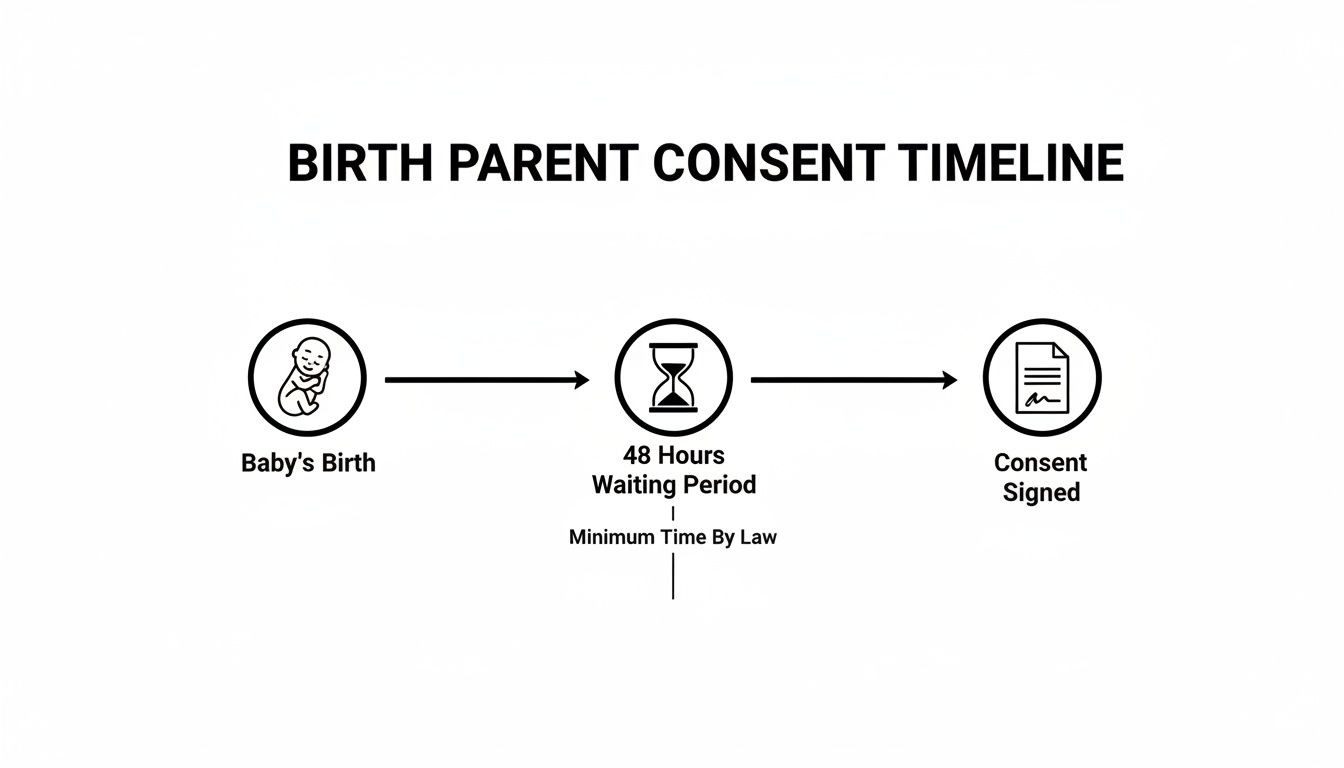
This graphic shows the legally protected 48-hour waiting period, which ensures a birth mother has time to make her decision with deliberation and certainty.
For a clearer picture of what to expect, here's a breakdown of the typical timelines you might encounter on your journey.
Estimated Newborn Adoption Timelines and Costs in Texas
This table provides a realistic breakdown of the typical timeframes and financial investments for a private domestic infant adoption in Texas. Note that these are averages and individual experiences may vary.
| Adoption Stage | Typical Timeline | Estimated Cost Range |
|---|---|---|
| Home Study & Application | 2-4 months | $2,000 – $4,000 |
| Waiting to Match | 6-24 months | Varies (agency/marketing fees) |
| Legal Fees & Birth Mother Expenses | Throughout match & placement | $15,000 – $35,000 |
| Post-Placement & Finalization | 6 months post-placement | $1,000 – $3,000 |
| Total Estimated | 12-30 months | $25,000 – $50,000+ |
Remember, these figures are estimates. Your journey might be shorter or longer, and costs can shift based on your specific circumstances.
The Finalization Hearing: A Day of Celebration
After the post-placement period is over, your attorney will schedule the finalization hearing. This is the moment you’ve been waiting for—the beautiful, emotional day in a courtroom where a judge makes your child a legal and permanent member of your family.
The finalization hearing is more than a legal proceeding; it’s a celebration of family. It’s the moment the legal process catches up to the love that has been there all along, and a judge joyfully declares what you already know in your heart: you are a family, forever.
Many families bring relatives and friends to share in the joy. The judge will review the final paperwork, ask you a few simple questions, and then sign the final decree of adoption. You’ll leave the courthouse with a new, official birth certificate listing you as the parents—the legal proof of the family you’ve built with love.
Navigating these final steps is a deeply rewarding experience. Our team is here to provide the compassionate legal guidance you need through every stage of the process.
Getting Ready for Your Consultation with an Adoption Attorney
You’ve walked through the entire process of adopting a newborn in Texas—from choosing your path to the celebration of bringing your child home forever. It's a journey that takes courage, patience, and a whole lot of love. Now, taking that next step to get personalized legal advice is the most empowering move you can make.
Trying to decipher the Texas Family Code on your own can feel overwhelming, but you don’t have to do it alone. An experienced adoption attorney is your guide, your advocate, and your peace of mind, ensuring every legal detail is handled with precision. They are there to protect your rights, explain the process in simple terms, and free you up to focus on what really matters: preparing to welcome your baby.
What to Talk About with Your Attorney
To get the most out of your first meeting, spend some time thinking about the questions that are on your mind. This is your chance to get clarity and start building a relationship with a trusted advisor who will be in your corner.
You might want to bring up topics like:
- Your family's unique story and what you're hoping for in an adoption.
- Any worries you have about the timeline, potential costs, or the home study.
- Questions about open adoption and what communication with the birth parents could look like.
Your first consultation is so much more than a legal meeting. It’s the beginning of a partnership. Think of it as a dedicated space to share your hopes and fears, get honest answers, and feel truly heard as you start this incredible journey.
Building your family through adoption is one of the most profound things you will ever do. Here at The Law Office of Bryan Fagan, PLLC, our compassionate attorneys are ready to provide the expert legal guidance you deserve. We invite you to schedule a free, no-pressure consultation to talk about your dreams of adopting a newborn in Texas. Let us help you take the next step with confidence.
Common Questions About Newborn Adoption in Texas
The path to adopting a newborn is an incredible one, filled with hope and a lot of questions. As you get closer to making this dream a reality, it’s completely normal to want clear answers. We hear these questions all the time from hopeful parents just like you, and we’re here to offer direct, compassionate answers.
How Long Does It Really Take to Adopt a Newborn in Texas?
There’s no magic number, but knowing the typical timeline can help you prepare for the road ahead. For a domestic infant adoption in Texas, most families can expect to wait anywhere from 12 to 24 months from the start of the process to the day they bring their baby home.
Of course, some families match much faster, while for others, it might take longer. Your patience during this time is a true testament to your commitment. To get a better feel for what impacts these timelines, you can discover more insights about Texas adoption wait times.
A few key things can influence how long you wait:
- Your home study: Getting this done efficiently is your ticket into the matching pool.
- Your adoption profile: A genuine, heartfelt profile can make a powerful connection with an expectant mother.
- Your openness: Being flexible about a baby’s background or potential health needs can open up more opportunities for a match.
What Is an Open Adoption and Is It Common?
Open adoption, where there's some level of ongoing communication with the birth family, has become the standard in modern infant adoption. It’s a beautiful way to honor your child’s full story and the courageous choice their birth parents made for them.
What this relationship looks like is different for every family. It might be sharing photos and updates through your agency, sending a letter once a year, or even planning occasional visits. At its core, it's a relationship built on mutual respect and a shared love for the child. Our experience shows that these connections often give children a stronger sense of identity as they grow up.
Can a Birth Mother Change Her Mind After Placement?
This is one of the biggest and most understandable fears for adoptive parents. Texas law is specifically designed to create stability for the child and security for your new family. Once a birth mother signs the legal documents to consent to the adoption—which can only happen at least 48 hours after she gives birth—her decision is legally irrevocable.
That means it’s final. It cannot be reversed, except in extremely rare cases involving proven fraud or duress. This is why having an experienced legal team is non-negotiable. We ensure the process is handled with the utmost ethical care, protecting everyone involved and giving your family the solid legal foundation it deserves.
The path to adopting a newborn in Texas is a profound journey, and you don’t have to walk it alone. For personalized guidance that honors your family's unique story, the compassionate attorneys at The Law Office of Bryan Fagan, PLLC are here to help. Schedule your free consultation today to take the next step with confidence and clarity. https://texasfamilyadoption.com
