
Deciding to grow your family by adopting a newborn is one of the most heart-filled choices you’ll ever make. It’s a journey that starts with a dream and quickly turns into a path filled with hope, excitement, and—let's be honest—a lot of questions. For Texas families, that dream can become a reality through several clear legal routes, each designed with one goal in mind: bringing loving parents and children together for a lifetime.
At The Law Office of Bryan Fagan, PLLC, we believe that knowing which path to take is your first step toward a successful adoption. Whether you are a hopeful adoptive parent considering a private adoption, a birth parent exploring your options, or a relative stepping up for a child, understanding the Texas adoption landscape is key to a smooth and confident journey.
The Paths to Newborn Adoption in Texas
Choosing to grow your family through adoption isn't just a legal process; it's a deeply personal and emotional commitment. We want to cut through the confusion and provide clear, plain-English answers about how to adopt a newborn in Texas. Think of this as your compassionate roadmap.
We'll walk you through the main avenues for newborn adoption, breaking down the real-world differences so you can find the right fit for your family’s unique situation.
Private vs. Agency Adoption: What's the Difference?
Most newborn adoptions in Texas fall into one of two categories: private or agency.
- Private Adoption: This path allows for a direct, personal connection. You'll work closely with an adoption attorney who helps connect you with an expectant mother considering an adoption plan. It often provides more flexibility and encourages a closer relationship between you and the birth parents.
- Agency Adoption: This route offers a more structured framework. Licensed adoption agencies handle the entire process—from matching and counseling to managing all legal and logistical details. It’s a comprehensive, A-to-Z support system for those who prefer more guidance.
While less common for newborns, other routes like stepparent and kinship adoptions are also vital ways to formally and legally unify a family, ensuring a child’s stability and well-being.
At its core, every adoption is about one thing: the best interests of the child. The Texas Family Code, specifically Chapters 162–166, lays out a clear roadmap to protect everyone involved—the child, the birth parents, and you.
We’ll help you make sense of these legal steps. For example, a critical protection under Texas law is the 48-hour waiting period a birth mother must observe after giving birth before she can sign an irrevocable affidavit of relinquishment. This ensures her decision is made without pressure and with full consideration.
You don't have to navigate this journey alone. With compassionate legal support, the path to adopting a newborn becomes a clear, manageable, and ultimately joyful experience.
Choosing Your Newborn Adoption Pathway in Texas
When you decide to adopt a newborn, one of the first and most important decisions you'll make is how. The path you choose will shape your entire journey, from the people you work with to the timeline you can expect. In Texas, there are a few primary routes to consider, and finding the right fit for your family's heart and circumstances is key to moving forward with confidence.
This decision sets the stage for everything that follows.
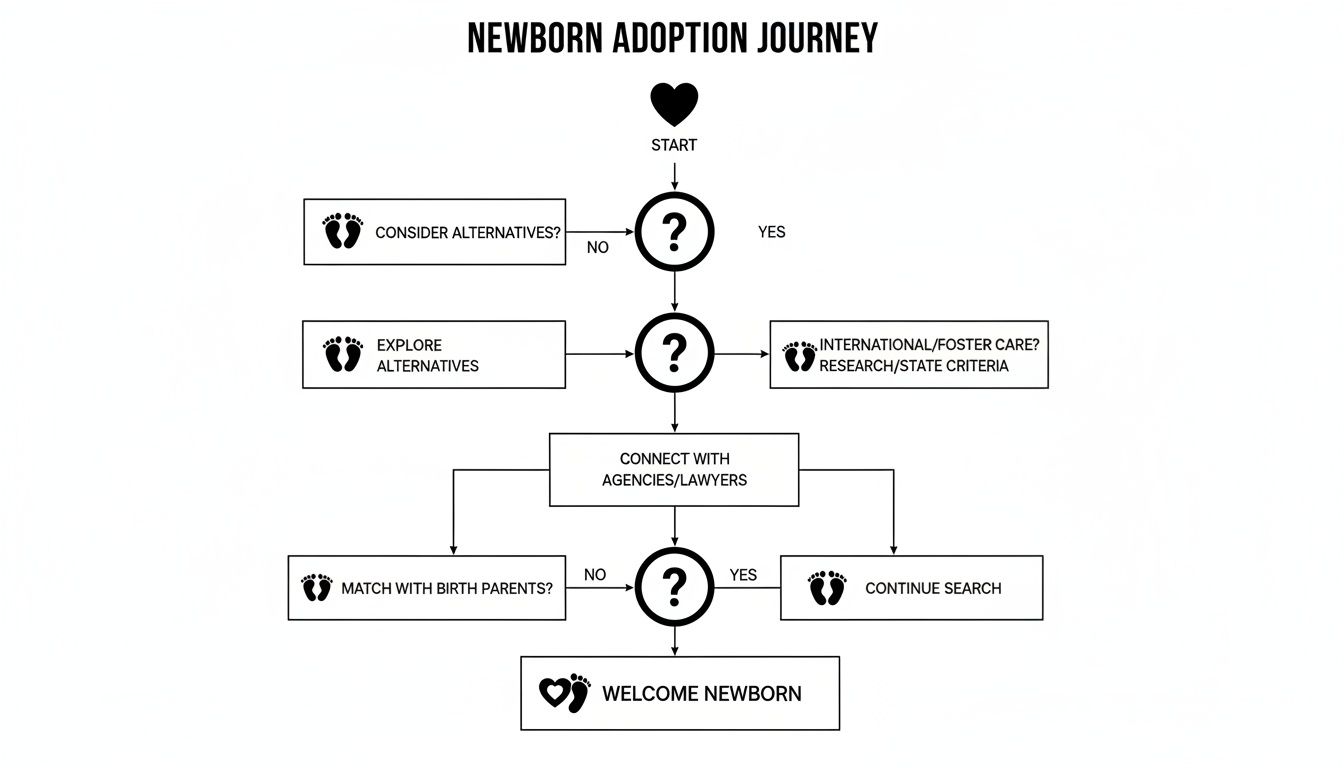
As you can see, your journey starts with a core choice: will you work with an attorney, an agency, or the state's foster care system? Each option has its own unique process, emotional feel, and legal requirements.
Private Adoption: A Personal Connection
Private adoption, often called independent adoption, is where you partner directly with an experienced adoption attorney. Your lawyer serves as your guide, helping you connect with an expectant mother who is thoughtfully considering an adoption plan for her child.
This route often creates a more personal and direct relationship between the adoptive parents and the birth mother, allowing for greater flexibility in communication and the final adoption plan.
Imagine a couple, Sarah and Mark, who feel comfortable managing direct communication and hope for a close, open relationship with their child’s birth mother. They choose a private adoption, and their attorney helps them create a heartfelt profile. They are soon matched with an expectant mother who values that direct connection, and they build a supportive, trusting relationship throughout her pregnancy.
Agency Adoption: Structured Support
Choosing an agency adoption means you'll be partnering with a state-licensed organization that provides comprehensive, structured services to manage the entire process for you.
This is a great fit for families who prefer a more guided experience with a dedicated case manager overseeing every detail. Agencies typically handle everything, including:
- Matching Services: Connecting you with a birth mother from their network.
- Counseling: Providing crucial emotional support for both you and the birth parents.
- Home Study Services: Conducting the required home study evaluation in-house.
- Legal Coordination: Working with attorneys to manage all the legal paperwork and court procedures.
Private domestic infant adoption remains one of the primary ways families grow. In 2022, approximately 25,500 infants were placed for adoption through private channels in the U.S. These numbers show that this is a consistent and hopeful path for families eager to welcome a newborn.
Adopting a Newborn From Foster Care
While most people associate foster care with older children, it is sometimes possible to adopt a newborn through the Texas Department of Family and Protective Services (DFPS). This path is much less common and often less predictable if your heart is set specifically on adopting a newborn.
These situations typically arise when a newborn cannot be safely cared for by their biological parents and is placed directly into foster care from the hospital. The state's primary goal is always reunification with the biological family. If those efforts are not successful, the baby eventually becomes legally free for adoption. Families licensed as "foster-to-adopt" homes are usually the first to be considered for placement.
To help you see the differences at a glance, here’s a quick comparison of the three main paths for newborn adoption in Texas.
Comparing Newborn Adoption Paths in Texas
| Adoption Path | Key Characteristics | Best For Families Who… |
|---|---|---|
| Private Adoption | Work directly with an attorney; direct connection with the birth mother; high flexibility. | Want a personal, direct relationship and are comfortable managing more of the process themselves. |
| Agency Adoption | Work with a licensed agency; structured, all-inclusive support; built-in counseling. | Prefer a guided experience with a clear framework and comprehensive support from one organization. |
| Foster Care Adoption | Work with DFPS/CPS; unpredictable for newborns; focus is on reunification first. | Are open to fostering first and understand that a newborn placement is rare and not guaranteed. |
Each path is designed to lead to the same beautiful outcome, but the journey to get there can feel very different.
No matter the path, the guiding principle in every Texas adoption is the best interest of the child. The law ensures that every route—private, agency, or foster care—is structured to place a child in a safe, stable, and loving permanent home.
The right path depends entirely on your personal circumstances and what feels most authentic to you. For a more detailed comparison, you can explore the various types of adoption available to Texas families.
Getting Ready for the Texas Adoption Home Study
Let’s be honest: the phrase “home study” is enough to make any hopeful parent feel a little anxious. It sounds invasive, like someone is about to show up with a white glove to check for dust on your picture frames.
But please, take a deep breath. Based on our experience guiding countless Texas families, we can tell you the home study isn't about passing a perfection test. It's a collaborative process designed to prepare your heart and home for a child. Think of it as the first real step in building your family, not a hurdle meant to trip you up.

What the Home Study Actually Looks Like
The home study is a comprehensive but conversational look into your life, led by a licensed social worker. It’s their job to get to know you, understand your motivations for adoption, and ensure you’re ready to provide a safe, loving home for a newborn.
You’ll sit down for a series of interviews, sometimes together and sometimes individually if you’re adopting as a couple. These chats cover a wide range of topics—from your own childhood and family life to your relationship, parenting philosophies, and hopes for the future.
And yes, the social worker will visit your home. This isn’t a design critique. It’s a basic safety check to make sure the environment is secure for an infant.
Your social worker isn’t looking for a show home. They’re looking for a safe home. Functioning smoke detectors, covered electrical outlets, and securely stored chemicals are what matter—not a perfect magazine-ready layout.
Tackling the Paperwork and Background Checks
A big part of the home study is gathering documents and clearing background checks. It can feel like a lot of paperwork, but starting early with good organization makes all the difference.
You’ll need to pull together several key documents:
- Identity and Relationship: Birth certificates, driver’s licenses, and your marriage certificate or any past divorce decrees.
- Financials: Recent pay stubs, tax returns, and bank statements to show you're financially stable enough to support a child.
- Health Records: A letter from your doctor confirming you're physically and mentally healthy enough for the demands of parenting.
On top of that, every adult living in your home must pass state and federal criminal background checks, plus a child abuse and neglect registry check. This is a non-negotiable requirement under the Texas Family Code, designed to protect the child’s best interests above all else.
Preparing Your Heart and Home
More than anything, the home study is an emotional and mental preparation. Your social worker wants to see that you’ve truly considered what it means to adopt a newborn.
Be ready to talk about your support system—the friends and family who will be there for you. You'll discuss how you plan to talk to your child about their adoption story and your feelings about maintaining a relationship with the birth family, if that is part of the plan.
There are no “right” answers here. What matters most is your honesty, thoughtfulness, and openness to the journey ahead. For a practical list to get you started, our adoption home study checklist is a great resource for organizing both your documents and your thoughts. This is where your adoption story truly begins, and we're here to help you through every step.
Understanding Birth Parent Rights and Consent
At the heart of every newborn adoption is a birth parent’s incredibly brave and selfless decision. This part of the journey requires more than just legal paperwork—it demands empathy, respect, and a clear understanding of the rights of everyone involved. Getting this right isn't just about following the law; it's about building an honest, loving, and ethical foundation for your future family.

The legal process for consent is carefully designed to protect all parties, especially the birth parents. It gives them the time and space needed to make a fully informed choice, blending the emotional reality of adoption with the clear structure of Texas law.
The Birth Mother’s Right to Consent
In Texas, the law honors the immense weight of a birth mother's decision. Chapter 161 of the Texas Family Code lays out the rules for voluntarily relinquishing parental rights, and it contains a crucial protection for her.
A birth mother cannot sign the irrevocable affidavit of relinquishment of parental rights until at least 48 hours after the child is born. This waiting period is a non-negotiable cornerstone of ethical adoption in our state. It ensures she has time to recover from childbirth and make a permanent decision without feeling rushed or pressured.
Once she signs this document after the 48-hour window has passed, her decision is generally considered irrevocable. This provides the legal certainty needed for the adoption to move forward, and it's a step handled with incredible sensitivity by adoption professionals.
What About the Birth Father’s Rights?
A legally secure adoption means properly addressing the birth father's parental rights. This is one of the most complex areas of adoption law, and getting it right is critical to prevent legal challenges down the road.
Here are a few common scenarios you might encounter:
- A Known and Supportive Father: If he's involved and agrees with the adoption plan, he can sign his own affidavit of relinquishment, often around the same time as the birth mother.
- An Unknown or Uninvolved Father: Texas law requires that reasonable efforts be made to identify and notify him of the adoption. This is where the Texas Paternity Registry comes in. A man who believes he may have fathered a child can register to protect his rights.
- A Contesting Father: If a birth father objects to the adoption, the matter will likely go to court. A judge will then decide whether to terminate his parental rights, always based on what is in the best interest of the child.
Navigating birth father rights is a job for an experienced adoption attorney. Their role is to make sure every legal requirement is met, protecting the integrity of your adoption and giving you the peace of mind to move forward.
Crafting a Path with Open Adoption
Beyond the legal documents, modern adoption is all about human connection. Open adoption has become the norm, with research suggesting that approximately 95% of domestic infant adoptions now include some level of ongoing contact. This compassionate shift helps children develop a stronger sense of identity and is often beneficial for everyone involved. For more on this trend, you can explore U.S. domestic adoption statistics.
An open or semi-open adoption agreement is a plan you and the birth parents create together. It's built on trust and can include things like:
- Sharing photos and letters through your attorney or agency
- Planning for annual in-person visits
- Staying in touch directly through text, email, or video calls
While this isn't a legally binding contract in Texas, it’s a good-faith agreement founded on mutual respect. It honors the birth parents' lifelong connection to their child while affirming your role as the parents, creating a stable and loving future for all.
From Placement to Finalization: Your First Months Home
Bringing your newborn home is the moment you’ve been dreaming of. It’s a pure, overwhelming joy that also kicks off the final legal chapter of your adoption journey. This next phase, called the post-placement period, is all about bonding, adjusting, and taking the last steps to make your family legally whole.

Think of this time as a supportive bridge, helping you navigate the beautiful whirlwind of new parenthood while ensuring all the legal boxes are checked before you officially adopt a newborn.
The Post-Placement Supervision Period
Once your baby is settled in your arms and at home, Texas law requires a post-placement supervision period. This involves a series of in-home visits from a social worker over several months, usually lasting about six months. It’s completely natural to feel a bit nervous, but try to see these visits for what they really are: a source of support, not scrutiny.
The social worker’s role is to:
- Observe the bond forming between you and your baby.
- Offer resources and answer your questions about newborn care.
- Ensure the whole family is adjusting well.
- Prepare a positive report for the court that recommends finalizing the adoption.
These check-ins are simply to confirm that your home is the safe, loving, and stable place everyone knew it was during the home study. The social worker is on your team. The first few months are an adjustment for everyone, especially when it comes to sleep. For some practical advice, you can find helpful tips on how to get sleep with a newborn.
The Finalization Hearing: A Day of Celebration
The finish line of your entire adoption journey is the finalization hearing. This court appearance is often the most emotional and rewarding day of the whole process. It’s anything but a cold legal formality—it’s a celebration of your family’s creation.
The finalization hearing is the day your child legally becomes yours, forever. Many families bring cameras, grandparents, and close friends to witness this momentous occasion and share in the joy.
During the hearing, the judge will review the social worker’s positive reports, likely ask you a few simple questions, and then sign the Final Decree of Adoption. This is the official document that grants you full, permanent parental rights.
Completing the Journey: An Amended Birth Certificate
With the Decree of Adoption signed, your attorney will help you with one last administrative task: applying for an amended birth certificate for your child.
This new certificate replaces the original, listing you as the legal parents. It’s the final piece of paperwork that solidifies your child’s new legal identity as a permanent member of your family.
This whole phase, from that first car ride home to holding that final decree, is a time of immense love and transition. It’s the beautiful culmination of your decision to adopt a newborn, turning long-held hopes into a legal and emotional reality.
Planning for Adoption Costs and Timelines
Let's talk about two of the biggest practical considerations in any adoption journey: money and time. While you can't put a price tag on building your family, having a clear understanding of the financial and time commitments helps you plan, reduce stress, and focus on what truly matters—preparing to welcome a child into your home.
When it comes to a private newborn adoption in Texas, the financial investment can be significant, and the timeline can feel unpredictable. The costs and wait times are never one-size-fits-all; they shift based on the professionals you work with, the specific legal needs of your case, and the birth mother’s unique circumstances.
Understanding the Financial Picture
When you set out to adopt a newborn, a handful of major expenses make up the total cost. Knowing what they are ahead of time is the best way to budget with confidence. A big piece of the puzzle is understanding how much a lawyer costs, as they will be your guide through the entire legal process.
You can generally expect to see costs for:
- Legal Fees: This covers everything from court filings and the termination of parental rights to the finalization hearing that makes your family official.
- Home Study Costs: This is the fee for the required, in-depth evaluation of your family and home environment.
- Birth Mother Expenses: Texas law allows for covering reasonable and necessary living expenses for the birth mother during her pregnancy. These are always handled ethically through your attorney to ensure full legal compliance.
- Agency or Facilitator Fees: If you partner with an adoption agency, their fees will cover services like matching, counseling, and managing your case.
The good news? You don't have to face these costs alone. Resources are available to help make adoption more affordable. The federal Adoption Tax Credit, for example, can provide a significant financial relief. Many employers also offer adoption assistance programs, and numerous non-profits award grants specifically to hopeful adoptive parents.
For a more detailed look, you can read our complete guide on how much adoption costs in Texas.
The adoption journey is not a race, and there's no standard "wait time." Your path is unique. Embrace the process with patience, knowing the right match is worth the wait.
Navigating the Adoption Timeline
One of the first questions we always get is, "How long will it take to adopt a newborn?" The honest answer is… it depends. The timeline can be as short as a few months or stretch out over a couple of years.
Your "openness" is one of the biggest factors influencing your wait time. A family that is open to a wide range of situations, different backgrounds, and potential health considerations will often be matched more quickly. The number of expectant mothers an agency or attorney is currently working with also plays a big part.
The key is to trust the process. Remind yourself that the goal isn’t just to find any match, but to find the right one for you and for the child.
Your Top Questions About Newborn Adoption in Texas
As you start exploring newborn adoption, it’s completely normal for your head to be spinning with questions. We understand. This is a huge, life-changing decision, and you deserve clear, compassionate answers. We’ve pulled together some of the most common questions we hear from hopeful parents just like you.
Our goal isn't just to give you information but to give you confidence. Let's tackle some of those "what ifs" together.
Can we specify preferences like the baby's gender?
Yes, you can absolutely have preferences for the child you hope to adopt, including gender, race, or health history. It’s your family, and being honest about what you are prepared for is important.
Just keep in mind that the more specific your criteria, the longer your wait for a match might be. Birth mothers are looking for a real, authentic connection, and they often choose a family based on their story and the feeling they get from their profile.
We always encourage families to be as open as they can be—it simply creates more opportunities to connect. But at the end of the day, your preferences will always be honored.
What happens if a birth mother changes her mind?
This is often the biggest fear for adoptive parents, and it’s important to address it with honesty and compassion. In Texas, a birth mother has the legal right to change her mind about adoption at any point before she signs the irrevocable paperwork.
Under the Texas Family Code, she cannot legally sign those documents until at least 48 hours after the baby is born. This waiting period is a vital part of an ethical adoption, ensuring she has time to make a decision without pressure. But it also represents a real emotional risk for you.
A disrupted adoption is undeniably heartbreaking. There’s no way to sugarcoat that. An experienced adoption attorney will not only handle the legal side but also provide emotional support and connect you with resources. It’s a devastating setback, but it doesn't have to be the end of your journey to build a family.
The 48-hour waiting period is a critical protection under Texas law. It ensures a birth mother has time to make a clear, unpressured decision, which is the cornerstone of an ethical and legally sound adoption.
How do we find a birth mother in a private adoption?
In a private adoption, finding a birth mother is an active and hopeful process—and your story is at the center of it. Your adoption attorney will be your guide, helping you craft a family profile book or video that is genuine, compelling, and uniquely you.
This profile is then shared through trusted professional networks and ethical outreach channels that all comply with strict Texas laws. It’s not about "selling" yourselves; it's about telling your story in a way that resonates with an expectant mother who is looking for the right loving, stable home for her child.
The entire process is built on a foundation of trust, strategic outreach, and, most importantly, presenting your true self.
The path to adopting a newborn is filled with unique questions and personal decisions. At The Law Office of Bryan Fagan, PLLC, we provide the clear legal guidance and compassionate support Texas families need to move forward with confidence. If you're ready to explore your adoption options, schedule a free consultation with our team today. We're here to help you write your family's next chapter.
