
Deciding to adopt is a profound moment, one filled with excitement, hope, and often, a lot of questions. If you are exploring adoption in Texas, please know you are not alone on this journey. The process here is well-defined, and with compassionate guidance, you can walk this path with clarity and confidence.
We understand that the legal steps can feel overwhelming. That is why we have created this guide for hopeful adoptive parents, birth parents considering an adoption plan, and relatives exploring their options. Think of it as a step-by-step roadmap, designed to answer your questions and empower you, from your very first thought about adoption to the joyful day you finalize your family in court.

The journey begins with understanding your unique options. Whether you are dreaming of bringing a child into your home, a stepparent hoping to make your family legally whole, or a relative ready to provide a loving home for a child you already cherish, knowing the different paths is the first, most important step.
Different Paths to Building Your Family
In Texas, adoption is not a one-size-fits-all process. The right path for you will depend on your specific situation and what you envision for your family. Each route has its own legal requirements, as outlined in the Texas Family Code, and its own emotional considerations.
Here are the most common pathways to adoption in our state:
- Private Infant Adoption: This is when you work with an adoption agency or an attorney to connect with expectant parents who are lovingly choosing an adoption plan for their newborn.
- Stepparent Adoption: This path legally formalizes the beautiful bond between a stepparent and their spouse’s child, providing security and legal recognition for the entire family.
- Kinship or Relative Adoption: This occurs when grandparents, aunts, uncles, or other relatives adopt a child in their family, offering a stable, loving home while preserving precious family connections.
- Adopting from Foster Care: This journey provides a permanent, loving family for a child whose biological parents’ rights have been terminated by the state, giving them the forever home they deserve.
Why Texas is a Leader in Adoption
The Lone Star State has a well-deserved reputation for helping build families through adoption. In fact, Texas has a robust rate of 6.2 adoptions per 1,000 children, which is significantly higher than many other states.
This is largely due to our state's large population and a well-established support system, particularly through the Department of Family and Protective Services (DFPS). The adoption process here typically begins with an application where you’ll outline your readiness to become a parent. Many families navigate this with the help of agencies or private attorneys at firms like The Law Office of Bryan Fagan, PLLC, which serves families across Houston, Dallas, Austin, and San Antonio. You can read more about U.S. adoption statistics to see how Texas stacks up.
The choice to adopt is a powerful act of love. The legal process that follows is a journey of purpose, designed to give every child the security of a permanent, forever family. We're here to help you understand each and every milestone.
Choosing the Right Adoption Path for Your Family
The first step on your Texas adoption journey is a personal one. It is about looking inward and discovering which path truly fits your family's heart and circumstances. Adoption in Texas isn’t a single road but a network of different journeys, each leading to the same beautiful destination: creating a family.
Making this initial choice with clarity and confidence sets a strong, positive foundation for everything that follows. This isn't just about paperwork; it's about matching your hopes, resources, and emotional readiness with the right process.
Exploring Your Adoption Options
Let's break down the most common ways families are built through adoption in Texas. Each one comes with unique legal procedures, emotional dynamics, and timelines.
Private Infant Adoption: This is what many people picture when they think of adoption. You'll work with an agency or an attorney to connect with an expectant mother who is making an adoption plan for her baby. This path is filled with deep emotion and focuses on building a match based on trust and shared hopes for the child's future.
Stepparent Adoption: Imagine you’ve been a parent to your spouse’s child in every meaningful way for years. A stepparent adoption makes that bond legal, officially recognizing you as the child's parent. This process solidifies your family unit and gives your stepchild the security and legal standing they deserve.
Kinship or Relative Adoption: This path is all about family stepping in to provide a safe, permanent home. For example, grandparents might adopt their grandchild to ensure they grow up in a stable, loving environment. This type of adoption prioritizes keeping a child's crucial family connections intact.
Adopting from Foster Care: This is a powerful way to give a forever family to a child who desperately needs one. These children are in the care of the state because their biological parents' rights have been terminated. The focus here is on matching a child’s specific needs with a family's unique strengths to create a healing, supportive home.
Every adoption path shares one common goal—to serve the best interests of the child. Your role is to find the path where your family can best meet that goal, providing a lifetime of love and stability.
Comparing Common Texas Adoption Paths
To help you quickly compare the key differences, this table breaks down the most common types of adoption in Texas. Use it to better understand which path aligns with your family goals.
| Adoption Type | Typical Candidates | Key Consideration | Average Timeline |
|---|---|---|---|
| Private Infant | Couples or individuals hoping to adopt a newborn. | Matching with an expectant mother. | 12-24 months |
| Stepparent | A stepparent who has a strong bond with their spouse's child. | Terminating the other biological parent's rights. | 6-9 months |
| Kinship/Relative | Grandparents, aunts, uncles, or other family members. | Maintaining family bonds and stability for the child. | 6-12 months |
| Foster Care | Families open to adopting children of various ages with diverse needs. | The legal process to finalize permanency after TPR. | 9-18+ months |
Seeing the options side-by-side can make it easier to see where your own circumstances might fit. Each timeline and consideration is different, so it's important to be realistic about what each journey entails.
Taking the First Practical Steps
Once you have an idea of which path feels right, the journey becomes more tangible. Now is the time to start organizing the practical side of your life to prepare for the formal process. One of your first decisions will be whether to work with a licensed adoption agency or directly with an experienced adoption attorney. An agency often provides comprehensive support, including counseling and matching, while an attorney focuses on navigating the legal requirements with precision.
From there, you can start preparing on two main fronts:
Emotional Preparation: Take time to talk with your partner and support system. Read books, join online forums, and connect with other adoptive families. This period is about building your emotional resilience for the journey ahead.
Financial and Logistical Preparation: Begin gathering preliminary documents like birth certificates, marriage licenses, and financial statements. Researching potential costs and exploring resources like the Adoption Tax Credit can also provide much-needed peace of mind.
Taking these early, thoughtful steps helps demystify the process and empowers you to move forward with confidence. To dive deeper into the specifics of each option, you can learn more about the different types of adoption in Texas in our detailed guide.
Remember, the adoption journey is a marathon, not a sprint. By choosing your path carefully and preparing thoughtfully, you set the stage for a smoother, more joyful experience.
Navigating the Texas Adoption Home Study with Confidence
Let's be honest, the words "home study" can make anyone a little nervous. Many hopeful parents picture a white-glove inspection, and the pressure can feel immense. We want to pull back the curtain and tell you a simple truth: the home study is not about having a perfect house or a flawless past.
It's a collaborative process with a single, crucial goal—making sure a child will be placed in a safe, stable, and nurturing home. Think of it as a series of conversations where a licensed social worker gets to know you, your reasons for adopting, and the loving environment you plan to provide. They're looking for warmth and preparedness, not perfection.

What the Home Study Really Entails
Think of the home study as building a comprehensive profile of your life and your readiness to become a parent. It’s put together through meetings, paperwork, and a visit to your home. While the process is thorough, it's a manageable and essential part of the Texas adoption process step by step.
This phase is a cornerstone of every Texas adoption, from private placements to those involving CPS, and typically takes about 3-6 months. You’ll start by picking a licensed provider and submitting applications that cover your financial, medical, and personal history. This is followed by in-depth interviews where you’ll discuss your parenting philosophies—a key step, especially for relatives adopting grandchildren, as DFPS prioritizes kinship placements. You can find more data on this from the Texas adoption data from the Department of Family and Protective Services.
The process generally breaks down into four main parts:
- Personal Interviews: These are just conversations with your social worker, sometimes individually and sometimes as a couple. You’ll talk about your background, your relationship, and your hopes for adoption. Honesty is everything here.
- Document Gathering: This is the administrative part. You'll be asked to provide documents that create a complete picture of your life.
- Home Safety Review: A social worker will visit your home—not to judge your decorating skills, but to ensure it meets basic safety standards for a child.
- Comprehensive Background Checks: This is a non-negotiable step to verify there is no history of child abuse or neglect.
Preparing Your Documents and Home
Getting all your paperwork together can feel overwhelming, but staying organized is your best friend. Break it down into small, manageable steps.
You’ll typically need to gather documents like:
- Birth certificates and marriage license (if married)
- Financial statements (like recent pay stubs or tax returns)
- Medical records or a letter of health from your doctor
- Personal reference letters from friends, family, or coworkers
- Autobiographical statements from each prospective parent
When it comes to the home safety visit, remember, the social worker isn't expecting a palace. A single parent in a simple two-bedroom apartment can easily pass their home study if the space is clean, safe, and clearly a warm, prepared environment.
The home study isn't a test to be passed, but a journey of self-discovery and preparation. It's your chance to show not just that you have a safe home, but that you have a loving heart ready to welcome a child.
Approaching Your Interviews with Authenticity
The interviews are where your personality and desire to be a parent can really shine. Forget trying to give the "right" answers—just be yourself. Share your real-life experiences and what led you to this journey.
For example, imagine a couple is asked how they handle conflict. Instead of a textbook answer, they share a real story about a disagreement they had and how they talked it through to find a solution. That kind of authentic response shows far more maturity and self-awareness than any rehearsed speech ever could.
The social worker wants to see that you've thought about the realities of parenting an adopted child, including the challenges. Talking about how you'll build a support system or handle tough questions shows you're thoughtful and prepared. For a more detailed look at what to expect, check out our adoption home study checklist.
Remember, the goal is to paint an honest picture of who you are and the loving home you can provide. With the right mindset and preparation, you can move through the home study with confidence and get one step closer to building your family.
The Wait: Navigating the Matching Process in Texas Adoption
Once your home study is approved, you step into what many families agree is the toughest part of the adoption journey: the wait. This is the time between being "paper ready" and finally being matched with a child. It’s a period filled with a unique mix of hope, anxiety, and anticipation.
How this unfolds depends entirely on your adoption path. The experience of a couple waiting for a private infant placement in Houston will look very different from that of a family in Dallas hoping to adopt from foster care. Let's break down what to expect and how to not just survive the wait, but thrive during it.
For Private Adoptions: Crafting Your Family Profile
In a private adoption, the wait is an active process. Your primary task is to create a compelling family profile book or online portfolio. This isn't just a scrapbook; it's your story, your values, and your vision for a child's life, shared directly with expectant parents.
An expectant mother considering adoption isn't searching for a "perfect" family. She is looking for a real one. Authenticity is everything.
Your profile is your chance to show, not just tell, who you are. Instead of just saying you're "loving and fun," share photos and stories that prove it:
- Show your daily life: What do weekends look like for you? Are you regulars at the San Antonio Missions or do you spend Saturday mornings gardening in your backyard?
- Share your traditions: Talk about the little things, like Friday pizza nights or how you celebrate birthdays and holidays with your extended family.
- Introduce your village: Include photos and descriptions of grandparents, cousins, and close friends—the people who will love and support your child.
This profile is often the very first connection you’ll make with a birth mother. It’s a powerful, personal introduction that helps her envision her child’s future in your home.
For Foster Care Adoptions: The DFPS Matching Process
If you're adopting from the Texas foster care system, the matching process works differently. You won't be creating a profile book for expectant parents. Instead, caseworkers at the Department of Family and Protective Services (DFPS) are the primary matchmakers.
These caseworkers have an intimate knowledge of the children in their care—their personalities, their histories, and their unique needs. Their job is to find the family best equipped to help a specific child heal and flourish.
For example, a caseworker might match a quiet, patient couple in a stable Austin suburb with a child who has experienced a lot of turmoil and needs a calm environment. A child who is energetic and loves the outdoors might be a perfect fit for a family with a bit of land outside the city. It's a thoughtful, human-led process.
It's easy to feel like nothing is happening during the wait, but it's crucial to remember that behind the scenes, dedicated professionals are working hard. They are carefully considering every factor to make a match that serves the absolute best interest of a child. This is about finding a forever family, not just filling a spot.
How to Thrive Emotionally During the Wait
Let’s be honest: the waiting period can be an emotional rollercoaster. Some days are filled with optimism, while others are clouded with doubt. The key is to acknowledge these feelings and channel that energy into productive preparation.
We once worked with a couple who used their waiting period to connect with a local adoption support group in their city. Sharing their journey with others who truly got it gave them an incredible sense of community and strength. They turned a time of uncertainty into one of connection.
This is also the perfect time to:
- Keep learning: Read books on parenting adopted children, especially on topics relevant to your path, like navigating open adoption or understanding childhood trauma.
- Strengthen your own relationship: If you have a partner, go on dates. Have the big conversations. Enjoy this chapter together before your family grows.
- Prepare your home and heart: Go beyond the home study checklist. Think about creating a warm, welcoming space. Most importantly, work on your own emotional readiness for the joys and challenges ahead.
Navigating this part of the Texas adoption process step by step demands a great deal of patience. But the wait will eventually end. By using this time to prepare, you’ll be even more ready when you finally get the call that changes your life forever.
From Placement to Finalization: The Legal Steps to Parenthood
You’ve been matched with a child—congratulations! This is the moment when everything starts to feel real. The journey now shifts into its final, most critical legal phase. This is where you move from placement—that incredible day a child comes to live with you—to the final court hearing that officially creates your forever family.
This part of the Texas adoption process step by step can feel a bit intimidating, but it's a well-traveled road. It involves sensitive legal work, a period of adjustment for your new family, and ultimately, a day of pure celebration. Having an experienced adoption attorney in your corner is key to navigating every detail correctly and giving you peace of mind.
The Critical Step of Terminating Parental Rights
Before any adoption can become official, the parental rights of the child's birth parents must be legally terminated. This is a profound and non-negotiable step that makes the adoption permanent and legally secure. In Texas, this generally happens in one of two ways.
- Voluntary Relinquishment: This is common in private infant adoptions. The birth mother (and sometimes the birth father) signs a legal document called an affidavit of relinquishment, voluntarily giving up their parental rights. Texas law has important safeguards in place here: a birth mother cannot sign this irrevocable document until at least 48 hours after the child's birth. This gives her time to make this life-altering decision without pressure.
- Involuntary Termination: In cases coming from the foster care system, a court will terminate parental rights if it determines the birth parents cannot provide a safe and stable home. This is a court-ordered process that always prioritizes the child’s safety and well-being above all else.
Understanding the legal and emotional gravity of this step is vital. For a deeper dive into this specific legal action, you can read our detailed guide on the termination of parental rights in Texas.
The Post-Placement Supervision Period
The day a child is placed in your home is a milestone you’ll cherish forever. It’s the beginning of your new life together, but the legal process isn't quite over yet.
After placement, Texas law requires a post-placement supervision period, which typically lasts for at least six months. During this time, a social worker from your adoption agency will visit your home a few times.
Don't worry—these aren't inspections. Think of them as supportive check-ins. The social worker is there to:
- Offer guidance and resources as your family adjusts.
- Observe how everyone is bonding and settling in.
- Make sure the placement is stable and thriving.
- Prepare a final report for the court recommending that the adoption be finalized.
It's like having a supportive coach on your side, helping you navigate those first few months and making sure everything is on track for a successful finalization.
Adoption Day: The Finalization Hearing
Once you've successfully completed the post-placement period and all legal requirements are met, your attorney will file the final petition and schedule your court hearing. This day, often called "Adoption Day," is the joyful finish line of your long journey.
The finalization hearing is usually a brief and celebratory event. You, your child, and your attorney will appear before a judge. Many families invite grandparents and close friends to witness this powerful moment.
The judge will review the final paperwork, ask you a few questions to confirm you're ready, and then sign the final decree of adoption. In that instant, the child is legally and permanently your son or daughter. Your family is officially complete in the eyes of the law.
The infographic below illustrates the key stages that lead up to this point, from creating your profile to being matched with a child.
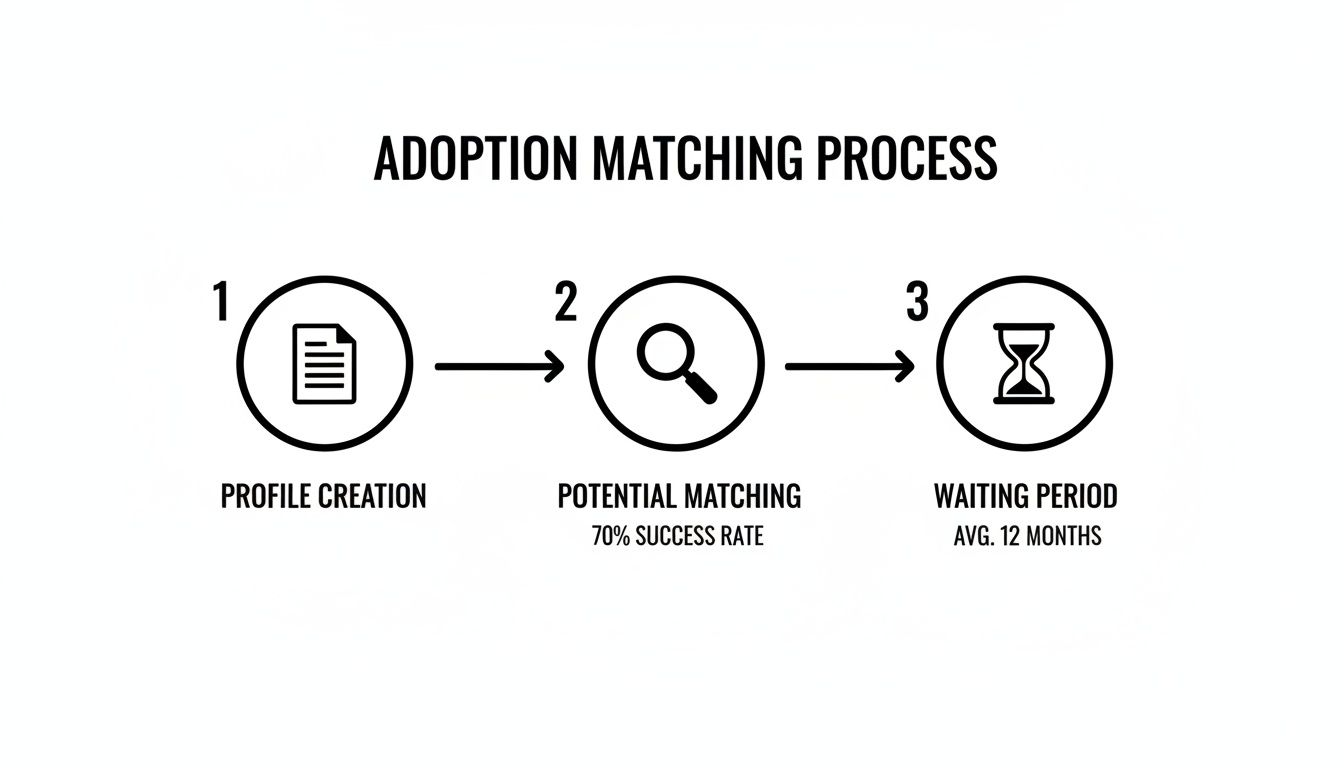
From the delicate legal work of terminating parental rights to the joyful finalization day, this last phase is where an experienced attorney's guidance is truly indispensable. They manage every filing, deadline, and court appearance, freeing you up to focus on what matters most: bonding with your new child.
Your Adoption Questions Answered by a Texas Attorney
The path to adoption is full of questions. Big ones, small ones, and the ones that keep you up at night. That's completely normal. Getting clear, straightforward answers is the best way to move forward with confidence instead of uncertainty.
We've guided countless Texas families through this journey, and we've heard it all. Here are some of the most common questions we answer, broken down with the kind of no-fluff advice you need.
What Is the Main Difference Between a Stepparent and a Private Adoption Process?
The biggest distinction comes down to two things: the home study and the legal focus. They are fundamentally different journeys.
In a stepparent adoption, the court often waives the home study requirement if the child has already lived with you for at least six months. This makes things much simpler. The legal heavy lifting is focused on terminating the parental rights of the other biological parent, which can be done with their consent or, if necessary, through a court order.
A private infant adoption is a different world. It always requires a comprehensive home study. The entire process revolves around being matched with expectant parents who are voluntarily making an adoption plan. The legal and emotional dynamics are centered on ensuring the birth mother’s consent is given freely and is ironclad after the baby arrives.
What Are the Typical Costs of Adoption in Texas?
Let's talk numbers. The cost of adoption varies dramatically depending on which path you take, and it's smart to know the financial landscape from the start.
- Private Infant Adoptions: This is typically the most expensive route, with costs ranging from $30,000 to over $60,000. These fees go toward agency services, all the legal work, and sometimes approved living expenses for the birth mother.
- Stepparent and Relative Adoptions: These are far more affordable. You're usually looking at a few thousand dollars to cover attorney fees for filing the petition and handling court appearances.
- Foster Care Adoptions: Adopting from the foster care system is often free or extremely low-cost. In fact, many families who adopt from foster care are eligible for a monthly financial subsidy to help support the child’s needs.
Don't forget to look into the federal Adoption Tax Credit, employer benefits, and adoption grants. These resources exist to make adoption more financially manageable.
Understanding the potential costs and timelines isn't about adding stress—it's about empowerment. Knowing what to expect lets you prepare your finances and your heart for the journey ahead.
How Long Does the Texas Adoption Process Usually Take?
Patience is more than a virtue in adoption; it's a necessity. Timelines can fluctuate, but here’s a general idea of what to expect.
A straightforward stepparent or relative adoption can often be wrapped up within 6 to 9 months. It's one of the quicker processes.
For private infant adoptions, the wait is all about the match. After your home study is complete, most families wait 12 to 24 months before being chosen by an expectant mother. When adopting from the foster care system, the timeline can be anywhere from 9 to 18 months or longer, often depending on the legal steps needed to terminate the biological parents' rights.
What Happens If a Birth Parent Changes Their Mind?
This is probably the biggest fear for hopeful adoptive parents, and it’s completely understandable. The good news is that Texas law is built to create finality and permanence for everyone involved.
A birth mother cannot legally give her consent to an adoption until at least 48 hours after giving birth. This is a mandatory waiting period designed to ensure her decision is made without pressure and with a clear mind. Once she signs the official, irrevocable affidavit of relinquishment in front of a notary, her decision is final. A birth father's rights can be handled in a similar way, either through his consent or a court order.
When you're dealing with the legal fine print of adoption, it helps to have an expert in your corner. It’s also interesting to see how technology is helping. Many Texas attorneys now use tools like an AI Legal Assistant to manage and double-check complex legal documents. Ultimately, working with an experienced attorney is your best protection, ensuring every legal detail is handled correctly to secure the permanence of your adoption.
At The Law Office of Bryan Fagan, PLLC, we believe every family deserves compassionate, clear legal guidance on their adoption journey. Whether you are just beginning to explore your options or are ready to take the next step, our team is here to support you. We invite you to schedule a free, no-obligation consultation to discuss your unique situation. Visit us at https://texasfamilyadoption.com to get started on your path to building a family.
