 Skip to content
Starting your adoption journey is an incredible time, full of hope and excitement. But let’s be honest—the question of cost can feel like a huge, looming roadblock. The truth is, the cost to adopt in Texas varies dramatically, swinging from almost nothing to tens of thousands of dollars, all depending on the path you choose to build your family.
A Straight-Talk Guide to Texas Adoption Costs
Before we get into the numbers, we want to reassure you: building your family through adoption is far more achievable than most people think. This guide is here to pull back the curtain on the finances, replacing uncertainty with clear, straightforward answers. We'll walk through the real-world costs of different adoption types, without all the confusing legal jargon.
Our goal is simple: to give you the financial clarity you need so you can pour your energy into the emotional journey ahead. Whether you're a hopeful parent ready to start a family, a stepparent wanting to make your family legally whole, or a relative stepping up for a child you love, knowing what to expect financially is the first, most empowering step.
Texas Adoption Costs at a Glance
The financial side of adoption is, without a doubt, one of the biggest concerns we hear from families. But the price tag isn't a "one-size-fits-all" situation. It really comes down to the specific type of adoption you're pursuing, always keeping the best interests of the child at the center of the process.
For instance, a private infant adoption often comes with agency fees, legal services, and support for the birth mother, making it the most expensive route. At the other end of the spectrum, adopting from the Texas foster care system is an incredibly affordable path where the state actually reimburses most of your costs, prioritizing family unity above all.
This chart gives you a quick visual breakdown of what to expect for the most common adoption types here in Texas.
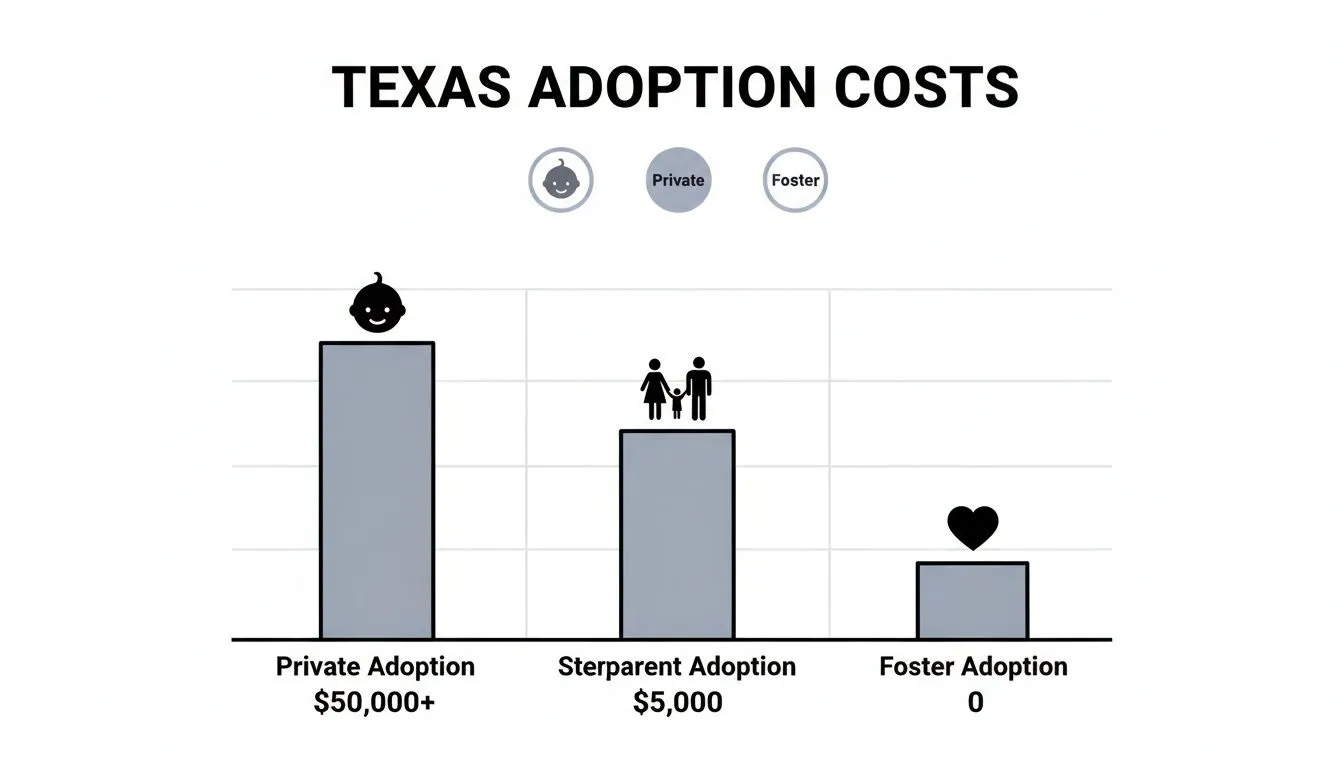
As you can see, the massive range in costs proves there’s a feasible path for nearly every family and every budget. Stepparent adoptions, for example, land somewhere in the middle, with costs mostly tied to the legal work needed to formalize a bond that's already there.
Understanding these differences is key. It allows you to start this journey feeling prepared, informed, and ready to make the best decision for your family.
Understanding the Costs of Private Infant Adoption
When you start dreaming of bringing a newborn into your family, that dream often leads to private infant adoption. It’s a beautiful, powerful way to grow your family, but it’s also the path that usually carries the highest financial commitment. We believe in being transparent about these costs from day one—not to intimidate you, but to empower you. Let's break down exactly what those numbers mean so you can feel prepared and confident.

Seeing a figure like $40,000 to over $60,000 for a private infant adoption can certainly make you pause. But it's vital to understand that you aren't just paying a single fee. Instead, you're investing in a network of professional, ethical, and legal services designed to protect everyone involved—you, the birth parents, and most importantly, the child. Every dollar is a building block for a secure and legally sound adoption.
Key Expenses in Private Adoption
So, where does the money actually go? Private adoption costs are a bundle of different fees, each with a critical job to do. Knowing what you're paying for gives you peace of mind and shows the level of professional care your journey requires.
Here’s a look at the primary expenses:
- Adoption Agency Fees: Think of this as the operational hub of your adoption. These fees cover everything from advertising to connect with expectant mothers to providing essential counseling and support for both birth parents and you. It also pays for the professional staff who work tirelessly to orchestrate a successful match.
- Legal Fees: Every adoption is, at its core, a legal process governed by the Texas Family Code. You'll have an attorney to represent your interests, file all the necessary court documents, and finalize the adoption. Crucially, you are also responsible for the birth mother’s legal fees, ensuring she has her own independent attorney to advise her on her rights. This is a non-negotiable ethical safeguard.
- Home Study Costs: As mandated by Chapter 162 of the Texas Family Code, every potential adoptive family must complete a home study. A licensed social worker conducts this evaluation to confirm that your home provides a safe, stable, and nurturing environment for a child.
- Birth Mother Expenses: Texas law permits adoptive families to help with a birth mother’s reasonable and necessary living expenses during her pregnancy and for a short time after birth. This can include support for housing, groceries, transportation, and maternity clothes. All of these payments are handled legally through the agency or attorneys to ensure complete transparency and prevent any situation that could be seen as paying for a child, which is illegal.
The goal of covering a birth mother's expenses is not to influence her decision, but to ensure she is healthy, safe, and supported during one of the most challenging times of her life. It is an act of compassion that centers her well-being.
Why Costs Can Vary
Just as no two families are the same, no two adoptions are identical—and that means the costs can fluctuate. A smooth adoption where a birth father is supportive or his parental rights are easily terminated will naturally have lower legal fees. For a more detailed breakdown, you can read our guide on how much a private adoption can cost in Texas.
On the flip side, a contested adoption—where a birth father legally challenges the plan—can lead to drawn-out court proceedings and, unfortunately, much higher legal bills. Other factors that can move the financial needle include the level of living assistance the birth mother requires and whether you need to travel a long distance for the birth.
While the numbers can feel substantial, remember that each expense plays a vital role in building a strong, legal, and ethical foundation for your new family. By understanding where the money goes, you can better prepare for the financial side of your journey and focus on what truly matters: the emotional one.
The Rewarding and Affordable Path of Foster Care Adoption
For thousands of Texas families, the dream of parenthood comes true through a path that’s as rewarding as it is special: foster care adoption. While many people think of adoption as an expensive process, adopting a child from the Texas foster care system is actually one of the most affordable ways to build your family. It's a journey that puts the focus right where it belongs—on giving a child the loving, permanent home they deserve.

When hopeful parents ask, "how much does it cost to adopt in Texas through foster care?" the answer often comes as a huge relief. The Texas Department of Family and Protective Services (DFPS) isn’t looking for wealthy families; they’re looking for loving ones. Because of that, the state provides significant financial support to make sure cost isn’t a barrier for the right family.
How Texas Makes Foster Adoption Affordable
The state is deeply committed to finding forever homes for kids, which means most—if not all—of the typical adoption costs are either covered or reimbursed. This support structure makes adoption a reality for people from all walks of life, whether you're a single parent, an LGBTQ+ couple, or a family with a modest income.
Here's how it breaks down:
- No Agency Fees: Unlike private adoption, you don't pay any fees to an adoption agency for matching services. DFPS or its contracted agencies handle the process.
- Reimbursement for Major Costs: The state often pays you back for essential expenses. This typically includes the full cost of your home study and up to $1,200 in nonrecurring legal fees for each child you adopt.
- Post-Adoption Assistance: For children with specific needs, the state provides ongoing monthly financial help (a subsidy) and continued Medicaid coverage until they turn 18.
This setup means many families finalize their adoption with little to no out-of-pocket expense. As the Texas Family Code makes clear, the primary goal is always what's in the best interest of the child—and that means putting a stable, loving home ahead of a family's bank account.
Real-World Costs of Adopting from Foster Care
Adopting from the Texas foster care system is one of the most affordable routes to parenthood. Most families spend between $0 and $2,500 out-of-pocket, and the state often reimburses nearly all of those expenses. This has created a powerful pathway to permanency for children across Texas.
With thousands of these adoptions finalized every year, the system is designed to work. The upfront home study fee, which can run $1,000–$3,000, is often the biggest expense, but even that is usually refundable for qualified families. This affordability empowers everyday Texans to provide the safe, permanent homes these kids need.
Welcoming a child from the foster care system is an act of profound love. These children have often experienced instability or trauma, and what they need more than anything is the security and compassion you can provide. The financial support from the state is there to help you focus on the emotional healing and bonding that truly builds a family.
For a deeper dive into the specific reimbursements and subsidies available, check out our detailed article on the costs of adopting from foster care.
A Journey of Heart and Healing
Let's imagine a couple in Houston who have always wanted to be parents. They start the process to get licensed as a foster-to-adopt home. After they complete their training and home study (with the fee later reimbursed), they welcome a 7-year-old boy into their house.
Over the next eight months, they give him the stability, patience, and love he’s never had. When it’s time to finalize the adoption, the attorney fees are almost entirely covered by the state's reimbursement program. Because the child has ongoing needs related to his past, the family also qualifies for a monthly subsidy and Medicaid, ensuring they can give him the best care possible.
Their journey was never about the money; it was about opening their hearts and home. The support from DFPS simply made it possible for them to focus entirely on their son, helping him heal and thrive. This is the beautiful reality of foster care adoption in Texas.
The Cost of Stepparent and Relative Adoptions: Legally Affirming Your Family Bond
Adopting a stepchild or a relative—like a niece, nephew, or grandchild—is a powerful way to make your family whole in the eyes of the law. When you’re already the one packing lunches, helping with homework, and offering hugs after a tough day, the legal process is just the final, crucial step to confirm the bond that’s already been built on love and trust.
The great news is that these adoptions, often called kinship or stepparent adoptions, are typically the most straightforward and least expensive path to legal parenthood in Texas.
Because the child is already part of your life, you can skip the most expensive part of private adoptions: finding a match. There are no massive agency or matching fees. Instead, the process is focused on what truly matters—formally recognizing the family that already exists.
Why Are Stepparent and Relative Adoptions More Affordable?
So, what keeps the costs down? It all comes down to the streamlined nature of these adoptions. The total expense for a stepparent or relative adoption in Texas usually falls between $2,500 and $7,500, a fraction of what you might expect for a private infant adoption.
This price range almost entirely covers the necessary legal work, not finder's fees. Here’s a typical breakdown of where the money goes:
- Attorney Fees: This will be your primary expense. An experienced family law attorney is essential for preparing and filing all the right documents, navigating the complex process of terminating the other biological parent's rights, and representing you at the final hearing.
- Court Filing Fees: Every court case has them. These are standard, relatively minor fees for filing the legal paperwork with the county clerk.
- Background Checks: As part of the legal requirements to ensure a safe home, you'll need to complete criminal background checks.
In many stepparent adoptions, especially when the child has lived with you and your spouse for over six months, the judge may waive the formal home study requirement. This alone can save you thousands of dollars and significantly speed up the timeline.
A Scenario From the Heart: The Journey of a Stepparent
Picture Mark, who married Sarah when her son, Leo, was just four. For the past seven years, Mark has been the only dad Leo has ever really known. He’s the one on the sidelines at soccer games, the one teaching him to ride a bike, and the one offering comfort after a bad dream.
But legally, Mark has no rights. He can’t sign a permission slip for a field trip or make a medical decision if Leo gets hurt at school. It’s a constant, nagging worry. Meanwhile, Sarah’s ex-partner has been out of the picture for years, with no contact and no child support. The family decides it’s time to make what they feel in their hearts official under the law.
A stepparent adoption doesn't create a family—it legally recognizes the family that already exists. It provides the security and permanence that both the child and the stepparent deserve.
Mark and Sarah hire an attorney from The Law Office of Bryan Fagan, PLLC. The first step, as outlined in the Texas Family Code, is to terminate the parental rights of Leo’s biological father. Because of the long history of abandonment, the court agrees to an involuntary termination.
Once that’s done, the attorney files the adoption petition. Since Leo is 11, he's old enough to understand and is thrilled about Mark officially becoming his dad. At the finalization hearing, the judge speaks warmly with Leo, who proudly says he wants Mark’s last name. The judge signs the order, and in a tearful, joyful moment, their family is finally legally whole.
Their total cost was around $4,500 for attorney fees and court costs—a small price for the priceless legal security and emotional peace of mind they now share forever.
Finding Financial Aid to Fund Your Adoption
When you first see the price tag for adoption, it’s easy to feel overwhelmed. But here’s something to remember: you don’t have to face the financial side of this journey alone. A powerful network of support exists to turn what feels like a financial mountain into a series of manageable steps, helping you bring your child home.

We want you to feel equipped and encouraged, not discouraged. Let's walk through the most impactful financial resources available to Texas families, starting with what is often the single biggest help for most people.
The Federal Adoption Tax Credit
For many adoptive families, the Federal Adoption Tax Credit is a game-changer. It’s a non-refundable credit that directly reduces your federal income tax liability, significantly easing the financial burden of adoption. For 2024, the maximum credit is a substantial $16,810 per child.
So, what does that mean in real terms? It's a dollar-for-dollar reduction of what you owe in federal taxes. If you have $10,000 in qualified adoption expenses and owe $10,000 in taxes, this credit could completely wipe out your tax bill for the year. And if you don't use the full credit in one year, you can carry it forward for up to five years.
- Who Qualifies? Most families who complete a domestic private or foster care adoption can claim it. The credit does phase out for higher-income families, with thresholds adjusted annually.
- What Expenses Are Covered? It covers almost all reasonable and necessary costs, including adoption fees, court costs, attorney fees, and even travel expenses like meals and lodging.
- The Special Rule for Foster Care: This is huge. If you adopt a child with special needs from foster care, you can claim the full credit amount—even if you had little to no out-of-pocket expenses. It's the government's way of supporting families who open their homes to children who need it most.
The Adoption Tax Credit isn’t just a financial tool; it's a statement. It’s a tangible acknowledgment of the incredible commitment you’re making to build your family.
Exploring Other Financial Lifelines
Beyond the tax credit, there are several other resources that can make a huge difference in your adoption budget. Creating a solid financial plan often means combining a few of these options. Let’s break down the most common ones.
To help you see the big picture, we’ve put together a table summarizing the key financial resources available to families adopting in Texas.
Key Financial Resources for Texas Adoptive Families
| Resource Type | What It Typically Covers | Key Eligibility Notes | Where to Learn More |
|---|---|---|---|
| Employer Benefits | Reimbursement for adoption expenses, paid leave. | Varies by company; check with your HR department. | Your company's employee handbook or benefits administrator. |
| Military Programs | Reimbursement of up to $2,000 per child for qualifying adoption expenses. | Must be an active-duty military member. | Military OneSource or your service branch’s family support center. |
| Adoption Grants | Direct financial aid that does not need to be repaid. | Varies by organization; some focus on specific adoption types or family needs. | Organizations like HelpUsAdopt.org or the National Adoption Foundation. |
| Adoption Loans | Low-interest loans designed specifically for adoption costs. | Requires a loan application and credit check; rates are often favorable. | Financial institutions like LightStream or dedicated adoption finance groups. |
| Community Fundraising | Funds raised from your personal network and community. | Based on your ability to share your story and mobilize support. | Platforms like GoFundMe or through local community events. |
This table is a great starting point, but let’s dive a little deeper into what each of these means for you.
Employer-Provided Benefits
More and more companies are stepping up to support employees who are growing their families through adoption. These benefits can range from direct financial reimbursement to paid leave that mirrors maternity or paternity leave. Don’t just assume—ask your HR department what your company offers. You might be pleasantly surprised.
Military Reimbursement Programs
For our active-duty service members, the Department of Defense provides a direct reimbursement of up to $2,000 per child (with a maximum of $5,000 per calendar year) for qualifying adoption expenses. It's a well-deserved benefit to support the military families who serve our country.
Adoption Grants and Loans
Dozens of nonprofit organizations exist purely to help families fund their adoptions. These groups offer grants that you never have to pay back. Each one has a different mission and application process, so it’s worth researching to find one that aligns with your family’s story.
Low-interest loans designed for adoption are another popular option. While it means taking on debt, the interest rates are often much better than a standard personal loan. You may also find it helpful to learn about state-level support, as we explain in our guide on understanding adoption subsidies in Texas.
Community Fundraising
Never underestimate the power of your own village. Many families have successfully raised a significant portion of their adoption funds by sharing their journey with their community. From bake sales and online crowdfunding campaigns to garage sales, inviting people into your story can inspire friends, family, and even strangers to help bring your child home.
No matter your income or the adoption path you’ve chosen, there are ways to make the numbers work. By combining these resources, the financial side of your adoption can feel far less daunting and much more achievable.
Taking the Next Step on Your Adoption Journey
Taking in all this information can feel a bit like drinking from a firehose. Our hope is that this guide has done more than just list numbers—it's given you a clear map of the road ahead and the confidence that, no matter the path you choose, you can get there from here.
At the end of the day, adoption isn't just a financial transaction. Whether you’re dreaming of bringing home a newborn, finalizing a bond with your stepchild, or stepping up for a relative, the numbers are just one piece of a much larger story. The real story is about love, commitment, and the simple, powerful desire to build a family.
From Information to Conversation
You've done the reading. You have a better handle on the costs. Now, it's time to shift from research to real-world planning. The next step is a simple one: start a conversation with someone who's been down this road with hundreds of Texas families just like yours. Every family’s story is unique, and you deserve advice that fits your specific situation, not a generic template.
Here at The Law Office of Bryan Fagan, PLLC, our job is to bring legal clarity and genuine compassion to your adoption journey. We get it—the mix of excitement and nerves is real. We’re here to answer your questions, calm your anxieties, and help you map out a clear path forward.
Think of a legal consultation not as a high-pressure sales pitch, but as your first strategy session. It's a chance to get your questions answered in a safe space and find a trusted partner to help you turn your dream into a concrete, achievable plan.
Let Us Help You Build Your Family
Whether you’re ready to grow your family from the ground up, make a bond with a stepchild official, or provide a forever home for a child you already love, your next step is simple. We invite you to schedule a free, no-obligation consultation with our compassionate legal team.
Let's talk about your hopes, your questions, and your family's future. Contact The Law Office of Bryan Fagan, PLLC today, and let us be the helping hand that guides you through the legal process and celebrates with you as you begin this incredible new chapter.
Frequently Asked Questions About Adoption Costs
When you’re thinking about adoption, the money part can feel overwhelming. It's completely normal to have a ton of questions swirling around, and you deserve clear, straightforward answers.
We get it. That's why we've put together some straight talk on the financial questions we hear most often from hopeful families in Texas. Our goal is to give you the clarity you need to move forward with confidence.
Do Birth Mothers Pay for Anything in a Private Adoption?
Absolutely not. A birth mother should never have to worry about paying for anything related to her adoption plan. It's a foundational principle of ethical adoption.
Texas law allows adoptive parents to cover her reasonable and necessary expenses. This isn't about "paying for a baby"—it's about providing crucial support during what is an incredibly demanding physical and emotional journey. These expenses are carefully regulated to make sure everything is handled ethically and without pressure.
What does that typically include?
- Medical and hospital bills that aren't covered by her insurance.
- Independent legal counsel, so she has her own attorney to protect her rights.
- Counseling and emotional support services.
- Some living expenses, like rent and food, during her pregnancy and recovery.
All financial support is managed legally through the attorneys or a licensed agency. This protects everyone involved and keeps the focus where it belongs: on the well-being of the birth mother and her child, honoring her courageous decision with the dignity it deserves.
Is the Adoption Tax Credit Available for Stepparent Adoptions?
This is a common point of confusion, and the short answer is no. The Federal Adoption Tax Credit is a fantastic resource, but it specifically excludes the adoption of a spouse’s child.
The IRS views a stepparent adoption as formalizing an existing family unit rather than creating a new one, which is why it doesn't qualify. But here's the good news: stepparent adoptions are already one of the most affordable ways to adopt in Texas. You aren't paying agency or matching fees, so the costs are mainly for the attorney and court filings needed to legally make your family whole.
We can give you a crystal-clear breakdown of those costs for your specific situation during a free consultation.
How Does the Adoption Timeline Affect the Overall Cost?
The timeline can definitely have an impact on the final cost, especially when it comes to private adoptions. For stepparent or relative adoptions, the process is usually wrapped up within 4-6 months, which helps keep legal fees predictable and contained.
Foster care adoptions are also fairly quick once a child is placed with you, typically finalizing within 6-12 months.
In private infant adoption, a longer wait to match with a birth mother can sometimes increase certain costs, like agency profile renewal fees or ongoing advertising expenses.
But don't let that uncertainty discourage you. A solid financial plan can account for this. By working with an experienced team, you can build a budget that anticipates different scenarios, giving you peace of mind so you can focus on what really matters—preparing your heart and home for your new child.
Every family's adoption story is different, and so are the costs. If you have more questions, the team at The Law Office of Bryan Fagan, PLLC is here to offer personalized guidance with the empathy and clarity you deserve. Schedule a free, no-obligation consultation today to talk about your family's future. Visit us at https://texasfamilyadoption.com to take the next step.

