
Deciding to adopt is an act of incredible hope. But let’s be honest—the first question on almost every family’s mind is, "How long will this actually take?" The truth is, the timeline for a Texas adoption can be anywhere from 3-6 months for a clear-cut stepparent adoption to well over two years for certain private or foster care adoptions.
This guide is here to be your roadmap. We want to replace that feeling of uncertainty with real, practical understanding so you know what’s ahead on your journey to build your family.
Your Compassionate Guide to Texas Adoption Timelines
Embarking on the adoption journey is one of the most meaningful things you can do. It’s a path filled with excitement, love, and—understandably—a lot of questions. Here at The Law Office of Bryan Fagan, PLLC, we know firsthand that the waiting is often the hardest part. Our goal is to give you a clear, honest look at what to expect, empowering you with clarity and empathy for the steps to come.
This timeline gives you a quick visual overview of the different adoption paths and their typical durations.
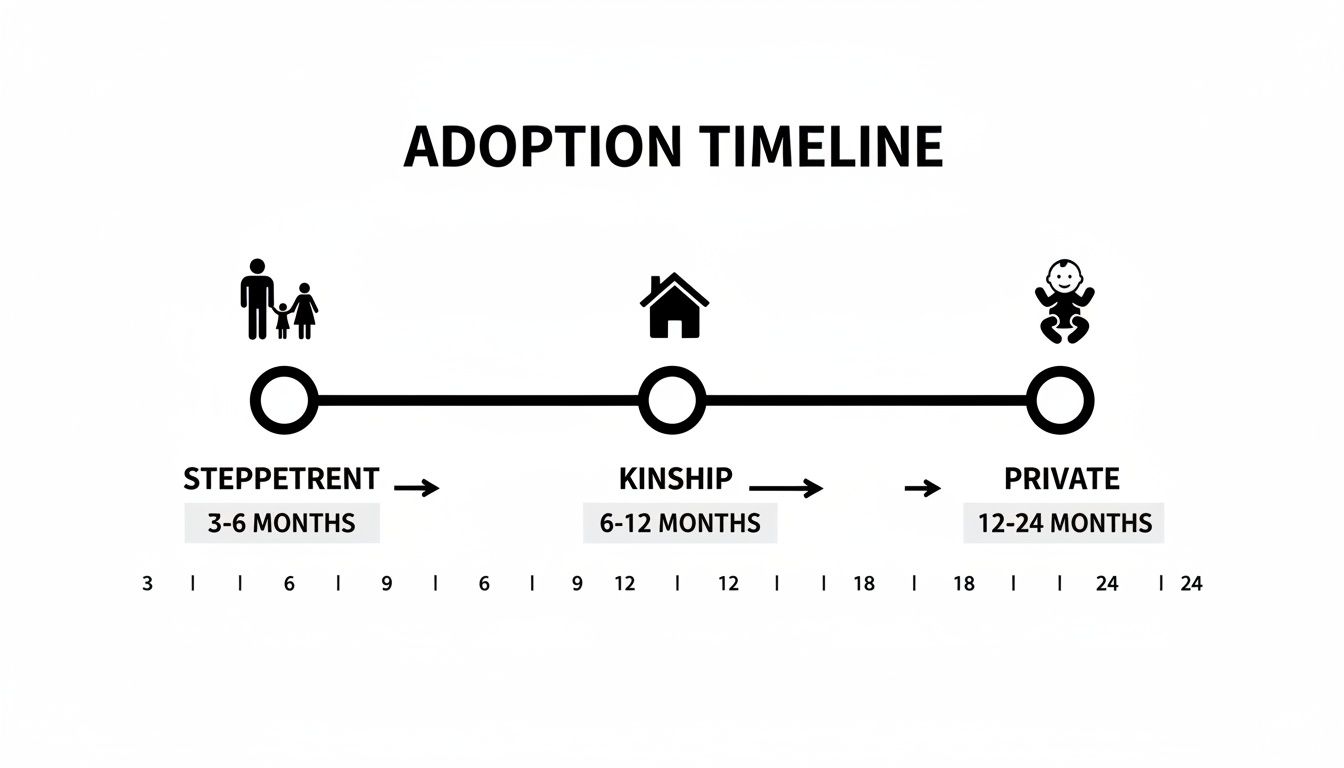
As you can see, the specific road you take has a huge impact on how long the process will be. Adoptions involving family members almost always move more quickly because the focus is on legally solidifying a pre-existing bond.
To help you set clear expectations, we've broken down the average timelines for different types of adoption in Texas.
Texas Adoption Timelines at a Glance
This table provides a realistic overview of the average time it takes to complete different types of adoptions in Texas, helping hopeful adoptive parents, birth parents, and relatives set clear expectations for the journey ahead.
| Type of Adoption | Typical Timeframe | Key Factors |
|---|---|---|
| Stepparent Adoption | 3-6 months | Consent from the other biological parent is the biggest factor. |
| Kinship (Relative) Adoption | 6-12 months | Depends on CPS involvement and termination of parental rights. |
| Private Infant Adoption | 12-24+ months | Matching with a birth mother is the most variable step. |
| Foster Care Adoption | 12-24+ months | Depends on the child's legal status and court dockets. |
Remember, these are just averages. Your journey will be unique, but this gives you a solid starting point for planning and patience.
Understanding the Key Variables
Several factors will shape your specific adoption timeline, and it’s helpful to know them from the start. Think of it like planning a road trip—your route, the traffic you hit, and how well you prepared all affect when you arrive.
In adoption, these variables include:
- The Type of Adoption: A stepparent adoption where the other parent agrees is a world away from a contested foster care case.
- Legal Hurdles: The need to terminate parental rights is often the longest and most unpredictable part of the process, especially if it's contested in court. As outlined in the Texas Family Code, this legal step is essential for securing a child's future.
- Administrative Steps: Finishing the home study, clearing background checks, and filing court paperwork all add up.
The most important thing to remember is that this process is designed around one thing: the best interests of the child. Every form, every interview, and every waiting period exists to ensure a child lands in a safe, stable, and loving permanent home.
While the wait can feel endless, each milestone brings you one step closer to growing your family. This guide will break down each timeline in detail, offering clarity for your specific journey.
If you are just beginning to explore your options, understanding the different types of adoption in Texas is the perfect place to start. For personalized guidance on your unique situation, we are here to help. Schedule a free consultation with our compassionate team to discuss your family's future.
The Private Infant Adoption Timeline and What to Expect
When you decide to grow your family through private infant adoption, one of the first questions you'll ask is, "How long will this take?" It's a natural question, but the answer isn't a simple number. This path is deeply personal and filled with hope, and understanding the stages can make the wait feel more manageable and less like an abstract countdown.
Think of private infant adoption less as a race and more as a process of building trust—with your agency, with yourselves, and ultimately, with a birth mother who sees your family as the right choice for her child.

Stage 1: The Foundational Months (3-6 Months)
The first phase of your journey is all about preparation. We like to tell clients to think of this as building the "nursery" of your adoption—getting everything in order long before a baby arrives. This stage usually takes around 3 to 6 months and covers all the essential groundwork you must complete before a birth mother can even consider you.
Here's what's happening during this time:
- Completing the Home Study: A licensed social worker will visit your home, conduct interviews, and assess your readiness to provide a safe and loving home. This isn’t an interrogation; it's a collaborative process meant to support you on your path to parenthood.
- Gathering Paperwork: You’ll need to compile all your essential documents, like birth certificates, marriage licenses, financial records, and personal references. Organization is your best friend here.
- Background Checks: To ensure the safety of the child, every adult living in your home must pass both state and federal criminal background checks.
This initial phase requires a good bit of patience and diligence. But getting it done right sets you up for a much smoother process down the road.
Stage 2: The Matching Process (6-18+ Months)
This is the most unpredictable part of the entire timeline, and frankly, the one that requires the most emotional resilience. "Matching" is the moment a birth mother chooses you to parent her child. There is no magic formula or set schedule for this; it’s a deeply human connection that happens on its own time.
For example, a couple in Houston might complete their home study and wait just three months before a birth mother from Austin connects with their profile, feeling that their story and values resonate with her hopes for her child's future. For another family, this same process could take over a year. The wait is truly unique to each situation.
On average, the entire private infant adoption journey in Texas spans 12 to 24 months from start to finish. Some families match with an expectant mother in as little as six months, while for others, the wait may stretch to three years or more.
Remember, even after you've matched, there's still a wait. If the match happens early in the pregnancy, you’ll be supporting the birth mother until she gives birth, and then you'll complete the legally required post-placement period before the adoption is final.
Being open and authentic in your family profile often leads to a shorter wait. A birth mother isn't looking for a perfect family—she's looking for a real one. Your story, your values, and your hopes are what will truly connect with her.
Stage 3: Legal Finalization (6-8 Months Post-Placement)
Once a beautiful child is placed in your arms, the final legal phase kicks off. This is where the court system steps in to make your family official and permanent, giving your child the legal security they deserve.
In Texas, a birth mother must wait at least 48 hours after giving birth before she can legally sign the documents to relinquish her parental rights. This mandatory waiting period, detailed in Chapter 162 of the Texas Family Code, ensures her decision is made with total clarity and without any pressure.
After the relinquishment paperwork is signed, these final steps unfold over the next several months:
- Post-Placement Supervision: For about six months, a social worker will visit your home periodically. These aren't inspections; they are supportive check-ins to see how the baby and your new family are adjusting.
- Filing the Final Petition: Your attorney will file the final adoption petition with the appropriate court.
- Finalization Hearing: This is the day you’ve been waiting for. You’ll go before a judge who will review your case and sign the final Decree of Adoption. It’s a joyous, celebratory moment—the day you officially become a legal family forever.
While the wait for a private adoption can feel long, each step is a meaningful part of the story of how your family came to be. For those specifically hoping to adopt a newborn in Texas, our detailed guide offers even more targeted insights.
Stepparent and Kinship Adoptions: Making Your Family Official
When a child is already a cherished part of your life, adoption isn't about finding them a family—it's about making the one you've already built legally permanent. For stepparents and relatives, this journey is often one of the fastest, designed to provide the legal security a child deserves with the people they already love and trust.
It’s less of a search and more of a confirmation, turning the love you already share into a legal reality that prioritizes family unity.

The Stepparent Adoption Timeline: A Surprisingly Quick Journey
Stepparent adoption is one of the most straightforward paths to finalizing your family. When everyone is on the same page, the entire process can move remarkably quickly, often bringing a sense of relief and joy.
The biggest variable, by far, is whether the other biological parent (the non-custodial one) consents to the adoption. If they agree to voluntarily terminate their parental rights, the path forward is clear for a swift and joyful finalization.
A consensual stepparent adoption in Texas can often be wrapped up in just 3 to 6 months. This streamlined process involves filing a petition, getting the necessary background checks done, and attending a final—and often celebratory—court hearing.
This quick turnaround makes sense. The child is already in a stable home with you. The courts simply recognize that the family bond is already there; the legal paperwork is just catching up to what your hearts already know.
The Kinship Adoption Timeline: Stability for Relatives
Kinship adoptions—where a grandparent, aunt, uncle, or other relative steps up to adopt a child—are also much faster than private or foster care adoptions. These situations are special because the child stays within their biological family network, which helps preserve their sense of identity and connection.
The timeline for a typical kinship adoption is usually 6 to 12 months. What stretches it out or speeds it up often comes down to a few key things:
- CPS Involvement: If the Texas Department of Family and Protective Services (CPS) is involved, you can expect some extra steps and oversight that can extend the timeline.
- Termination of Parental Rights: Just as with a stepparent adoption, the biological parents' rights must be legally terminated. If this is contested, it will require court hearings and can easily add months to the process.
- Home Study: A home study is required, but the process can sometimes be expedited for relatives who are already caring for the child in a stable environment.
For example, imagine grandparents who have been caring for their grandchild for over a year. Their kinship adoption may move quickly because the child is already in a loving, stable home, and the home study process often acknowledges this existing family bond.
How Consent Shapes Your Timeline
The single biggest factor that determines how long a stepparent or kinship adoption takes in Texas is consent.
When a biological parent agrees to sign away their parental rights, it avoids what could otherwise be a long, expensive, and emotionally draining court battle. This voluntary termination is a selfless act that prioritizes the child’s need for stability above all else.
For families thinking about this path, our guide on what kinship adoption in Texas entails can offer more clarity. Understanding these details is the first step toward making your family's love legally permanent.
Navigating Foster Care Adoption Timelines in Texas
Choosing to adopt from foster care is one of the most powerful ways to build a family, giving a child the stability and love they deserve. But the timeline can feel like a mystery. You're ready to open your heart and home, but the process can seem long and confusing. Our goal here is to pull back the curtain and give you a realistic, step-by-step look at what to expect with warmth and compassion.
First things first: becoming a licensed foster-to-adopt home is your starting line. This foundational step, which includes your training and home study, typically takes about 6 months. Once a child is placed in your home, the legal journey to final adoption usually takes another 9 to 18 months.
But the single biggest factor that shapes your entire timeline is the child's legal status.
The Elephant in the Room: Termination of Parental Rights (TPR)
The most significant and often longest part of any foster care adoption is the Termination of Parental Rights (TPR). This is the official court process that must happen before a child is considered "legally free" for adoption. It’s a crucial step that ensures a child can have the permanent, stable family they need.
If you are fostering a child whose parents' rights have not yet been terminated, the court's primary goal is still reunification. Your role during that time is to provide a safe, loving, and temporary home while the legal system, guided by the Texas Family Code, works through its process.
This TPR journey can take a while. While the adoption itself might take 9-18 months after you’re licensed, the entire path from when a child first enters the system to your final adoption day can often stretch from 2 to 4 years. These legal proceedings are mandatory and simply take time. You can read more about what goes into adoption wait times in Texas on AngelAdoptionInc.com.
Getting Certified and Ready for Placement
Before you can welcome a child, you need to become a licensed foster home in Texas. This isn't just about paperwork; it's a critical process designed to prepare you and ensure every child is placed in a safe, supportive environment. This initial phase involves a few key steps:
- Mandatory Training: Expect to complete about 35 hours of state-required training. This isn't just a box to check—it equips you with essential skills in areas like trauma-informed care and understanding child development.
- A Comprehensive Home Study: A licensed social worker will get to know you through interviews and home visits. Think of it less as an inspection and more as a partnership to set you up for success.
- Background and Safety Checks: Every adult in the house must pass thorough state and federal background checks to ensure the home is a safe space.
Finishing these requirements shows you're ready and committed, preparing your home for a child who truly needs you.
Want to Shorten the Timeline? Consider Legally Free Children
If your main goal is adoption and you want to move things along more quickly, you can specifically ask to be matched with a child who is already legally free. These are children whose biological parents' rights have already been terminated by a court.
By focusing on legally free children, you essentially skip the most unpredictable part of the process—the TPR court proceedings. Your adoption journey then centers on the placement and finalization stages.
Once a legally free child is placed with you, a new clock starts: the mandatory 6-month post-placement supervisory period. During these six months, a caseworker will visit your home periodically to offer support and document how everyone is adjusting. It’s a time to make sure the match is a good fit for both you and the child, ensuring the placement is in the child's best interest.
After that period is successfully wrapped up, your attorney will file the final adoption paperwork. The court then sets a date for your finalization hearing—the day you've been waiting for. This is when the judge signs the final Decree of Adoption, and the child you've loved and cared for becomes a legal and permanent member of your family. If you're considering this beautiful path, our team can provide more information about adopting from foster care in Texas.
The Roadblocks and Green Lights on Your Adoption Timeline
Every adoption journey has its own unique rhythm. While we can talk about averages, the truth is that your specific timeline will have its own set of roadblocks and green lights. Knowing what these are ahead of time can make all the difference, helping you navigate the bumps with more confidence and less stress.
Think of it like a road trip. Some stretches are smooth, open highway where you can cruise along. Others feel like hitting traffic on a Friday afternoon. Your preparation is your GPS, helping you anticipate the slowdowns and find the fast lanes.

What Can Slow an Adoption Down
Some things almost always add time to the clock. Being aware of them from the get-go helps you set realistic expectations and steel yourself for the wait.
- A Contested Termination of Parental Rights: This is the single biggest delay you can face. If a biological parent decides to fight the termination in court, the legal battle can add months, or sometimes over a year, to your timeline.
- Home Study Hiccups: If your home study finds an issue—maybe a safety concern that needs fixing or some missing paperwork—the process will hit pause until you resolve it.
- Backed-Up Court Dockets: Especially in major counties like Harris, Dallas, or Travis, the courts are just plain busy. Simply getting a hearing date on the calendar can add weeks or even months to your wait time.
- Finding an Absent Parent: The law requires a thorough search for a missing biological parent before their rights can be terminated. This process, often involving "service by publication," is a necessary legal protection that will definitely extend your timeline.
What Can Speed an Adoption Up
Just as there are roadblocks, there are also things that can put you in the express lane. Your proactivity and mindset are your most powerful tools here.
- Full Consent from Biological Parents: When both biological parents willingly sign the relinquishment of parental rights, it's the clearest path forward. It eliminates the need for a drawn-out court fight and moves the focus to placement and finalization.
- Being Hyper-Organized: You can't control the court's schedule, but you absolutely control your own paperwork. Having every document ready for the home study, finishing your training quickly, and responding immediately to your agency or attorney can easily shave weeks off the process.
- Openness in Your Preferences: In private infant adoptions, families who are open to a wider range of situations—regarding race, gender, and correctable health conditions—tend to be matched with a birth mother much more quickly.
- Adopting a "Legally Free" Child: In foster care adoptions, choosing to adopt a child whose biological parents' rights have already been terminated means you get to skip the entire TPR legal process, which is often the longest phase.
The adoption journey is a masterclass in managing expectations. Timelines will shift, and delays will happen. Understanding why expectations kill happiness is surprisingly relevant here, as your ability to stay flexible is your greatest superpower. Keep your eyes on the goal—your forever family—and you'll get through it.
Take the Next Step on Your Path to Adoption
Knowing what to expect is the first step toward feeling in control of your adoption journey. We’ve walked through the timelines for different types of adoption in Texas, and it's clear the wait can feel long. But every single day of it leads to one of the most incredible moments of your life: building a permanent, loving family. The path has its twists and turns, but each step—from the home study to that final day in court—is a meaningful part of your story.
At The Law Office of Bryan Fagan, PLLC, we believe you should never have to walk this path alone. Our team is here to offer the warm, steady, and knowledgeable legal support you deserve at every turn. We understand the emotional weight of the waiting periods and the details of the Texas Family Code, and our mission is to bring you clarity and confidence.
Now is the perfect time to turn what you’ve learned into action. You know the factors that influence how long adoption takes in Texas, whether you’re considering a private infant adoption, a kinship placement, or a stepparent finalization. The next move is to apply that knowledge to your own family’s dream.
Your dream of building a family is worth every moment of the wait. Let us help you navigate the legal steps with compassion and expertise, turning your hope into a reality.
We invite you to schedule a free, no-obligation consultation with one of our experienced Texas adoption attorneys. This is your time. We’ll listen to your story, talk about your specific goals, and start mapping out a legal plan that fits your family's future.
Don't let unanswered questions hold you back. Contact The Law Office of Bryan Fagan, PLLC today and take that brave next step. Let’s build your family, together.
Frequently Asked Questions About Texas Adoption Timelines
When you’re starting the adoption process, questions about the timeline are often the first thing on your mind. We get it. Waiting is the hardest part. Here are some of the most common questions our team hears from families just like yours, with straightforward, plain-English answers to give you a clearer picture of the road ahead.
Does the County I Live in Affect My Adoption Timeline in Texas?
Yes, it absolutely can. While the Texas Family Code provides the same set of rules for everyone, the reality on the ground changes from one county to the next.
A court in a major metro area like Harris County or Dallas County is juggling a much heavier caseload than a court in a small, rural county. This difference can directly impact how long your adoption takes in Texas. A backed-up court docket means longer waits for critical hearings, including the day you finally get to finalize your adoption.
This is where having an experienced local attorney is a game-changer. Our team knows the ins and outs of courts across Texas, from Houston to San Antonio, and we can help you navigate the local system to sidestep frustrating delays.
If a Birth Parent Consents, How Quickly Can an Adoption Be Finalized?
Having a birth parent’s full, voluntary consent is the single fastest way to move an adoption forward. It completely removes the need for a contested court battle to terminate parental rights, which can be both lengthy and emotionally draining.
But Texas law has important safeguards built in to protect the birth mother.
A birth mother in Texas cannot sign the legal papers to relinquish her parental rights until at least 48 hours have passed since the child's birth. This waiting period is non-negotiable and ensures her decision is made with total clarity, free from pressure.
Once those rights are voluntarily terminated and the required six-month post-placement supervision period is successfully completed, we can ask the court to schedule the finalization hearing. In an ideal scenario with full consent and no other hang-ups, things can move relatively quickly after the baby is born.
What Is the ICPC and How Does It Affect Out-of-State Adoptions?
The Interstate Compact on the Placement of Children (ICPC) is a legal agreement that governs every adoption that crosses state lines. If you're a Texas resident adopting a child born in another state (or vice-versa), you have to go through the ICPC process. There are no exceptions.
The process involves sending a packet of legal and social documents to officials in both the sending state (where the child is) and the receiving state (where you live). Both states must sign off before the child can legally travel home with you to Texas.
This necessary step usually adds an extra 7 to 14 business days to your timeline after the child is born. During this wait, you must remain in the child's birth state, so it’s crucial to plan for the extra travel, lodging, and time off work.
Can I Do Anything to Speed Up My Home Study?
Yes, you can be a huge help in moving your own home study along. This stage typically takes three to six months, and the key to shortening that time is simple: preparation. Your social worker has a long checklist, and the faster you can provide everything they need, the faster they can write their report.
Here’s what you can do to be proactive:
- Gather Documents Early: Don’t wait to be asked. Start collecting your essential paperwork now—birth certificates, marriage license, divorce decrees, tax returns, and recent pay stubs.
- Prep Your References: Give your personal references a heads-up. Let them know to expect a call or letter and double-check that you have their best contact information.
- Schedule Appointments ASAP: If your home study requires you to get medical exams or be fingerprinted for background checks, get those on the calendar immediately.
- Be Responsive: When your social worker emails or calls with a request, make it your top priority. Your organization and quick replies can make a world of difference in keeping things on track.
Understanding the timeline is a huge part of feeling prepared for your adoption journey. The team at The Law Office of Bryan Fagan, PLLC is here to give you the compassionate, expert legal guidance you deserve. We invite you to schedule a free consultation to discuss your family's unique path. Let us help you turn your dream of adoption into a reality. Contact us today at texasfamilyadoption.com.
