
When a loved one can no longer manage their own affairs, it's a heart-wrenching reality to face. At The Law Office of Bryan Fagan, PLLC, we understand that this moment is filled with concern and love. Guardianship laws in Texas offer a way to step in and provide a legal safety net, ensuring your family member is protected. This court-supervised process appoints a responsible person, known as a guardian, to make critical decisions for someone the court finds is incapacitated, called the ward.
What Guardianship Means for Your Family in Texas

Exploring guardianship is an emotional journey, often raising tough questions about independence, trust, and how to best care for someone you love. It's a path many Texas families walk, from grandparents stepping in to care for a grandchild to adult children supporting an aging parent. We see the weight of this decision every day, and our goal is to bring clarity and compassion to the process.
Think of it this way: guardianship isn't about taking control. It's about providing support where it's critically needed. It’s a tool the courts use when a person, due to age, illness, or disability, can no longer make sound decisions about their own well-being. This isn’t about stripping away their freedom; it’s about creating a shield to protect their health, well-being, and assets.
The Heart of Guardianship: The Best Interest of the Child or Loved One
At the heart of every guardianship case in Texas is one guiding principle: the best interest of the proposed ward. This is the same standard used in adoption and other family law matters. The court’s job is to find the least restrictive solution possible, protecting the individual while preserving as much of their personal liberty and dignity as they can.
This means a court might grant:
- Limited Guardianship: The guardian has authority over only specific parts of the person's life, like medical decisions or managing finances.
- Full Guardianship: When a person is completely unable to care for themselves or a minor needs a caregiver, the guardian is granted broader decision-making powers.
The Texas Estates Code is the rulebook for these proceedings, laying out every step and legal standard. The process is deliberately thorough to protect the rights of the person at the center of it all.
To help you get a quick handle on these foundational ideas, here’s a simple breakdown of the key concepts.
Key Texas Guardianship Concepts at a Glance
| Concept | Simple Explanation |
|---|---|
| Guardian | A person or couple appointed by the court to make decisions for another. |
| Ward | The person, often a child or an elderly relative, who needs a guardian. |
| Incapacitated Person | Someone who can't care for themselves or manage their finances due to a physical or mental condition. |
| Best Interest | The legal standard the court uses to make all decisions in a guardianship case. |
| Least Restrictive Alternative | The court must choose an option that interferes with the ward's independence as little as possible. |
Understanding these basics can make the entire process feel less intimidating. For families and potential caregivers, just learning about your options is a loving and responsible first step. To see how this fits into the bigger picture of family law, you can learn more about Texas legal guardianship and how it compares to other arrangements. We’re here to walk you through what guardianship is—and just as importantly, what it isn’t—so you can move forward with confidence, knowing you’re doing the right thing for your loved one.
Exploring the Different Types of Guardianship
When you're looking into guardianship laws in Texas, one of the first things you'll realize is that there's no one-size-fits-all solution. Every family's situation is unique, and the law reflects that by offering different tools for different needs.
The courts provide different types of guardianship, each designed to protect a loved one in a way that respects their needs while preserving as much of their independence as possible. Choosing the right one is a critical first step. It ensures your family member gets the precise support they need without imposing unnecessary restrictions on their life, which is always the court's primary goal.
Guardianship of the Person vs. Guardianship of the Estate
The most fundamental split in Texas guardianship is between managing a person’s life and managing their finances. Sometimes a person needs help with both, but in other cases, they might just need support in one area.
- Guardianship of the Person: This is all about personal, medical, and well-being decisions. A guardian of the person is responsible for things like deciding where the individual (the "ward") lives, consenting to medical treatments, and making sure they have proper food, clothing, and shelter.
- Guardianship of the Estate: This type is purely financial. A guardian of the estate manages the ward's property, pays their bills, handles investments, and protects their assets from fraud or mismanagement.
A court can appoint one person to handle both roles, or it can split the duties between two different people. For example, a grandparent who is raising a grandchild might be the perfect guardian of the person, while another relative with a finance background could be appointed guardian of the estate if the child inherited property.
It's very common for families to manage both aspects. Data shows that over 60% of guardianship appointments in Texas involve management of both the person and the estate. This reflects the reality that personal and financial needs are often deeply connected. You can explore the findings on Texas guardianship statistics.
Guardianship for Minors and Adults
The legal reasons for seeking guardianship are different depending on whether you're trying to protect a child or an adult who has become incapacitated.
A guardianship for a minor is often established when a child's parents have passed away or are unable to care for them. The main goal here is to provide a stable, nurturing home until the child turns 18. This is a common path for grandparents or other relatives who step up to raise a child, providing them with the legal authority to enroll them in school and make medical decisions.
On the other hand, a guardianship for an incapacitated adult is based on a clinical finding that the person can no longer make sound decisions for themselves due to dementia, a severe injury, or a developmental disability. The legal standard is much higher because it involves removing fundamental rights from an adult.
When Urgent Protection is Needed: Temporary Guardianship
What happens when a child or loved one is in immediate danger? A sudden family crisis or an instance of neglect might demand swift legal action before you can go through the full guardianship process.
For these urgent situations, Texas law offers temporary guardianship. This is an emergency measure that allows a court to quickly appoint a guardian for a limited time—usually no more than 60 days. Its purpose is to protect the person while the full, permanent guardianship hearing is pending. For example, if a child's single parent is unexpectedly hospitalized, a temporary guardianship can give a relative immediate authority to provide care.
Because it’s an emergency tool, the legal requirements are very specific. You can learn more in our guide on what is temporary guardianship. It's an essential option for families who need to act fast to keep a loved one safe.
Navigating the Texas Guardianship Process Step by Step
The legal journey to establish guardianship in Texas can feel overwhelming, but breaking it down into clear, manageable steps brings a sense of calm and control. Think of it as a well-defined path designed to protect your loved one and honor your family's commitment.
Each step is deliberate, ensuring the rights of the person in question—the proposed ward—are front and center while determining if guardianship is truly necessary. From the initial paperwork to the final court order, let’s walk through what you can expect.
Step 1: Filing the Application
The process officially begins when you file an Application for Appointment of Guardian with the court. In Texas, these cases are typically heard in statutory probate courts, county courts at law, or district courts in the county where your loved one resides.
This application is more than just a form. It’s a detailed legal document that tells the court:
- Who you are and your relationship to the proposed ward.
- The specific reasons why you believe a guardianship is needed to protect them.
- The type of guardianship you are requesting (of the person, estate, or both).
- The names of the proposed ward’s close family members, so everyone can be properly notified.
Once filed, the court appoints an attorney ad litem. This is an independent lawyer whose sole job is to represent the proposed ward. They will meet with your loved one, explain the legal proceedings in terms they can understand, and serve as their advocate throughout the case.
Step 2: Providing Medical Evidence
One of the most critical pieces of the puzzle is the physician’s certificate of medical examination. This is a specific form that must be completed by a doctor who has examined the proposed ward within the last 120 days.
This report provides the court with a professional, objective opinion on the person's physical and mental state. It details the nature and degree of their incapacity, helping the judge understand exactly which decisions they can and cannot make for themselves. This medical evidence is the bedrock for meeting the legal standard of incapacity in Texas.
The infographic below breaks down the main types of guardianship you might apply for.
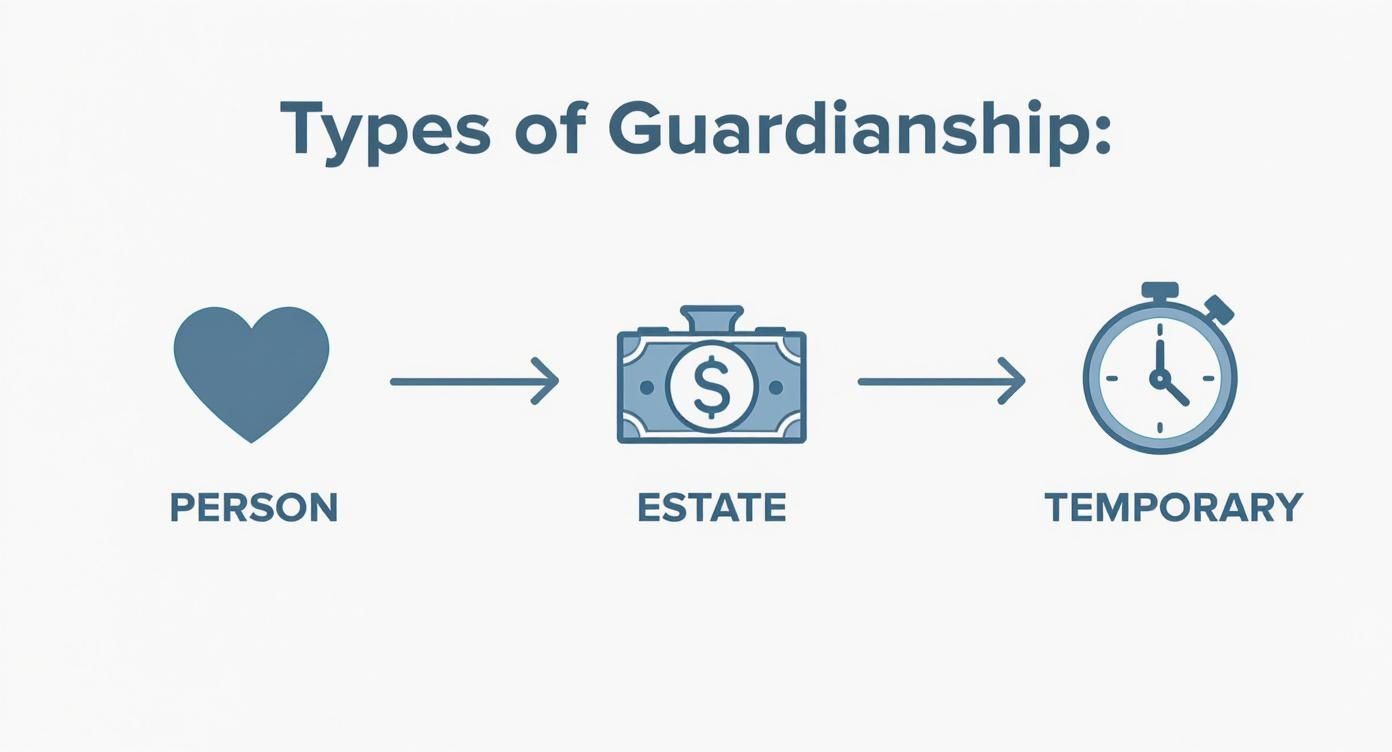
This visual clarifies that the process is tailored to the person's unique needs, whether that means managing day-to-day care, protecting their assets, or stepping in during a crisis.
Step 3: The Hearing and Court Decision
After the application is filed, a hearing is scheduled. All interested parties, including close relatives, must receive formal notice so they have a chance to appear and be heard.
At the hearing, the judge will consider all the evidence, including:
- The physician's report.
- Your testimony about why guardianship is necessary.
- The attorney ad litem’s report and recommendation.
- Testimony from the proposed ward, if they are able and wish to participate.
You must prove with clear and convincing evidence that the proposed ward is incapacitated and that appointing a guardian is in their best interest. This is a high legal bar, intentionally set to safeguard an individual’s fundamental rights. With many courts now operating differently, understanding the essential guidelines on remote proceedings is also becoming more important.
A Real-Life Scenario: Consider Sarah, whose elderly father, John, has advancing dementia. He's forgetting to pay bills and has wandered from home. Sarah files for guardianship. The court appoints an attorney ad litem who meets with John. At the hearing, Sarah presents a doctor's report detailing his cognitive decline and testifies with heartfelt concern. The judge, seeing the clear evidence, grants Sarah guardianship of the person and estate to ensure John's safety and financial stability.
If the judge agrees a guardianship is necessary, they will sign an order appointing you. You must then take an oath and post a bond (which is like an insurance policy) before you can officially act. Once these final steps are done, the court issues Letters of Guardianship—the official document proving you have the authority to make decisions.
This process is detailed for a good reason. Following these steps correctly ensures the outcome is fair and truly serves the well-being of your family member.
Fulfilling Your Responsibilities as a Guardian

Stepping into the role of a guardian is a profound act of service and love. It's a commitment built on trust—not just with your loved one, but also with the court that appointed you. To fulfill this role with the compassion and integrity it deserves, it's important to understand your legal and ethical duties from the start.
The responsibilities you'll carry depend on which type of guardianship the court has granted. Each role comes with its own set of critical tasks, all aimed at protecting the ward’s well-being and dignity.
Duties of a Guardian of the Person
As the Guardian of the Person, your world revolves around the ward's daily life and personal care. You are stepping into their shoes to make the personal decisions they no longer can, always with the goal of ensuring their comfort, safety, and happiness.
Your primary duties will include:
- Deciding on a Residence: You have the authority to choose where the ward will live, whether it's their own home, with you, or in a facility that offers more support.
- Making Medical Decisions: You will consent to medical, psychiatric, and surgical treatments to make sure the ward gets the healthcare they need.
- Providing for Basic Needs: It is your responsibility to ensure the ward has everything they need—proper food, clothing, and a safe, supportive environment.
This role is all about advocacy. You become the dedicated voice making sure your loved one's personal needs are met with respect and kindness.
Duties of a Guardian of the Estate
If you're appointed as the Guardian of the Estate, your focus shifts to finances. You become the steward of the ward’s assets, and your job is to manage their money and property wisely and ethically.
Key tasks for this role involve:
- Managing Assets: You must take legal control of all the ward's property, from bank accounts and investments to real estate.
- Paying Bills: It's your duty to see that all the ward's financial obligations—utility bills, medical expenses, and more—are paid correctly and on time.
- Protecting Property: You have a legal obligation to protect the ward's assets from being lost, wasted, or mismanaged.
No matter which role you fill, every decision you make must be guided by one unwavering principle: the best interest of the ward. You are legally required to act as a fiduciary, which means you must put their needs and interests above your own, without exception.
Accountability to the Court
A crucial part of being a guardian is staying accountable to the court. This is a legal requirement designed to protect the ward from neglect or exploitation. You'll have to provide regular, detailed reports to the judge overseeing the case.
The court system takes these reporting duties incredibly seriously. Failing to file reports on time can lead to serious legal consequences, as it’s the primary way the court ensures guardians are acting appropriately.
These required reports typically include:
- The Initial Inventory: Shortly after your appointment, you must file a sworn inventory that lists all property belonging to the ward’s estate.
- The Annual Report on the Person: Every year, the Guardian of the Person files a report detailing the ward's condition, living arrangements, and any significant life changes.
- The Annual Accounting: The Guardian of the Estate must file a detailed financial report each year, accounting for all income and expenses on behalf of the ward.
Keeping up with these deadlines can be challenging for busy families. A state-level review revealed that a surprising number of cases were out of compliance, with 44% missing annual financial accountings and 32% missing reports on the person's well-being. You can learn more about these findings from the Guardianship Compliance Pilot Project. This data drives home how vital it is to stay organized and diligent in your role.
Overcoming Common Challenges in Guardianship Cases
The path to guardianship is almost always paved with good intentions, but that doesn’t mean it’s free of emotional and practical hurdles. Knowing what these challenges look like ahead of time helps you prepare to meet them with patience, strategy, and a focus on what truly matters—your loved one’s well-being.
At The Law Office of Bryan Fagan, PLLC, we believe in empowering families with knowledge. Acknowledging these difficulties doesn't make the journey harder; it makes you a more prepared and effective advocate.
Navigating Family Disagreements
One of the most emotionally draining parts of a guardianship case can be disagreements among family members. One sibling might be convinced guardianship is the only way to protect Mom, while another feels it’s an overreach that strips her of her dignity. These conflicts almost always come from a place of love, even if they show up as heated arguments.
When disputes arise, open communication is critical. A family meeting, perhaps with a neutral third party, can give everyone a chance to feel heard. The goal isn't to win an argument; it's to find common ground and remember that protecting your loved one is the one thing you all agree on.
The Difficulty of Proving Incapacity
To establish a guardianship in Texas, you must prove with clear and convincing evidence that the person is legally incapacitated. That's a high legal bar, and it’s not always straightforward. Some individuals have good days and bad days, which can make their condition seem less severe at a glance.
This is where solid medical evidence becomes non-negotiable. A detailed physician's certificate is the cornerstone of your case, but you might also need testimony from caregivers or other healthcare providers to paint a complete and honest picture for the judge.
The Burden of Court Compliance
The legal duties of a guardian are ongoing. The court demands strict adherence to reporting deadlines to ensure the ward is protected. For busy family members, staying on top of these requirements can be a real challenge.
This isn't just administrative busywork; it's a critical accountability measure. A massive review by the Texas Guardianship Compliance Project found that roughly 41% of cases were out of compliance with court requirements, leading to significant reforms. You can learn more about the findings that spurred these guardianship reforms.
This statistic shows how important it is to be organized. If needed, don't hesitate to seek legal help to make sure all annual reports and accountings are filed correctly and on time. Overlooking these duties can have serious consequences, including being removed as guardian.
Facing these challenges with awareness and support turns potential obstacles into manageable steps, keeping the focus right where it belongs: on providing the best possible care for your family member.
How to Modify or End a Guardianship in Texas
Life doesn’t stand still, and neither should a legal arrangement like guardianship. Think of it as a flexible shield—it’s there to protect a loved one when they need it, but it’s designed to adapt as their life changes.
Texas law recognizes that guardianship isn’t always a lifelong necessity. It’s a tool that should only last as long as it's truly needed, always respecting the dignity and independence of the person it’s meant to protect.
When Circumstances Change
What kinds of life events might mean a guardianship needs to be revisited? The court understands that people recover, children grow up, and situations evolve.
Here are a few common reasons to modify or end a guardianship:
- A Minor Turns 18: When a child under guardianship becomes a legal adult at 18, the guardianship automatically ends. The guardian’s job then shifts to closing out the case file with the court.
- An Adult Regains Capacity: Imagine an adult was incapacitated after a serious car accident but has since made a full recovery. If they can manage their own affairs again, they or their guardian can ask the court to restore their legal rights and dissolve the guardianship.
- The Guardian Can No Longer Serve: If a guardian passes away, becomes incapacitated, or can no longer handle the duties for any reason, the court will need to step in and appoint a successor to take their place.
The Legal Steps for Making a Change
Changing a guardianship isn’t something you can do informally. You must return to the same court that created the arrangement.
The process begins by filing a formal request, usually called a Motion to Modify or a Motion to Terminate the Guardianship. This document clearly explains to the judge what’s changed and why the guardianship needs to be adjusted or ended completely.
For example, if you’re arguing that an adult has regained their capacity, you'll need to back it up with solid evidence, like a new evaluation from a physician. The court will then schedule a hearing to review the facts and decide if the change is truly in the ward’s best interest.
This court-led process is a critical safeguard. It ensures that any changes are made with extreme care, keeping the ward's well-being as the number one priority. The judge’s main goal is to confirm that the person is truly ready to take back control of their life and will be safe doing so.
Following these legal steps is a fundamental part of a guardian's responsibility. As your family's circumstances shift, revisiting the guardianship ensures the protections in place are still the right fit.
Frequently Asked Questions About Guardianship
When you're considering guardianship in Texas, it’s natural to have questions. Here are some of the most common concerns we hear from families, answered with clarity and compassion.
How Much Does Guardianship Cost in Texas?
The honest answer is: it depends. The total cost can vary based on the complexity of your family’s situation. You should plan for court filing fees, the fee for the court-appointed attorney (ad litem) who will represent your loved one, and your own attorney's fees. If the guardianship is contested by another family member, the costs will likely increase due to the extra legal work involved.
Do I Need a Lawyer to Get Guardianship?
Legally, you can file on your own. But the process is a maze of strict legal rules and deadlines. Even a simple mistake can cause major delays or even get your application denied. Given the immense responsibility of protecting someone you love, having an experienced attorney in your corner is strongly recommended. It ensures everything is handled correctly and compassionately from day one.
What Happens If a Family Member Objects?
It’s not uncommon for a relative to contest a guardianship. If this happens, the court will set a formal hearing where both sides can present their evidence. The judge will hear all testimony and make a final decision based on one single principle: what is in the best interest of the proposed ward. This is a critical moment where having skilled legal representation is essential to ensure your voice is heard.
Many families ask how guardianship differs from adoption. While both are designed to protect someone's well-being, they serve different legal functions. Guardianship is often temporary and does not terminate parental rights, while adoption creates a new, permanent parent-child relationship. To clear up any confusion, you can read our detailed guide on legal guardianship vs adoption in Texas.
Getting clear on these details can make you feel much more prepared for the road ahead.
The path to guardianship is a significant one, and you don’t have to figure it out alone. At The Law Office of Bryan Fagan, PLLC, we are here to help Texas families with empathy and clarity. If you are exploring your options for protecting a child or an aging loved one, we invite you to schedule a free, no-obligation consultation. Let's talk through your situation and help you take the next step with confidence and peace of mind. https://texasfamilyadoption.com
