
Thinking about becoming a foster parent is a huge, heart-led decision, one that’s likely filled with a mix of excitement and a whole lot of questions. One of the first on many people’s minds is simple: Do I even qualify?
The short answer is that Texas is looking for caring, responsible adults who can offer a safe, stable, and loving home to a child in crisis. You don't need to be perfect, wealthy, or fit some specific mold. At The Law Office of Bryan Fagan, PLLC, we believe that understanding these requirements is the first step toward the beautiful journey of building a family through foster care.
What Are the Core Foster Parent Requirements?
When you decide to explore becoming a foster parent in Texas, it’s easy to get bogged down in the "what-ifs" and worry about whether you’ll measure up. Let's reframe how we look at the foster parent requirements. They aren't a series of impossible hurdles designed to weed people out; they're a supportive framework built to protect children and prepare you for this important role.

Every single standard, from background checks to home safety inspections, is rooted in one guiding principle: the best interests of the child. The goal is to make sure that when a child walks through your door, they are entering a secure and nurturing space where they can finally start to heal.
Before we dive into the details, here's a quick overview of what the state generally looks for.
Texas Foster Parent Requirements at a Glance
| Requirement Category | Key Details |
|---|---|
| Age | Must be at least 21 years old. |
| Residency | Must be a Texas resident. |
| Marital Status | Can be single, married, divorced, or widowed. |
| Financial Stability | Must demonstrate you can support your own family financially. |
| Background Checks | All adults in the home must pass criminal and abuse/neglect checks. |
| Health | Must be physically and emotionally healthy. |
| Home Environment | Your home must meet basic safety standards. |
| Training | Must complete state-required training (e.g., PRIDE/STAR). |
This table gives you the big picture, but remember, every family's journey is unique. Let's break down what this really looks like in practice.
A Journey of Partnership, Not Perfection
It’s one of the biggest myths out there: that you have to own a home, be married, or earn a six-figure income to foster. The truth is, dedicated, compassionate people from all walks of life make the best foster parents. Single adults, renters, and members of the LGBTQ+ community are not only welcome—they are desperately needed.
The system isn’t looking for perfection; it’s looking for connection. What truly matters is your ability to provide stability, patience, and unconditional love.
Your unique life experiences, your background, your personality—these are the very things that can help a child feel seen, understood, and finally, at home. For example, a single teacher who loves art can provide a creative, stable environment for a child who needs a quiet, nurturing space to thrive.
Think of the licensing process as a partnership between you and the state. The agency provides the training and resources to get you ready. You provide the heart and the home. The requirements are there to prepare you for the realities of fostering, giving you the tools you need to handle the tough days and celebrate the incredible breakthroughs.
Here at The Law Office of Bryan Fagan, PLLC, we see foster care as a powerful way to build families. Whether your goal is to provide temporary care or you’re on a foster-to-adopt journey, understanding these first steps is key. We’re here to bring clarity and support to the process, making sure you feel confident and prepared right from the start.
Understanding the Foundational Eligibility Rules
When you first start looking into fostering, the list of rules can feel a little intimidating. But think of it this way: these foundational rules aren't meant to be roadblocks. They’re simply the first step to ensure every child lands in a safe, stable, and loving home. In Texas, these core standards are designed to be inclusive, welcoming caring adults from all walks of life.
The most straightforward foster parent requirement is age. You must be at least 21 years old to start the journey. While there’s no official upper age limit, the state will look at your health and ability to actively care for a child. This opens the door for young professionals, settled middle-aged couples, and even healthy, active retirees who have a lifetime of experience to share.
Defining Financial and Home Stability
Many hopeful parents get hung up on money, but financial stability isn't about being wealthy. You don't need to own a huge house or earn a six-figure salary.
- Financial Stability: This simply means you can manage your own household expenses without having to rely on the financial support that comes with a foster child. Whether you're a single teacher on a modest budget or a two-income family, the key is showing you can handle your finances responsibly.
- Home Stability: You also don't need to own your home. Many successful foster parents rent apartments, duplexes, or houses. The main concern is that your home is safe, has enough room for a child (including their own bed), and provides a consistent environment.
For example, a single man renting a two-bedroom apartment can absolutely qualify, just like a retired couple in a paid-off home. The state's focus is squarely on your ability to provide a secure and dependable home life.
Welcoming All Family Structures
One of the best parts about fostering in Texas is how open the system is to different family structures. Your marital status is not a dealbreaker. You can be single, married, divorced, or widowed and still provide an incredible home. This approach mirrors the beautiful diversity of modern families and recognizes that love and stability come in many forms.
This flowchart breaks down the simple, foundational steps to eligibility.
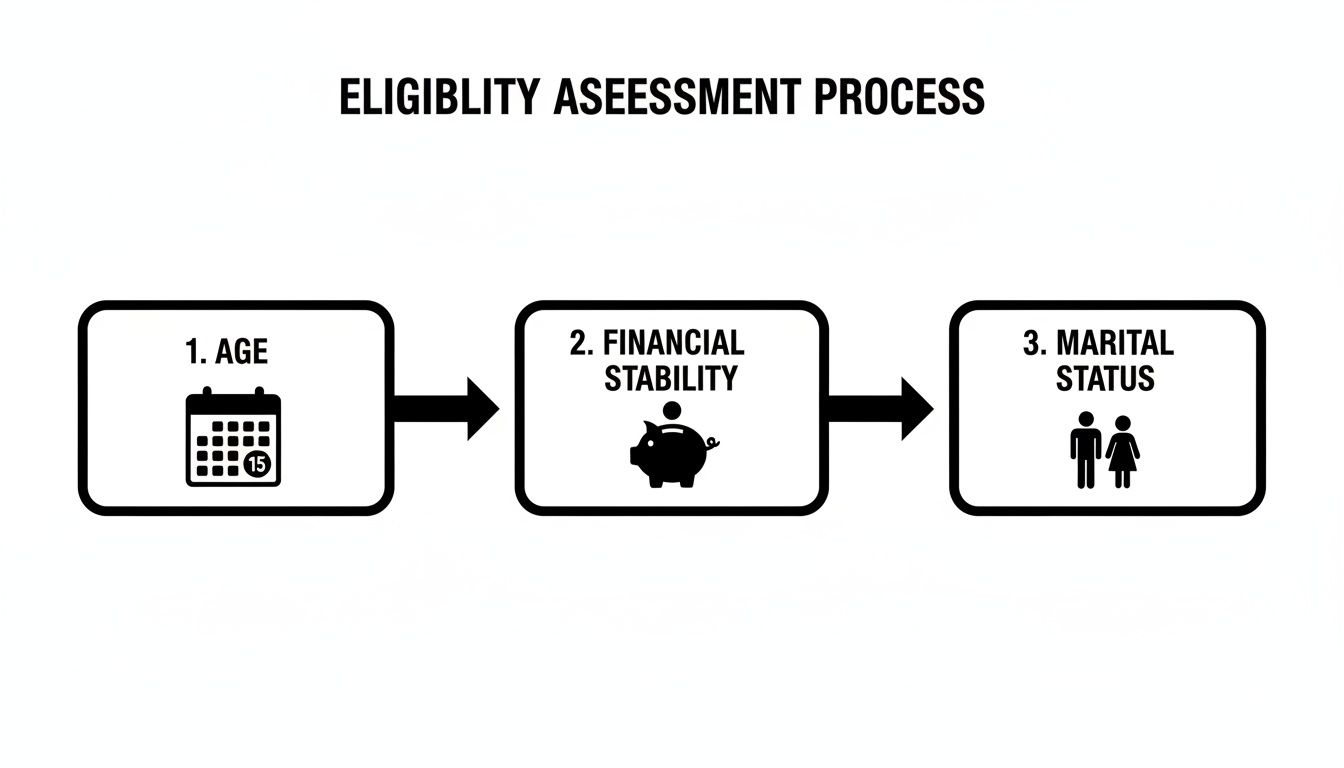
As the visual shows, the core requirements—age, financial health, and family status—are straightforward and designed to be accessible.
This inclusive mindset is so important. While Texas requires foster parents to be at least 21, the embrace of single and LGBTQ+ parents tracks with national trends. In fact, single-parent adoptions are projected to rise significantly by 2026. You can discover more insights about these adoption statistics and see how families are changing.
"It doesn't matter what your sexuality is—all that matters is that you are able to provide a child with a loving, safe, and nurturing home. A home where they can feel welcomed and part of a family."
This compassionate perspective is at the very heart of the Texas foster care system. Whether you are a single gay man who has always dreamed of being a dad or a newly married couple ready to grow your family, you are needed. The system isn't looking for a specific family model; it's looking for caring hearts and stable homes.
Navigating Background Checks and The Home Study
For many hopeful parents, the background check and home study can feel like the most nerve-wracking parts of the entire process. It’s completely normal to feel a bit anxious about someone looking so closely at your life and your home.
But we encourage you to reframe this. Think of these steps not as an interrogation, but as a partnership. This is all about making sure every child has a safe place to land.

Your licensing agency is on your team. They’re there to get to know you, understand what makes you a great potential parent, and confirm your home is a secure environment. Let’s walk through what this really looks like.
Understanding the Background Checks
First things first: every adult aged 14 or older who lives in your home will need to complete a thorough background check. This is a non-negotiable safety requirement designed to protect vulnerable kids.
In Texas, this involves two key checks:
- FBI Fingerprint-Based Criminal History Check: This is a standard, national check that scans for any past criminal activity. It’s the same kind of check required for anyone who works closely with children.
- Texas Department of Family and Protective Services (DFPS) History Check: This review specifically looks for any history of child abuse or neglect reports. Its only job is to ensure children are placed in homes free from any past risk of harm.
Under Chapter 162 of the Texas Family Code, certain serious offenses, especially anything involving violence or harm to a child, are automatic disqualifiers. However, a minor issue from your college days likely won't prevent you from fostering. The key is honesty. Always be upfront with your caseworker about anything in your past.
The goal of the background check isn't to judge you. It's a universal safety net, applied to every applicant, to ensure the well-being and security of every child entering the foster care system.
This uniform standard creates a foundation of trust that is absolutely essential for a child’s healing journey.
The Home Study as a Collaborative Process
If the background check is about safety, the home study is about connection. This part is far less about having a perfect, magazine-worthy house and much more about understanding who you are as a person and a future parent.
A caseworker will visit your home a few times, but these aren’t surprise inspections designed to catch you off guard. They are scheduled conversations. Your caseworker will want to chat about:
- Your life story and personal history.
- Your views on parenting and discipline.
- Your support system—friends, family, and community.
- Your personal reasons for wanting to foster.
Think of it as building a relationship with a guide who's helping you prepare for the road ahead. They will also do a basic safety inspection of your home, making sure you have essentials like working smoke detectors, a first-aid kit, and safe storage for potential hazards. This isn't about wealth or style; it’s simply about creating a safe space.
Ultimately, this process helps the agency figure out what kind of child might thrive in your unique home. Are you an active, outdoorsy family or a quiet crew that loves movie nights? Your specific qualities are what will help create the perfect match for a child who needs you.
How Training Prepares You for Success
After the paperwork and background checks, the idea of hours of mandatory training can feel like just one more hurdle. Many hopeful parents see it as another box to check, but we encourage you to look at it a different way.
Think of this training as your toolkit, packed with the real-world skills, knowledge, and confidence you’ll need on day one.

This isn’t about just meeting a foster parent requirement; it’s an investment in your future family. It prepares you for the realities of caring for a child who has experienced trauma, giving you practical strategies to build trust, manage tough behaviors, and create a truly healing home. You aren’t expected to have all the answers right away; Texas provides this training to help you become the best parent you can be.
Inside the PRIDE Training Program
In Texas, most prospective foster parents go through a program called PRIDE, which stands for Parent Resources for Information, Development, and Education. Forget dry lectures and slideshows—this curriculum is designed to be interactive and deeply insightful.
The whole point is to help you see the "why" behind a child's actions and equip you with trauma-informed ways to respond. Rigorous training is a standard requirement across the country because it ensures every child is placed in a safe, skilled home. While many states mandate around 20-30 hours of pre-service training, Texas's comprehensive program is tailored to prepare parents for the unique needs of children in the system. You can learn more about these national standards and how they contribute to child safety on cafo.org.
PRIDE training is built on five core principles:
- Protecting and Nurturing Children: Learning to create a home that feels both physically and emotionally safe.
- Meeting Developmental Needs: Understanding how trauma affects a child's development and how you can help them catch up.
- Supporting Relationships with Birth Families: Navigating the complicated but critical connections between a child and their biological family.
- Connecting Children to Safe, Nurturing Relationships: Helping a child form a healthy attachment to you and your family.
- Working as a Member of a Professional Team: Learning to collaborate effectively with caseworkers, therapists, and other professionals who are all on the child’s team.
Practical Skills for Real-World Challenges
This training isn’t just theoretical. It’s packed with real-world scenarios, group discussions, and even role-playing exercises that let you practice these new skills in a supportive setting before you ever need them.
For instance, you might work through a scenario where a child hoards food because of past neglect. Instead of seeing it as just a "bad habit," PRIDE teaches you to recognize it as a survival skill. You'll learn compassionate, practical strategies—like giving the child their own designated snack drawer—to help them feel secure and finally start to trust that their needs will always be met in your home.
"I went into training thinking I already knew how to be a parent, but PRIDE opened my eyes. It taught me to listen to what a child's behavior is really saying and gave me the confidence to respond with empathy instead of frustration."
This shift in perspective is what makes a great foster parent. It’s about moving from simply reacting to a child's behavior to truly understanding the story behind it.
The training also dives into other essential topics, including:
- Understanding Grief and Loss: Children in foster care are grieving—the loss of their family, their home, and their sense of "normal." You'll learn how to help them navigate these powerful emotions.
- Discipline with Connection: Discovering effective, trauma-informed discipline that builds your relationship rather than creating fear.
- Cultural Awareness: Learning to honor and support a child's cultural, racial, and ethnic identity, which is a vital part of their self-worth.
By the time you finish, you won't just have fulfilled a state requirement. You'll have a solid foundation and a community of other foster parents to lean on, ready to welcome a child with an open heart and the skills to help them truly thrive.
The Path from Fostering to a Forever Family
For many people, the path to foster care starts with a quiet hope—not just to offer a child a temporary safe place, but to build a forever family. This journey, often called “foster-to-adopt,” is one of the most incredible ways families are formed here in Texas. But it's a road that demands patience, a whole lot of heart, and a very clear grasp of the legal side of things.
Making the leap from temporary caregiver to permanent parent means you have to balance your own dreams with the realities of the system. Remember, the primary goal of foster care is always what’s best for the child, which is family reunification whenever safe and possible. Knowing this from day one can help you guard your heart for the emotional journey ahead.
When a Child Becomes Legally Free for Adoption
The shift from fostering to adopting can only happen after a child becomes “legally free” for adoption. This is a formal legal milestone guided by the Texas Family Code, which prioritizes finding a permanent home for children who can't safely go back to their biological parents.
This happens when a court officially terminates the birth parents' legal rights after determining that reuniting the child with their family just isn’t a safe or viable option. This decision is never taken lightly. It's the final step in a long, difficult legal process involving caseworkers, lawyers, and judges, with everyone focused on the child's long-term safety and well-being.
The legal process of terminating parental rights is one of the most serious actions a court can take. It is done with immense care, ensuring that every possibility for family reunification has been explored before creating a path for a new, permanent family to be formed through adoption.
For a foster parent, this waiting period can be a mix of emotions. You're loving and caring for this child as if they were your own, all while knowing their future is still up in the air. This is exactly where empathy, resilience, and a solid support system are absolutely non-negotiable.
Partnering with Your Team for a Smooth Transition
During this uncertain time, your most valuable asset is your partnership with your professional team. This includes your agency caseworker and, most importantly, a compassionate family law attorney. Think of them as your guides, your advocates, and your source of truth when the path forward gets murky.
- Your Caseworker: This person is your daily link to the child's case. Keeping an open and honest line of communication with them is critical. They'll give you updates, help you navigate the emotional challenges, and make sure you're checking every box.
- Your Attorney: An experienced attorney brings the legal expertise needed to get the adoption finalized. They will handle the court filings, stand with you in hearings, and sweat the details so you don't have to.
Imagine this period like building a bridge. Your caseworker helps you gather the right materials and lay a strong foundation by providing excellent care. Your attorney then comes in with the legal engineering to make sure that bridge is solid, secure, and leads directly to a successful adoption.
This team approach turns a maze of legal jargon into a manageable series of steps. For a more detailed look at the specific milestones you'll encounter, you can learn more about how to foster to adopt in Texas with our step-by-step guide.
At the end of the day, the journey from foster parent to adoptive parent is nothing short of profound. It's about loving a child through deep uncertainty and finally celebrating the moment they become legally and officially part of your family forever. With the right support and legal guidance, you can walk this path with confidence, knowing you're building a forever family on a foundation of both love and law.
How Legal Guidance Can Support Your Foster Journey
Navigating the Texas foster care system, especially when adoption is on the horizon, can feel like a tangled web of legal paperwork and emotional hurdles. Your agency caseworker is an essential guide, but a dedicated family law attorney serves a different role: they are your personal advocate, ensuring every step you take is legally sound and confident.
You shouldn't have to decipher the legal complexities of meeting every foster parent requirement on your own. Having an experienced attorney in your corner brings a sense of calm and control to an often-overwhelming process.
Your Advocate from the Home Study to Finalization
An attorney’s role isn’t just for the final adoption hearing. They can provide clarity and support from the very beginning, helping you spot and tackle potential roadblocks before they become serious issues.
For example, during the home study, questions might arise about your financial history, background, or even the fine print on your lease. An attorney helps you prepare your documents and answer those questions with complete confidence. They become your go-to professional when things get confusing. If you're not sure how to find the right legal partner, our team has put together some great advice on how to find a good family law attorney who truly understands the Texas adoption landscape.
Securing Your Forever Family with Legal Expertise
When a child in your care becomes legally available for adoption, the legal intensity dials up. This is where an attorney's guidance is absolutely critical. They take charge of the complex legal procedures laid out in the Texas Family Code, ensuring every document is filed correctly and on schedule.
An attorney will:
- Review all court orders tied to the termination of parental rights.
- Prepare and file the adoption petition with the court on your behalf.
- Represent you at the finalization hearing, transforming a day of legal procedure into a pure moment of celebration for your family.
The legal finalization is so much more than a judge's signature on a document; it’s the moment the law officially recognizes the love and commitment you've already poured into your child. An attorney ensures that this powerful moment is built on a perfect legal foundation.
Think of your lawyer as the person who sweats the details so you can focus on what truly matters: being a parent. They protect your rights, advocate for the child’s best interests, and ensure a smooth, secure path from foster parent to a forever family.
At The Law Office of Bryan Fagan, PLLC, our goal is to empower you with the clarity and support you need at every stage. We’re here to answer your questions, ease your worries, and help you confidently take that next step.
Frequently Asked Questions About Fostering in Texas
Deciding to become a foster parent is a huge, heart-driven step, and it’s completely normal for your mind to be buzzing with questions. It’s a journey filled with hope, but also a lot of details to get right. We’ve gathered some of the most common questions we hear from aspiring foster parents to give you the clear, straightforward answers you need to move forward with confidence.
Can I Be a Foster Parent if I Rent My Home?
Absolutely. This is one of the top questions we get, and the answer is a firm yes. You don’t have to be a homeowner to meet the foster parent requirement in Texas. Whether you’re in a rented house, an apartment, or a condo, the state is focused on one thing: your ability to provide a safe, stable, and loving home.
What matters most for your rental property are a few key things:
- Enough Space: A foster child needs their own designated bedroom. They can’t share a room with an adult.
- Safety First: Your home has to pass a basic safety check, which includes things like working smoke detectors and ensuring potential hazards are securely stored away.
- Landlord Permission: It's always a smart move to check your lease for any rules about occupancy. A quick, open conversation with your landlord about your plan to foster is essential, and it’s best to get their permission in writing.
Do I Have to Be Married to Foster a Child?
No, you don't. Texas welcomes single, capable adults from all walks of life to become foster parents. Your marital status—whether you're single, married, divorced, or widowed—is not what the licensing agency focuses on.
What they do care about is your ability to provide a stable, supportive home. Single individuals, including members of the LGBTQ+ community, are not only welcome but are desperately needed. As one social worker told us, what truly matters is your capacity to open your heart and home to a child who needs to feel safe and wanted.
Is There an Income Requirement to Foster?
There is no specific minimum income you have to earn. The state’s requirement is about financial stability, not about how much money you make. You simply need to show that you can manage your own household expenses without relying on the monthly reimbursement you receive for the foster child.
The focus is on responsible money management and your ability to maintain a stable household. The state wants to ensure that the foster care stipend is used entirely for the child's care and well-being.
What if I Have a Minor Criminal Offense in My Past?
This is a sensitive but important question. Every adult living in the home will need to pass a thorough background check. While serious crimes, especially those involving violence or any harm to a child, are automatic disqualifiers under the Texas Family Code, a minor offense from many years ago might not stop you from fostering.
The single most important thing you can do is be completely honest and upfront with your agency from day one. Hiding something is far more likely to cause a problem than disclosing it. Being transparent allows your caseworker to review the situation and guide you through the process with no surprises.
Navigating the foster care journey can feel complicated, but you don't have to figure it all out on your own. The team at The Law Office of Bryan Fagan, PLLC is here to offer the compassionate legal guidance you need, from understanding every last requirement to finalizing a foster-to-adopt plan. We invite you to schedule a free, no-obligation consultation to discuss your unique situation and learn how we can help you build your family.
