
The dream of building your family through adoption is a beautiful one, but it often comes with a quiet fear: what if something in my past stands in the way?
Many hopeful adoptive parents in Texas worry that a past mistake or personal challenge will automatically close the door to adoption. The reality, however, is often much more hopeful and nuanced than people imagine. While Texas has firm rules to protect children, most issues are not automatic deal-breakers.
This guide will walk you through Texas adoption requirements with the compassion and clarity your family deserves. We will address your biggest concerns head-on, explaining how factors like your finances, health, and personal history are actually reviewed, and empower you to take the next step toward building your family.
Your Path to Adoption Starts with Understanding
The journey to adoption can feel overwhelming, but understanding one core principle can replace anxiety with confidence. Everything circles back to a single idea mandated by the Texas Family Code: the "best interest of the child."
This isn't a rigid checklist designed to find "perfect" parents. It's a thoughtful process to ensure a child will be placed in a safe, stable, and loving home. For example, a family in Houston might wonder if their rented apartment disqualifies them. The answer is no. The focus is on the safety and stability of the home, not ownership.
The Focus on Safety and Stability
At its heart, the Texas adoption process is a partnership between you and the state to ensure a child's welfare. To do this, everyone goes through a few key steps, primarily the home study and comprehensive background checks. These evaluations are not meant to intimidate you; they simply help paint a complete picture of your life and your ability to provide a nurturing environment.
The system isn't looking for reasons to say "no." It's looking for every reason to confidently say "yes" to a family that can provide a child with the future they deserve.
Instead of seeing these steps as hurdles, think of them as opportunities. They are your chance to showcase your strengths, honesty, and readiness to be a parent. Throughout this guide, we will explore:
- The difference between an absolute disqualifier (a non-negotiable barrier) and a circumstantial concern (an issue that can be addressed).
- How the mandatory background checks and home study process actually work, step by step.
- The importance of honesty and proactivity in addressing potential issues in your past.
- How different adoption paths, like a kinship adoption, may have different requirements.
It’s easy to get caught up in the "what-ifs," but Texas law is designed to build families, not create barriers. Many common worries that keep prospective parents up at night are not the automatic disqualifiers they assume them to be. The table below cuts through the noise.
Common Adoption Concerns vs. Texas Law
| Common Concern | The Texas Approach (Best Interest of the Child) | Is It an Automatic Disqualification? |
|---|---|---|
| "I'm not wealthy." | The state looks for financial stability, not wealth. Can you meet a child's basic needs? | No. |
| "I'm single." | Texas law permits adoption by single individuals. Your ability to provide love and support is what matters. | No. |
| "I have a past criminal offense." | The nature, severity, and time since the offense are reviewed. Non-violent, older offenses are often manageable. | It depends. Only specific, severe felonies are absolute bars. |
| "I'm over 40." | There is no upper age limit, as long as you have the health and energy to parent. | No. |
| "I have a health condition." | The focus is on whether a condition is managed and if you have a support system in place. | No, as long as it doesn't impact your ability to care for a child. |
As you can see, the system is far more flexible and holistic than most people realize. It's about the big picture of your life and what you can offer a child.
Our goal at The Law Office of Bryan Fagan, PLLC, is to empower you with the knowledge to move forward confidently. Let’s begin by breaking down what the state truly looks for when building forever families.
The Texas Home Study and Background Check Process
Two phrases can send a shiver down the spine of any hopeful adoptive parent: "home study" and "background check." It’s easy to picture a stern inspector checking for dust or an investigator digging through every detail of your past.
Let’s clear the air. The reality is far more compassionate and collaborative.
Think of the home study less as a test you can pass or fail and more as a conversation. It’s a process designed to ensure a child will be placed in a safe, stable, and nurturing home. The goal is simply to paint an authentic picture of your life, what’s driving your desire to adopt, and your readiness to be a loving parent.
This isn't about finding a perfect family; it's about understanding your unique strengths and ensuring you're prepared. A licensed social worker will guide you through it, treating it like a partnership to get you ready for the incredible journey ahead.
What Really Happens During a Texas Home Study
The home study is a comprehensive review that pulls together a few key pieces of your life story. Each step helps the state and your adoption agency get to know you and your family on a deeper level.
- Interviews: You, your partner, and anyone else in your household will have warm, guided conversations with a social worker. These chats cover your personal history, relationship, parenting philosophies, and support system. Honesty is your best friend here.
- Home Visits: Yes, a social worker will visit your home, but they aren't judging your interior design. They’re checking for basic safety features—like working smoke detectors and secure windows—to confirm it’s a suitable place for a child to live and play.
- Financial Review: You'll be asked to share documents like tax returns and pay stubs. The goal is to verify financial stability, not wealth. The focus is on your ability to manage your resources and provide for a child's needs.
This is your opportunity to show the loving home you’re ready to provide.
The Role of Mandatory Background Checks
Alongside the home study, Texas law requires a thorough background check for every adult living in the prospective adoptive home—that usually means anyone age 14 and older. This is a non-negotiable step designed entirely to protect children. It’s not about judging you for a minor mistake from twenty years ago.
These are serious, fingerprint-based checks run through multiple databases, including:
- Texas Department of Public Safety (DPS)
- The Federal Bureau of Investigation (FBI)
- State and national child abuse registries
The purpose is to flag specific criminal histories that could put a child in danger. Investigators are looking for patterns of behavior or serious offenses that pose a direct risk, not digging for dirt.
The background check is a safety net for the child. While it can feel intrusive, its sole focus is confirming that your home will be a place of security and protection, free from any history of violence or abuse.
It’s crucial to understand that not every past offense is an automatic disqualifier. The system is designed to tell the difference between a serious, violent felony and a youthful indiscretion. By being open and honest from the start, you give your adoption professionals the chance to guide you through any potential concerns with clarity and support.
Understanding Criminal History and CPS Involvement
For many hopeful parents, this is the single most nerve-wracking part of the adoption process. The thought that a past mistake could derail your dream of starting a family can feel overwhelming. Let's walk through this with clarity, because the reality under the Texas Family Code is often more nuanced than you might fear.
The state’s primary goal is always to protect the child. This means certain serious offenses create a non-negotiable, absolute bar to adoption. But many other issues are discretionary, meaning they’re reviewed case-by-case. Your honesty and the personal growth you can demonstrate are your most powerful assets.
Absolute Bars to Adoption in Texas
Texas law is crystal clear about certain crimes. If you or any other adult living in your home has a conviction for specific felony offenses, you will be disqualified from adopting. This isn't a judgment on who you are today; it's a strict safety measure for the child.
These absolute bars typically include convictions for:
- Violent crimes against a child: Any offense involving injury, abuse, neglect, or sexual assault of a child.
- Serious violent offenses: Crimes like homicide, kidnapping, or aggravated assault.
- Domestic violence: A history of violence against a family or household member.
- Sexual offenses: Including sexual assault or indecency with a child.
If a background check reveals a conviction for one of these offenses, the adoption cannot move forward. This rule applies to every adult living in the prospective home.
The entire adoption journey is a series of checks and balances, starting with the home study and leading to background checks and a final decision. This flowchart gives you a high-level view of how it all fits together.
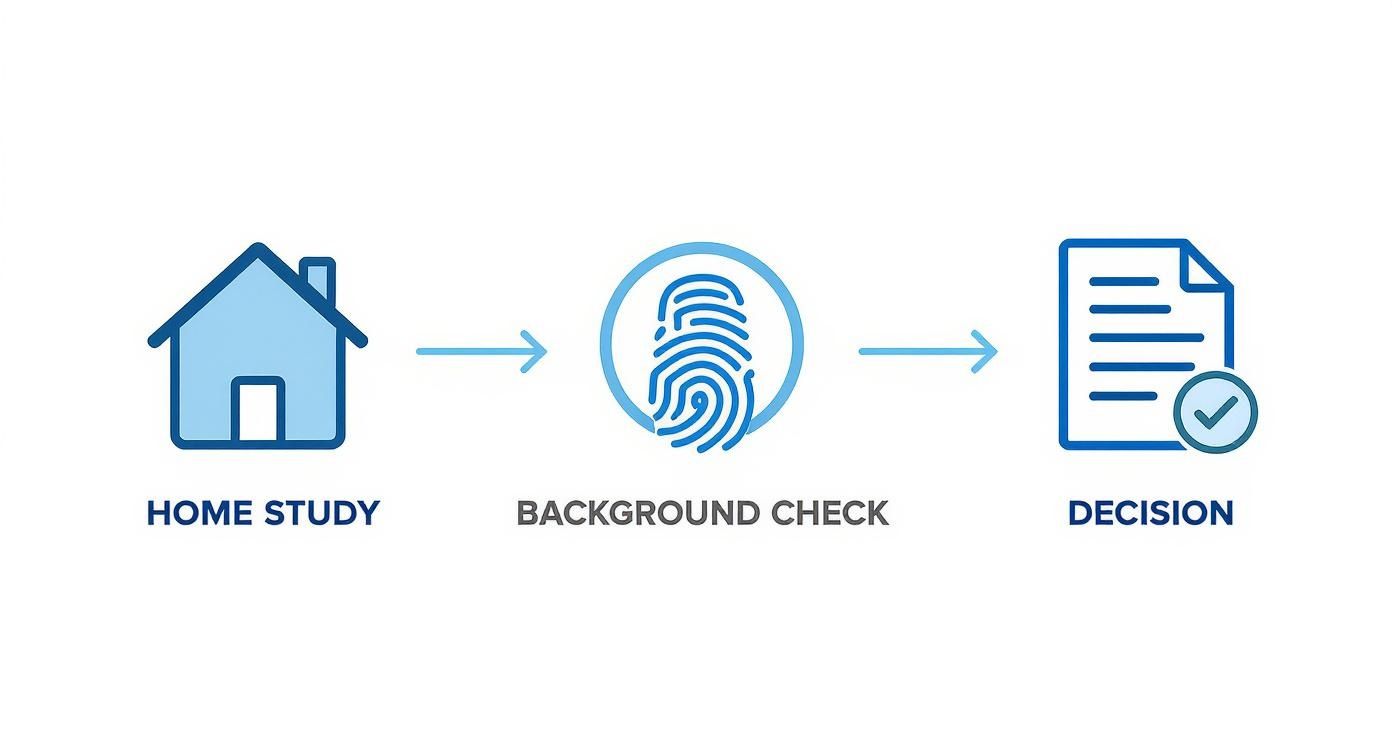
As you can see, the process is designed to gather a complete picture. The ultimate goal is to ensure the final decision is made with the child's best interests at the very heart of it all.
Discretionary Issues and Demonstrating Rehabilitation
Now, let's get into the gray areas where most people's real concerns live. What about a DUI from ten years ago? A misdemeanor charge from your college days? A non-violent felony in your distant past? The good news is that these do not automatically disqualify you.
Instead, your social worker and the court will look at the whole story:
- The nature of the offense: Was it a non-violent crime or a youthful mistake?
- When it occurred: An offense from 15 years ago is viewed very differently than one from last year.
- Evidence of rehabilitation: This is the most critical piece. Have you completed probation, attended counseling, held a steady job, and built a stable life?
The agency is less interested in the person you were and far more focused on the person you are today. Being upfront about these issues from the very beginning builds trust. Hiding a past issue is infinitely more damaging than addressing it honestly.
Navigating Past CPS Involvement
Much like a criminal record, a history with Child Protective Services (CPS) can feel like a massive hurdle. But here, too, context is everything. There is a world of difference between a previous investigation that was closed with no findings and a confirmed history of child abuse or neglect.
A past CPS case does not mean your adoption journey is over. The critical question is what the outcome was and what you have done since to create a safe and stable home environment.
If you have a confirmed history of abusing or neglecting a child that resulted in the termination of your parental rights, this will almost certainly be an absolute bar to adoption. Beyond criminal records, agencies will be extremely vigilant in understanding factors related to child abuse in an applicant's background.
However, if CPS was involved due to a misunderstanding, a difficult period in your life that is long resolved, or a situation where the case was closed without action, it becomes a discretionary issue. You’ll just need to be prepared to discuss it openly during your home study. Provide documentation showing the case outcome and evidence of the positive changes you've made, like completing parenting classes or counseling.
In all these scenarios, your transparency is your greatest strength. An experienced adoption attorney can be your best guide in helping you present your story completely and effectively.
Evaluating Your Financial Health and Personal History
Many hopeful parents are held back by myths about what can disqualify them from adopting. They worry they need to be wealthy, have a flawless health record, or fit a perfect mold. Let's set the record straight—the Texas adoption process is focused on one thing: your ability to provide a stable, loving home.
This part of the evaluation is all about the big picture of your life. Agencies and courts are looking for stability, responsibility, and the capacity to care for a child for the long haul.

Financial Stability, Not Riches
One of the most stubborn myths is that you have to be rich to adopt. That’s just not true. The financial review during your home study is designed to confirm stability, not a certain income bracket.
The real question is: can you responsibly manage your money to provide for a child's needs? A social worker will look over documents like pay stubs and tax returns to see that you have a steady income and can handle your current bills. Getting a clear handle on your household finances is a huge plus; you can learn more about how to determine the best budget percentages for you to build that confidence.
The goal is to see a responsible financial plan in action. A past bankruptcy or significant debt isn't an automatic "no," especially if you can show a solid track record of rebuilding and managing your money responsibly since then.
Personal Health and Long-Term Care
Your physical and mental health will also be part of the conversation, but again, perfection is not the standard. Having a managed chronic illness, a physical disability, or a history of seeing a therapist does not automatically disqualify you.
Here's what they’re really focused on:
- Long-Term Ability to Parent: Will your health condition affect your life expectancy or your ability to physically and emotionally care for a child until they’re grown?
- Stability and Management: Are you following a treatment plan? Is your condition well-managed? Getting a letter from your doctor confirming you're fit to parent can be a huge help.
- Support System: Do you have a network of family and friends who can step in and help if you need it?
Being open about your health journey shows self-awareness and a proactive approach—qualities that are seen as major strengths. For a deeper dive, our guide on Texas adoption financial stability and health assessments provides a great step-by-step overview.
Your Life Story and Path to Parenthood
Your personal history—your age, your marital status, and your life experiences—all come together to tell your story. Texas law is refreshingly inclusive, focusing on your ability to provide a loving home above all else.
- Age: There's no upper age limit to adopt in Texas. As long as you have the health, energy, and stability to raise a child, your age isn't a barrier.
- Marital Status: You can absolutely adopt as a single parent in Texas. The state and its agencies welcome dedicated single people with open arms. LGBTQ+ couples also have the same legal rights to adopt as anyone else. It's your ability to be a parent that matters.
- Past Substance Abuse: A history of substance abuse can be a serious hurdle, but it’s not always insurmountable. What agencies need to see is a documented record of long-term recovery and stability. This means showing years of sobriety, consistent participation in support programs, and a stable life you've built. Showing how you've grown is far more powerful than the past itself.
How Requirements Vary for Different Adoption Paths
Not every path to building a family through adoption follows the same map. The specific rules and requirements can shift depending on the type of adoption you pursue. Understanding these differences is key to preparing for the road ahead.
The core principles of child safety and well-being, as laid out in the Texas Family Code, are the foundation for all adoptions. But the intensity of the home study, agency criteria, and even international laws can add different layers to the process.
Private Infant Adoption vs. Adopting from Foster Care
When you pursue a private infant adoption, you will almost always work with a licensed adoption agency. These agencies must follow all state laws, but they often have their own additional criteria. For instance, an agency might have specific preferences regarding a family's faith or financial reserves—all on top of the state’s minimum stability requirements. This is done to honor the wishes of birth mothers who entrust them with finding the perfect family for their child.
Adopting from the Texas foster care system, often called a CPS adoption, has a different primary focus. The main goal here is to find a safe, permanent, and loving home for a child in the state's custody. While all the same critical safety checks apply, the emphasis is less on agency-specific preferences and more on your ability to provide stability and care for a child who may have experienced trauma. The state is actively seeking qualified, compassionate parents.
Stepparent and Kinship Adoptions
When you’re adopting a child you already have a strong relationship with, like a stepchild or a grandchild, the process is often more streamlined. The law recognizes that these situations are unique.
In stepparent and kinship (relative) adoptions, the home study requirements are often modified or, in some cases, may be waived entirely by the court. The focus remains on ensuring the home is safe, but the intensive evaluation might be less extensive because you are a known and trusted figure in the child’s life.
But it’s crucial to remember: mandatory criminal background checks always apply. No matter the relationship, the state’s duty to protect the child remains the top priority.
The Complexities of International Adoption
Adopting a child from another country introduces a much more complex set of rules. When pursuing an international adoption, you have to meet the requirements of three separate governing bodies:
- The State of Texas
- The U.S. government (U.S. Citizenship and Immigration Services)
- The child’s country of origin
Each country has its own strict laws regarding the age, income, and health of prospective parents. What is acceptable in Texas might be a deal-breaker in another nation. Sadly, the number of international adoptions to the U.S. fell by a staggering 94% between 2004 and 2023, as detailed in this analysis of international adoptions. This reality underscores just how important it is to work with an experienced attorney.
Proactive Steps to Address Potential Hurdles
If you've discovered a potential roadblock in your past, don't panic. Instead, see this as an opportunity to get ahead of the story. Taking ownership of your past and showing how you’ve grown is one of the most powerful things you can do on your adoption journey.
The single most important rule? Be completely transparent on your application and during your home study. Trying to hide something, like an old misdemeanor, is far more damaging than the issue itself. If an agency discovers you weren't truthful, it shatters trust and can lead to an immediate denial. Being upfront, on the other hand, shows integrity and self-awareness—qualities that agencies and courts value highly.
Building Your Case for Parenthood
When you have a past issue to discuss, your goal is to build a strong, compelling case that shows who you are today. This isn’t about making excuses; it’s about providing clear evidence of your stability, rehabilitation, and readiness to be a wonderful parent.
Think of it as creating a portfolio of your personal growth. Depending on your situation, this might include:
- Certificates of Completion: From counseling, therapy, parenting classes, or substance abuse recovery programs.
- Character References: Powerful letters from employers, community leaders, friends, or family who can speak to your character and growth.
- Proof of Stability: Documents showing steady employment, a history of responsible financial management, or records of long-term sobriety.
This collection of evidence tells a story of positive change. It lets the social worker and the court see the complete picture—not just a single event from your past, but the dedicated person you have become.
When to Consult an Adoption Attorney
While honesty and good documentation go a long way, some situations demand professional legal guidance. It's time to consult an experienced adoption attorney if you have any serious concerns, especially in complex cases involving a past felony, significant CPS history, or other major potential barriers.
An attorney is your advocate. They can help you understand exactly how Texas law applies to your specific circumstances, advise you on the best way to present your story, and ensure your case is positioned in the most favorable light. They can review your documents, prepare you for tough questions, and stand beside you in court, giving your dream of building a family the strongest possible chance of success.
Your past doesn't have to define your future. By taking proactive, honest steps, you can confidently show that you are ready to provide a safe, loving, and permanent home for a child.
Your Questions About Adoption Disqualifiers, Answered
When you're thinking about adoption, it's natural for specific worries to pop up. Here are clear, straightforward answers to the questions we hear most often from hopeful parents in Texas.
Does a past bankruptcy automatically disqualify me from adopting in Texas?
No, not at all. A past bankruptcy won't automatically shut the door on your adoption dreams. The home study is focused on your current financial stability and whether you can responsibly manage a budget to support a child. Be ready to talk about your financial history with honesty. The goal is to show you have a solid plan and have learned from past challenges. Stability is what matters.
Will a managed mental health diagnosis prevent me from adopting?
Absolutely not, as long as it's well-managed. Having a mental health condition doesn't mean you can't be a wonderful parent. The key is demonstrating that your condition is stable and doesn't get in the way of your ability to be a safe, effective, and loving parent. Providing a letter from your doctor or therapist that confirms you're fit to parent is a great idea. Being upfront shows you're proactive about your well-being, which is a huge strength.
Can I adopt if someone else in my home has a criminal record?
This is a critical question, and the answer is firm. Every adult living in the home—and often teens age 14 and older—must go through a comprehensive background check. There are no exceptions.
If another person in your household has a criminal history that's considered an absolute bar under the Texas Family Code, it will stop the adoption. The state has a non-negotiable duty to ensure a child's entire living environment is safe.
It is absolutely crucial to bring this up with your agency or attorney right from the start. Discovering this issue late in the game can lead to serious heartbreak, so being proactive is always the best move.
Facing these kinds of questions can feel overwhelming, but you don't have to do it alone. The compassionate attorneys at The Law Office of Bryan Fagan, PLLC are here to provide the clear legal guidance your family deserves. Schedule a free, confidential consultation today to talk about your unique situation and take the next step toward building your family with confidence.
