
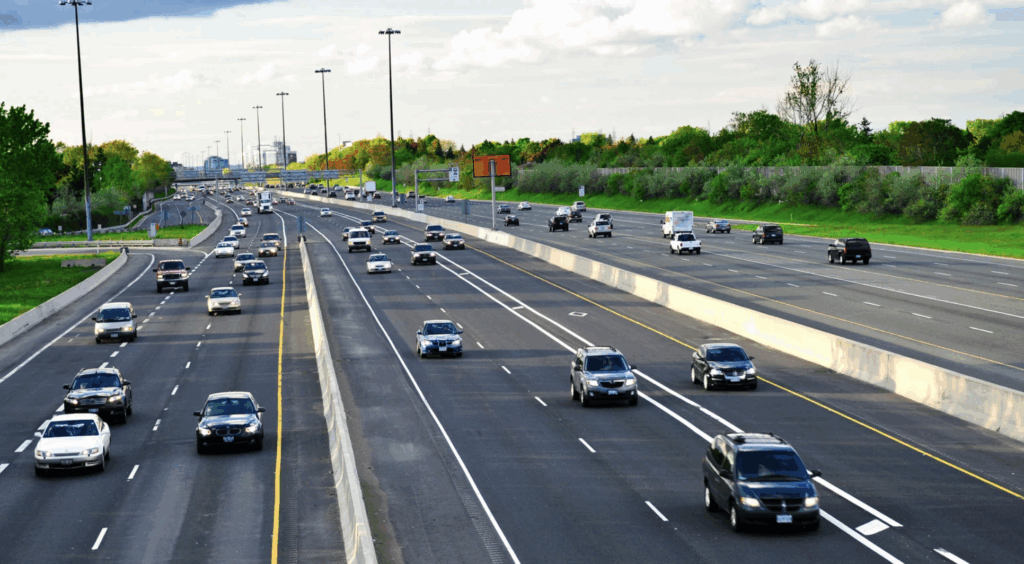
Lane changes are a routine part of driving, but when performed carelessly or aggressively, they can quickly lead to accidents. In fact, unsafe lane changes are a leading cause of car crashes in Texas, often resulting in rear-end collisions, side-swipes, or multi-vehicle pileups.
If you’ve been in an accident caused by another driver’s unsafe maneuver, you may be wondering: What exactly counts as an unsafe lane change, and who is at fault under Texas law?
WHAT IS AN UNSAFE LANE CHANGE?
Texas traffic laws require drivers to remain in a single lane until they can safely move into another. Under Texas Transportation Code § 545.060, a driver may only change lanes when:
- The movement can be made safely, and
- The driver signals their intent to change lanes.
An unsafe lane change occurs when a driver:
- Fails to use a turn signal
- Weaves between lanes recklessly
- Cuts off another vehicle without enough space
- Crosses solid lane lines or double yellow lines
- Drifts out of their lane due to distraction or fatigue
- Fails to check mirrors or blind spots before merging
These violations often create dangerous situations that leave little time for other drivers to react.
COMMON ACCIDENTS CAUSED BY UNSAFE LANE CHANGES
Unsafe lane changes frequently lead to:
- Sideswipe accidents – when a driver collides with a car in the adjacent lane
- Rear-end collisions – when a driver cuts in front of another without space
- Multi-car pileups – when sudden swerves or lane changes trigger chain reactions
- Motorcycle accidents – when drivers fail to see smaller vehicles in blind spots
Because lane-change accidents often occur at highway speeds, injuries can be severe.
WHO IS AT FAULT FOR AN UNSAFE LANE CHANGE IN TEXAS?
Fault in Texas car accidents is based on negligence. In unsafe lane change cases, the driver who violated the traffic law is usually found at fault.
Examples include:
- A driver who merged without signaling
- A driver who crossed into another lane without clearance
- A driver distracted by texting or drowsy driving who drifted into another lane
However, Texas follows a modified comparative fault rule. This means more than one driver may share responsibility. For example:
- If a driver makes an unsafe lane change but you were speeding, both drivers may share liability.
- If you are found to be more than 50% at fault, you cannot recover damages.
PROVING FAULT IN AN UNSAFE LANE CHANGE ACCIDENT
To prove liability, evidence may include:
- Police accident reports
- Witness statements
- Traffic or dashcam footage
- Skid marks and vehicle damage patterns
- Cell phone records if distracted driving is suspected
An experienced car accident lawyer can gather and present this evidence to build a strong claim on your behalf.
DAMAGES YOU MAY RECOVER
If another driver’s unsafe lane change caused your accident, you may be entitled to compensation for:
- Medical expenses (emergency care, rehabilitation, ongoing treatment)
- Lost wages and loss of earning capacity
- Vehicle repair or replacement costs
- Pain and suffering
- Wrongful death damages (if a loved one was killed in the accident)
FREQUENTLY ASKED QUESTIONS
Is an unsafe lane change always the other driver’s fault?
Not always. If both drivers contributed to the accident, fault may be shared.
Can I sue if I was hit by a driver changing lanes without signaling?
Yes. Failing to signal before changing lanes is a traffic violation and strong evidence of negligence.
What if the other driver claims I was in their blind spot?
Drivers are responsible for checking mirrors and blind spots before merging. This argument does not usually excuse unsafe lane changes.
FINAL THOUGHTS
Unsafe lane changes in Texas are more than just traffic violations—they are acts of negligence that put lives at risk. If you were injured in a lane change accident, you have the right to hold the at-fault driver accountable and seek compensation for your losses.
Injured in a Lane Change Accident?
Contact The Law Office of Bryan Fagan, PLLC today for a free consultation. Our Texas car accident attorneys will review your case, explain your rights, and fight to recover the compensation you deserve.

Bryan Fagan is a Texas family law attorney with a heart for adoption—inspired not just by his legal career, but by his own family story. Growing up in Atascocita with two adopted brothers, Bryan learned early the profound meaning of chosen family. His passion for justice was sparked by John Grisham’s The Pelican Brief, and he became the first lawyer in his family, balancing night classes at South Texas College of Law while caring for his grandmother with Alzheimer’s.
Today, Bryan brings that same dedication to his practice, guiding families through adoptions, custody disputes, divorces, and complex marital agreements. A certified member of the College of the State Bar of Texas, he combines elite legal expertise with genuine empathy—drawing from his roles as a husband, father of three, and advocate for families facing false CPS allegations.
Based in Houston, Bryan is actively involved in the Houston Bar Association’s Family Law Sector and statewide family law organizations. Whether finalizing an adoption or protecting parental rights, he believes the law should reflect the deepest values of home, commitment, and love.