
Starting the adoption journey is a profound, heartfelt decision, filled with hope, questions, and powerful emotions. The Texas laws on adoption can seem complex, but they are not obstacles. Instead, think of them as a protective framework, designed with one purpose: to ensure every child’s well-being. This guide is here to walk you through what it takes to adopt a child in Texas, explaining the legal steps in simple terms so you can move forward with confidence and clarity.
Your Texas Adoption Journey Starts Here
Deciding to build your family through adoption is one of the most meaningful choices you will ever make. It is a path of courage, patience, and deep love. While the legal process in Texas might look complicated, understanding the fundamental steps can transform feelings of uncertainty into a sense of empowerment.
The entire process, guided by the Texas Family Code, is structured to ensure every placement is stable, safe, and loving. It's less like a test and more like a partnership. You, your legal team, and social workers are all working toward the same beautiful goal: a child’s happiness. Every form you fill out and meeting you attend is a concrete step toward building your family.
This flowchart breaks down the core phases of the Texas adoption process.

As you can see, the journey can be simplified into three key stages: starting with an inquiry, moving through the home study, and finally reaching placement and finalization. It’s a clear path toward growing your family.
To give you a clearer picture, here is a simple breakdown of the major milestones you can expect.
Key Stages of the Texas Adoption Process
| Stage | Key Objective | Typical Duration |
|---|---|---|
| Initial Inquiry & Training | Learn about the process, complete required training, and choose an adoption path/agency. | 1-3 months |
| Home Study | A social worker assesses your home, finances, background, and readiness to parent. | 3-6 months |
| Matching & Placement | You are matched with a child, and the child begins living in your home for a supervision period. | Varies widely (weeks to years) |
| Finalization | After a mandatory waiting period (at least 6 months), you attend a court hearing to legally finalize the adoption. | 1-2 months |
This table provides a high-level look at the timeline, but remember that every adoption journey is unique and these durations can vary.
The Guiding Principle: "Best Interest of the Child"
At the heart of every single adoption in Texas is one guiding principle: the best interest of the child. This is the standard you will see referenced throughout the Texas Family Code, and it steers every decision made by judges, social workers, and attorneys. What does it mean? Simply put, the child’s physical safety and emotional well-being are the ultimate measures of a successful adoption.
For you as a hopeful adoptive parent, this means demonstrating that you can provide a secure and nurturing home. The entire legal process is designed to help you prepare for this incredible responsibility.
- Safety and Stability: The courts need to see that a child will be raised in a safe environment with consistent emotional and financial support.
- Emotional Readiness: The process also looks at your readiness to meet a child’s unique emotional needs, especially if they come from a place of trauma or loss.
- Family Unity: The law recognizes the importance of creating lasting family bonds and supports a smooth, healthy transition for everyone involved.
The goal of Texas adoption law isn't to create hurdles. It's to build strong, permanent families where children can truly thrive. It is a protective process rooted in compassion and a deep commitment to every child's future.
Whether you are exploring adopting a stepchild, a relative, a newborn through a private agency, or a child from the foster care system, this legal framework is there to guide you. Each path has its own unique steps, but they all lead to the same beautiful destination: creating a forever family.
Feeling a bit overwhelmed? You don’t have to walk this path alone. For personalized guidance on your specific situation, a free consultation can provide the clarity and support you need to get started.
Who Is Eligible to Adopt a Child in Texas?
One of the first questions hopeful parents ask is, "Am I qualified to adopt a child in Texas?" This question often comes from a place of deep hope mixed with a little anxiety. The good news is that the answer is far more inclusive than most people expect. Texas law is not looking for a "perfect" parent—it’s focused on finding safe, loving, and stable homes for children who need them.

Under the Texas Family Code, any adult can petition to adopt. The law is intentionally inclusive and does not disqualify anyone based on their marital status, gender, sexual orientation, or age. Whether you are single, married, or in a committed partnership, you have the right to build your family through adoption as long as you can provide a nurturing environment.
The Foundation of Eligibility: The Home Study
So how does the state determine if you are ready to become an adoptive parent? The primary tool is the adoption home study. The name might sound intimidating, but its true purpose is to prepare you for this new chapter and ensure a child will be safe and cared for. Think of it as a collaborative project, not a pass-or-fail exam. A licensed social worker will partner with you to gather information and assess your readiness.
The home study is designed to create a complete picture of the life you can offer a child. While specific requirements may vary slightly depending on the type of adoption, nearly every home study in Texas will review a few key areas:
- Financial Stability: You don’t need to be wealthy. You simply need to demonstrate that you can comfortably provide for a child's basic needs.
- Physical and Emotional Health: This involves confirming you are physically and emotionally capable of handling the demands of parenting.
- Your Home Environment: A social worker will visit your home to ensure it is a safe and suitable place for a child.
- Criminal Background Checks: Every adult living in the home must complete a background check to screen for any history of child abuse or neglect.
- Parenting Skills and Readiness: Through interviews and training, the process helps gauge your understanding of parenting and your emotional preparedness for the journey ahead.
How to Think About the Home Study Process
It is completely normal to feel nervous about the home study. Many people worry about being judged or having their home scrutinized. It helps to reframe this step as a supportive process. Social workers are looking for reasons to approve you, not to disqualify you. They want to see your strengths and help you prepare for the unique joys and challenges of raising an adopted child.
The home study is fundamentally about preparation and education. It’s an opportunity for you to reflect on your motivations, learn about the needs of adopted children, and ensure you have a strong support system in place for your growing family.
Think of your social worker as a guide who is there to help you succeed. For a deeper dive into these requirements, you can learn more about who can adopt in Texas in our dedicated article.
Ultimately, the eligibility requirements for adoption in Texas are designed with one goal: building strong, permanent families. If you have love in your heart and a stable home to offer, you are already on your way.
If you have questions about your eligibility or feel anxious about starting the home study, a compassionate legal team can help you prepare every document and feel confident in your next steps.
Exploring Different Paths to Adoption in Texas
Adoption is not a one-size-fits-all journey. Think of it less like a single road and more like a network of paths, each leading to the same beautiful destination: family. The right path for you will depend on your unique circumstances, your hopes, and the needs of the child waiting for a home.
Figuring out the different types of adoption available under Texas law is the first real step in finding the journey that fits your life and your heart.

Whether you’re looking to make an existing family bond official or opening your home to a child you haven't met yet, there is a legal process designed to get you there. Let's walk through the most common adoption routes in Texas.
Stepparent Adoption: Blending Your Family Legally
For many blended families, a stepparent adoption is the final, powerful step that makes the family whole in the eyes of the law. This process allows a stepparent to become the full legal parent of their spouse's child, granting them every right and responsibility a biological parent has.
- When It's a Good Fit: This is an ideal path when the other biological parent is either absent from the child's life, consents to the adoption, or has already had their parental rights terminated by a court.
- The Process: It generally begins with filing a petition with the court. The other biological parent's rights must be addressed—either through their consent or a court order. A home study is also required, though it is often a more streamlined version for stepparents.
- Emotional Impact: For a child, a stepparent adoption provides a profound sense of security and permanence. It officially validates the loving, parent-child bond that has already been growing for years.
Kinship or Relative Adoption: Keeping Family Together
Kinship adoption, often called relative adoption, occurs when a family member—like a grandparent, aunt, uncle, or older sibling—steps in to adopt a child. This path is incredibly common and is often seen as the best possible outcome when a child's parents are unable to care for them, as it honors the child’s existing family ties and cultural roots.
This type of adoption is so vital that state data proves its importance. Relatives adopt more than half of all children leaving the Texas foster care system. It is a powerful testament to the stability that comes from keeping children within their existing family networks. You can discover more insights about adoption statistics and trends.
A kinship adoption is a powerful act of love that provides a child with stability while preserving their sense of identity and belonging within their family. The legal process is often streamlined to support this goal.
Private Infant Adoption: Working with an Agency or Attorney
When most people first think of adoption, this is often what comes to mind. In a private infant adoption, prospective adoptive parents are matched with an expectant mother who has made the courageous and loving choice to create an adoption plan for her child. This is usually facilitated by an adoption agency or a specialized attorney.
This journey is deeply personal and is built on a foundation of trust and open communication. It involves careful legal steps to ensure the rights of the birth parents are fully respected while creating a secure future for the child. Key elements include:
- Creating a Profile: You will put together a profile book or video to introduce yourselves to expectant mothers.
- The Match: An agency or attorney helps find a match based on the hopes and wishes of both the birth parents and the adoptive parents.
- Termination of Parental Rights: After the child is born and a mandatory waiting period has passed, the birth mother (and father, if involved) must legally consent to the adoption by signing an affidavit of relinquishment.
Adopting from Foster Care (DFPS)
Choosing to adopt through the Texas Department of Family and Protective Services (DFPS) means opening your home to a child who has entered state care due to abuse, neglect, or abandonment. These children, who range from infants to teenagers, are all waiting for one thing: a permanent, loving family to finally call their own.
The state’s primary goal is always to reunite children with their biological families, but when that is not a safe option, adoption becomes the path to giving a child a forever home. The process usually begins with becoming a licensed foster parent, and many families end up adopting a child who was first placed with them through foster care. While this path can have its challenges, the rewards are immeasurable.
No matter which path feels right for you, each one is a valid and beautiful way to build a family. The Texas laws on adoption are structured to support these different journeys, always with the child's best interests as the top priority.
If you are ready to explore your options and take the next step, we invite you to schedule a free, compassionate consultation to discuss your family's future.
Understanding Termination of Parental Rights
Before any adoption can happen—before a child can legally and permanently join a new family—the legal ties to their biological parents must be formally severed. This process is known as the termination of parental rights (TPR), and it is one of the most significant and sensitive parts of the adoption journey.
It's a profound legal step that the Texas Family Code handles with incredible care, always putting the child's well-being first. TPR can happen in one of two ways: voluntarily or involuntarily. Understanding the difference is crucial for everyone involved, from hopeful adoptive parents to birth parents considering their options.
Voluntary Relinquishment of Parental Rights
In many private adoptions, a birth parent makes the brave and loving choice to place their child with an adoptive family. This is called voluntary relinquishment. To make it official, the birth parent signs a legal document called an Affidavit of Relinquishment of Parental Rights.
This is not a decision anyone takes lightly, and Texas law has built-in safeguards to ensure it is made with full awareness and without any pressure.
- Waiting Period: A birth mother must wait at least 48 hours after giving birth before she can sign the affidavit. This mandatory pause gives her time to physically recover and be absolutely certain of her decision, away from the immediate stress of childbirth.
- Irrevocable Consent: Once the affidavit is properly signed, it is almost always irrevocable, meaning it cannot be taken back. This finality is crucial—it gives the child and the new adoptive family the stability they need to bond and move forward.
- Legal Counsel: Birth parents have the right to their own attorney to make sure they fully understand the permanent consequences of signing the document.
Voluntary relinquishment is a testament to a birth parent's deep love for their child, representing a selfless choice for a future they believe is in that child's best interest.
Involuntary Termination of Parental Rights
In other, more difficult situations, a court must step in to end a parent's rights without their consent. This is known as involuntary termination. It is a very serious measure that judges only consider when a parent's actions have put a child in a harmful or dangerous environment. These cases are most common within the foster care system, after the Department of Family and Protective Services (DFPS) has gotten involved.
A court can only terminate parental rights if it finds "clear and convincing evidence" that a parent has engaged in specific harmful conduct and that severing the legal ties is truly in the child’s best interest. Some of the grounds for involuntary termination include:
- Abandoning the child
- Endangering the child's physical or emotional well-being
- Failing to follow a court-ordered service plan designed to regain custody
- Knowingly placing the child in dangerous conditions
A judge’s decision to involuntarily terminate parental rights is never made lightly. It is a last resort, taken only when it becomes clear that it is the only way to provide the child with the safety and permanency they deserve.
This is a very complex and sensitive area of the law. For a more detailed look at the legal standards and what the process entails, you can read our comprehensive guide on the termination of parental rights in Texas.
Whether it happens voluntarily or is ordered by a court, the termination of parental rights clears the path for a new beginning. It legally frees a child to be adopted, allowing them to finally join a permanent, loving family where they can thrive.
Finalizing Your Adoption in a Texas Courtroom
After months, or even years, of paperwork, interviews, and waiting, the final step of your adoption journey is a beautiful and emotional milestone. The adoption finalization hearing is the moment in a Texas courtroom where a judge legally declares you a family. It is less of a trial and more of a celebration—the joyful culmination of your entire process.
But before you get to that special day, there is one last important phase to navigate: the post-placement supervision period. This is a crucial time that bridges the gap between when a child is placed in your home and the day you officially become their parent in the eyes of the law.
The Post-Placement Supervision Period
Once your child is living with you, Texas law requires a supervisory period that lasts for at least six months. During this time, a social worker from your adoption agency will visit your home a few times. These are not meant to be intrusive or judgmental visits; think of them as supportive check-ins designed to ensure everyone is adjusting well.
The social worker is there to:
- Observe the bond forming between you and your child.
- Offer guidance on any parenting challenges that arise.
- Confirm that your home continues to be a safe, nurturing place.
See these visits as a partnership. Your social worker is a resource, there to answer questions and help compile a positive report for the court. This report simply confirms that finalizing the adoption is in your child’s best interest.
The Finalization Hearing: A Day to Celebrate
Once the post-placement period is complete and all legal requirements are met, your attorney will schedule the finalization hearing. This court appearance is often the highlight of the entire journey. Many families dress up, bring grandparents and close friends, and have a camera ready to capture the moment.
The atmosphere is almost always warm and joyful. The judge will review the final report, ask a few simple questions, and confirm your intention to love and provide for this child forever. You will stand before the judge, take an oath, and sign the Final Decree of Adoption.
This decree is the legal document that officially creates the parent-child relationship. It grants you all the rights and responsibilities of a biological parent and legally recognizes your child as a member of your family.
After the Decree: What Comes Next?
With the signed decree in hand, the legal chapter of your adoption is officially closed. Your family is now whole in the eyes of the law. After the hearing, your attorney will help you with the final administrative steps.
The most important of these is applying for a new birth certificate for your child. The Texas Vital Statistics Unit will issue an amended birth certificate that lists you as the parent(s) and reflects their new legal name, if you chose one. This document legally seals your family bond and serves as the official record of your child’s identity, making your family’s story complete.
If you are approaching this final, exciting step, we would be honored to stand with you in the courtroom. Schedule a free consultation to ensure your finalization day is as smooth and joyous as it deserves to be.
Navigating Special Considerations in Texas Adoption
The adoption journey is deeply personal, and sometimes the path includes unique circumstances that require special attention. While every adoption is centered on the child's best interests, situations like adopting a child from another state or creating agreements for future contact add important layers to the process. Understanding these ahead of time helps you prepare with confidence.
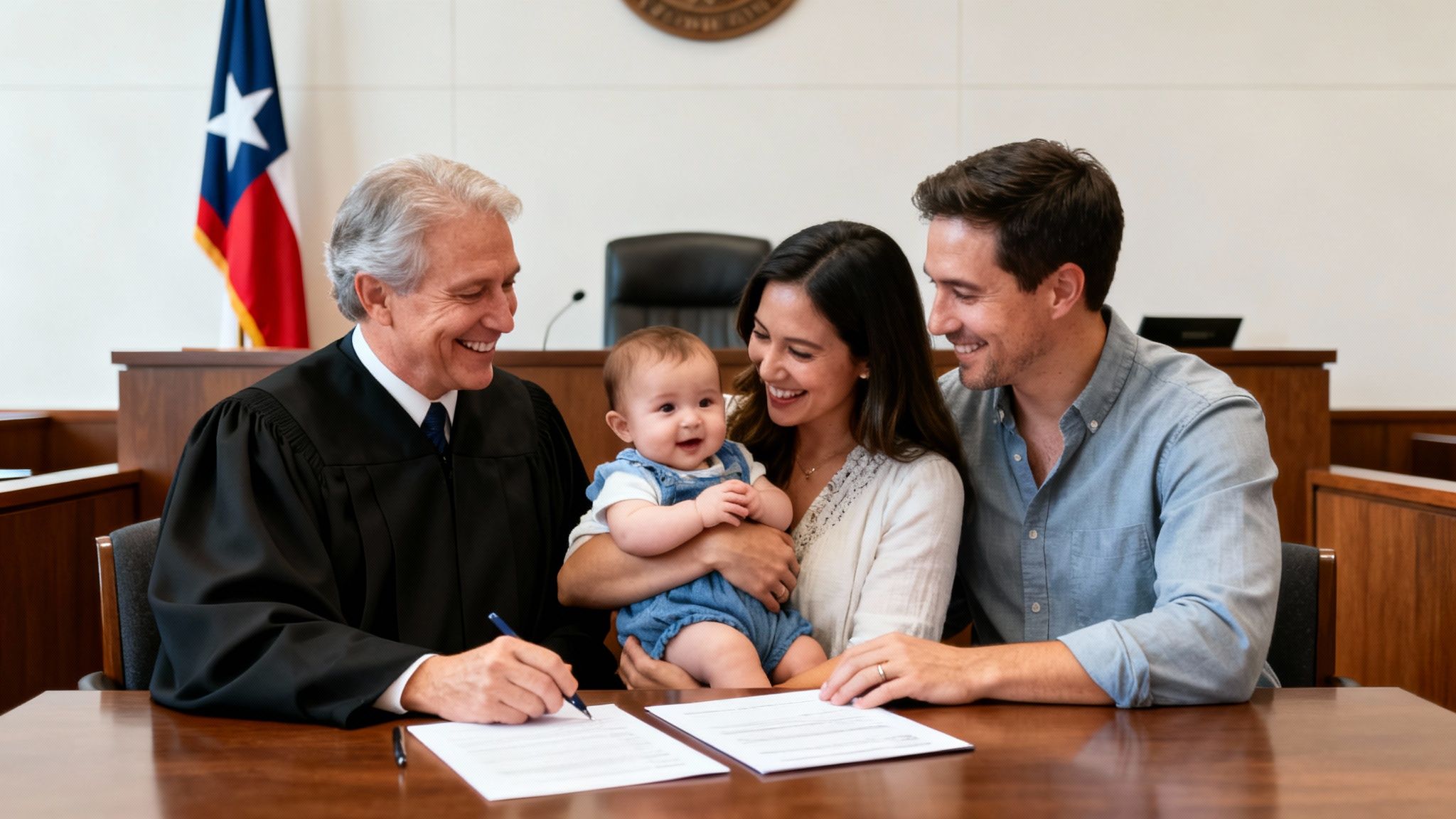
Many families also feel called to open their homes to a child in the state's care. Adopting from the foster care system is a profound way to give a child the permanent, loving family they deserve. This path has its own rhythm and legal framework, managed by the Texas Department of Family and Protective Services (DFPS).
Adopting a Child from Another State
What happens when the right match for your family is a child living outside of Texas? This is where the Interstate Compact on the Placement of Children (ICPC) comes into play. The ICPC is a legal agreement between all 50 states that governs the process of moving a child across state lines for an adoption.
It acts as a protective bridge between the two states, ensuring the placement is legally sound and that the new home in Texas meets all requirements. This process involves extra paperwork and coordination between state agencies, which can add time to your adoption journey. The main steps are:
- Submitting an ICPC Packet: Your adoption professional will prepare and send a packet of legal and home study documents to both states.
- State Approval: Officials in both the sending and receiving states must review and approve the placement.
- Permission to Travel: You cannot bring the child to Texas until you receive official clearance from both states.
The ICPC process is in place to protect everyone involved, especially the child, ensuring no legal issues are left unresolved.
Open vs. Closed Adoption: Post-Adoption Contact Agreements
Modern adoption often embraces a spirit of openness, recognizing that it can be healthy for a child to maintain some connection to their biological roots. In Texas, this can be formalized through a post-adoption contact agreement. This is a written, good-faith agreement between the adoptive family and the birth family outlining plans for future communication.
These agreements can map out details like:
- How often you will send letters and photos.
- The possibility of phone calls or video chats.
- Arrangements for in-person visits.
It is critical to understand that in Texas, these agreements are generally not legally enforceable by a court. They are considered moral agreements, built on mutual trust and a shared commitment to the child's well-being.
Creating this kind of agreement honors the child's full story and can be incredibly valuable for their sense of identity as they grow. It also provides comfort and peace of mind for birth parents who made a courageous adoption plan. For more information on this topic, you can explore our resources on how to adopt a child with special needs, which often involves unique family dynamics and agreements.
Common Questions About Texas Adoption Laws
The road to adoption is paved with questions, and it is completely normal to feel uncertain as you begin. Getting clear, straightforward answers is the best way to move forward with confidence. Here, we address some of the most common questions we hear from families navigating Texas laws on adoption.
Our goal is to give you the clarity you need to feel empowered on your journey.
How Much Does It Cost to Adopt a Child in Texas?
Adoption costs in Texas vary widely depending on the path you choose. Adopting from the foster care system (DFPS) often involves very low costs—sometimes it is even free—and financial assistance is often available.
On the other hand, private infant adoptions can range from $30,000 to $60,000 or more. This figure typically covers legal representation, agency fees, and the birth mother's medical and living expenses. Stepparent and kinship adoptions are almost always the most affordable since they do not require the same level of agency involvement.
How Long Does the Texas Adoption Process Take?
Patience is essential in every adoption story, as timelines can vary significantly. A stepparent or relative adoption can sometimes be completed in less than a year due to the existing family relationship.
Private infant adoptions often take one to two years or even longer, depending on the matching process. For families adopting from foster care, the process usually leads to a final adoption about a year after a child is placed in their home.
Can a Single Person Adopt a Child in Texas?
Absolutely. Texas law welcomes any single adult to adopt. The home study is designed to ensure a prospective parent can provide a safe, stable, and loving home for a child. Marital status is not a barrier—the focus is always on your readiness and ability to be a wonderful parent.
Can LGBTQ+ Couples Adopt in Texas?
Yes. LGBTQ+ individuals and couples have the same right to adopt in Texas as anyone else. The law does not discriminate based on sexual orientation or gender identity. As long as you meet the eligibility requirements, including passing the home study, you can build your family through adoption in Texas.
What Happens to Adoption Records?
This question is important for both adoptees and birth families. Texas law has specific procedures for accessing records later in life. The Texas Department of State Health Services maintains many adoption records and operates a voluntary reunion registry. This allows adult adoptees, biological parents, and siblings to register for a potential match if both parties are interested.
If you want to learn more about accessing adoption records in Texas, the state offers helpful resources to get you started.
No matter where you are in your adoption journey, having a compassionate legal guide can make all the difference. The team at The Law Office of Bryan Fagan, PLLC is here to answer your questions and help you build your family with confidence and clarity. Schedule a free, no-obligation consultation today by visiting us at https://texasfamilyadoption.com to take the next step.
