
Family is a bond built on love and commitment, not just age. In Texas, the law recognizes this through adult adoption, a unique legal process that allows you to formalize a lifelong parental bond with another adult. It's a way to give legal recognition to a relationship that has long existed in your hearts, proving that parenthood doesn't end when a child turns 18. At The Law Office of Bryan Fagan, PLLC, we help Texas families understand this process with empathy and clarity, empowering you to take the next step toward building your family.
Why Families Choose Adult Adoption in Texas

The decision to pursue an adult adoption in Texas is deeply personal and often rooted in a desire to provide emotional, financial, and legal security. While the reasons are as unique as the families themselves, they usually center on making a long-standing parent-child relationship official in the eyes of the law. This process isn't about creating a family from scratch; it's about giving an existing, cherished connection the legal respect and permanence it deserves.
Solidifying Lifelong Bonds
For many, adult adoption is the beautiful final step in a journey that started years ago. Imagine a stepfather who raised his stepson from a young age, offering guidance, support, and unwavering love. Even after the stepson is a grown man, that bond remains powerfully paternal. An adult adoption legally cements this relationship, making the stepfather a legal parent in every sense of the word.
Another common scenario involves a former foster parent who wants to adopt an adult who aged out of the foster care system. This compassionate act provides a permanent legal anchor for someone who might not have one, ensuring they always have a legal family to turn to and reinforcing the best interests of the family unit.
Securing Inheritance and Legal Rights
Beyond the emotional significance, adult adoption has practical benefits that protect your family's future. The most significant legal effect is the creation of inheritance rights. Once the adoption is finalized, the adopted adult is legally considered the child of the adoptive parent, with the same right to inherit as a biological child. This is critical for estate planning, ensuring a beloved caregiver or stepchild is protected and provided for according to your wishes.
It also simplifies decision-making during medical emergencies and other critical moments, giving the adoptive parent clear legal standing. For a deeper look into the motivations behind this process, you can explore more about adopting adults in Texas and understanding the why, when, and how.
Common Paths to Adult Adoption in Texas
While every family’s story is different, we often see certain relationships lead to adult adoption. This quick overview can help you see if this path aligns with your family's journey.
| Relationship Type | Primary Motivation for Adoption |
|---|---|
| Stepparent and Adult Stepchild | Formalize a lifelong parental bond and secure inheritance rights. |
| Former Foster Parent and Adult | Create a permanent legal family connection after aging out of the system. |
| Caregiver and Dependent Adult | Provide a legal family structure and ensure long-term stability. |
| Close Family Friend or Mentor | Legally recognize a deep, parental-like relationship built over many years. |
Even though it’s a powerful tool for families, adult adoption is a legally recognized but relatively rare process in Texas. Recent data shows that Texas courts approve fewer than 500 adult adoption cases annually, despite thousands of potential situations involving stepparents and former foster youth. These low numbers often come down to institutional unfamiliarity with the process and the unique legal hurdles involved.
Meeting the Legal Requirements for Adoption
Before a Texas adult adoption can begin, both the person adopting and the adult being adopted must meet specific criteria laid out in the Texas Family Code. While it’s a less complicated path than child adoption, understanding these core requirements ensures your journey starts on solid legal footing. At its heart, the law is designed to confirm two simple but profound things: Is the petitioner a suitable parent? And does the adult adoptee truly want this adoption to happen?
Requirements for the Adopting Parent
Texas law is straightforward: any reputable adult can petition to adopt another adult. The term “reputable” isn’t defined precisely, but courts generally interpret it to mean you're a law-abiding individual of good moral character. The judge wants to see that you're a stable, responsible person capable of fulfilling a parental role, even for an adult child.
A big piece of meeting the legal requirements involves properly filling out and filing various essential legal forms. This paperwork is how you formally establish your identity and suitability for the court. Your marital status is another key factor. If you're married, your spouse will almost always need to join you in the adoption petition, as the law presumes that adoption is a family decision.
A Real-World Scenario Involving Spousal Consent
Let's imagine John, who has been a devoted stepfather to Michael for over 25 years. Michael is now 30, and John and Michael's mother, Sarah, want to make their family bond legally official through adult adoption.
Even though the idea came from John and the relationship is primarily between him and Michael, the court will still require Sarah to join the petition. This simple step shows the judge that the entire family unit supports this legal change. Sarah’s participation signals a unified front and confirms the adoption serves the harmony of their family.
The spousal consent rule is there for a reason. It reinforces that adoption is a significant family event and prevents one spouse from making a major legal change to the family structure without the other’s knowledge and agreement. It's all about promoting stability and transparency.
Requirements for the Adult Being Adopted
For the adult being adopted, one requirement stands above all others: their own voluntary and written consent. This is the absolute cornerstone of the entire process. Unlike a child adoption, where the court’s main focus is the "best interests of the child," an adult adoption is driven by the clear, undeniable desire of the adult adoptee.
This consent must be given freely, without any pressure or manipulation. The adult adoptee must sign a formal legal document—often in front of a notary—stating their wish to be adopted. This sworn statement is then filed with the court and serves as the primary evidence of their agreement. The law places immense weight on this personal choice, fully recognizing the adoptee's autonomy as an adult.
For a comprehensive breakdown of all the necessary paperwork, you can learn more about the legal requirements and documentation for adult adoption in Texas in our detailed guide. It will help you get a head start on gathering the specific documents the court will need.
Your Legal Journey Through the Adoption Process
Embarking on a Texas adult adoption isn't just a legal procedure; it’s about making a lifelong family bond official. Let's walk through what that journey actually looks like, step-by-step, from the initial paperwork to the final celebration in court. Think of the process as beginning with a compassionate consultation where we map out your unique situation and gather essential documents, like birth certificates and marriage licenses, to build the foundation of your case.
Step 1: Crafting and Filing Your Adoption Petition
The first official step is to prepare the Original Petition for Adult Adoption. This is the formal document we file with the court that tells your family's story and officially asks the judge to grant the adoption. It clearly states who is adopting whom and why this decision is so meaningful for everyone involved.
A crucial part of this petition is the adoptee's sworn written consent. This is more than just a signature; it's a powerful, legally binding statement from the adult being adopted, confirming they are making this choice willingly and wholeheartedly. The court places immense importance on this document because the adoptee's personal choice is paramount. Once everything is drafted, reviewed, and signed, we file the petition with the appropriate court in your county, and your legal journey officially begins.
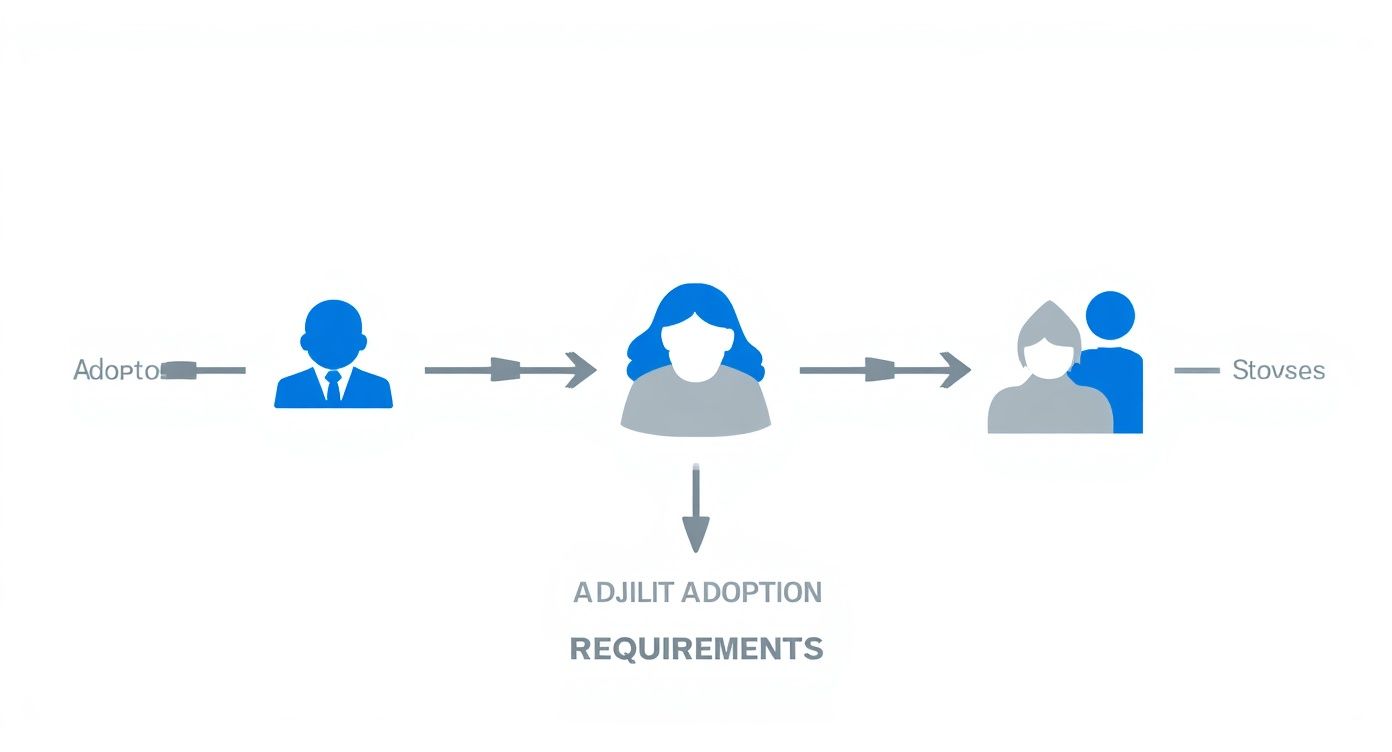
As you can see, the process hinges on the mutual agreement between the person adopting and the adult being adopted. If the person adopting is married, their spouse's consent is also a key piece of the puzzle.
Step 2: The Court's Review and Waiting Period
After your petition is filed, the court reviews it. Adult adoptions are generally more straightforward than child adoptions, but this phase is still critical. The court will meticulously check that all paperwork has been submitted correctly and every legal requirement is met. In some situations, the court might require legal notice to be given to certain parties, but consent from biological parents is typically not needed. This waiting period allows the legal system to perform its due diligence, ensuring the final adoption decree is solid and legally sound. The exact timeline can vary, and our guide on how long adult adoption takes in Texas provides more detailed insight.
Step 3: The Final Hearing: A Celebration of Family
The final court hearing is the moment everything comes together. It’s completely normal to feel a little nervous, but this event feels much more like a celebration than a formal trial. For an uncontested adult adoption, the atmosphere is almost always warm, positive, and affirming. You, the adult adoptee, and your attorney will appear before the judge. The judge will review the petition, confirm the adoptee's consent on the record, and ask a few simple questions to ensure everyone understands the legal and personal importance of what’s happening.
This is often the most emotional and rewarding part of the entire process. It’s the moment a judge’s signature on the final decree transforms a lifelong relationship into an official, legally recognized family bond.
The judge will then sign the Final Decree of Adoption, the official document that declares the adoptee is now, and forever, the legal child of the adoptive parent(s). In that instant, your family is legally whole. Many families even take photos with the judge to commemorate this incredible day.
The Lifelong Impact of an Adult Adoption Decree
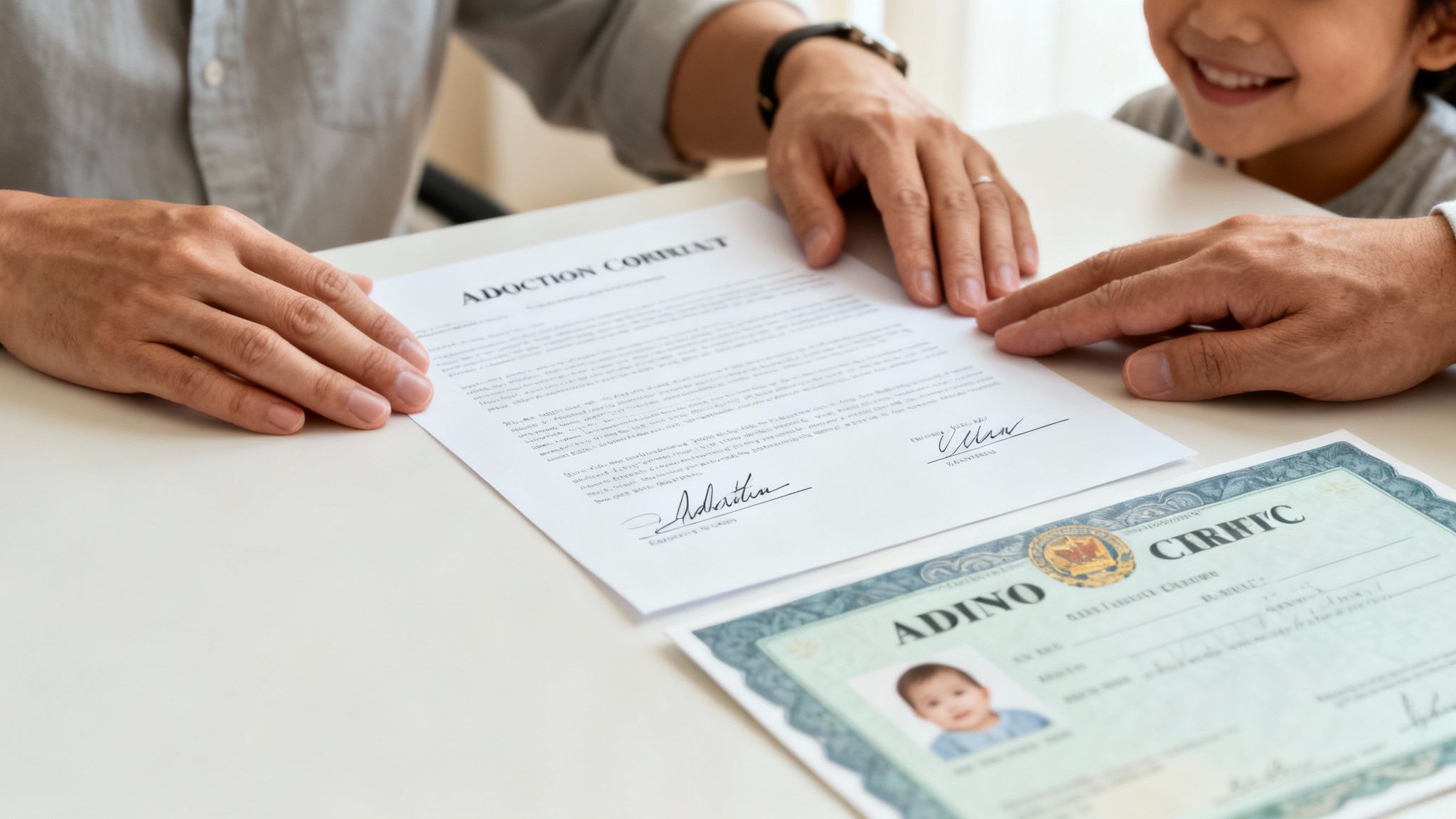
The moment a judge signs the Final Decree of Adoption is a powerful one. It’s when your family’s emotional truth finally aligns with your legal reality. This single document creates profound and permanent changes that ripple through every part of your lives. It’s so much more than a name change—it’s the official recognition of a parent-child bond, bringing with it a new sense of security, identity, and belonging.
Finalizing a Texas adult adoption isn't just the end of a legal process. It's the beginning of a new chapter, officially recorded and protected by law. Understanding these lifelong impacts helps you appreciate just how significant this decision truly is.
Redefining Family Through Inheritance Rights
One of the most immediate consequences of an adult adoption is how it reshapes inheritance. The Texas Family Code is crystal clear: the adoption legally and permanently establishes the adoptee as an heir to the adoptive parents. This means the adopted adult gains the exact same legal right to inherit property, assets, and benefits as a biological child would. For many families, especially those built on a lifelong stepparent-stepchild bond, this is a primary motivation. It offers peace of mind, knowing your loved one will be legally protected and provided for according to your wishes.
It’s also crucial to understand that the decree legally severs the adopted adult's right to inherit from their biological parents if they die without a will (also known as dying intestate).
A will can always override this default rule. A biological parent can absolutely still choose to leave property to their adult child in a will, even after an adoption. But without a specific will in place, that legal tie is cut.
An Estate Planning Scenario
Let’s look at a common situation. Imagine Maria, a 65-year-old widow who wants to adopt her 40-year-old stepson, David. David's biological father passed away years ago, and Maria has raised him since he was a young boy. She has a modest estate she wants to leave entirely to him.
- Without Adoption: If Maria passed away without a will, her estate would likely go to her closest biological relatives, like siblings or cousins. David could be left with nothing.
- With Adoption: Once the adoption is finalized, David becomes Maria’s legal son. Now, if she passes away without a will, he is her sole legal heir. Her estate will automatically pass to him under Texas law.
This simple example shows how a Texas adult adoption can be a powerful estate planning tool, ensuring your legacy goes exactly where you intend it to.
Practical Steps After the Decree Is Signed
Once the judge’s signature is on the decree, your family’s new legal status is official. The next steps are about updating paperwork to reflect this change, which helps solidify your new family identity. These practical tasks are an important part of the journey and usually include:
- Obtaining a New Birth Certificate: You can apply to the Texas Vital Statistics Unit for a new birth certificate for the adoptee, which will list the adoptive parent(s) as the legal parents.
- Updating Legal and Financial Documents: Now is the time to update wills, trusts, and powers of attorney to reflect the new legal relationship.
- Changing Identification: The adopted adult may need to update their Social Security card, driver's license, and passport, especially if a name change was part of the adoption.
These steps are more than just administrative chores; they are affirmations of the new family structure. They create consistency across all legal and personal records, bringing an immeasurable sense of peace that only comes when your heartfelt family bond is fully recognized by the law.
Navigating Potential Costs and Complications
While most adult adoptions in Texas are joyful and straightforward, it’s wise to be prepared for potential hurdles. Knowing what to expect, both financially and legally, allows you to focus on what really matters—the emotional significance of this journey. A clear picture of the costs and common snags helps make the entire process feel smooth and predictable. For context, it can be helpful to look at the broader adoption landscape. For example, in 2021, the United States saw around 54,200 foster children adopted. While that number is about child adoptions, it gives you an idea of how complex the legal system can be. You can find more of these kinds of insights on the National Council for Adoption's website.
Understanding the Financial Investment
Embarking on a Texas adult adoption is an investment in your family's future, and we believe in being completely transparent about the costs involved. The total expense will vary depending on your specific situation, but the main costs usually fall into a few key areas:
- Court Filing Fees: Every legal case begins with filing fees paid directly to the county court. These are standard costs set by the county to start the adoption process.
- Attorney Fees: This is typically the most significant part of the cost. Having an experienced attorney is invaluable for drafting the petition correctly, ensuring every document is filed on time, and representing you at the final hearing. Our firm provides clear, upfront information about our fee structure, so there are no surprises.
- Ancillary Costs: You might also have a few smaller expenses, such as the fee for ordering a new birth certificate or the cost of having a notary public witness the adoptee's signed consent.
By planning for these expenses from the start, you can approach the process with financial confidence.
Handling Potential Roadblocks with Grace
Even in an adult adoption where everyone is in agreement, unexpected issues can arise. Having an experienced guide on your side is the best way to navigate these challenges without adding stress or delays. One common worry is how to handle objections from a biological parent. While their consent isn't legally required, it doesn't stop them from trying to voice an objection. A skilled attorney knows how to make sure the court understands that the adult adoptee's consent is the only one that truly matters.
The most frequent cause of delays in any legal proceeding is incomplete or improperly filed paperwork. An incorrect form or a missed deadline can set your case back by weeks or even months. This is where professional legal support is most critical—we make sure every detail is handled correctly the first time.
Another potential hiccup can be as simple as figuring out which court to file in or understanding that county's specific local rules. We handle these administrative headaches so you can focus on what's important: your family. Our job is to see these potential complications coming, address them before they become problems, and keep your adoption journey on a smooth, steady path to finalization.
Answering Your Texas Adult Adoption Questions
The path to an adult adoption in Texas is often filled with very specific, personal questions. It's a unique legal process, and it's natural to wonder how it all works. Below, we've gathered some of the most common questions our clients ask, offering clear, plain-English answers to help you navigate this meaningful journey.
Does a Biological Parent Need to Consent to an Adult Adoption in Texas?
Generally, no. For the adoption of a consenting adult, Texas law does not require the approval of biological parents. The single most important element is the willing and informed consent of the adult who is being adopted. This is a major difference from child adoptions, where terminating biological parents' rights is a central and often complex legal step. While a court might still require that the biological parents are notified of the proceedings, their objection typically won't stop the adoption as long as all other legal requirements are met.
Can I Use Adult Adoption for Immigration or Citizenship Purposes?
This is a common and critical misunderstanding. An adult adoption in Texas does not create any immigration benefits or offer a shortcut to U.S. citizenship. U.S. immigration laws are incredibly specific and almost exclusively recognize adoptions of minor children for family-based visa petitions. A Texas adult adoption decree forges a legal parent-child relationship under state law—perfect for inheritance—but it is not recognized by USCIS for immigration sponsorship. If your goal involves immigration, it is essential to speak with an experienced immigration attorney.
Key Takeaway: Think of adult adoption as a powerful tool for formalizing family bonds and securing inheritance rights under Texas law. It should never be pursued as an immigration strategy—the two legal worlds are entirely separate.
How Is Adult Adoption Different from Guardianship?
It’s easy to confuse adult adoption and guardianship, but they serve completely different legal purposes.
- Adoption is about creating a legal parent-child relationship. It’s used to formalize a deep emotional bond and establish legal rights, especially for inheritance. The adopted adult keeps all their legal rights and continues to make their own decisions.
- Guardianship is a protective legal process for an adult who a court has found to be incapacitated and unable to manage their own affairs. A guardian is appointed to make personal, financial, or medical decisions for them.
In short, adoption is about family creation. Guardianship is about protective care for someone who can no longer care for themselves.
How Long Does the Texas Adult Adoption Process Usually Take?
The timeline can vary depending on the specific county court's schedule. However, adult adoptions are usually uncontested and don't require lengthy processes like a home study, making them significantly faster than child adoptions. With an experienced attorney ensuring all paperwork is filed correctly the first time, a Texas adult adoption can often be finalized within just two to four months, from filing the initial petition to the final court hearing. This efficiency allows families to get the legal recognition they want without a long, stressful wait.
Navigating the details of adult adoption requires a guide who is both compassionate and knowledgeable. At the Law Office of Bryan Fagan, PLLC, we are dedicated to helping your family achieve the legal recognition it deserves. To discuss your unique situation and take the next step toward building your family with confidence, schedule your free, no-obligation consultation with us today. We're here to empower you with clear guidance and support.
