
In Texas, the phrase "termination of parental rights" refers to a court order that permanently and completely severs the legal bond between a parent and a child. For families looking toward adoption, this isn't just a legal step—it's the critical moment that clears the path for a new family to officially and securely form with empathy and clarity.
What Termination of Parental Rights Really Means for a Child

While the legal term "termination" can sound cold and absolute, its purpose is rooted in compassion and protection. At its core, this legal action is all about securing a safe, loving, and permanent home for a child who desperately needs one. This process is always guided by the best interests of the child and the goal of family unity.
Think of it this way: before you can build a strong house, you have to lay a solid, unshakable foundation. Termination of parental rights is that foundation for an adoption. It ensures that the adoptive parents can fully step into their role—providing care, making decisions, and forming lasting bonds—without the fear of future legal challenges from a biological parent.
To help you grasp the key ideas quickly, here's a look at the core concepts behind this legal process, explained in plain English.
Core Concepts of Parental Rights Termination in Texas
| Concept | What It Means for Families |
|---|---|
| Legal Finality | The court order is permanent, creating a clean slate for the child's new family story. |
| Best Interest of the Child | This is the only standard the court uses. Every decision prioritizes the child's safety and well-being above all else. |
| Paves the Way for Adoption | Termination is a necessary prerequisite for almost every adoption in Texas, making it legally possible. |
| Emotional and Legal Clarity | It provides clear legal boundaries, allowing the adoptive family to bond without ambiguity or fear. |
Ultimately, this process gives a child the legal and emotional security they need to truly thrive.
Voluntary and Involuntary Termination
In Texas, terminating parental rights typically unfolds in one of two ways, and each path carries its own distinct legal and emotional weight:
- Voluntary Relinquishment: This is a conscious, often heart-wrenching, choice made by a birth parent who believes adoption is the best path for their child. It's a profound act of love, putting the child's future needs above their own.
- Involuntary Termination: This happens when a court must step in to protect a child from a dangerous situation. A judge may end a parent's rights if there is clear and convincing evidence of serious issues like neglect, abuse, or abandonment.
A huge part of this process involves ensuring a child has the stability they need to grow and develop. For those wanting to learn more about what that looks like, this resource on understanding childhood development milestones is incredibly helpful.
No matter how a case gets to the courthouse, Texas law is guided by one single, powerful principle: the best interests of the child. Every piece of evidence and every decision is measured against this standard to ensure the child’s physical safety and emotional health are the absolute top priorities.
This legal step is heavy, and the courts recognize the emotional journey for everyone involved—the birth parents, the hopeful adoptive parents, and concerned relatives. Whether you're a stepparent hoping to make your family official, a grandparent stepping in to provide a safe home, or a birth parent making an impossibly difficult choice, understanding this process is the first step. It is the legal mechanism that allows a new family story to finally begin.
When a Court Steps In: Understanding Involuntary Termination

Sometimes, a child's environment becomes so dangerous that the courts have no choice but to step in. This is the world of involuntary termination of parental rights—a profound legal step taken only when a child's safety and well-being are in serious jeopardy.
A judge doesn’t make this decision lightly. It’s reserved for the gravest of circumstances where a parent’s actions, or their failure to act, have put a child directly in harm's way. The process usually starts when someone files a petition—the other parent, a grandparent, or Child Protective Services (CPS)—laying out the specific reasons, or grounds, why a parent’s rights should be permanently ended.
From that moment, the court begins a meticulous investigation, with one question guiding every step: what is truly in the best interest of this child?
The High Bar of "Clear and Convincing Evidence"
Before a Texas judge will even consider severing the parent-child bond, the person bringing the case must prove their claims with "clear and convincing evidence." This isn't your typical legal standard; it’s one of the highest in civil law.
Think of it like this: in many cases, the scales of justice only need to tip slightly to one side. For involuntary termination, the evidence must weigh so heavily that the judge is left with a firm, unwavering belief that the allegations are true. This high standard exists for a reason—to protect the sacred parent-child relationship and ensure it’s only broken when absolutely necessary for the child's future.
Legal Grounds for Involuntary Termination
The Texas Family Code is very specific about why a court can order an involuntary termination. These aren't just vague concerns; they are concrete, provable actions and situations that pose a direct threat to a child's physical or emotional health.
For instance, the law lists numerous grounds that must be proven before a court will act. These include situations where a parent knowingly lets a child stay in a dangerous environment, has a history of having their rights terminated for another child, or is incarcerated and unable to care for the child.
Let's look at a few of the most common grounds.
- Endangerment: This means exposing a child to physical or emotional harm. It could be a home where drug use is rampant, where domestic violence is a regular occurrence, or where a child suffers from severe emotional abuse.
- Abandonment: This can happen when a parent disappears from a child's life, offering no support or contact for a long time. If a parent hasn't seen or supported their child for a year, despite having the ability to do so, a court might see it as abandonment.
- Neglect: This is the failure to provide for a child's most basic needs—food, shelter, medical care, or supervision—to the point that it harms the child’s health and safety.
A Real-Life Scenario: Imagine a stepparent who wants to adopt their spouse’s child. The child's other biological parent has been out of the picture for years, struggles with substance abuse, and has made zero effort to be involved. Here, the stepparent could ask the court to terminate the absent parent's rights on the grounds of abandonment and endangerment, paving the way for a stepparent adoption that secures the family unit.
Substance Abuse as a Factor
A parent’s substance abuse is another serious reason for termination, but only if it directly endangers the child. If a parent's drug or alcohol use puts a child's health or safety at risk, and they've refused or failed to complete court-ordered treatment, a judge may be forced to intervene.
When substance abuse and mental health issues are at the root of state intervention, getting help from professional dual diagnosis treatment centers in Texas can be a critical step for families trying to heal.
This entire process is legally complex and emotionally draining for everyone. For stepparents, grandparents, or foster parents who are considering this path, having a compassionate family law attorney is non-negotiable. An expert can help you understand the evidence you'll need and the court's unwavering focus on the child's best interest, giving you the clarity to move forward.
The Courageous Choice of Voluntary Relinquishment
For a birth parent, the decision to place a child for adoption is almost always an act of profound love and sacrifice. Choosing to voluntarily relinquish parental rights isn't about giving up; it's about giving a child a future you believe is best for them, even when it comes with immense personal pain. This is a courageous step taken to create a stable, loving adoption plan.
This path, known as voluntary termination, is a legal process where a birth parent formally and willingly consents to end their legal relationship with their child. Unlike involuntary termination, which is ordered by a court due to safety concerns, this choice comes directly from the parent. It is the essential first step in a private adoption, clearing the way for a new family to form.
The Legal Steps of Relinquishment
The legal heart of voluntary termination is a specific document: the affidavit of relinquishment of parental rights. Signing this document is a serious, legally binding action with permanent consequences. Texas law recognizes the emotional weight of this moment and has specific rules in place to protect the birth parent and ensure the decision is made with full understanding.
One of the most critical rules is the waiting period. A birth mother cannot sign this affidavit until at least 48 hours after the child is born. This two-day period is mandatory. It's designed to ensure the decision is made free from the immediate physical and emotional pressures of childbirth, allowing time for reflection and confirming the choice is deliberate and certain.
A birth mother's journey might involve months of counseling and planning, working with an adoption agency to choose a family, and preparing emotionally. The 48-hour period is the final, quiet moment to confirm that this loving, difficult choice is the right one for her and her child.
Why This Decision is Irrevocable
Once the affidavit is properly signed and witnessed, the decision is legally irrevocable—meaning it cannot be undone. This finality is essential for the child's stability. It allows the adoption process to move forward with confidence, giving the adoptive parents the legal security they need to begin bonding and building a life with their new child without fear of future legal challenges.
The process of formally documenting this choice can be complex, and it’s vital to get it right. Understanding the specific language and requirements of a release of parental rights form is crucial. You can learn more about the details of this legal document in our guide to the release of parental rights form.
Support Systems for Birth Parents
Making this choice is not a journey to be walked alone. Birth parents have access to a network of support to help them through this emotional process.
- Adoption Counselors: These are professionals who provide a safe space to explore feelings, discuss options, and confirm the decision without judgment.
- Legal Counsel: An attorney can explain the legal document in plain English, ensuring the birth parent fully understands their rights and the permanent nature of their signature.
- Adoption Agencies: Many agencies offer comprehensive support, from medical care during pregnancy to post-placement grief counseling.
Ultimately, voluntary relinquishment is a selfless act that honors the child’s best interests above all else. It is a testament to a parent’s love, strength, and unwavering desire to see their child thrive.
How the Texas Court Process Works Step by Step
Stepping into the Texas court system for a termination of parental rights case can feel overwhelming. But understanding the road ahead—knowing each turn and milestone—can bring an incredible sense of clarity and calm.
The process is methodical for a reason. It’s designed to ensure every decision is made with the child's absolute best interests at the forefront. Think of it as a carefully guided journey, where each step, from filing the first document to the final hearing, has a distinct purpose. Knowing what to expect demystifies the legal jargon and empowers you to move forward with confidence.
Kicking Off the Case: The Initial Petition
It all starts with filing a Petition to Terminate the Parent-Child Relationship. This isn't just another form; it's the official legal document that sets the entire case in motion. It formally asks the court to intervene and clearly explains why the termination is necessary and in the child's best interest, laying out the specific legal grounds for the request.
This petition is filed by the "petitioner," who could be a parent, a stepparent hoping to adopt, a grandparent, or another authorized person. Once it's filed, the other parent—the "respondent"—has to be officially notified through a legal process called "service." This critical step guarantees they know about the lawsuit and have a fair chance to respond.
Texas courts don't drag their feet on these cases, and that speed reflects a deep commitment to child welfare. In 2018 alone, Texas completed more than 5,500 terminations of parental rights. Especially in CPS cases, courts move quickly to reduce the time children spend in foster care and find them the permanent, loving homes they deserve.
Appointing an Attorney for the Child
A child can't stand up in a courtroom and speak for themselves, so the judge appoints a special attorney just for them. This lawyer is called an attorney ad litem, and their one and only job is to be the voice for the child's best interests.
The ad litem is the child's advocate. They will:
- Meet with the child (if they're old enough) to understand their feelings and wishes.
- Interview parents, teachers, counselors, and anyone else who plays a role in the child's life.
- Dig into all the documents and evidence tied to the case.
- Ultimately, make a recommendation to the judge about what outcome they believe is truly best for the child.
This appointment is a crucial safeguard, making sure the child’s needs are never overlooked and remain central to every decision the court makes.
This flowchart shows the timeline for a birth mother who is voluntarily making this incredibly difficult choice.
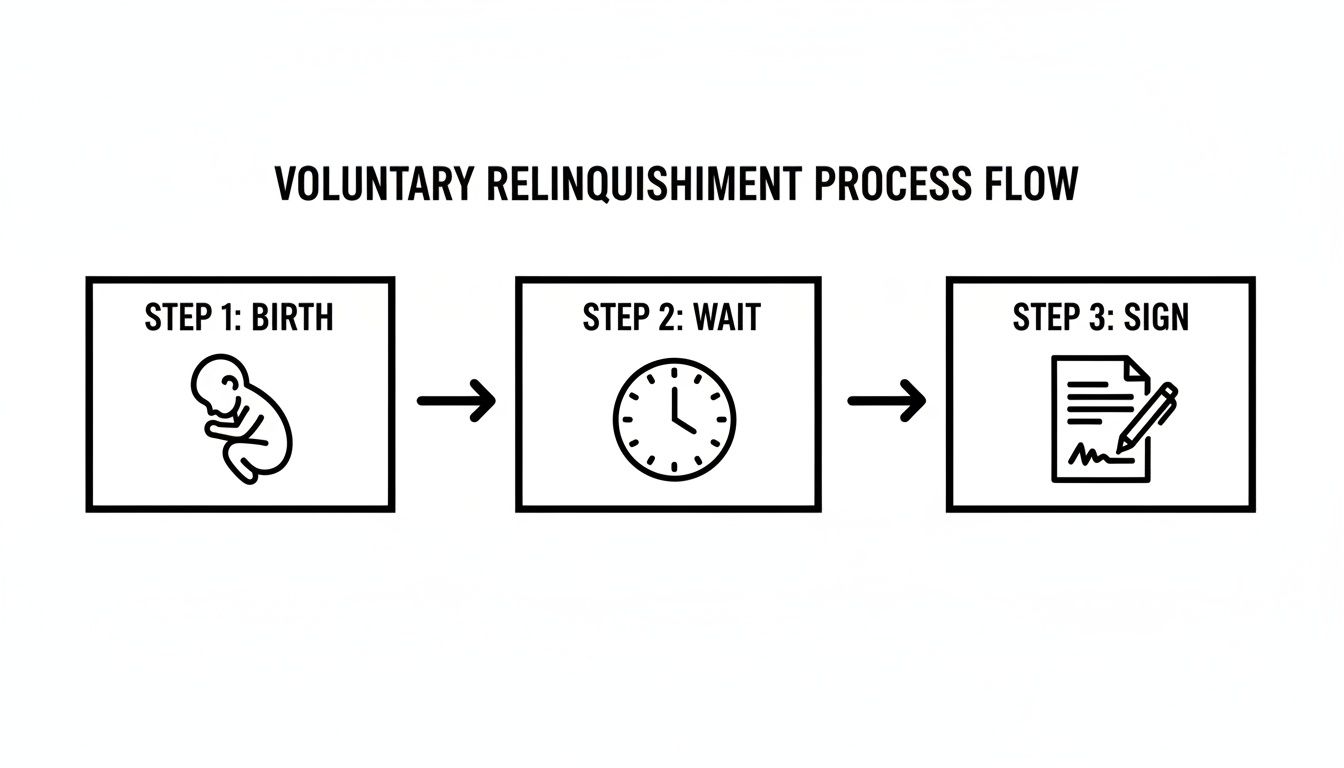
As you can see, there’s a legally required 48-hour waiting period after birth before a mother can sign the affidavit of relinquishment. This pause is a vital protection, ensuring the decision is made with care and without pressure.
The Hearing and Final Order
The whole process leads to a final court hearing. This is where both sides present their evidence, witnesses, and arguments to the judge. In an involuntary termination case, the petitioner faces a very high bar: they must prove their case with "clear and convincing evidence." This is a much tougher standard than in most civil cases.
The judge will listen to all the testimony, review every piece of evidence, and weigh the recommendation from the attorney ad litem. But their final decision will hinge on a single, powerful principle: what is in the best interest of the child?
If the judge agrees that termination is the right and necessary step, they will sign a Final Order of Termination. This document legally and permanently severs the parent's rights. For families on the path to adoption, this order is the green light they’ve been waiting for—it’s the legal foundation upon which a new, forever family can be built. Our guide on how to terminate parental rights in Texas offers more context on this journey.
The court process is designed to be thorough and fair, not fast and easy. Its deliberate pace ensures that a decision this permanent is made with the utmost care, always prioritizing a child's right to a safe and stable future.
This journey is legally complex and emotionally charged. Having a knowledgeable family law attorney by your side isn't just a good idea; it's essential to ensure every step is handled correctly and with the compassion your family deserves.
From Termination Order to Forever Family: How Adoption Follows

A final court order terminating parental rights isn't just an ending. For a child and the hopeful family waiting to welcome them, it’s the powerful, legal beginning of a life together. Think of that order as the key that finally unlocks the door to adoption, creating the permanency and stability every child deserves.
The termination order essentially clears a legal path, removing all prior claims and responsibilities to create a clean slate. This allows the adoptive parents to step fully and confidently into their roles, ready to provide a lifetime of love and support without the fear of future disruption.
This legal clarity is what transforms a house into a forever home. It’s the final step that allows a child’s new family story to begin on a solid and secure foundation.
How Termination Paves the Way for Different Adoptions
The connection between termination and adoption can look a little different depending on a family's unique story, but the goal is always the same: creating a legal and emotional bond that will last a lifetime.
- In Stepparent Adoptions: A termination order for an absent biological parent allows the stepparent to legally become the child’s parent. This formalizes a bond that often already exists, giving the child two fully present and legally recognized parents.
- In Kinship Adoptions: When a grandparent, aunt, or other relative steps in to raise a child, terminating the biological parents' rights allows that relative to adopt. This provides the child with legal permanency within their own extended family, honoring those existing, loving relationships.
- In Private or Agency Adoptions: For families adopting an infant or child, the termination order—whether from a voluntary relinquishment or a court’s decision—is the final legal hurdle before the adoption can be finalized.
The entire process, from the first court filing to the final adoption hearing, is designed with one unwavering purpose: to give a child a stable, supportive, and loving forever home. The law recognizes that a child’s well-being is paramount.
This deep focus on permanency has had a real, measurable impact across the state.
A Focus on Stability and Family Unity
Texas has made significant strides in ensuring children find stable homes more quickly. Between 2018 and 2024, the state saw the numbers of children in foster care and those waiting for adoption decrease by an incredible 47% and 43%, respectively. This shift highlights a strong commitment to effective case management and, most importantly, creating permanent families.
Even with these incredible improvements, the termination of parental rights in Texas remains a crucial part of protecting children and building families. It is the legal mechanism that provides the security and unity every child needs to truly flourish.
For those ready to take this step, understanding the full journey is vital. We offer a comprehensive guide to the adoption process in Texas that can help you see the entire road ahead.
The journey from a termination order to a final adoption decree is one filled with hope. It’s the moment a child’s future becomes bright and secure, and a new family is officially born.
Common Questions About Terminating Parental Rights in Texas
The journey to terminate parental rights is tangled with legal questions and a lot of raw emotion. It's completely normal for families to feel a bit lost in the process. We hear the same questions time and again, so we've put together some clear, straightforward answers to help you see the path forward.
How Long Does the Termination and Adoption Process Take?
This is usually the first question on everyone's mind: "How long is this going to take?" While every family's story is different, a relatively straightforward termination and adoption in Texas can take anywhere from six to twelve months.
But that's just a ballpark figure. A few key things can really stretch out the timeline:
- Is it Voluntary or Involuntary? When a birth parent willingly signs the papers to relinquish their rights, things move much faster. If the termination is contested and you have to prove the parent is unfit, you're looking at a longer road with more court dates and evidence gathering.
- Can You Find the Other Parent? If the other biological parent has dropped off the map, a big chunk of time will be spent just trying to legally notify them. This can add significant delays.
- How Busy is the Court? Simple logistics matter. The specific court's caseload can affect how quickly you can get a hearing on the calendar.
Think of it this way: a stepparent adoption where the other biological parent is cooperative and ready to sign can sometimes wrap up in just a few short months. But a case where you have to hire investigators to track down an absent parent is naturally going to take a lot longer. Patience is key, and your attorney will be able to give you a much more realistic timeline based on your unique situation.
Can a Termination Order Be Reversed or Appealed?
This is a big one, both for the birth parents letting go and the adoptive families stepping in. In Texas, an order terminating parental rights is meant to be permanent and final. This isn't just a legal formality; it's about giving a child the deep-seated stability and security they need to truly bond with their new family.
That said, like most court orders, it can be appealed. The parent whose rights were terminated has a very short window of time to file an appeal, but they can't just say they disagree. They have to argue that a serious legal mistake was made during the original case.
It is incredibly difficult to get a termination order overturned. The court's number one priority, even during an appeal, remains the "best interest of the child." Once the deadlines to appeal have passed, the order is set in stone and becomes irrevocable.
The entire legal system is built to create lasting stability for children. While the right to appeal is there, the high bar for proving a termination was legally flawed—combined with the intense focus on the child's well-being—makes reversals extremely rare. This gives adoptive families the peace of mind they need to build their future without looking over their shoulder.
What Happens If the Other Parent Cannot Be Located?
This scenario pops up all the time, especially in stepparent or kinship adoptions, and it can be incredibly stressful. What do you do when you have no idea where the other biological parent is? Thankfully, Texas law has a process for this so a child's future isn't stuck in limbo forever.
Your attorney is required to perform what's called a diligent search to find the missing parent. This isn't just a quick Google search; it's a thorough, documented effort that can include:
- Digging through public records and online databases.
- Reaching out to last known relatives, friends, or even old bosses.
- Sending certified mail to their last known address.
If that exhaustive search turns up nothing, the law provides a backup plan: "service by posting" or "service by publication." This means a legal notice is posted at the courthouse or published in a local newspaper. It serves as the official, legal notification, allowing the court to move ahead with the termination hearing even if the parent never shows up. It’s a crucial safeguard that ensures a child’s chance for a permanent home doesn’t stall out indefinitely.
Do I Still Need to Terminate Rights If the Parent Is Not on the Birth Certificate?
Yes, absolutely. This is a common misconception that can cause major legal headaches down the road. Just because a father's name isn't on the birth certificate doesn't mean he has no legal rights to the child.
A biological father could have established his legal rights in other ways, like by signing an Acknowledgment of Paternity at the hospital or by registering with the state's Paternity Registry. To make sure an adoption is 100% legally secure and can't be challenged later, it is essential to formally terminate the rights of any potential or alleged biological father.
Your attorney will help you identify anyone who might have a claim and take the proper legal steps to notify them. Tackling this head-on is one of the most important things you can do to build a solid legal foundation for your new family, leaving no room for future surprises.
Taking the step to terminate parental rights is a profound move toward securing your family's future. The legal maze can feel overwhelming, but you don't have to navigate it alone. The experienced, compassionate team at The Law Office of Bryan Fagan, PLLC is here to bring clarity and support to your journey. Schedule a free consultation with us today to talk about your family's future and take the next step toward the loving, permanent home every child deserves.
