
Embarking on the adoption journey is a profound act of love, and we understand that thinking about the financial side can feel overwhelming. It’s a significant and valid part of the process. The good news is that with careful planning and clear information, the finances become a manageable part of your path to building a family. In Texas, the legal fees for adoption can range from a few thousand dollars for a straightforward stepparent adoption to tens of thousands for a more complex private or international case.
Understanding the Financial Path to Building Your Family
Starting your adoption journey is an incredible expression of love and hope. As you prepare to open your heart and home to a child, it’s completely natural for financial questions to arise. At The Law Office of Bryan Fagan, PLLC, we believe that understanding the costs shouldn't add to your stress—it should empower you. This guide is designed to provide clear, plain-English explanations of the legal fees for adoption in Texas.
Think of this as your financial roadmap. We'll walk you through each potential cost, from attorney fees to court filings, so you can plan with confidence. This clarity allows you to focus on what truly matters: preparing to welcome your child home.

Key Components of Adoption Costs
The total investment in your adoption is made up of several key pieces, each playing a critical role in ensuring the process is smooth, ethical, and legally sound. While every adoption journey is unique, here are the primary expenses you can expect in Texas:
- Legal and Attorney Fees: This is your investment in professional legal guidance to handle court filings, navigate the termination of parental rights, and finalize the adoption in accordance with the Texas Family Code.
- Agency and Professional Fees: If you partner with an adoption agency, these fees cover vital services like matching you with a birth mother, providing counseling for all parties, and managing your case from start to finish.
- Home Study Costs: This is a mandatory step in Texas, as outlined in Chapter 162 of the Family Code. A licensed social worker will assess your home and readiness to provide a safe, loving environment for a child.
- Court and Administrative Fees: These are the official costs for filing your legal documents with the court and, ultimately, obtaining a new birth certificate for your child.
- Miscellaneous Expenses: This category can include things like travel (especially for interstate adoptions), legally permitted living expenses for the birth mother, and post-placement supervision visits.
Legal fees often represent a significant portion of the total cost, especially in private adoptions. A national survey found that attorney fees for private domestic adoptions averaged around $4,435, which was part of an overall average cost of over $43,000 per adoption. You can explore these national adoption trends on SmartAsset.com.
To give you a clearer picture, here's a quick breakdown of where the money goes.
Quick Overview of Texas Adoption Cost Components
This table summarizes the primary expenses you can expect during the Texas adoption process, providing a high-level financial roadmap.
| Expense Category | Typical Role in Adoption | Cost Variability |
|---|---|---|
| Attorney Fees | Manages all legal filings, court appearances, and finalization. | Varies significantly based on adoption type (stepparent vs. private) and complexity. |
| Agency/Placement Fees | Covers matching, counseling, and case management. | Applies to agency adoptions; can be a major cost component. |
| Home Study Fees | A mandatory evaluation of the prospective adoptive home. | A fixed cost, but can vary by provider. |
| Court Filing Fees | Official fees paid to the court system to process the adoption. | Relatively low and standardized by county. |
| Birth Mother Expenses | Legally allowable living and medical costs for the birth mother. | Highly variable; depends on the birth mother’s needs and Texas law. |
| Travel & Misc. Costs | Can include travel for ICPC, meetings, and post-placement visits. | Depends heavily on the specifics of the placement. |
Each of these components is an essential part of a secure, ethical, and legally sound adoption.
At its core, every fee you encounter is an investment in the best interests of the child. It ensures that every legal box is checked, protecting your family’s future and providing a secure, permanent home for a child who needs one.
Our goal is to help you understand these numbers so you can move forward with clarity, not anxiety. Now, let's break down each of these costs in greater detail.
Decoding Your Attorney's Role and Fees
When you decide to hire an adoption attorney, you’re not just paying for someone to fill out paperwork. You are bringing a guide, an advocate, and a legal architect onto your team to help build your family. Think of your attorney as the person drawing up the blueprints for your adoption, ensuring every legal detail is solid, secure, and fully compliant with the Texas Family Code.
Understanding what their fees cover is the first step in seeing the immense value they bring to protecting your family’s future. The legal fees for adoption can be broken down into a few main categories, each playing a vital role in making your adoption legally permanent and secure.
Understanding Attorney Billing Structures
One of the first conversations you'll have with a law firm is about how they bill for their services. Most adoption attorneys in Texas use one of two common structures:
- Flat Fee: This is a single, all-inclusive price for the entire legal process. It’s a wonderful option for adoptions with a clear and predictable path, like an uncontested stepparent or relative adoption. The primary benefit of a flat fee is its predictability—you know exactly what you’ll pay from day one, which makes budgeting much easier.
- Hourly Rate: For more complex or potentially contested adoptions, an attorney might bill by the hour. This means you pay for the actual time your legal team spends on your case, from drafting documents to appearing in court. While less predictable, this model ensures you’re only paying for the specific services you need.
A trustworthy law firm will always explain these options upfront to help you determine the best fit for your unique situation. While Texas law is our focus, it can be interesting to see how legal fees are handled in other parts of the world, like these rules governing attorney compensation in other jurisdictions.
What Your Attorney's Fees Typically Cover
Your attorney's fee is usually the most significant part of the direct legal costs, but it covers a wide range of critical work needed for a successful adoption. Their job is to handle every step with precision and care, so you can focus on your growing family.
"An experienced adoption attorney does more than file papers. They anticipate potential roadblocks, protect your parental rights, and provide peace of mind so you can focus on preparing for your child."
This fee pays for their expertise in:
- Drafting and Filing the Adoption Petition: This is the official court document that begins the legal process, formally asking the court to approve the adoption.
- Managing the Termination of Parental Rights (TPR): This is arguably the most critical legal step. Your attorney will handle the sensitive and complex process of legally ending the birth parents' rights, whether through their voluntary consent or, if necessary, a court proceeding, all in accordance with Texas law.
- Representing You in Court: Your lawyer prepares you for and attends all necessary court hearings, especially the finalization hearing where a judge makes the adoption official and permanent.
- Ensuring Legal Compliance: They ensure every action complies with the Texas Family Code, particularly Chapters 162-166, which outline the rules for adoption procedures, consents, and finalization.
Finding the right legal partner is a crucial first step. If you're just beginning your search, our guide on how to find the best adoption attorneys near you can offer helpful insights.
Other Direct Legal Costs
Beyond what you pay your attorney for their professional time, there are a few other direct costs tied to the legal process. These are not payments to the law firm but are essential administrative expenses.
- Court Filing Fees: Every Texas county charges a fee to file legal documents, like the initial adoption petition. These fees are fairly standard and relatively modest, usually ranging from $300 to $500.
- Service of Process Fees: If a birth parent needs to be formally notified of the legal proceedings, there may be a small fee to have a professional process server or constable deliver the legal papers.
When you break down these costs, you can see how each dollar is put to work building a secure legal foundation for your family. This legal framework is what ultimately turns the dream of adoption into a permanent, wonderful reality.
How Your Adoption Path Shapes Legal Costs
Every family’s story is unique, and so is every adoption journey—which means the legal fees will be just as personal. The path you choose to grow your family is the single biggest factor influencing the legal investment required. For instance, a straightforward stepparent adoption is legally and financially very different from a private adoption that involves a contested termination of parental rights.
Understanding these differences is the first step toward creating a realistic budget and moving forward with confidence. Let's break down how the legal costs compare across the most common types of adoption in Texas.
Private Domestic Adoption Fees
When most people think of adopting a baby, they’re picturing a private domestic adoption. This is where you typically work with an agency or an attorney to connect with an expectant mother who is making an adoption plan for her child. From a legal standpoint, this path requires a significant amount of work to ensure the entire process is ethical, transparent, and legally sound for everyone involved.
Your attorney’s role is immense. They are responsible for:
- Drafting and filing the initial adoption petition with the court.
- Navigating the delicate and complex process of terminating the birth parents' legal rights.
- Ensuring every step complies with the Texas Family Code, especially the rules around birth mother expenses and irrevocable consents.
Because of this intensive legal work, the legal fees for private domestic adoptions are generally higher. It demands meticulous attention to detail to protect the child, the birth parents, and you as the adoptive family.
Stepparent and Kinship Adoption Fees
Adoptions by a stepparent or another relative (a kinship adoption) are often the most affordable and legally direct paths to building a family. For example, a stepparent adopting their spouse's child, or grandparents adopting a grandchild, begins with a pre-existing relationship, which naturally simplifies many legal hurdles.
The main legal task is usually terminating the parental rights of the absent parent. If that parent consents and signs the necessary documents, the process can move very quickly and smoothly. Even if they cannot be located, an experienced attorney knows the proper legal steps to manage the requirements and proceed. Because the home study is sometimes waived for relatives, these adoptions tend to have lower overall costs and a much faster timeline. This focused legal scope translates directly into more predictable and lower legal fees. You can find more details in our complete guide to understanding adoption costs in the Lone Star State.
Adoptions from Child Protective Services (CPS)
Choosing to adopt a child from the Texas foster care system is a beautiful way to provide a permanent, loving home to a child who needs one. Financially, it's also the most accessible path to adoption. In most CPS adoptions, the state has already handled the legal process of terminating the biological parents' rights.
For families adopting from foster care, the focus is on permanency. Texas often covers the legal fees and provides financial assistance, making this a virtually no-cost adoption for the adoptive family.
This means your attorney’s primary role is to finalize the adoption, which is a far less complex and costly process. The state’s number one goal is to find stable, loving homes for these children, and they provide the financial backing to make it happen.
To help you visualize where the costs come from, particularly in private adoptions, here is a simple breakdown of the core legal expenses.
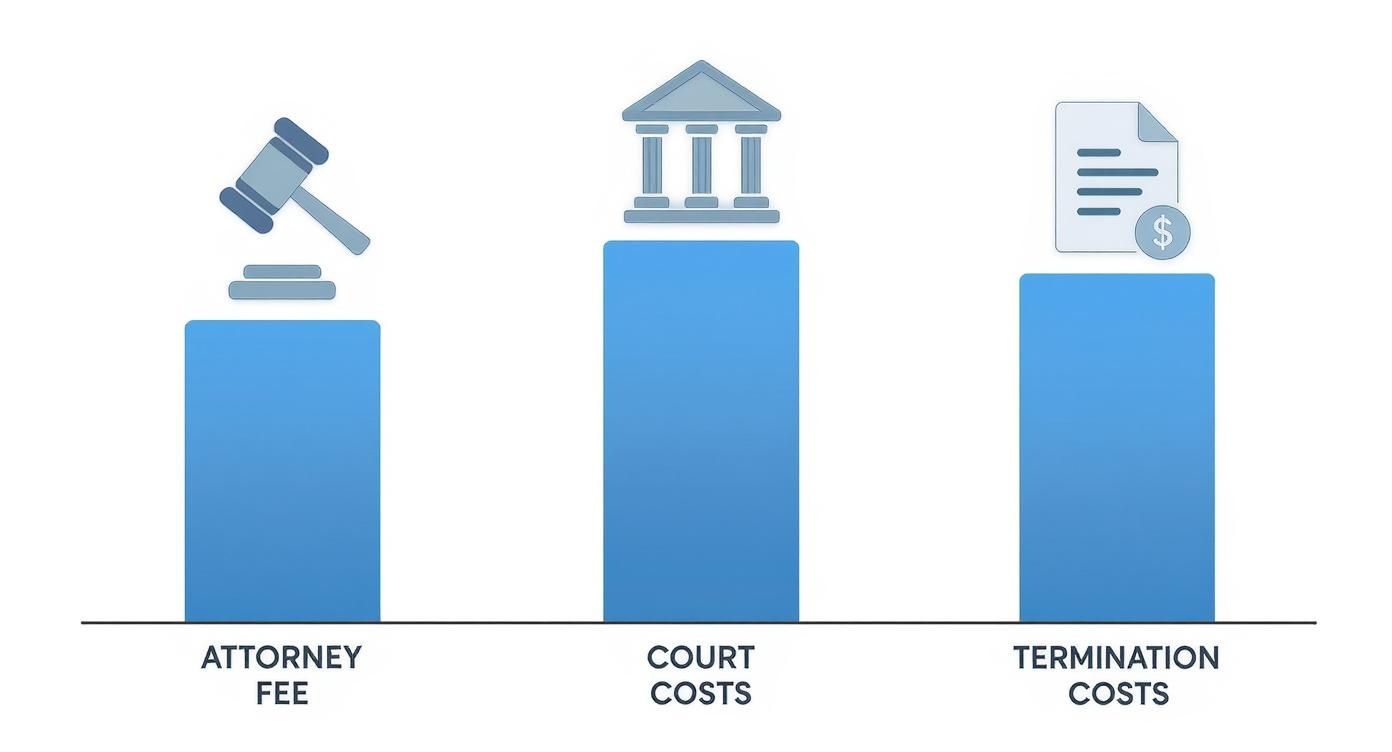
As you can see, while court costs are a piece of the puzzle, the real investment is in the attorney’s expertise and the critical process of terminating parental rights to ensure the adoption is secure.
To give you a clearer idea of how these factors play out in real numbers, here’s a look at the typical legal fee ranges for different adoption paths.
Estimated Legal Fee Ranges by Adoption Type in Texas
| Adoption Type | Typical Legal Complexity | Estimated Attorney Fee Range (Texas) | Key Cost Factors |
|---|---|---|---|
| Private Domestic | High | $5,000 – $15,000+ | Termination of rights, birth parent expenses, interstate compacts (ICPC) |
| Stepparent | Low to Moderate | $1,500 – $5,000 | Whether the absent parent consents to termination or must be served |
| Kinship/Relative | Low to Moderate | $2,000 – $6,000 | Often involves CPS; may have waived fees or state subsidies |
| CPS/Foster Care | Low | $0 – $2,500 | State often covers or reimburses all legal fees for the family |
Note: These figures are estimates and can vary based on your case's specific circumstances.
Ultimately, the path you choose will dictate the legal work needed. Understanding this from the start helps you plan not just your finances, but your emotional energy for the journey ahead.
Navigating International Adoption Fees
When your heart leads you across borders to grow your family, international adoption is a beautiful—but legally complex—journey. This path involves harmonizing the legal systems of two different nations: the United States and your child's home country. This dual legal landscape naturally adds unique layers of cost and complexity, making experienced legal guidance more important than ever.
You’re not just dealing with Texas family law. You’re simultaneously navigating U.S. federal immigration law and the court system of another nation. Every step requires meticulous documentation to ensure your child can legally enter the U.S. and eventually become a citizen. It’s an incredibly rewarding process, but one that demands careful financial and emotional preparation.

Key Legal Fees in International Adoption
The legal fees for an international adoption cover a wide range of essential services designed to bring your child home safely and legally. These costs ensure that every requirement from both countries is met, protecting your family’s future.
Here’s a breakdown of the typical expenses:
- U.S. Citizenship and Immigration Services (USCIS) Fees: Before you can begin, you need USCIS approval. This involves filing specific forms, like the I-800A or I-600A, which have government-mandated filing fees.
- Foreign Legal Counsel Fees: You will almost certainly need to hire an attorney or legal representative in your child's country of origin. Their job is to manage the in-country court proceedings and make sure the adoption is legally recognized there.
- Dossier Preparation and Authentication: Your dossier is a comprehensive portfolio of your life on paper. It includes personal documents that must be translated, notarized, and authenticated (often with an Apostille), and each step comes with a fee.
- Hague Convention Compliance Fees: If you’re adopting from a country that is part of the Hague Adoption Convention, there are specific accreditation and processing fees to ensure high ethical standards are maintained throughout.
How Global Factors Influence Costs
International adoption costs are not static; they can shift based on global events, diplomatic relations, and changes in foreign laws. Political instability or new regulations in another country can unexpectedly increase processing times and legal requirements, which directly impacts your overall expenses.
International adoption is a journey of both heart and patience. The legal framework is designed to protect children, and while it can feel complex, each fee and requirement serves the ultimate goal of ensuring a safe, permanent, and loving home.
This is precisely why having a U.S. attorney who understands the nuances of international adoption is so critical. They can help you stay informed and prepared. To get a better feel for the journey, you can review the specific steps involved in an international adoption in Texas.
The legal fees can also vary substantially from one country to another due to different legal systems and travel requirements. Navigating this intricate process requires a team that understands both the legal hurdles and the emotional side of the journey. The investment you make in proper legal support is an investment in a smooth, secure, and legally sound future for your new family.
Planning for Other Essential Adoption Expenses
While attorney fees are a major piece of the financial puzzle, they aren't the whole picture. To create a realistic adoption budget and avoid surprises, it’s important to understand the other costs that are part of building your family. Think of these as the practical, hands-on steps that happen alongside the legal work—each one is vital to ensuring a safe, ethical, and loving home for a child.
From the first steps of getting approved to the day you finally bring your child home, these expenses are investments in your family's future. A clear view of them now allows you to build a financial plan, so you can focus your energy on preparing your heart and home.
The Mandatory Home Study Process
Before any adoption can be finalized in Texas, every prospective family must complete a home study. This is a foundational step required by the Texas Family Code, designed to ensure every child is placed in a safe, stable, and nurturing home. A licensed social worker will visit you, conduct interviews, and gather information to prepare a detailed report for the court.
The cost for a home study in Texas typically falls between $1,000 and $3,000. This fee covers the social worker’s time for interviews, home visits, background checks, and compiling the final report. It's a significant expense, but its purpose is critical: it serves the best interests of the child and gives the court confidence in your readiness to become a parent.
The home study isn't just a hurdle to clear; it's a valuable process of preparation and self-reflection. It helps you think through your parenting style and prepares you for the beautiful journey ahead, all while ensuring the utmost safety for your future child.
Agency and Placement Fees
If you choose to work with a private adoption agency, their fees will likely be the largest part of your overall costs. What you're paying for is a wide array of critical services that you would otherwise have to manage on your own.
Agency fees usually cover essential support, including:
- Networking and Advertising to connect with expectant mothers considering adoption.
- Screening and Matching services to help find a placement that feels right for your family.
- Counseling and Support for birth parents before, during, and after the birth.
- Case Management to coordinate all the moving parts of the adoption plan.
These comprehensive fees can range from $20,000 to $45,000 or more, depending on the agency. While it's a major investment, a reputable agency offers an invaluable support system for everyone involved, especially the birth mother.
Travel and Post-Placement Expenses
Don't forget to factor in travel. If you are adopting a child from another state, you’ll need a budget for flights, lodging, and daily expenses while you wait for the Interstate Compact on the Placement of Children (ICPC) paperwork to clear, which can sometimes take a week or more. The shifting landscape of international adoptions can also create complex travel requirements. Since peaking in 2004, international adoptions have dropped significantly, partly due to legal policy shifts in other countries, which can increase complexity and costs. You can learn more about how global trends affect the adoption process on PewResearch.org.
Once your child is home, Texas law requires several post-placement supervision visits. A social worker will visit periodically before the finalization hearing to see how everyone is adjusting. Each visit has a fee, usually a few hundred dollars. Finally, there's a small administrative cost to obtain a new, amended birth certificate for your child after the adoption is finalized—the official document that legally marks them as a permanent member of your family.
Building Your Family with Financial Confidence
As we conclude, let's move from the numbers on the page to what really matters: your next steps. Looking at the legal fees for adoption can feel intimidating at first, but it is a manageable—and necessary—part of this incredible, life-changing journey.
Every fee, from a simple court filing to the in-depth guidance from your attorney, serves one vital purpose: building a secure, legal, and permanent foundation for your family. Think of it as an investment, not just in a child's future, but in the dream you hold for your family. It ensures every detail is handled with care, protecting the child's best interests and giving you true peace of mind.
Your Journey Is a Story of Hope
Remember, you are not walking this path alone. The financial and emotional sides of adoption are deeply connected, and having the right support system changes everything. Finding an experienced, compassionate legal team that prioritizes clear communication is essential. Your attorney should be your trusted guide, offering total transparency about costs so you can focus on what’s important: preparing your heart and your home.
This journey is one of profound hope and love. While the financial details are a critical piece of the puzzle, they are simply the framework for the amazing story you are about to write as a family.
The most important thing to remember is that building a family through adoption is absolutely within reach. With the right information and a supportive legal partner, you can navigate the costs with clarity and move forward with confidence toward the moment you finally welcome your child home.
Take the Next Step with Us
We know that every family’s situation is unique, and you likely have questions that apply specifically to you. The best way to get clear, personalized answers is to talk with someone who lives and breathes Texas adoption law.
We invite you to schedule a free, no-obligation consultation with our team. Let's sit down, talk about your dreams for your family, and map out a clear, compassionate path forward—together.
Frequently Asked Questions About Texas Adoption Fees
Even with a detailed breakdown, it's completely normal to have more questions about the financial side of adoption. Getting clear, straightforward answers is one of the most important steps toward feeling confident and prepared. Let's walk through some of the most common questions we hear from families like yours.
Does Texas Offer Financial Assistance for Adoption?
Yes, absolutely. The most significant financial help is available to families who open their hearts to children in the Texas foster care system. To ensure these children find the permanent, loving homes they deserve, the state often provides:
- Monthly Subsidies: This is ongoing financial support to help you meet the child's daily needs.
- Medicaid Coverage: This ensures the child’s medical needs are covered without straining your family's budget.
- Reimbursement for Expenses: Many families can be reimbursed for the legal fees for adoption and other one-time costs associated with finalization.
If you're pursuing a private adoption, you still have great options. The federal Adoption Tax Credit is a major resource that can dramatically lower your tax liability. Many employers now offer adoption assistance benefits as part of their compensation packages. Additionally, numerous non-profit organizations provide grants to hopeful adoptive families. We can help you explore every financial resource available for your situation.
What Is the Difference Between a Flat Fee and an Hourly Rate?
Understanding how you'll be billed is key to planning your finances. A flat fee is a single, all-inclusive price for your entire adoption case. This provides certainty about the total cost from day one and works best for straightforward adoptions, like an uncontested stepparent adoption where the legal path is predictable.
An hourly rate means you are billed for the actual time your attorney spends working on your case. This is common with more complex or unpredictable adoptions, such as a case that might be contested. We believe in total transparency. During our first conversation, we will review our fee structure and determine which approach is the fairest and best fit for your family.
The goal is always clarity and comfort. A transparent fee agreement ensures there are no surprises, allowing you to focus on preparing for your child instead of worrying about unexpected legal bills.
Are Legal Fees Refundable if an Adoption Is Unsuccessful?
This is a sensitive but incredibly important question. Generally, fees paid for legal work that has already been completed are not refundable. For example, if your attorney has already spent hours drafting petitions, negotiating with another party, or appearing in court, that time and expertise must be compensated.
However, the specific details will always be clearly outlined in the written representation agreement you sign. It is vital to have an open conversation about this possibility with your attorney at the very start. Understanding these terms beforehand provides protection and clarity for everyone involved, no matter how the journey unfolds.
Can I Handle a Private Adoption Without an Attorney?
While it might seem like a way to save money, navigating a private adoption in Texas without an experienced attorney is extremely risky. We strongly advise against it. The Texas Family Code is filled with strict, detailed requirements for every step, especially concerning the termination of parental rights. A single procedural mistake can jeopardize the entire adoption, leading to devastating emotional and financial heartbreak.
Hiring an attorney is about much more than paperwork; it’s about security. An expert in your corner ensures every legal detail is handled correctly, protecting you, the child, and the birth parents. This investment brings the ultimate peace of mind that your adoption is legally sound, secure, and permanent.
The journey to adoption is filled with hope, and you don’t have to navigate the financial questions alone. The compassionate team at The Law Office of Bryan Fagan, PLLC is here to provide the clarity and guidance you need. To discuss your family’s future and get personalized answers to your questions, we invite you to schedule a free consultation at https://texasfamilyadoption.com.
