
Adopting a foster child in Texas is more than just a legal process—it's a journey of the heart, building a bridge of love and stability for a child who needs it most. It begins with understanding the state's requirements and finding a compassionate child-placing agency to guide you. From there, you'll complete specialized training, a detailed home study process, and eventually, celebrate at a final court hearing that makes your family official. Every step, guided by the Texas Family Code, is designed to create a permanent, loving home for a child.
Your Journey to Adopting a Foster Child
Deciding to open your home to a child from the foster care system is one of the most profound ways to build a family. It’s a path filled with deep purpose, offering a child the stability, love, and sense of belonging they deserve. For hopeful parents here in Texas, the idea can be both thrilling and a little overwhelming. You're probably filled with questions about where to start and what this road really looks like.
This guide is your starting point—a compassionate, step-by-step roadmap to demystify the process of adopting a foster child in Texas.
At The Law Office of Bryan Fagan, PLLC, we understand that this is so much more than paperwork and court dates; it’s about connecting lives and building futures. We're here to walk beside you through every stage, providing the clear legal guidance and empathetic support you need, from that first informational meeting all the way to the day you finalize your family in front of a judge.
The Heart of Foster Care Adoption
The need for loving, permanent families is staggering. Right now, there are nearly 114,000 children in the U.S. foster system waiting for someone to call Mom or Dad. The average age of these kids is almost 8 years old. It’s a sobering reality that shines a light on how important it is for families to consider opening their hearts to older children and sibling groups, who often wait the longest.
In fact, close to 60% of these children will spend between two and five years in foster care before they find their forever home. You can find more of these national statistics over at AdoptionNetwork.com.
Choosing to adopt from foster care means you're choosing to embrace a child’s whole story—their history, their needs, and their incredible potential. It requires a special kind of dedication, one that’s ready for both the challenges and the unbelievable rewards. This journey is really built on four key pillars:
- Patience: This isn't an overnight process. It takes time to get through the training, background checks, and the delicate process of matching you with the right child.
- Empathy: Many children in foster care have known trauma and loss. Understanding their past is the first step to building the trust they so desperately need for their future.
- Commitment: You’re offering so much more than a house. You’re offering a permanent place to belong, no matter what, with a focus on family unity.
- Love: Above all, it’s about giving unconditional love and unwavering support as your child heals, grows, and finally feels safe.
This guide will break down all the legal and emotional steps you'll encounter, giving you clear, practical advice grounded in Texas law, especially Chapters 162-166 of the Texas Family Code. Let's consider this your first real step toward bringing a child home forever.
Preparing Your Heart and Your Home
Your journey to adopt a foster child in Texas starts long before you ever sign a piece of paper. It begins right now, with the emotional preparation and the practical steps you take to create a safe, welcoming space for a child. This is the foundation—it's about getting ready, learning what to expect, and taking those first real steps toward growing your family.
For most hopeful parents in Texas, the first official move is to attend an informational meeting. These sessions, usually hosted by a child-placing agency or the Department of Family and Protective Services (DFPS), are designed to give you a clear, honest look at what foster care adoption is all about. It’s where you can get answers to your initial questions and start feeling a genuine connection to the process.
Imagine a couple, Mark and Sarah, walking into their first meeting feeling a mix of excitement and nerves, armed with a long list of questions. By the end, they're chatting with other prospective parents, sharing their hopes, and leaving with a sense of community and purpose they didn’t have when they arrived. This is the moment when the abstract dream of adoption starts to feel real.
Building Your Parenting Foundation with PRIDE
After that initial meeting, your next big milestone is the required Parent Resource Information (PRIDE) training. Don't think of this as just checking a box; it's a vital educational experience that will equip you with the specific tools you need for this unique parenting journey. The training is grounded in the Texas Family Code's focus on a child's best interests and dives deep into understanding childhood trauma and developing effective parenting strategies.
The infographic below really captures these early steps, showing how families move from that first meeting to feeling empowered by the training they receive.
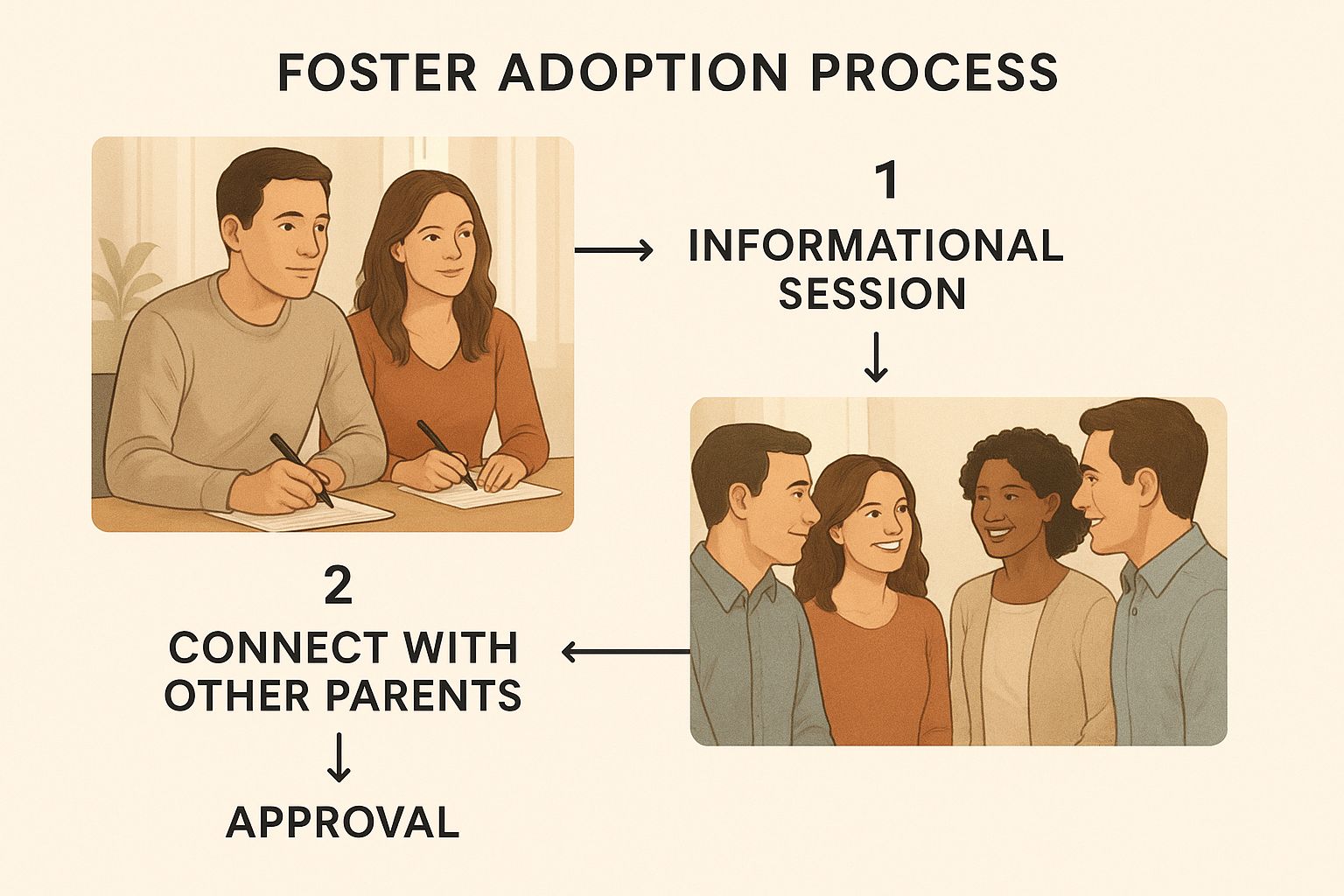
This visual shows the shift from simple curiosity to real confidence, highlighting how structured support prepares you for the realities of adopting from foster care.
PRIDE training is designed to be interactive and supportive, not a dry lecture. You’ll learn about:
- Attachment: How to build trust and create strong bonds with a child who may have experienced significant loss.
- Loss and Grief: Understanding the complex emotions a child carries after being separated from their birth family.
- Behavior Management: Learning trauma-informed techniques to respond to challenging behaviors with empathy and effectiveness.
- Strengthening Family Relationships: Strategies to help integrate a new child into your family dynamics and support your existing relationships.
This training is what helps you transition from simply wanting to adopt to being truly ready to parent a child with a unique history and specific needs.
Navigating the Initial Paperwork and Checks
Once your training is complete, you'll dive into the application and background checks. This part can feel a bit bureaucratic, but every form and fingerprint is a necessary step to ensure the safety and well-being of every child in the system. The application will ask for details about your personal history, financial stability, and your reasons for wanting to adopt.
A key takeaway: This isn't about being perfect; it's about being honest and stable. Your agency is looking for your ability to provide a safe, nurturing, and permanent home for a child.
At the same time, you'll undergo comprehensive background checks. Every adult living in the home must complete these, which screen for any history of criminal activity or child abuse. This is a standard, non-negotiable part of the process designed to protect the most vulnerable.
As you get your home ready, it’s a great idea to review some essential household safety tips, including childproofing. Simple steps like securing heavy furniture and covering electrical outlets are crucial for creating an environment where a child can finally feel safe.
These early steps—the meetings, the training, and the paperwork—are the building blocks of your adoption. Each one brings you closer to welcoming a child into your life, not just with an open heart, but with the skills and understanding to be the parent they truly need.
Navigating the Texas Home Study
Let’s be honest: the home study is probably the part of the adoption journey that causes the most anxiety. I’ve seen countless hopeful parents worry about it, but I want to reframe it for you. This isn’t an inspection where someone shows up with a white glove. It's a partnership.
Think of it this way: the home study is not about having a perfect house or being a perfect person. It's about showing you can provide a safe, stable, and nurturing place for a child to land, heal, and ultimately, thrive. Your caseworker isn't a judge; they're your first guide in this process, and their goal is to help you succeed.

This entire step, known legally as an adoption evaluation in the Texas Family Code (Chapter 162), is really a collaborative effort to make sure everyone is prepared. It helps both you and the agency see your strengths and pinpoint any areas where a little extra support might be helpful down the road.
The Heart of the Home Study: The Interviews
At the core of the home study are a series of candid, in-depth interviews. Expect your caseworker to want to chat with everyone living in your home, both one-on-one and as a family. This gives them a full picture of your family's dynamic and makes sure everyone is on the same page about welcoming a new child.
Imagine a single prospective parent, Maria. During her interviews, the caseworker asked gentle but thorough questions. They talked about her support system—friends who could babysit in a pinch, family members who lived nearby. They explored her parenting philosophy, her own childhood, and her dreams for her future family. These conversations aren't meant to trip you up; they're designed to simply understand who you are.
A Note of Reassurance: Honesty is your greatest asset here. Nobody has a flawless past. Being open about challenges you've overcome shows resilience and self-awareness—two of the most critical qualities for any parent, especially one raising a child from foster care.
The goal is to paint a real, holistic picture of the life a child would step into with you.
What Your Caseworker is Really Looking For
While every home study is a little different, caseworkers are generally looking at a few key areas to ensure a child's best interests are met. It’s not a pass-fail test, but a comprehensive look at the whole picture.
Here’s what they’re focusing on:
- Your Motivation to Adopt: They want to hear your "why." Is this a lifelong dream? A calling to give back? Your authentic reasons are what truly matter.
- Emotional Stability and Maturity: Can you handle the emotional rollercoaster that can come with parenting a child who has experienced trauma? They’ll be looking for signs of patience, empathy, and self-regulation.
- Your Support Network: Parenting is absolutely a team sport. Who’s in your corner? This includes family, friends, and community connections who will be there for you and your child.
- Financial Stability: This isn't about being rich. It’s about demonstrating that you can manage your finances responsibly and provide for a child's fundamental needs.
These conversations are your chance to share your story and show the love and stability you’re ready to offer.
Preparing Your Documents and Home
Getting organized from the start can make the home study feel much less stressful. Your agency will give you a list of documents you’ll need to pull together.
Gathering these key documents ahead of time can make your home study process much smoother and less stressful.
Essential Documents for Your Texas Home Study
| Document Type | Purpose and Key Details |
|---|---|
| Personal Identification | Driver's licenses, birth certificates, and Social Security cards for all adults in the home. |
| Relationship Status | Marriage license (if applicable), or divorce decrees from any previous marriages. |
| Financial Records | Recent pay stubs, tax returns (usually the last 2-3 years), and a basic household budget. |
| Health Statements | A letter from your doctor stating you are in good physical and mental health to parent a child. |
| Reference Letters | Typically 3-5 letters from non-relatives who can speak to your character and suitability to adopt. |
| Background Checks | State and federal criminal background checks and child abuse clearances for all adults in the home. |
Having a folder—digital or physical—ready to go will make you feel in control. For a more exhaustive checklist, we’ve put together a complete guide on the essential required documents for a Texas adoption home study that can help you prepare with confidence.
At the same time, you'll get ready for the home safety check. Your caseworker will walk through your home, but they aren't looking for pristine decor. They’re checking for practical things: working smoke detectors, safe storage for medications and cleaning supplies, and a generally secure environment.
This is a straightforward assessment to confirm your home is a safe place for a child. A little bit of prep work makes this part of the process a breeze.
Making a Lifelong Connection
Once your home study is approved, the journey shifts from paperwork to people. This is the heart of the process—the deeply personal and emotional stage of finding the child you are meant to parent. It’s a time filled with both hope and patience as you work with your agency to forge a lifelong bond.

Texas agencies and the Department of Family and Protective Services (DFPS) approach this with immense care. The focus is always on the child's best interests, which means thoughtfully matching their unique history, personality, and needs with your family's strengths and lifestyle. This isn’t about finding a "perfect" child; it's about creating the right match where both you and the child can truly flourish together.
Discovering Waiting Children in Texas
One of the most valuable resources you'll use is the Texas Adoption Resource Exchange (TARE). Think of it as a secure online platform where you can view profiles of children and sibling groups across the state who are legally free for adoption and waiting for their forever family.
Each profile offers a small window into a child's world—their interests, their personality, and what they hope for in a family. For many parents, this is the moment the whole process becomes incredibly real.
Let’s imagine a couple, David and Emily, scrolling through TARE one evening. They come across the profile of two brothers, ages 7 and 9. The description mentions their love for building LEGOs and their close, protective bond. Reading their story, David and Emily feel an immediate, undeniable pull. Their very next step is to call their caseworker, express their interest, and ask to learn more.
This single phone call kicks off a series of vital conversations. The caseworker will share non-identifying information about the boys' history, their experiences in foster care, and any known medical or emotional needs. David and Emily ask thoughtful questions, trying to understand the boys' whole story so they can be fully prepared to support them. They feel a mix of excitement and a healthy dose of nerves, which is completely normal.
Key Insight: The goal of the matching process isn’t speed, it’s sustainability. Your caseworker’s role is to ensure the match is built on a foundation of realistic expectations and genuine connection, giving your future family the best possible chance to thrive.
Building Trust Through Pre-Placement Visits
Once a potential match is identified and everyone—including the child’s caseworker—agrees to move forward, you’ll begin a series of pre-placement visits. This is a carefully managed process that allows you and the child to get to know each other gradually, in a low-pressure environment. It’s all about building familiarity and the first threads of trust.
These visits often follow a gentle, logical progression:
- The First Meeting: Usually a brief, supervised get-together, maybe at a neutral spot like a park or the agency's office.
- Longer Visits: As comfort grows, you might spend a full afternoon together, sharing a meal or doing an activity the child enjoys.
- Overnight Stays: Eventually, visits can progress to weekends at your home. This gives everyone a taste of what daily life together might actually feel like.
Every step is taken at a pace that feels right for the child. The focus is always on connection before correction, allowing a natural bond to form without the pressure of immediate expectations.
Understanding Legal-Risk Placements
In some situations, you might consider what's known as a legal-risk placement. This is when a child is placed in your home before the biological parents' rights have been officially terminated by a court. While the goal is still adoption, there remains a small—but real—possibility that the court could decide to reunify the child with their birth family.
This path requires a unique level of emotional readiness. It means loving and caring for a child as your own while knowing the legal process isn't final. Your caseworker and an adoption attorney are critical guides here, providing transparent information about the case's specific risks. It’s a decision that must be made with open eyes and a full heart, ensuring you are prepared for any outcome.
While the need for adoptive families is great, trends in foster care adoption have recently shown a steady decline. In fiscal year 2023, only 50,193 children were adopted from foster care nationwide, a decrease of over 5% from the year before. You can learn more by reviewing these national foster care and adoption statistics and see just how vital your role is in reversing this trend.
From Placement to Final Adoption
Bringing your child home for the first time is a feeling you’ll never forget. It’s that monumental, heart-filling moment when everyday family life truly begins. But while the emotional journey has hit its biggest milestone, there are still a few legal steps to take before the adoption is officially set in stone.
This final stage isn’t a test. Think of it as a supportive transition period designed to help your new family adjust and ensure everyone is thriving before the adoption is legally cemented. It's a time for bonding, creating routines, and navigating the beautiful, messy reality of becoming a family—all with your support team right there with you.
The Post-Placement Supervision Period
Once a child is placed in your home, Texas law requires a mandatory post-placement supervision period. This almost always lasts for six months. During these months, your caseworker will make regular visits to your home to see how everyone is settling in.
These visits aren't inspections; they're about support. Your caseworker is there to be a resource, answer your questions, and offer guidance as you handle new challenges and celebrate the small victories. They are invested in seeing your family succeed.
For instance, a family who just welcomed a ten-year-old might be struggling to establish a new bedtime routine. The caseworker can offer practical, trauma-informed strategies, connect them with a local support group of other adoptive parents, or simply be a listening ear. It’s a partnership focused on the child's well-being and your family's long-term happiness.
Understanding the Legal Roles
As you get closer to finalization, you'll work with a few key legal professionals. Each one has a specific and important job in protecting the child’s best interests and making sure every legal box is ticked correctly.
- Your Adoption Attorney: This is your personal advocate. Your attorney, like our team at The Law Office of Bryan Fagan, PLLC, is responsible for preparing and filing all the necessary legal documents. They represent you in court and ensure every requirement under the Texas Family Code is met. Think of them as your expert guide through the legal system.
- The Ad Litem Attorney: This attorney is appointed by the court, and their one and only responsibility is to represent the best interests of the child. They’ll meet with the child, talk to you and your caseworker, and then make a recommendation to the judge. Their focus is entirely on the child's safety, happiness, and permanency.
Knowing who does what helps demystify the court process. It makes the whole thing feel less intimidating and more like the collaborative effort it’s meant to be.
Filing the Petition to Adopt
Once the six-month supervision period is nearly over and your caseworker has put together a positive post-placement report, your attorney will file the Petition to Adopt. This is the formal legal document that officially asks the court to recognize you as the child’s legal parents.
This petition brings together all the critical information—from your completed home study to the order terminating parental rights—into a single legal package. It represents the culmination of all your hard work and is the legal kickoff for the final hearing. Our firm can help you understand all the essential guidelines for parents navigating Texas post-adoption requirements so you feel completely prepared.
The Finalization Hearing: A Day to Celebrate
The finalization hearing is the moment your family becomes legally and officially whole. It's a joyous, emotional day you'll remember forever. Many families make it a true celebration, bringing grandparents, close friends, and even the child's favorite stuffed animal to the courthouse.
The hearing itself is usually pretty brief and overwhelmingly positive. The judge will review the case file, ask you a few final questions to confirm your commitment, and then sign the Final Adoption Decree.
With the stroke of a pen, the judge makes it official. The child is no longer a "foster child" but simply, and forever, your child. This decree legally grants you all parental rights and responsibilities, cementing your family bond for a lifetime.
Support for Your Forever Family
Finalizing an adoption isn't the end of the story—it's the beautiful, sometimes messy, beginning of a new chapter. As your family starts this lifelong journey, having a strong support system isn't just nice to have; it's the key to thriving. Thankfully, Texas offers a wealth of resources designed to help you navigate the joys and challenges ahead with confidence.
You are never alone on this path. Building your forever family means knowing where to turn for guidance, community, and specialized support when you need it most. Reaching out is a sign of strength and a deep commitment to your child's well-being.
Financial and Medical Support Programs
One of the most critical resources for families who adopt from foster care is the Post Adoption Assistance (PPA) program. Many children adopted from the Texas foster care system are eligible for this crucial support, which often includes:
- Monthly Financial Assistance: A regular payment to help with the everyday costs of raising your child.
- Medicaid Coverage: This ensures your child’s medical and therapeutic needs are met without creating a crushing financial burden.
This program is grounded in the Texas Family Code's commitment to permanency. It’s a practical acknowledgment that children with histories of trauma or with special needs may require ongoing care, providing a safety net so you can focus on healing and connection.
Therapeutic and Emotional Guidance
Parenting a child who has experienced deep loss and trauma requires a unique skill set and a whole lot of empathy. Finding counselors and therapists who specialize in adoption is one of the most proactive steps you can take. These professionals really get the nuances of attachment, grief, and trauma-informed care.
A dedicated adoption-competent therapist can give your family a shared language to talk about difficult feelings. They provide a toolbox of strategies to build trust and strengthen your bonds, making your home a true place of healing.
As you settle into new routines, helping your child adjust can feel like navigating uncharted territory. Simple tools can make a big difference. For example, consider utilizing social story creators to craft personalized narratives that explain new situations in a gentle, predictable way. These stories can make transitions feel much safer for a child who needs that extra reassurance.
Finding Your Community
Nothing beats connecting with other adoptive families. Sharing your experiences with people who truly understand your journey can ease feelings of isolation and provide practical, been-there-done-that advice that you just can't find anywhere else. We’ve put together a guide to help you find local and online adoptee and parent support groups where you can find that sense of community.
It's helpful to remember the bigger picture. In the U.S. in 2023, reunification with family accounted for 44% of foster care exits, while adoption made up 27%. These numbers highlight just how vital a permanent, stable home is for children who cannot return to their birth families. Discover more insights about these national orphan care statistics. Leaning on community support is a powerful way to ensure these adoptions are successful for life.
The journey of adoption is a profound commitment of love and patience. At The Law Office of Bryan Fagan, PLLC, we are honored to provide the legal guidance that turns that commitment into a forever family. If you are ready to take the next step or have questions about how to adopt a foster child, we invite you to schedule a free, compassionate consultation with our experienced legal team today.
Schedule Your Free Consultation with the Law Office of Bryan Fagan, PLLC
