
Deciding to grow your family through adoption is a journey of the heart, filled with hope and excitement. But for most families, it also brings up practical questions about the financial side of the process. Understanding the cost to adopt a child in Texas is a crucial first step, and the answer can range from just a few thousand dollars for a foster care adoption to $50,000 or more for a private infant adoption.
This guide is here to offer the clarity and reassurance you deserve. We'll walk you through the numbers with compassion, helping you understand what to expect so you can focus on what truly matters: preparing to welcome a child into your life.
Your Compassionate Guide to Texas Adoption Costs
Thinking about the money involved in adoption can feel overwhelming, but it doesn't have to be. At The Law Office of Bryan Fagan, PLLC, we believe every hopeful parent deserves a clear, straightforward breakdown of the potential expenses. When you know what to expect, you can plan with confidence and keep your focus on building your family.
The total cost isn't a single fee. Instead, it’s a collection of essential services, each playing a vital role in ensuring the process is safe, legal, and ethical for everyone—the child, the birth parents, and you. The entire framework is designed to protect the best interests of the child, a guiding principle in Texas Family Law.
What Makes Up the Cost of Adoption?
Every adoption story is unique, and so is its financial path. The total investment depends on the type of adoption you choose—such as working with a private agency, pursuing an independent adoption, or adopting from foster care—and the specific circumstances of your situation.
However, most private adoptions include expenses from a few key areas. To give you a clearer picture, here’s a summary of the typical costs you might encounter in a private adoption here in Texas.
Estimated Texas Adoption Costs at a Glance
This table provides a summary of potential expenses for a private adoption in Texas. These are estimates and can vary significantly based on your specific situation.
| Expense Category | Typical Cost Range | What It Generally Covers |
|---|---|---|
| Agency & Professional Fees | $15,000 – $30,000 | Matching services, birth parent counseling and support, case management, administrative oversight, and post-placement supervision. |
| Legal & Court Fees | $8,000 – $15,000 | Attorney fees for filing petitions, representation in court, finalizing the adoption, and ensuring compliance with Texas Family Code. |
| Home Study Costs | $1,500 – $3,000 | The required assessment of your home and family, including background checks, interviews, home visits, and the final report. |
| Birth Parent Expenses | $5,000 – $10,000+ | Legally allowable support for the birth mother, which can include medical, living, and transportation costs during her pregnancy. |
Keep in mind, these numbers are a starting point. Your journey might look different, but understanding these core components is the first step toward creating a realistic budget.
This infographic helps visualize where that money typically goes.
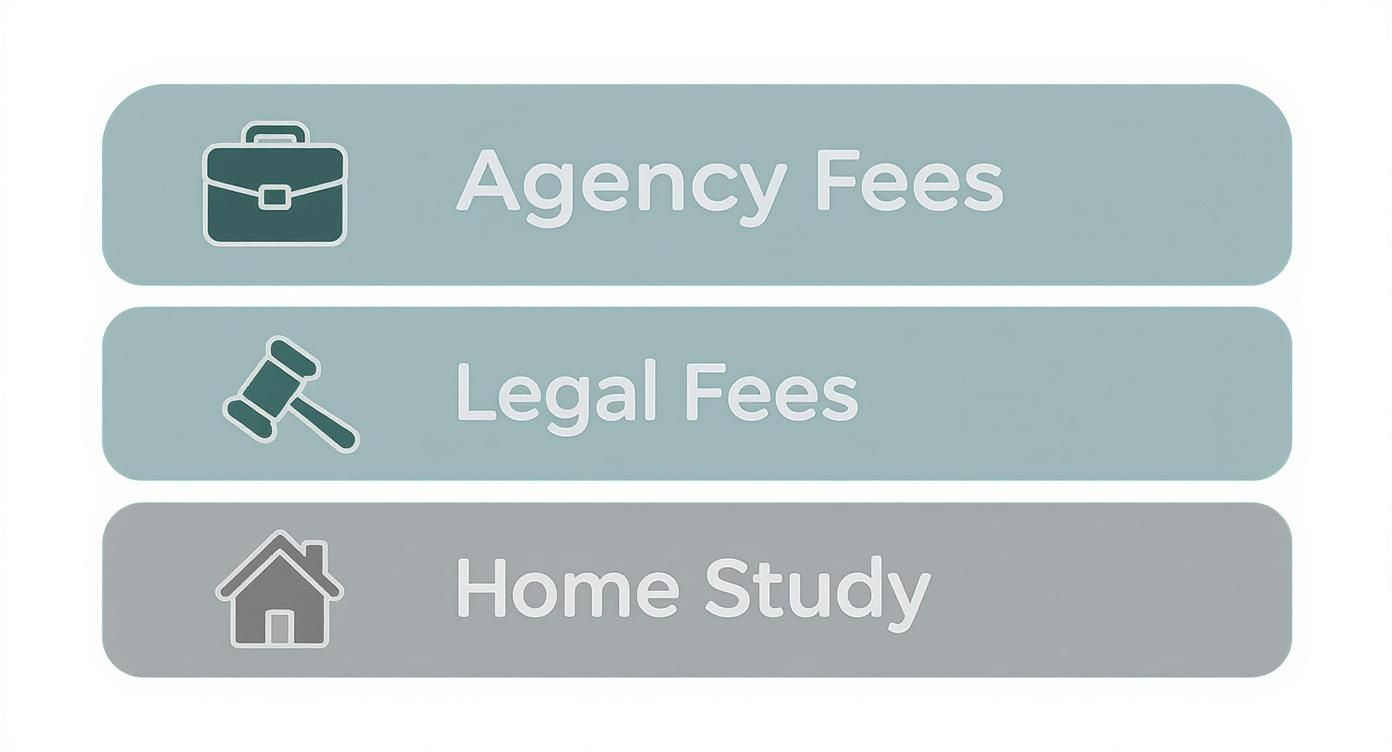
As you can see, these core areas are the foundation. Each fee pays for a specific, vital part of the process, all working together to protect the child's best interests and ensure your adoption is handled with professional care and legal integrity.
The Law Office of Bryan Fagan, PLLC is dedicated to providing transparent guidance on adoption costs. We believe that understanding the financial journey is the first step toward a confident and joyful adoption experience.
Feeling ready to take the next step? Our compassionate legal team is here to answer your questions and provide personalized guidance. Schedule a free, no-obligation consultation today to discuss your family's future.
Decoding Adoption Agency and Professional Fees
When you first start exploring the cost to adopt, the largest figure you’ll likely see is for agency and professional fees. It can feel daunting at first, but once you understand what this investment covers, you begin to see the incredible value and support system you’re building for your family's future.
This isn't just a fee for paperwork; it’s the engine that drives a safe, ethical, and successful adoption. These professionals are the heart of the process, providing a structured and supportive environment for everyone involved. Their work is governed by the principles laid out in the Texas Family Code, ensuring every action prioritizes the well-being of the child.

What Your Agency Fees Typically Include
Think of an adoption agency as your dedicated team of guides. They handle all the complex logistics so you can focus on what really matters: preparing your heart and your home.
Here’s a glimpse of what’s happening behind the scenes:
- Matching and Outreach: This is where the journey to find your child begins. Agencies work to connect hopeful adoptive families with expectant birth mothers. This includes creating your family profile, advertising, and networking to find a potential match.
- Birth Parent Counseling and Support: This is one of the most critical services. Fees support compassionate, unbiased counseling for the birth mother, ensuring she understands all her options and is making a fully informed decision—completely free from pressure. It also covers support services she might need throughout her pregnancy.
- Pre-Adoption Training and Education: Most agencies provide mandatory training for adoptive parents. This education prepares you for the unique joys and challenges of raising an adopted child, covering everything from attachment to how to talk about adoption openly.
- Case Management and Administrative Work: From your first call to finalization day, a dedicated caseworker manages every detail. This means coordinating communication, handling mounds of documentation, and ensuring all state requirements are met.
Imagine a family like Maria and David, who felt completely lost in the early stages. Their agency fees connected them with a social worker who became their trusted guide. She not only helped them create a beautiful profile book but also facilitated their first meeting with their child's birth mother, providing emotional support for everyone in the room. This human connection is what those fees make possible.
The Role of Professional Support Systems
Beyond making a match, agency fees fund an entire ecosystem designed to protect the integrity of the adoption. This includes maintaining state licensing, employing qualified staff, and providing the post-placement supervision required by Texas law after a child is placed in your home.
Agency and professional fees are an investment in a child-centered process. They ensure that both birth parents and adoptive parents receive the ethical guidance, emotional support, and professional oversight needed to build a family on a foundation of respect and care.
For example, after a child is placed in your home, a social worker will conduct several post-placement visits. These check-ins are essential for ensuring your family is adjusting well and to offer resources if you need them. This service, covered by your initial fees, provides a crucial safety net during a critical transition period, always upholding the best interests of the child as the primary goal.
Understanding this breakdown helps reframe the cost to adopt. You aren't just paying for a service; you're investing in a comprehensive support network that walks alongside you, the birth family, and most importantly, the child at the center of this beautiful journey.
The Purpose and Price of a Home Study
Every adoption in Texas requires a home study, a foundational step that typically costs between $1,500 and $3,000. While it's easy to see this as just another expense, the home study is so much more than a line item on your budget. It's not a test to pass or fail; think of it as a collaborative process designed to prepare your heart and home for a child.
It's like getting a nursery ready before a baby arrives. You carefully pick out the crib, baby-proof the room, and fill the space with love and intention. The home study does something similar—it guides you in making sure your home is physically safe and emotionally prepared for this new chapter.
What Does the Home Study Fee Actually Cover?
That fee is an investment in safety, preparation, and peace of mind. The Texas Family Code mandates this assessment to protect the child's best interests, making sure they are placed in a secure and nurturing environment.
So, where does the money go? Your fee covers several critical parts of the process:
- Comprehensive Background Checks: This involves state and federal criminal history checks for every person in your household over the age of 14, as required by law.
- Interviews with a Licensed Social Worker: You'll have honest, supportive conversations with a professional about your background, why you want to adopt, your parenting style, and the strength of your relationship.
- Home Safety Inspection: A social worker will visit your home to ensure it meets all safety standards, often offering helpful suggestions to make it even safer for a child.
- Creation of Your Family Profile: All this information is compiled into a detailed report. This document gives the court a clear picture of your family and helps agencies find the right match for you.
The home study is really an opportunity for education and self-reflection. It carves out dedicated time for you to think through your parenting plans and get ready for the journey, all while satisfying a critical legal step in your adoption.
More Than a Requirement—It's an Opportunity
Yes, the home study is required by law, but the personal benefits are immense. It creates a structured space to talk through your hopes, fears, and expectations with your partner and a professional guide. Many families tell us these conversations were incredibly valuable, strengthening their commitment and preparing them for the unique joys and challenges of building a family through adoption.
If you want to pull back the curtain on what this process really looks like, you can learn more about the top components of a Texas adoption home study in our detailed guide. Understanding each step can take a lot of the mystery—and anxiety—out of it.
Ultimately, the cost of the home study is a direct investment in the safety and integrity of the entire adoption process. It’s a safeguard for the child and a preparatory step for you, ensuring that when the day finally comes, you’re confident and ready to welcome a new member into your family.
Understanding Legal Fees and Court Expenses
The legal side of adoption is where your deep, emotional commitment officially becomes a legally recognized, permanent family. While attorney fees and court costs are a significant part of the financial picture, think of them as a crucial investment in your family's security and long-term peace of mind.
An experienced adoption attorney is like the captain of your ship, navigating the complex waters of the Texas Family Code so you don't have to. Their entire job is to make sure every document is filed correctly, every deadline is met, and your rights as a prospective parent are protected from start to finish.

The Role of Your Adoption Attorney
Your attorney’s fees cover so much more than just an appearance in court. They are your guide, your strategist, and your advocate through a process that demands absolute precision. A knowledgeable attorney ensures your adoption is built on a rock-solid legal foundation, protecting it from any potential challenges down the road.
These legal services almost always include:
- Filing the Adoption Petition: Your lawyer will draft and file the formal "Petition for Adoption" with the appropriate Texas court, which officially begins the legal process.
- Termination of Parental Rights: This is a delicate but absolutely necessary step. Your attorney manages the legal process for terminating the birth parents' rights, as required by Texas Family Code Chapter 161, making sure it's handled ethically and correctly.
- Court Representation: They will represent you at every required hearing, presenting your case to the judge and handling any legal questions that arise.
- Finalization Hearing: Your attorney prepares you for the final hearing—that joyful day when the judge signs the final decree, and your child becomes a legal member of your family, forever.
Investing in a knowledgeable adoption attorney isn't just about checking a legal box; it's about safeguarding your family's future. Their expertise gives you the assurance that every single legal detail is handled correctly from day one.
A Real-Life Scenario
Imagine a situation where a birth father appears late in the process, uncertain about his decision. This is an emotionally charged and legally complex moment. An experienced attorney will immediately step in to manage all communication, file the necessary legal motions, and ensure the birth father's rights are addressed exactly as Texas law requires—all while shielding you and your family from unnecessary stress.
This kind of proactive legal work prevents future disputes and ensures the adoption's finality cannot be questioned later. The fees you pay are for this exact type of expert navigation through potentially challenging situations.
Legal Costs and Budgeting
In Texas, legal fees for a private adoption typically run from $8,000 to $15,000, but this can vary based on the complexity of your case. For example, a straightforward stepparent adoption might be on the lower end, while a contested case or one involving interstate laws will naturally be higher.
It's important to have a clear fee agreement with your attorney from the very beginning. While some families might be tempted to handle the paperwork themselves, the legal risks are significant. For anyone curious about what that entails, we have a resource that explains the challenges when you file adoption papers yourself in Texas.
Ultimately, legal expenses are a direct investment in the legitimacy and permanence of your family. This part of the adoption cost provides the official, binding legal structure that will support and protect your family for a lifetime.
Managing Birth Parent Expenses with Care
One of the most compassionate, yet carefully regulated, parts of the adoption journey is providing financial support to the birth mother. This piece of the cost to adopt puzzle can feel delicate, but it’s rooted in empathy and ensuring an expectant mother has the stability she needs to navigate her pregnancy with dignity.
It is absolutely critical to understand what this support is—and what it is not. Under the Texas Family Code, these funds are not a payment for placing a child for adoption. Instead, they are a legally permitted way for you to help with reasonable and necessary expenses that a birth mother might struggle with during her pregnancy and recovery. This support honors her incredible sacrifice and ensures her well-being, which directly contributes to the health of the child.
What Expenses Are Legally Permissible in Texas
Texas law is very specific about the types of expenses that are allowed. This is not just red tape; it is a critical safeguard to protect everyone involved from any hint of coercion. The goal is to provide a safety net for the birth mother, not to influence her decision.
These permissible costs usually fall into a few key categories:
- Medical Care: This can cover prenatal vitamins, co-pays for doctor’s visits, and other medical needs not covered by her insurance or Medicaid.
- Housing and Utilities: Helping with rent, electricity, and water bills ensures she has a safe and stable home throughout her pregnancy.
- Food and Groceries: It’s common and completely acceptable to provide for basic nutritional needs.
- Transportation: This covers reasonable costs for getting to and from doctor’s appointments and other necessary trips.
- Maternity Clothing: Assistance for appropriate clothing as her pregnancy progresses is also considered a reasonable expense.
Think of it this way: if a close family member were pregnant and hitting a rough financial patch, you’d want to make sure she had a safe home and healthy food. The law allows you to extend that same compassionate care to your child’s birth mother.
Why All Support Must Go Through Your Attorney or Agency
This is a non-negotiable rule in adoption: never give money or items of value directly to a birth mother. Your instinct might be to help her directly, but doing so can create serious legal and ethical problems that could put the entire adoption at risk.
All financial support must be managed by a neutral third party, like your adoption attorney or agency. This creates a transparent, accountable process that protects everyone.
By managing all financial assistance through the proper legal channels, you uphold the integrity of the adoption. This process ensures every dollar is documented and used for legally approved expenses, safeguarding the birth mother, the child, and your family from future legal challenges.
This structured approach removes any sense of obligation from the birth mother, ensuring her decision is made freely and without financial pressure. It also gives you clear records and the peace of mind that you are following Texas law to the letter.
Your attorney acts as a protective buffer, handling the logistics so you can focus on building a healthy, respectful relationship with the birth mother. This careful handling is a vital part of the overall cost to adopt, making sure the journey is built on a foundation of ethics, legality, and genuine care.
How to Make Your Adoption Financially Possible
After looking at the numbers, it's completely normal to feel a little overwhelmed and wonder, "How can we actually afford this?" Take a deep breath. The good news is that you are not on this journey alone. Numerous resources are available specifically to help hopeful parents bridge the financial gap, so you can shift your focus from stress to smart, proactive planning.
Growing your family is an achievable goal, and the cost of adoption doesn’t have to be a roadblock. Let's walk through some of the most effective strategies that can help bring your child home.
The Federal Adoption Tax Credit
One of the biggest financial tools available is the federal Adoption Tax Credit. For the 2024 tax year, this credit lets families claim up to $16,810 per child for qualified adoption expenses.
Think of it this way: it's a nonrefundable credit, which means it can directly reduce what you owe in federal income taxes, potentially down to zero. So, what counts as a "qualified expense"? Generally, it includes:
- Reasonable and necessary adoption fees
- Court costs and attorney fees
- Travel expenses, including meals and lodging
- Other costs directly tied to the legal adoption of a child
For families adopting a child from foster care with special needs, you might even be able to claim the full credit amount, regardless of your actual expenses. This is a powerful resource that can provide huge financial relief once your adoption is finalized.
Adoption Grants and Employer Benefits
Beyond tax credits, countless organizations are dedicated to helping families fund their adoptions. These are not loans you have to repay; they are genuine gifts meant to help you cover the costs.
Financial help for adoption exists because a loving, stable home is what truly matters most. These organizations provide grants because they believe in creating families and know that being a wonderful parent is about much more than just your bank account.
Start looking into grants from groups like the National Adoption Foundation or HelpUsAdopt.org. Don't forget to check in with your employer's HR department, either. More and more companies are offering adoption assistance as part of their benefits packages, which can mean direct reimbursement for some of your expenses.
Budgeting and Fundraising for Your Journey
Creating a clear financial plan is an incredibly empowering first step. Start by building a detailed adoption budget, listing out all the potential costs we've talked about. To keep things on track, you might want to use one of the best money-saving apps to help you set funds aside and manage your spending.
Personal fundraising can also be a beautiful way to invite your community into your adoption story. From crowdfunding campaigns online to small local events, sharing your journey can rally an incredible network of support around you. And remember, some adoption paths have much lower costs. For example, you can learn more about how to adopt a child in Texas for free through the state's foster care system.
The path to affording adoption is paved with resources, community support, and careful planning. With these tools in hand, you can confidently take the next steps toward building your family.
Frequently Asked Questions About Adoption Costs
The financial side of adoption can feel like a puzzle with many moving pieces. It's completely normal to have questions, and we've heard just about all of them from hopeful families across Texas. Our goal here is to give you clear, straightforward answers to demystify the process and help you move forward with confidence.

Let's dive into some of the most common questions we get about paying for an adoption.
Is It Cheaper to Adopt From Foster Care in Texas?
Yes, absolutely. Adopting a child from the Texas foster care system—often called a CPS adoption—is almost always far less expensive than a private adoption. In many cases, it's virtually free.
The state often waives or reimburses most of the legal and administrative fees. On top of that, families who adopt from foster care can often receive a monthly financial subsidy and ongoing health insurance for the child to help meet their needs. This path truly opens the door to parenthood for many who might find private adoption costs out of reach.
Can I Use a Personal Loan to Cover Adoption Costs?
You certainly can. Many families find that a personal loan is a practical way to get the upfront funds needed for agency fees, legal expenses, and other immediate costs. Some banks and credit unions even offer loans specifically for adoption.
Taking out a loan allows you to manage the financial side of things without putting your adoption journey on hold, so you can focus on what really matters: preparing to welcome your child home.
Are Adoption Agency Fees in Texas Refundable?
This is one of the most important questions you can ask an agency, and the answer is: it depends entirely on their policies. Most agencies have non-refundable application or administrative fees. However, some may roll over other funds to a new match if an initial placement doesn't work out.
Before you sign anything or pay a dime, insist on getting a clear, written financial agreement. It should spell out the agency's exact policies on refunds and what happens in a failed match. This transparency is non-negotiable for protecting your financial investment and giving you peace of mind.
Does Health Insurance Cover Any Adoption Expenses?
Typically, health insurance policies do not cover the administrative or legal fees that are part of the adoption process itself. Where your insurance becomes critical is in covering your child’s medical care after they are officially placed with you.
It's also worth noting that, depending on your agreement with the birth mother, you might be asked to help cover her medical expenses that aren't paid for by her own insurance. This is a detail you’ll want to discuss thoroughly with your attorney to make sure you understand all your responsibilities.
The financial road to adoption can seem complicated, but you don't have to walk it alone. At The Law Office of Bryan Fagan, PLLC, our compassionate attorneys are here to give you the clear, straightforward legal guidance you deserve. We can help you understand the costs, map out a budget, and ensure every detail of your adoption is handled with the utmost care. Schedule your free, no-obligation consultation today to talk about your family's future.
