
Adoption is about family, and family knows no age limit. In Texas, an adult adoption legally recognizes a parent-child relationship between two consenting adults. It's a powerful way to create a permanent family bond that is respected in the eyes of the law—often the final, beautiful step in formalizing a relationship that has existed in your heart for years.
Why Families Choose Adult Adoption in Texas
When we think of adoption, our minds usually jump to infants and young children. But the need to legally formalize a deep, parental bond doesn't just vanish when someone turns 18. An adult adoption in Texas is a profound act of love and commitment, chosen by families for reasons as unique as the relationships themselves. It’s a way to make the unspoken official, providing both emotional security and legal permanence.
Think about a stepfather who raised his stepdaughter from the time she was a toddler. He was there for scraped knees, homework help, driving lessons, and graduation. Though he has been her dad in every way that matters, their legal connection is missing. Adult adoption allows them to finally give their relationship the legal recognition it deserves, cementing his role as her father forever.
Solidifying Lifelong Bonds
Many families pursue adult adoption not to start a new relationship, but to finally honor an existing one. It's a legal process catching up to an emotional reality.
Common scenarios we see include:
- Stepparents and Stepchildren: A stepparent who has been a consistent, loving parental figure for years wants to legally become a parent.
- Former Foster Parents and Children: The bond formed during foster care continues long into adulthood, and both parties want to make their family connection permanent.
- Relatives Who Raised a Child: An aunt, uncle, or grandparent who stepped in as a primary caregiver wants to formalize that lifelong parental role.
In each of these situations, the adoption provides a deep sense of belonging and finality that can be incredibly validating for both the adopted adult and the adoptive parent.
Securing Important Legal Rights
Beyond the emotional fulfillment, adult adoption creates crucial legal rights and protections. Once the adoption is finalized, a brand-new, legal parent-child relationship is established. This has significant implications, especially for inheritance—an adopted adult legally becomes an heir, entitled to inherit from their new parent just as a biological child would.
This legal recognition is about more than just assets; it's about legacy. It ensures that a lifetime of love and care is honored in estate plans and that the family's future is secure.
While adult adoption is a powerful tool, it's a relatively specialized area of family law in Texas. It represents a small fraction of total adoptions in the state, with courts approving fewer than 500 such cases each year. This highlights its primary use: solidifying established, existing bonds. For comparison, Texas processed 4,586 child adoptions through DFPS in 2021 alone. You can discover more insights about Texas adoption statistics and what they mean for families.
Ultimately, choosing adult adoption is a declaration. It’s a way of saying, "You are, and always have been, my family." It provides peace of mind, emotional closure, and the legal foundation to protect the ones you love for a lifetime.
Navigating the Legal Steps for an Adult Adoption
Embarking on an adult adoption in Texas is a deeply meaningful journey. While the idea of a legal process can sound intimidating, it's really about giving the law a chance to catch up with the reality of your family. The steps are designed to confirm the genuine, loving relationship that already exists between you and the adult you wish to adopt.
Think of it less like jumping through hoops and more like telling your family’s story to the court in a way it can formally recognize. The whole process kicks off when you file an Original Petition for Adult Adoption with the court in the county where either you or the adult adoptee resides. This document is your formal starting line, introducing your family to the court and clearly stating your goal: to create a legal parent-child relationship.
The Foundation: Written Consent
The single most critical piece of the puzzle in an adult adoption is the written, notarized consent of the person being adopted. This is where adult adoption differs dramatically from adopting a child. Here, there's no judge deciding a child's "best interest"—it all comes down to the mutual agreement between two consenting adults.
This document is the heart of your case. It’s a powerful declaration where the adult explicitly agrees to the adoption and acknowledges that it will legally sever the rights of their current legal parents. Without this clear, voluntary consent, the adoption simply cannot move forward.
For example, our firm once worked with Maria, a 28-year-old whose stepfather, David, had raised her since she was five. When they decided to make it official, Maria's signed consent was their first and most important step. It was her clear, legal voice telling the court, "This is the man I've always known as my father, and I want the law to recognize it."
The infographic below really gets to the heart of what motivates families like Maria and David's to take this step.
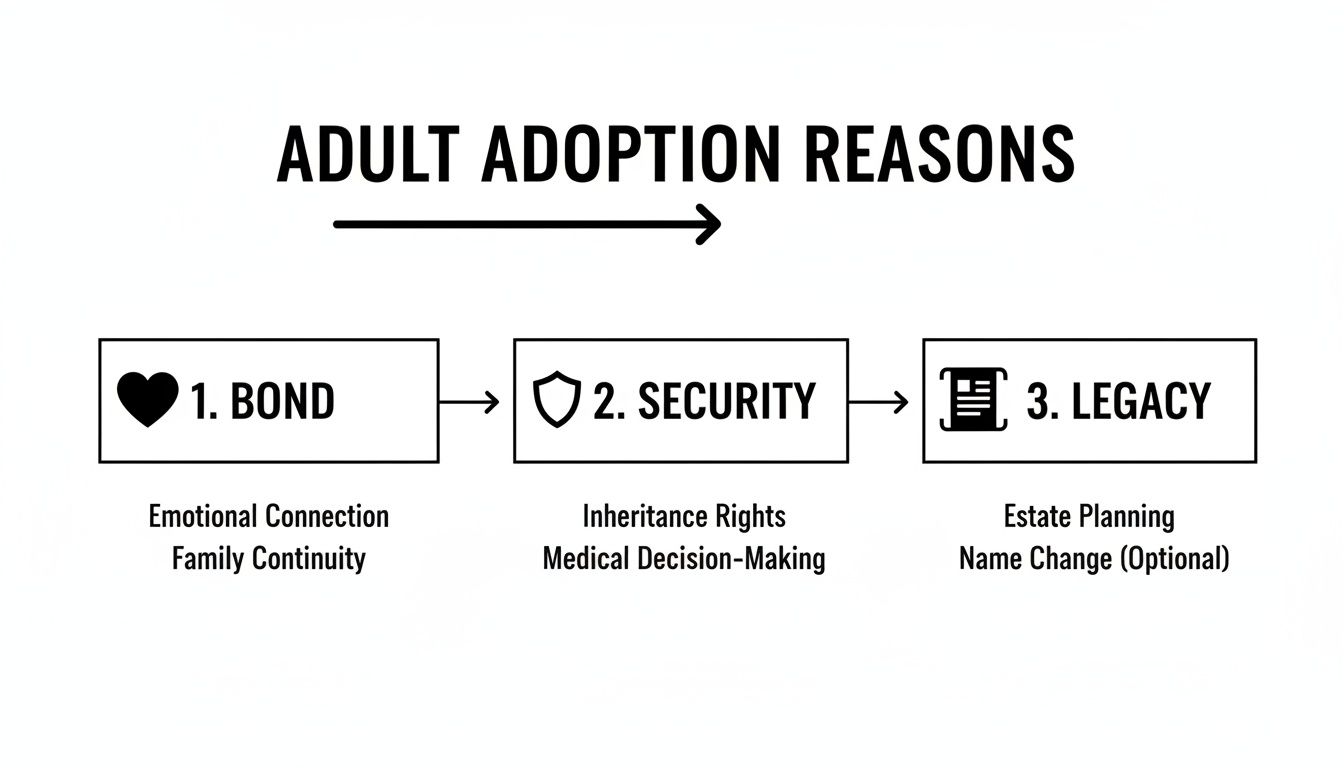
As you can see, it's about making a bond official, creating long-term security, and building a lasting family legacy—powerful drivers that make the paperwork worthwhile.
Gathering Your Essential Paperwork
Once the petition and consent are ready, it's time to gather the supporting documents. Putting together a complete package for the court is key. As you sort through the legal forms, having a basic understanding of effective document analysis can make the requirements feel much clearer.
While your legal team will guide you, you should be ready to pull together:
- Proof of Identity: Copies of birth certificates and driver's licenses for both you and the adult adoptee.
- Proof of Residence: Something like a recent utility bill or lease agreement to show you're filing in the right Texas county.
- Marriage Certificate: If you (the adoptive parent) are married, the court will typically want to see a copy of your marriage certificate.
Think of this stage as building a portfolio of your family's life. Each document adds another layer of validation to the relationship you're asking the court to legally recognize. For a more detailed breakdown, you can explore the legal requirements and documentation for adult adoption in Texas in our dedicated guide.
The Court's Review and Final Hearing
After everything is filed, your petition goes under the court's review. A judge will likely require a background check on the adoptive parent to ensure there are no legal red flags. In some situations, especially if there are unusual circumstances, the court might appoint an ad litem or amicus attorney. Their job is to independently investigate the case and report back, confirming the adoption is for legitimate reasons and not for any fraudulent purpose.
The journey wraps up with a final court hearing. This is often a surprisingly quick and joyful event. The judge will ask a few questions to confirm everyone is consenting and understands the outcome, then sign the final Decree of Adoption. That's the moment your family bond becomes legally permanent—a testament to a relationship built on years of love and support.
We understand this process is deeply personal. If you’re ready to take the next step in formalizing your family bond, our compassionate legal team is here to help. We invite you to schedule a free consultation to get started.
Understanding the Costs, Timelines, and Hurdles
Deciding to pursue an adult adoption is a huge emotional step. But just as important is understanding the practical side of things—the costs, the timeline, and the bumps you might encounter along the way.
Being prepared for these realities helps make the journey to legalizing your family bond as smooth and stress-free as possible. It’s all about setting realistic expectations so you can focus on what really matters: the joy of the process.
Many families are caught off guard by the investment required. The financial and time commitments can be significant, with the average cost for an adult adoption in Texas falling between $5,000 and $15,000 per case. These costs typically cover attorney fees (often $3,000-$10,000), court filing fees (around $500), and necessary background checks.
A Realistic Timeline for Your Adoption
Every family's situation is different, but you can generally expect an adult adoption to take several months from start to finish. From the moment the initial petition is filed to the final hearing where a judge signs the decree, the process usually takes between six to twelve months. This window allows enough time for all the necessary legal steps, like notifying required parties and getting a court date scheduled.
A few key things can stretch out this timeline:
- Court Schedules: How busy the court is in your county can directly impact how quickly you get a hearing.
- Locating Biological Parents: If a biological parent must be notified but is hard to find, this step alone can add weeks or even months.
- Gathering Paperwork: Making sure every form is filled out correctly and filed on time is crucial for keeping things moving.
Knowing these variables from the get-go helps manage expectations. For a closer look at what to expect, check out our guide on how long an adult adoption takes in Texas.
Navigating Potential Hurdles with Foresight
Even when everyone is in agreement, families can run into unexpected challenges. This isn't meant to discourage you, but to give you the foresight to prepare a proactive strategy with your attorney.
One common hurdle is a judge wanting to be sure about the real motivation behind the adoption. While securing inheritance rights is a valid outcome, the court needs to see that the primary goal is to create a true parent-child relationship.
A judge’s main duty is to prevent fraud. They will look for evidence of a long-standing, authentic family bond. Be prepared to share your family’s story and demonstrate the depth of your relationship.
Another tricky area can be the legal requirement to notify biological parents. Their consent isn't needed, but the law often says they must be informed. This can stir up complicated emotions for everyone.
For instance, we worked with a young woman who wanted her stepfather to adopt her but was terrified of contacting her biological father, whom she hadn't seen in over a decade. Our firm helped her navigate the notification process with legal precision and care, which allowed her to focus on the positive outcome with her stepdad.
Planning for these costs, timelines, and potential hurdles doesn't take away from the emotional significance of adult adoption. If anything, it honors the process by making sure you're fully prepared to see it through to a successful, happy conclusion.
The Lifelong Impact of an Adult Adoption Decree
The moment a judge signs the final Decree of Adoption, it’s far more than the end of a legal process. It’s the official start of a new, legally recognized chapter for your family. This single document holds immense power, transforming a relationship of the heart into one protected and honored by Texas law. It's a profound moment, filled with both legal weight and deep emotional meaning.
Finalizing an adult adoption in Texas is a formal declaration that permanently reshapes your family tree. The decree creates a brand-new, legally binding parent-child relationship that is, in the eyes of the law, identical to a biological one. It’s a moment of joy, relief, and validation for everyone involved.

The Legal Permanence of Your New Family
The effects of an adult adoption decree are immediate and far-reaching. One of its most significant functions is to permanently and completely terminate the parental rights of the adoptee's former legal parents. This action formally severs old legal ties, clearing the way for new ones to be established.
This legal shift ripples through several critical areas of life, providing clarity and security for the future.
- Inheritance Rights: The adopted adult now has the full legal right to inherit from their adoptive parents, just like a biological child would, even if there’s no will.
- Medical Decision-Making: As a legal parent, you gain the authority to be listed as next-of-kin and make crucial healthcare decisions for your adult child if they ever become incapacitated.
- Government and Insurance Benefits: The adoption can affect eligibility for certain benefits, like Social Security survivor benefits or inclusion on family health insurance plans.
In short, the decree ensures your relationship is respected in all official capacities, from hospital rooms to estate planning sessions. It removes any ambiguity about your family status.
The Emotional Validation of a Lifelong Bond
Beyond the legalities, the emotional impact of an adult adoption decree is truly immeasurable. For many families, it's the moment the law finally catches up to what they've known in their hearts for years. It’s a public and permanent acknowledgment of a bond built on love, support, and shared history.
We once worked with a family where a woman in her 40s was adopted by the aunt who had raised her. When the judge announced the adoption was final, they both just held each other and cried. The aunt later told us, "For forty years, she's been my daughter. Today, the rest of the world finally knows it."
This decree is more than paper; it’s peace of mind. It’s the security of knowing that your family is legally protected and that your bond is officially recognized for all time.
This feeling of permanence and belonging is the true gift of adult adoption. It quiets any lingering doubts and replaces them with a deep sense of security. For the adopted adult, it can be an incredibly affirming experience, validating their place within the family. For the adoptive parent, it solidifies their role and honors a lifetime of care.
The journey of an adult adoption culminates in this powerful decree—a legal document that is ultimately a testament to love. It formalizes your family’s unique story and provides a solid foundation for your future together. If you're ready to experience the security that an adult adoption can provide, we invite you to share your story with us. Please call The Law Office of Bryan Fagan, PLLC, to schedule a free, compassionate consultation and learn how we can help you take this meaningful step.
Tying Up the Loose Ends: Updating Records After Your Adoption is Final
Once the judge signs the final adoption decree, the biggest part of your journey is over. After the celebrations wind down, it's time for a few practical steps to make your new family's legal status official on paper. This is where you'll align all the official documents with the reality you've just formalized.
For many adopted adults, this is an incredibly powerful moment. It's often the first time their legal name and parentage truly match the family they've always considered their own.

Getting the New Birth Certificate
The most important document to update is the birth certificate. Following an adult adoption in Texas, the adoptee is legally entitled to a brand-new birth certificate that names the adoptive parents. This new document doesn't just amend the old one—it completely replaces it, becoming the new official record.
You'll need to work with the Texas Vital Statistics Unit to get this done. The process involves sending them a certified copy of the adoption decree and the right application forms. It can feel a little bureaucratic, which is why we've put together a specific guide on the Texas birth certificate amendment process to help you through it.
Updating Other Key Documents
Once you have the amended birth certificate, updating everything else gets much easier. The key is to ensure all of your documents are consistent to avoid any headaches down the road.
Here's a quick look at the typical post-adoption tasks we guide our clients through. This checklist ensures that every official record accurately reflects the new family structure.
Post-Adoption Checklist: Key Documents to Update
| Document/Record | Action Required | Where to Go |
|---|---|---|
| Birth Certificate | Submit adoption decree to get a new certificate issued with adoptive parents' names. | Texas Vital Statistics Unit |
| Social Security Card | Update the name and parent information on your record. | Social Security Administration (SSA) |
| Driver's License / State ID | Apply for a new ID reflecting the legal name change. | Texas Department of Public Safety (DPS) |
| U.S. Passport | Submit an application for a new passport with the updated name and parent info. | U.S. Department of State |
| Bank & Financial Accounts | Notify all financial institutions of the legal name change and update account details. | Your bank, credit card companies, etc. |
This checklist is more than just a to-do list; it's a roadmap for cementing the legal and practical realities of your newly formed family.
This process isn’t just about paperwork. It's about fully and officially stepping into your new identity. Each updated document serves as another layer of validation and security for your family.
Honoring the Past While Building a New Future
An adult adoption creates new legal bonds, but it doesn't erase a person's life story or history. For some, maintaining a connection with biological relatives is still important.
Texas law respects this complexity. The state's Central Adoption Registry (CAR) allows adoptees over 18, birth parents, and biological siblings to voluntarily register if they are open to making contact. This system acknowledges that family ties can be multifaceted and supports an individual's right to understand their full history.
Embracing this new chapter is about celebrating the family you’ve made official while respecting the unique path that brought you all together. If you have any questions about these final but crucial steps, our team at The Law Office of Bryan Fagan, PLLC, is here to offer the clarity and support you need. Schedule a free consultation with us to make sure every last detail is handled with care.
Common Questions About Adopting an Adult in Texas
Deciding to make a family bond official through adult adoption is a huge, personal step. It’s only natural that you have questions. While this journey is incredibly rewarding, it comes with its own set of legal and emotional twists and turns.
We’ve pulled together some of the most common questions we hear from families just like yours. Our goal is to give you the clear, straightforward answers you need as you think about making this meaningful commitment.
Do Biological Parents Need to Consent to an Adult Adoption?
This is probably the most frequent—and understandable—question we get. The short answer is no. Unlike a child adoption, a biological parent's consent is not a legal requirement for an adult adoption in Texas. What matters most is the clear, written agreement from the adult who is being adopted.
However, the law generally does require that the biological parents be notified that an adoption lawsuit has been filed. During the final hearing, the judge will officially terminate their parental rights in the adoption decree. This notification step can be emotionally complicated, especially if a parent has been out of the picture for years or is hard to find. An experienced attorney can help you handle this sensitive part of the process with care, ensuring every legal box is checked respectfully.
Can Someone Be Adopted Just for Inheritance Purposes?
Texas courts take a hard look at this. While gaining inheritance rights is a major and perfectly valid legal result of an adult adoption, it absolutely cannot be the only reason for it. The core purpose must be about creating a real parent-child relationship.
A judge’s primary job here is to make sure the adoption is genuine, not just a workaround for financial gain. They’ll want to see proof of a long-standing family bond, a history of mutual support, and a true desire to make the relationship official. If the court even suspects the adoption is just a tactic to change an estate plan, it will almost certainly be denied.
What if the Adult Being Adopted Is Already Married or Has Kids?
That’s perfectly fine. An adult’s marital status or whether they have children of their own has no bearing on their ability to be adopted in Texas.
It is, however, important to understand what this means legally. The adoption creates a new legal parent for the person being adopted, but it doesn't automatically change the legal status of their spouse or their own children. For instance, the adoptee’s kids don't legally become the grandchildren of the new adoptive parents for inheritance purposes—unless that's specifically laid out in wills or other estate planning documents. It’s crucial to talk through these details with a family law attorney to make sure everyone's future is protected exactly as you intend.
How Can The Law Office of Bryan Fagan Help My Family?
We get it. An adult adoption is so much more than a legal filing; it’s the official recognition of a bond of love that has likely existed for years. Our firm is here to provide compassionate, expert guidance for every single step.
We take care of the legal heavy lifting so you can stay focused on what really matters—your family. Here’s what we do:
- Prepare and file the initial petition and every other document the court requires.
- Help you gather the evidence you need to clearly show the judge your genuine parent-child bond.
- Navigate the delicate issues, like notifying biological parents, with professionalism and care.
- Represent you at the final hearing to ensure a smooth and joyful finalization day.
We truly believe every family deserves to have their unique story recognized and protected by the law.
The journey to make your family bond official is a beautiful and powerful one. At The Law Office of Bryan Fagan, PLLC, we are honored to help families all over Texas make their lifelong relationships legally permanent.
If you’re ready to learn more about how adult adoption can bring your family the security and recognition it deserves, we invite you to share your story with us. Please schedule a free, compassionate consultation to learn how we can help you formalize the family bond you already cherish.
